
Wood Doors vs. Fiberglass Doors
Fiberglass vs Wood Door Comparison for Front Entries
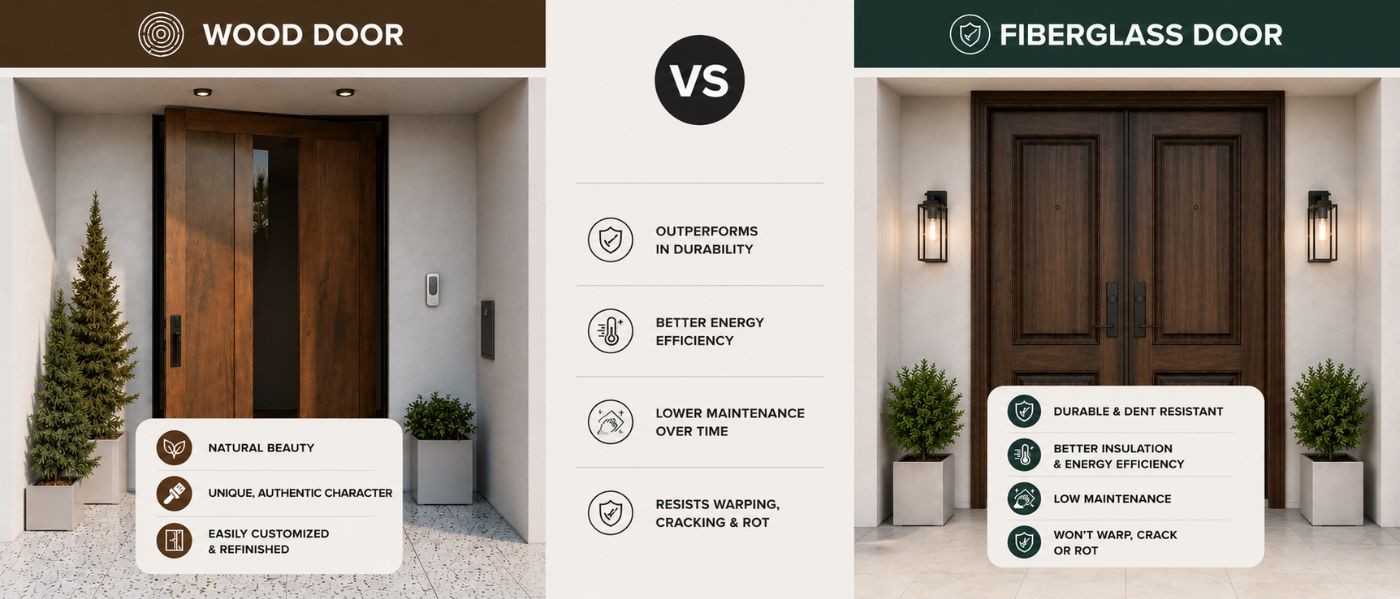
Choosing between a fiberglass vs wood door usually comes down to what you want from your entry door day after day. Both materials can work well for an exterior entry, but they usually serve different priorities. Fiberglass usually appeals to homeowners who want lower routine upkeep and stronger weather resistance, while wood tends to appeal to buyers who want natural material character and deeper customization.
That difference matters because this is not a simple winner-and-loser decision. If your main goal is lower ownership hassle, better moisture resistance, and a practical path toward rated performance shopping, fiberglass is often the stronger fit. If your main goal is real-wood appearance, traditional authenticity, or species-driven design flexibility, wood can be the better fit as long as you accept the added finish-care responsibility that comes with it.
A helpful way to think about the choice is this: fiberglass usually leans performance-first, while wood usually leans character-first. Once you know which side of that tradeoff matters more for your home and entry, the decision becomes much easier.
Fiberglass Doors
Durable and versatile, fiberglass doors are low-maintenance and available in smooth or textured finishes.
Wooden Doors
Classic and customizable, wooden doors bring warmth and character to any home.
Side-by-side comparison
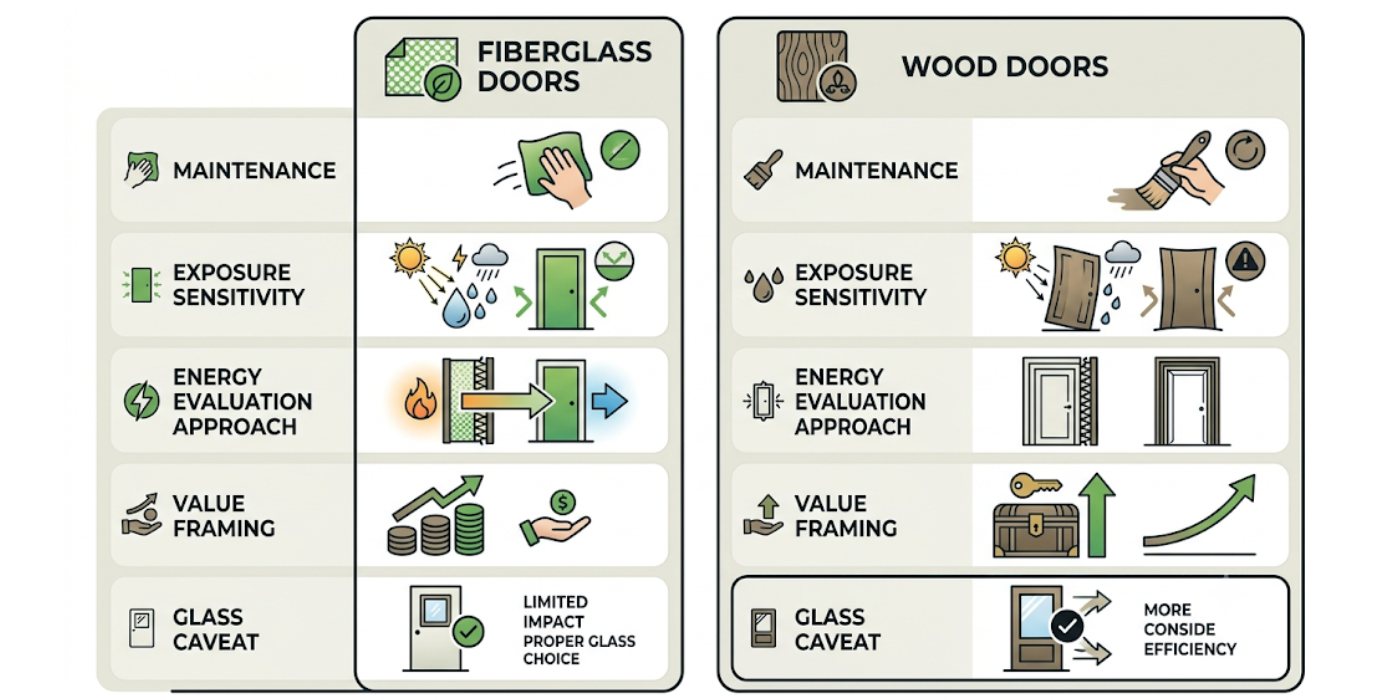
Maintenance and weather exposure
The biggest practical difference for many homeowners is upkeep. Wood exterior doors require protective finishing and ongoing finish maintenance, and moisture exposure can contribute to swelling or related movement concerns over time. Fiberglass, by contrast, is commonly positioned by manufacturers as a lower-maintenance option relative to wood, which is a major reason it is often favored for lower-hassle ownership.
That does not mean fiberglass is maintenance-free, and it does not mean every wood door is difficult to own. It means each material usually asks something different from the homeowner. If your entry sees more sun, rain, humidity, or seasonal swings, the maintenance gap often becomes more important in the real world.
Energy performance and insulation context
Energy performance is another area where buyers often oversimplify the decision. The most reliable fiberglass door vs wood door comparison is not about the materials in the abstract. It is the rated performance of the complete door system, using NFRC and ENERGY STAR information where available.
At a high level, DOE guidance says many steel and fiberglass-clad entry doors without glass fall in the R-5 to R-6 range and can deliver more than five times the insulating value of a same-size solid wood door, but that is not a universal rule for every door configuration. The practical takeaway is that fiberglass often starts with a strong performance case, but the final answer still depends on the specific product and the full door assembly.
Glass is one of the biggest reasons broad material claims can break down. High glass area can reduce the insulating advantage of an entry door in either material, so shoppers comparing decorative or glass-heavy designs should look closely at the rated whole-door numbers instead of assuming the base material tells the whole story.
Cost and value
Cost is best treated as a value question, not just a starting price question. Fiberglass is commonly positioned as a better long-term value choice because lower upkeep can reduce the ownership burden over time. Wood may still be worth the higher spend when real-wood appearance, species choice, or a more traditional custom look is the priority.
So if you are comparing the two honestly, fiberglass often wins on convenience and value logic, while wood can still win on material authenticity and design expression.
Decision guidance by buyer priority
If you want the clearest recommendation, rank your priorities first instead of asking which material is universally better. Both can be right, but they are usually right for different kinds of buyers.
- Choose fiberglass first if you want lower routine upkeep, better resistance to moisture-related wear concerns, and a simpler path toward comparing energy performance through rated door systems. This path usually makes the most sense for homeowners who want a practical exterior solution that asks less of them over time.
- Choose wood first if you care most about real-wood appearance, natural material authenticity, or species-driven customization and you are comfortable accepting more finish-care responsibility. This path usually makes the most sense when the visual character of the door matters enough to justify the extra attention.
- Use value as a tie-breaker, not the only factor. Fiberglass often makes a strong value case through lower upkeep, while wood can justify a higher spend when appearance and customization are doing most of the decision-making work.
If you are close between the two, the simplest tie-breaker is to ask whether you want your front door to be easier to own or more important as a design statement.
Exterior and front entry use-case guidance
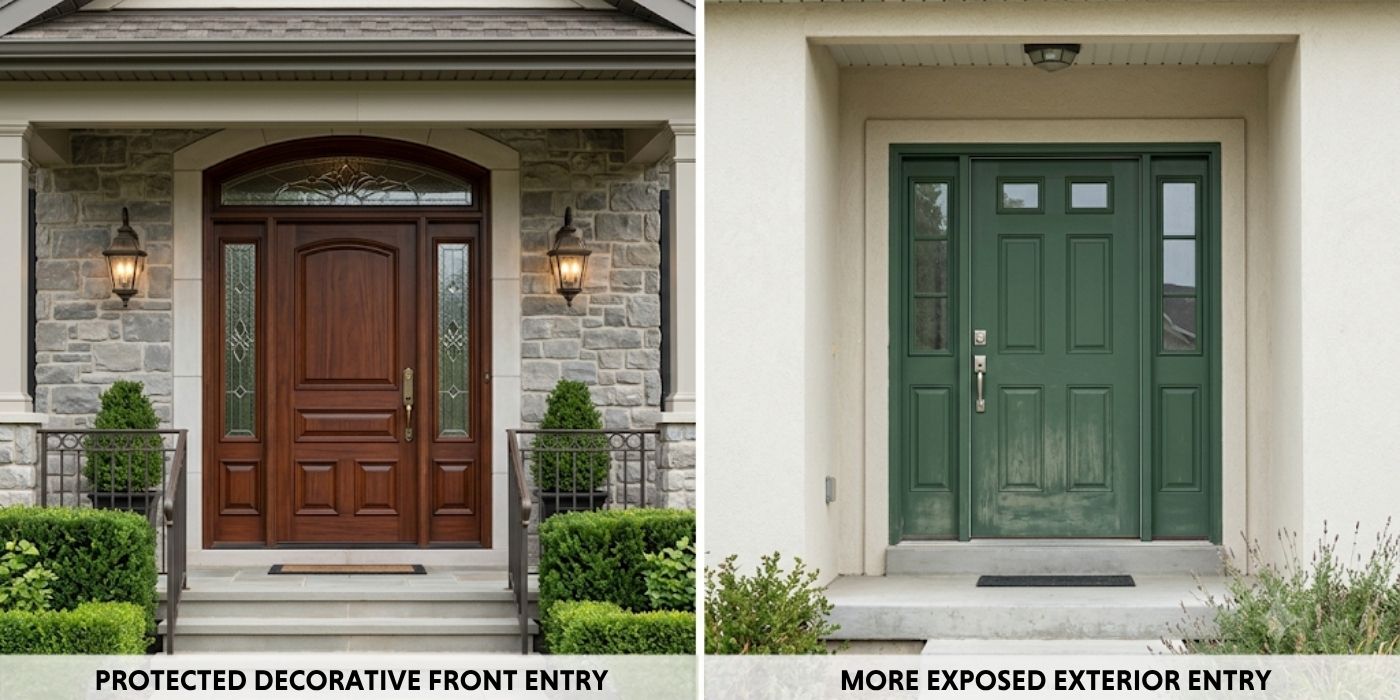
For a front entry, the best fiberglass vs wood front door choice often depends on what role the door needs to play. If you want the entry to read as a design statement first, wood often deserves stronger consideration. If you want the entry to function as a lower-maintenance exterior component first, fiberglass often rises to the top.
Exposure matters too. Climate and weather contact affect both materials, but exterior wood doors often need better protection from direct weather and dependable finish protection, so the same wood door that feels right in one setting may ask more from the homeowner in a more exposed location. That is why fiberglass is often the easier recommendation for entries with heavier weather exposure or for homeowners who simply want less upkeep pressure.
If your preferred design includes a lot of glass, be careful not to assume the slab material alone will carry the performance decision. High glass area can reduce insulating advantage in either material, so glass-heavy entry designs should always be checked at the whole-door level.
Next-step selection guidance
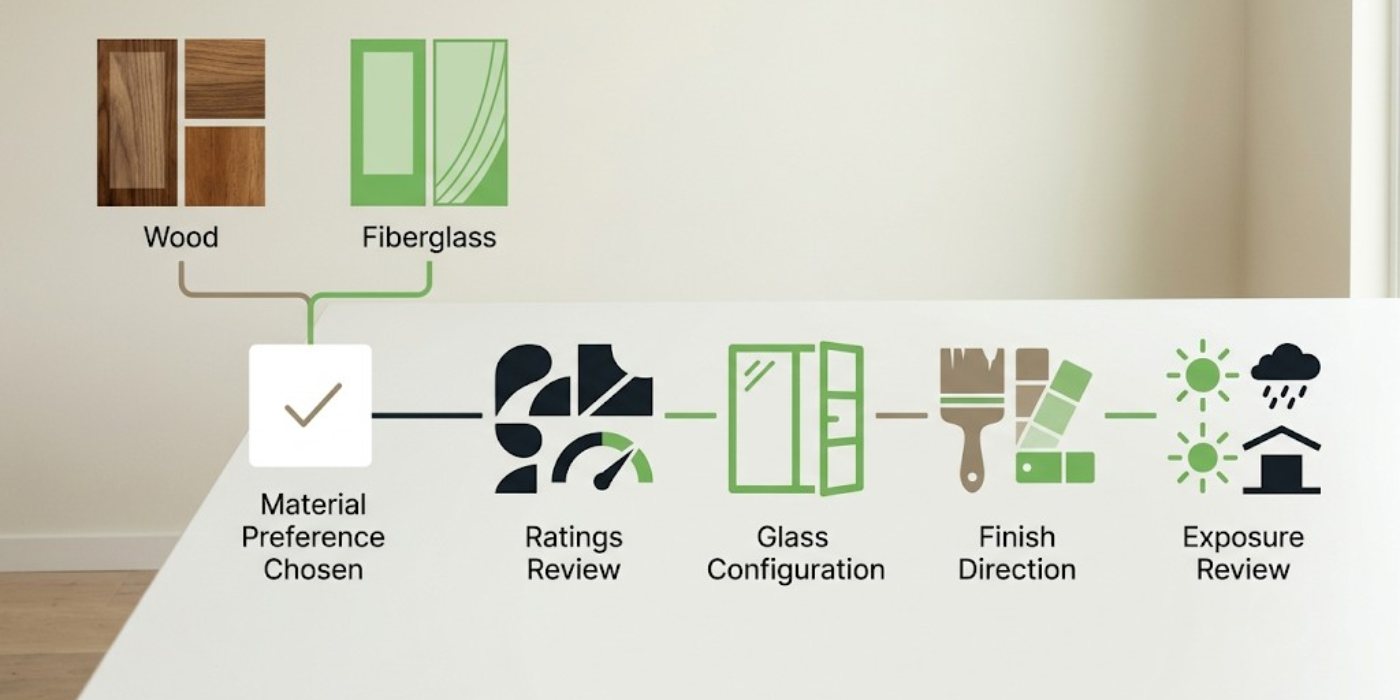
Once you know whether you are leaning fiberglass or wood, the next step is to stop comparing materials in the abstract and start comparing actual door systems. A broader exterior door buying guide can help if you want more context before narrowing further.
Use this short checklist:
- Compare the rated performance of the full door system, not just the slab material. NFRC and ENERGY STAR information can help you evaluate actual products more accurately.
- Review the glass configuration closely. Decorative glass can change the energy story in either material, so make sure the design you like still fits your performance goals.
- Decide what finish style matters most to you. If you want material authenticity and custom character, wood may stay in the lead. If you want a lower-hassle exterior with a more practical ownership profile, fiberglass may stay in the lead.
- Check exposure suitability. Material preference narrows the field, but the right fit still depends on where the door will live and how much weather contact it will see.
- Keep security in perspective. It is better to think about security as a door-system question rather than assume slab material alone determines the answer.
If you want more detail on finishing-related upkeep after you narrow your material direction, see this guide to staining a fiberglass door.
FAQ
Neither is automatically better for every home. Fiberglass is often the stronger fit when you want lower upkeep and a more performance-minded exterior choice, while wood is often the better fit when natural character and design presence matter most. For front entries specifically, the decision often comes down to whether you want the door to function as a statement feature first or a lower-maintenance exterior component first.
Real wood still has the authenticity advantage for buyers who want true natural material character. That said, modern fiberglass doors are often designed to mimic wood grain and panel detail closely enough that many homeowners find the look convincing, especially when they want wood style without the same upkeep.
Fiberglass is usually the lower-maintenance choice. Wood doors require protective finishing and ongoing finish care, and moisture exposure can add movement concerns over time. That does not make wood the wrong choice, but it does mean upkeep should be part of the decision from the start.
They often enter the conversation with a stronger high-level performance case, but the right comparison is the rated whole door system, not the material by itself. DOE guidance gives fiberglass-clad entry doors a strong insulation context at a high level, yet glass configuration can change the outcome significantly. If energy performance is important to you, compare NFRC and ENERGY STAR information on the specific door you are considering.
Wood is worth stronger consideration when real-wood appearance, traditional material authenticity, or species-driven customization matters more than maintenance convenience. It can also make more sense when you want your front entry to feel like a design statement first and you are comfortable taking on the added care that choice brings.
If you need upkeep-specific detail later, this wood door refinishing guide covers that separately.
Compare the actual door system next: rated performance, glass configuration, finish style, and exposure suitability. That is the best way to move from a material preference to a product decision. If performance is a major priority, use NFRC and ENERGY STAR information where available rather than relying on the material label alone.