
Direct-Set vs. Sash-Set Sidelites
SIDELITE BUYING GUIDE · 8 MIN READ
Direct-Set vs. Sash-Set Sidelites: Key Differences
Compare direct-set and sash-set sidelites by appearance, serviceability, and replacement implications to choose the better fit for your door project, without treating either construction as a lower-quality choice.
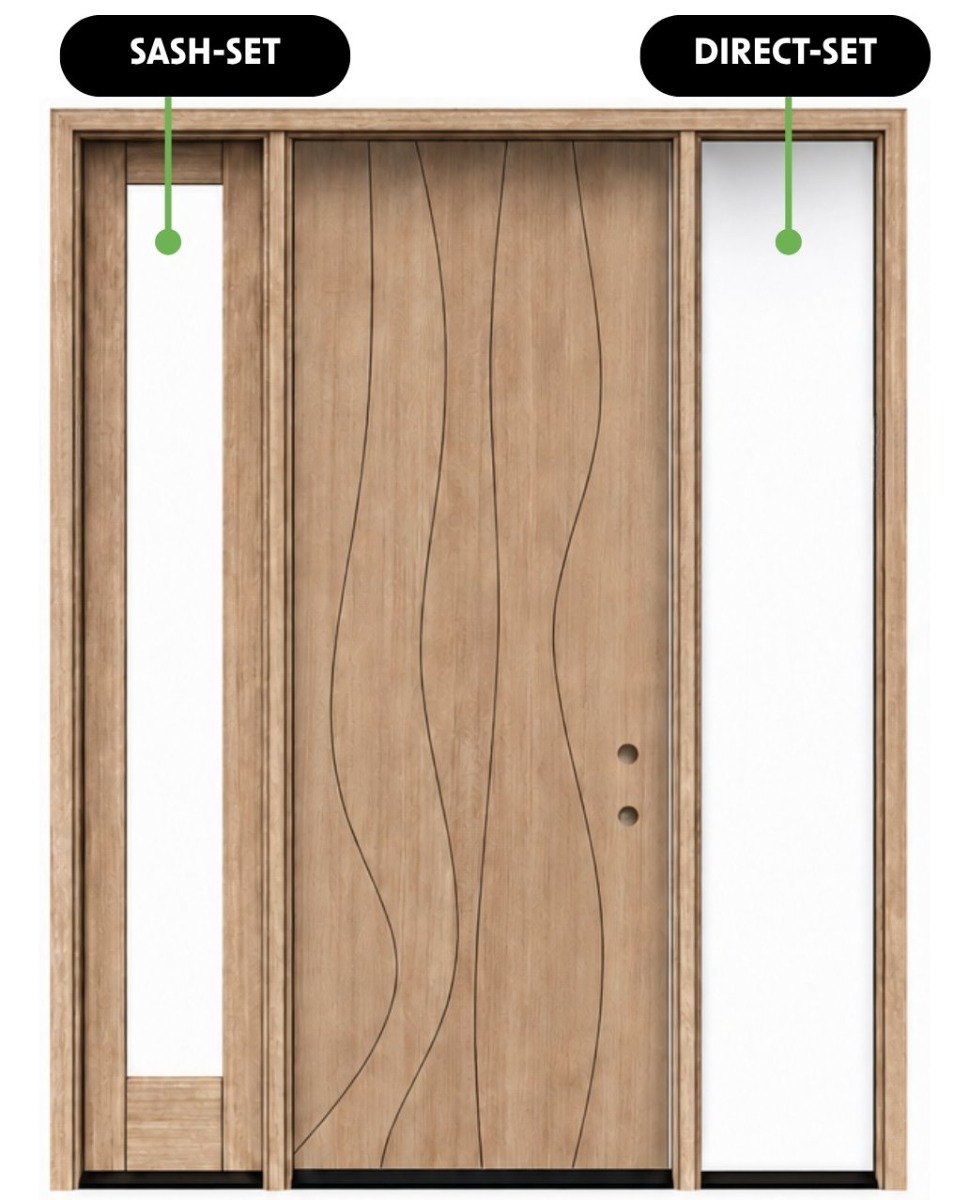
THE DIFFERENCE IN ONE SENTENCE
TWO WAYS TO SET THE SAME PIECE OF GLASS
Direct-set vs. sash-set sidelites describes two different ways the glass is built into the unit: the glass is either retained directly by the surrounding frame, or placed within a separate sash that is then installed within the frame.
Homeowners usually notice that construction choice in two places first: how the sidelite looks, and how it may be serviced later. Direct-set sidelites are generally associated with a more minimal profile and more visible glass, while sash-set sidelites add more visible sash detail that can create stronger alignment with surrounding sightlines. Brand styling can vary, so read this as a general construction-level pattern rather than an identical look across every product line.
Direct-set sidelite
Uses glass set directly into the surrounding frame rather than into a separate sash. Most useful here as door-system terminology and fixed-lite comparison framing.
Plain-language version: "glass in the frame."
Sash-set sidelite
Uses glass surrounded by sash components, with that sash assembly then set into the frame. Also applies here as door-system terminology and fixed-lite comparison framing.
Plain-language version: "glass in a sash, then sash in the frame."
That same distinction affects future service. Because sash-set construction places the glass within a removable sash assembly, it is generally more service-friendly than glass set directly into the surrounding frame. That's a general serviceability implication, not a promise about every field repair.
If you want broader context on how door layouts are grouped, a general door configuration guide may help, but this comparison stays focused on how the fixed glass is built into the sidelite rather than on wider configuration terminology.
AT A GLANCE
SIDE-BY-SIDE COMPARISON ACROSS BUYER-RELEVANT CRITERIA
The most useful comparison isn't a single verdict; it's how each construction handles appearance, service, and long-term ownership.
| Comparison | Direct-set glass | Sash-set glass |
|---|---|---|
| Appearance | Usually cleaner and more glass-forward, with less visible framing around the glass. | Usually shows more visible sash detail, creating a fuller framed profile that can align with nearby sightlines. |
| Visible glass area | Better suited if you want the glass area to visually take the lead. | Better suited if you prefer a more built-up look around the glass. |
| Common pairing | Contemporary, modern, or flush entrances. | Traditional, transitional, or paneled entrances. |
| Serviceability | Generally less service-friendly, since the glass isn't housed in a separate, removable sash. | Generally more service-friendly, because the glass sits within a removable sash assembly — a general implication, not a universal promise. |
| Replacement implications | Glass is stopped and caulked directly into the frame, tying future service more closely to the surrounding frame details. | The complete sash assembly is stopped and caulked into the frame, which can help localize glass service within a separate assembly. |
| Durability framing | Verified sources support a different construction profile, but not a blanket claim that direct-set is always more durable. | Same caveat applies here — a different profile, not a guaranteed durability advantage. |
| Maintenance framing | Routine upkeep isn't the main differentiator; the bigger question is how the unit is built if glass service is ever needed. | Routine upkeep isn't the main differentiator here either — the real difference shows up in future service strategy, not day-to-day cleaning. |
| Potential cost | May cost less in some product lines, because it uses fewer components. | May cost more because of the additional manufactured sash, depending on material, size, finish, and glass. |
That's why durability claims need to be handled carefully: the supportable comparison isn't that one construction type is universally tougher. The clearer, buyer-useful difference is that these two styles organize the glass and framing differently, and that affects profile and service approach more than it supports a one-word durability winner.
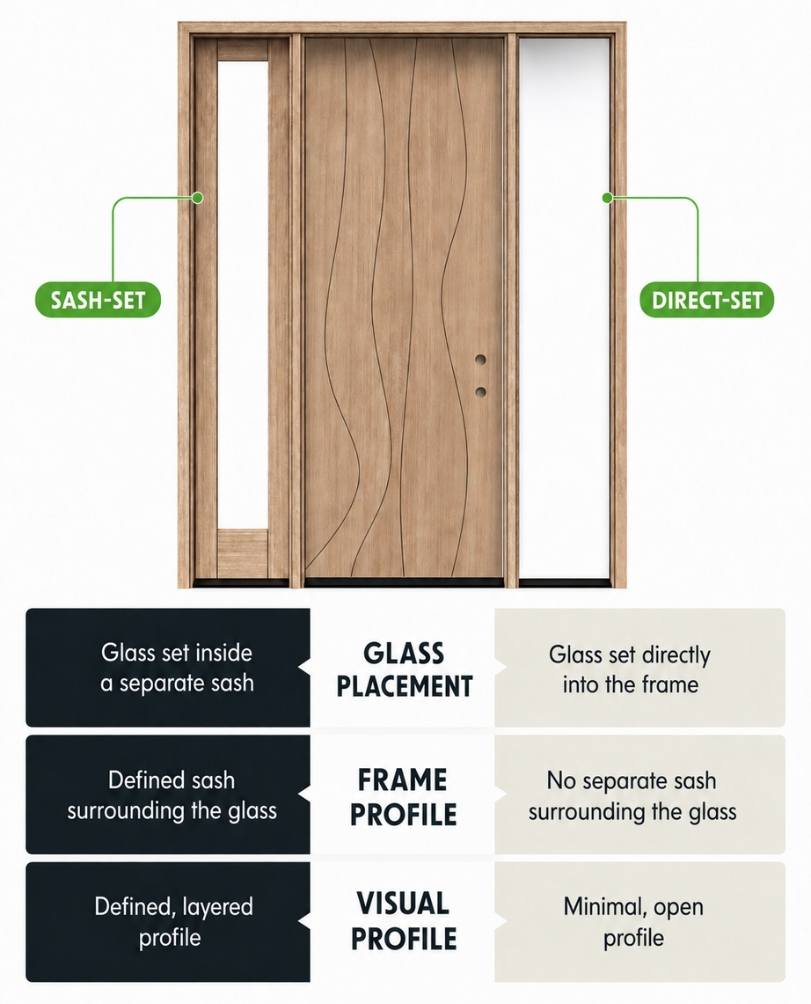
VISUAL COMPARISON
SEE WHERE THE SASH CHANGES THE PROFILE
The sash-set side adds a distinct framed layer around the glass. The direct-set side places the glass directly inside the perimeter frame.
BALANCED BUYER COMPARISON
PROS AND CONS OF EACH SIDELITE
These are design and ownership tradeoffs, not a quality ranking.
Direct-Set Sidelites
A direct-set design removes the intermediate sash so the glass becomes the visual focus.
Sash-Set Sidelites
A sash-set design adds a defined architectural layer between the glass and the outer frame.
Impact or specialty glass doesn't pick a side
Impact or specialty glass does not automatically make either construction the default choice. Verified sources support the direct-set vs. sash-set comparison itself, but they do not support a blanket rule that one construction is always the stronger or more appropriate answer.
For this decision, the more useful question is compatibility: impact or specialty glass can be offered in fixed sidelite formats, but the comparison should stay focused on whether the construction you want is available and engineered in the glass configuration your project requires.
Official product and specification sources support that both direct-set and sash-set fixed-glass constructions can exist in impact-related product families, so impact needs alone don't point to only one construction type. Availability and approvals remain product-line specific — confirm details in your glazing configuration guide before deciding.
Construction style alone does not determine performance
Neither style is automatically more energy efficient, more secure, more watertight, or more impact resistant. Compare the complete tested entry system.
HOW TO CHOOSE
START WITH THE ENTRANCE YOU WANT TO CREATE
A more open glass profile
- ✓The largest possible visible glass area
- ✓More natural light and a broader view
- ✓A minimal or contemporary entrance
- ✓Less visible framing around the glass
A more defined framed profile
- ✓A layered, architectural appearance
- ✓Traditional or transitional styling
- ✓Sightlines that match sash-based products
- ✓Visual coordination with rails and stiles
New project or replacement changes your flexibility
For a new door project, you usually have more freedom to choose between direct-set and sash-set as part of the original design and service tradeoff — both constructions may be considered from the start. In a replacement situation, the decision is often more constrained: existing unit construction may limit what can be swapped without changing more of the surrounding assembly, so confirm what you already have before assuming a simple swap is possible.
A practical way to decide: if you'd be happiest with the cleanest possible glass presentation and service structure isn't your leading factor, direct-set often makes sense. If you'd rather preserve a more service-aware construction even with a more built-up profile, sash-set often makes more sense.
Different profiles. Equal opportunity for a well-built entry.
Direct-set emphasizes glass and openness. Sash-set emphasizes architectural framing and coordination. Let the design and tested specifications — not assumptions — guide the decision.
COMMON QUESTIONS
FAQ
A direct-set sidelite uses glass set directly into the surrounding frame rather than into a separate sash. In plain terms, it's the glass-in-the-frame version of this comparison.
A sash-set sidelite uses glass surrounded by sash components, with that sash assembly then set into the frame. A simple way to picture it: glass in a sash, then sash in the frame.
Usually, no. A standard sash-set sidelite is fixed even though the glass is mounted within a sash. A venting sidelite is a separate, operable product.
Direct-set sidelites typically show a more minimal, glass-forward look and provide more visible glass and daylight, while sash-set sidelites show more visible framing around the glass with the same overall dimensions. Brand styling can vary, so treat this as a construction-level pattern rather than a universal exact look.
In general, sash-set is easier to service because the glass sits within a removable sash assembly. Official terminology also distinguishes direct-set glass as being stopped and caulked into the frame, while sash-set uses a sash assembly that is itself stopped and caulked into the frame. That helps explain why the two are often viewed differently for future service, but it remains implication-focused guidance rather than a repair promise or how-to.
A new project usually gives you more freedom to choose between direct-set and sash-set as part of the design and service tradeoff. In a replacement situation, the existing assembly may limit what can be changed without affecting more of the surrounding unit, so it's smart to confirm what you already have before assuming a simple swap is possible. This is general project guidance, not a retrofit guarantee.
Not necessarily. Energy efficiency depends on the complete configuration and its certified ratings — glass type, coatings, spacers, and frame materials — not simply how the glass is framed.
No. Impact glass does not automatically require one type over the other. Verified sources do not support a blanket rule that impact needs automatically point to only one construction type, and both direct-set and sash-set related fixed-glass constructions can appear in impact-related product families. The practical question is whether the exact sidelite construction you want is offered and approved in the glass configuration your project requires, which remains product-line specific.