
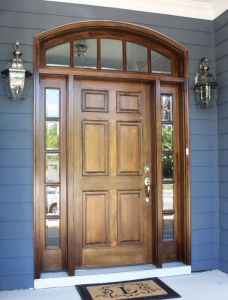
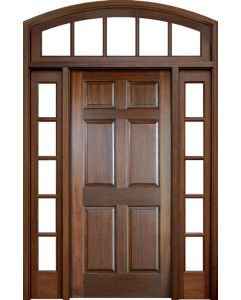
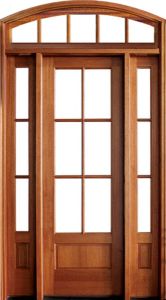
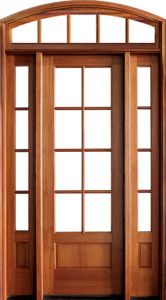
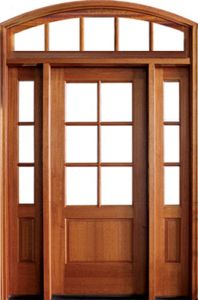
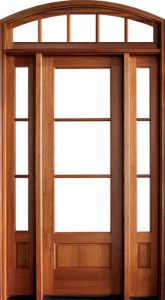
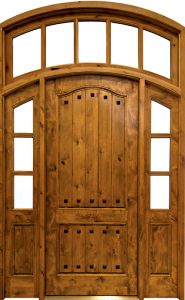
Wood Front Doors - Door with Two Sidelites and Segment Head Transom
Wood front doors are the right fit when visible grain, natural tone, and the warmth of real wood are central to your entrance. Wooden exterior doors in this category come in species like oak, mahogany, knotty alder, and walnut, each with its own grain pattern and finish tone, in styles from clean-lined to rustic.
To narrow the selection, start with three decisions: the style that fits your home, solid panels for privacy or glass for more light, and a single door, double doors, or a configuration with sidelites. Options vary by door.

Please wait...

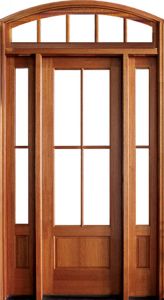
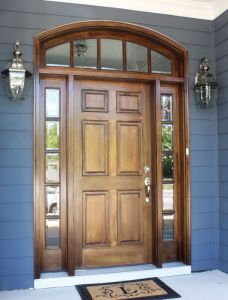
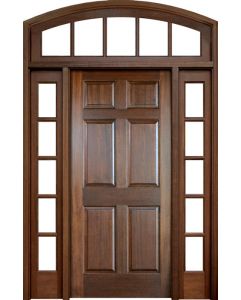
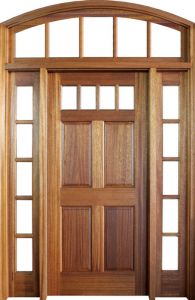
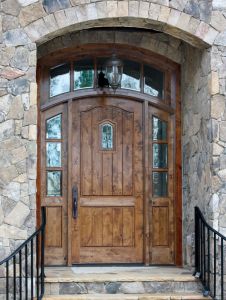
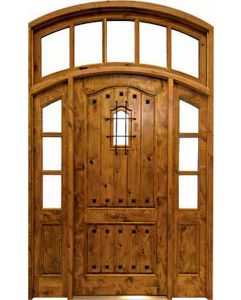
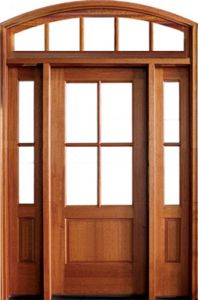
How to Choose Wood Front Doors
Start with the dimensions and configuration your entrance can support. Then compare operation, glass, wood character, finish, and design details according to how you want the entrance to look and function.
Single Doors, Double Doors, Sidelites, and Transoms
Choose a single wood front door when you want a simpler entrance that needs less overall width. Choose double doors when a broad opening calls for stronger symmetry, a larger-scale entrance, or a potentially wider passage.
Choose sidelites when you want daylight and visual width beside the main door without adding another operating door panel. Choose a transom when the entrance can support added height and you want vertical emphasis or light above the door.
How Your Wood Front Door Opens
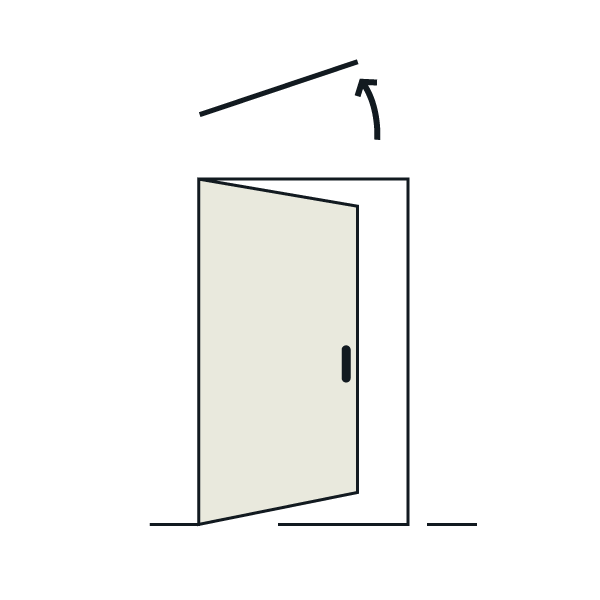
Choose a conventional swing wood front door for familiar side-hinged movement and a typical residential entrance layout. Choose a pivot door when the opening can support larger-scale movement around a top-and-bottom pivot axis, which changes rotation and clearance requirements. Choose a Dutch door when independent upper and lower operation suits your intended use, because the upper section can open while the lower section remains closed.


Balance Glass, Light, and Privacy
Choose a wood front door without glass when enclosure and limited direct sightlines matter most. Choose partial glass for a middle ground between coverage and daylight. Choose a larger glass area when natural light and a more open appearance lead the decision.
Wood front doors include solid-panel, half-lite, three-quarter-lite, and full-lite treatments. Patterned or obscure glass can reduce clear visibility while still admitting light, although the individual glass option must support any stated privacy level. The solid versus glass wood door comparison offers more guidance.


Choose the Right Wood Front Door Size
Choose a standard-size wood front door when your measured opening aligns with standard unit and rough-opening requirements. Choose a wider, taller, shaped, or custom-size door when the opening or intended entrance scale falls outside that path. Measuring the existing opening gives you the starting point for comparing these choices.
Nominal door size, assembled unit size, and rough-opening size are different measurements, so nominal dimensions alone do not establish fit. Size also affects which configurations, systems, and designs remain practical. For nonstandard projects, use the custom wood door purchasing guide.
Match the Grain and Finish to Your Exterior
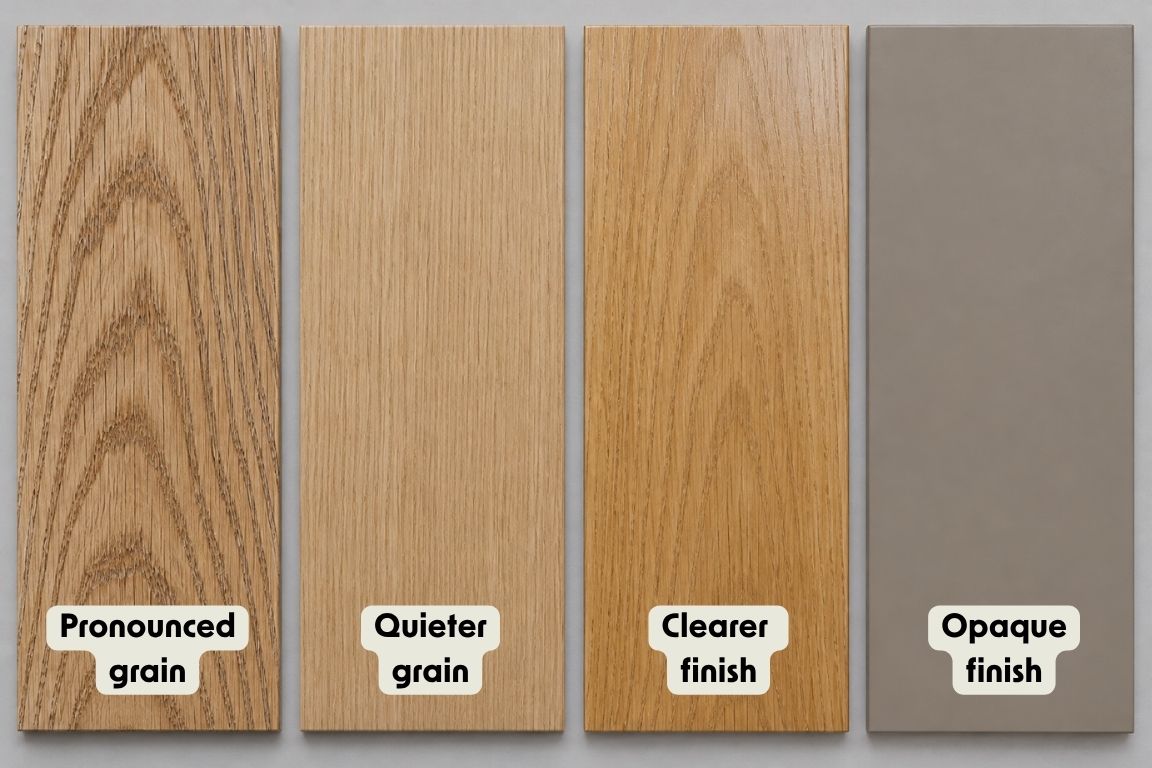
Choose pronounced or knotty grain when you want the wood to provide strong visual texture. Choose tighter or more uniform grain when panels, glass, or hardware should lead the design.
Choose a clear or stained finish direction when you want grain, texture, and natural tone to remain more visible. Choose a more opaque finish direction when coordinated exterior color should carry greater visual weight. Natural wood varies in grain and color, so a finished door may not look identical to a sample.
Wood offers natural grain and can be refinished, but exterior wood generally needs ongoing finish care. For planning help, see the exterior wood door maintenance guide.
Architectural Style and Panel Design
Choose a clean-lined wood front door when simple geometry, flush surfaces, and restrained detailing suit the exterior. Choose structured panels, horizontal lites, molding, or Craftsman-influenced details when the home uses organized traditional proportions. Choose plank, crossbuck, textured, rustic, or arched treatments when the entrance needs greater visual weight.
Compare the actual panel lines, proportions, lite patterns, top shape, and details rather than relying on a style label alone.
Before You Order
- +The unit dimensions and rough-opening requirements match the measured entrance.
- +The complete entry configuration fits the opening, and the intended door panels operate as needed.
- +The operating system and required movement clearances suit the entrance.
- +The glass area and opacity provide the balance of privacy and light you want.
- +The selected wood, design, and finish are offered together in the required dimensions and system.
- +The listed slab, prehung, or ready-to-assemble format includes the components you expect.
- +Any required regulated or performance attribute is supported by the product specifications and applicable documents.
FAQ
Choose wood when natural grain and the ability to refinish the surface are central to your entrance design. Fiberglass can imitate woodgrain and generally needs less routine upkeep. Use the wood versus fiberglass comparison to explore the choice further.
Not necessarily. A double-door unit can have an active panel used for everyday entry and an inactive panel that stays secured until a wider passage is needed. Panel operation varies by product.
A wood front door is an exterior entry door with a wood door leaf intended for the home's main entrance. This does not mean every product uses the same internal construction type or solid wood construction.
A slab is the door panel without a complete new frame, while a prehung door comes installed in its frame. A slab may suit a project that can reuse a compatible existing frame; a prehung unit may suit a project replacing the complete door assembly. Neither format alone establishes opening compatibility.
Not necessarily. A larger glass area brings more light and a more open look, but patterned or obscure glass can reduce clear visibility. The individual glass option must support the privacy level you want.