Exterior Door Buyer’s Guide
- Jul 27, 2026
What to Consider Before Choosing an Exterior Door
An exterior door has to do more than look good from the street. It also needs to suit the opening, handle the exposure around your entry, support the right level of privacy and daylight, and match the amount of upkeep you are willing to manage.
Choosing an exterior door is easier when you know what to compare first. This guide walks through the main factors that usually matter most, including material, style, configuration, glass, sizing, exposure, performance, and cost.
The goal is to choose a door that fits your home, your opening, and the conditions around the entry.
Choose the Right Exterior Door Material
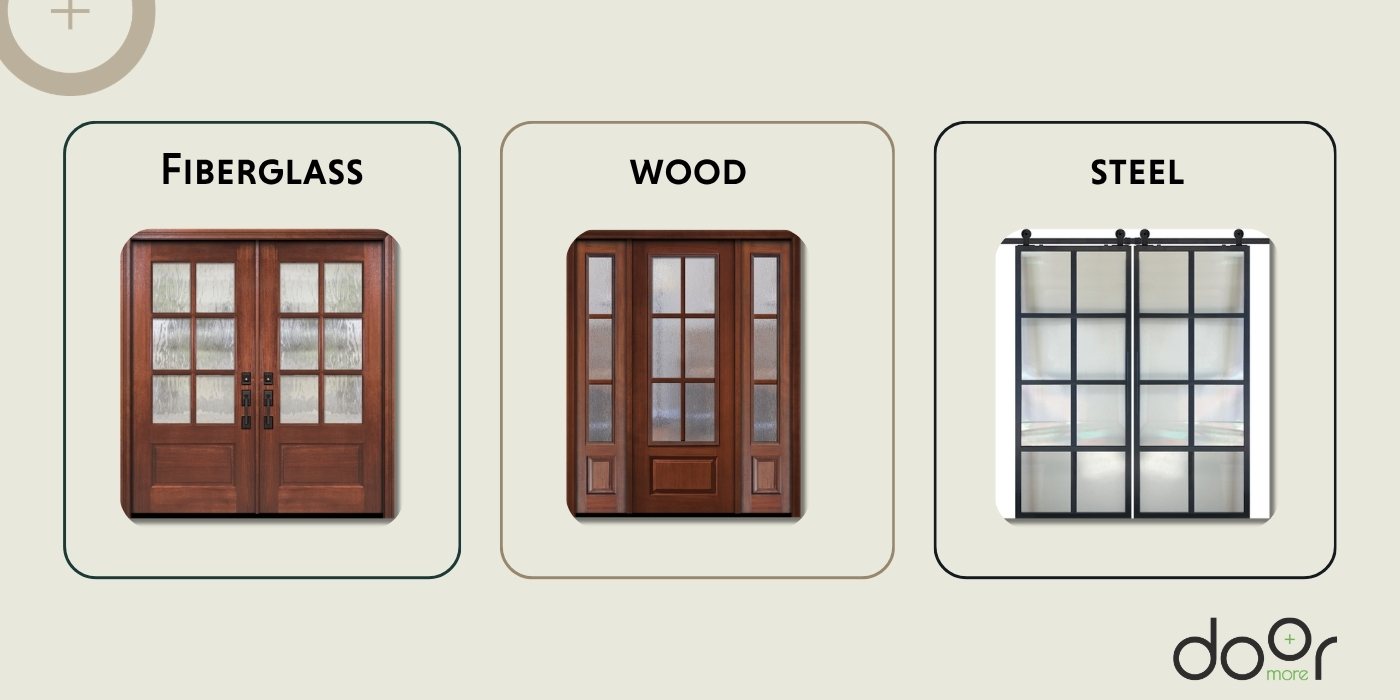
Material affects the door’s appearance, maintenance needs, and suitability for the entry location. Compare each option based on exposure, upkeep, and how the door will be used.
- Fiberglass Fiberglass is a practical option for homeowners who want a lower-maintenance exterior door. It is often considered for its resistance to warping, cracking, and rot under normal exterior conditions.
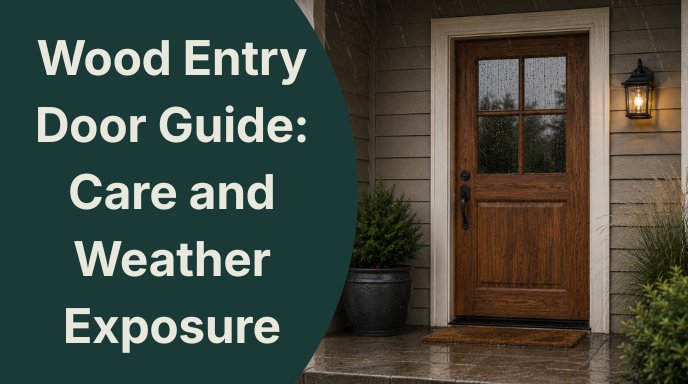
- Wood Wood offers natural warmth, character, and a more traditional appearance. It usually needs more finish maintenance, especially in areas exposed to sun, rain, humidity, coastal salt air, or frequent wetting.
- Steel Steel can suit homeowners who want a practical, straightforward exterior door. Before choosing steel, consider finish condition, dents, scratches, and exposure around the entry.
| Material | Good fit for | Keep in mind |
|---|---|---|
| Fiberglass | Lower-maintenance exterior entries | Check product details, finish options, and configuration |
| Wood | Natural warmth and traditional character | Needs ongoing finish maintenance |
| Steel | Practical, straightforward entry needs | Consider dents, scratches, finish condition, and exposure |
| For a lower-maintenance entry material, review Fiberglass Entry Doors. | ||
Understand What Affects Exterior Door Pricing
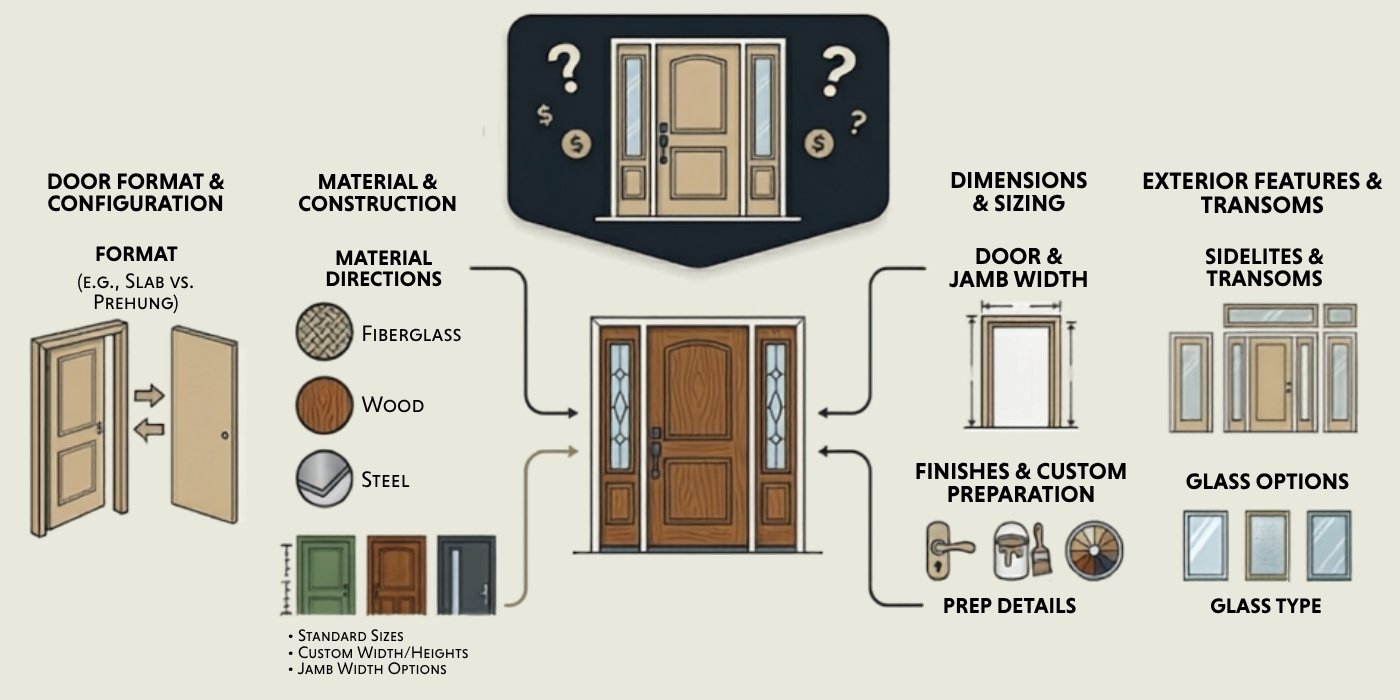
Exterior door pricing is usually clearer when compared by complete door unit or configuration, not by square foot. A slab door, a prehung exterior door, and a full entry with sidelites or a transom are not the same type of purchase.
Before comparing cost, confirm what is included. Material, glass type, size, finish, slab or prehung format, jamb width, handing, sidelites, transoms, and custom preparation can all affect the final price.
This is why broad price-per-square-foot estimates can be misleading. A better approach is to compare complete door options based on the actual configuration being considered.
Think About Glass, Privacy, and the Overall Entry Look
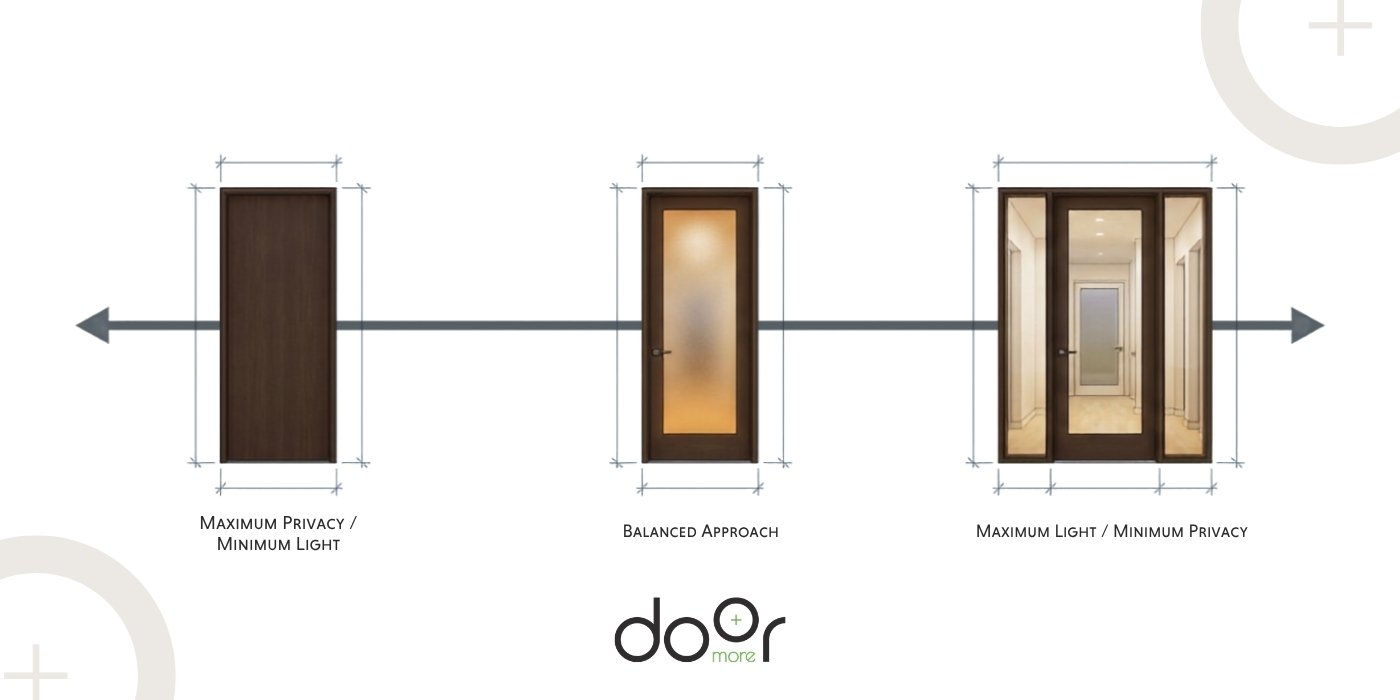
Glass affects how an exterior door looks from outside and how the entry feels from inside. It can change the door’s style, bring in daylight, affect privacy, and make the entry feel more open.
More glass can make an entry brighter and more welcoming, but it can also reduce privacy depending on where the door faces. Smaller lites or privacy glass can help balance daylight with a more private entry.
If energy performance matters, compare published ratings on a like-for-like basis rather than assuming one glass layout always performs better than another.
Sidelites and transoms should be considered with the door glass. They can make an entry feel larger and brighter, but they also affect configuration and measurement readiness.
For glass-related next steps, review Glass Type.
Check Door Type and Measurements Before Ordering
Before ordering, confirm the basic door format. A prehung exterior door includes the frame. A slab is the door panel only. This distinction affects the information needed before purchase.
Measurements should also be checked before ordering, especially if the entry includes sidelites, transoms, or custom configurations. For measuring details, review:
Handing and door preparation can also affect the order. Review Handing and Door Preparation if those details are unclear.
For unfamiliar terms, review Door Terminology.
Consider Weather Exposure and Performance
Strong sun, rain, humidity, coastal salt air, and frequent wetting can affect the door material, finish, and maintenance needs. A sheltered entry may have different requirements from a door exposed directly to weather.
If energy performance matters, compare published ratings on a like-for-like basis. Avoid assuming savings or performance outcomes that are not supported by documentation.
In storm-prone or regulated regions, impact-rated options may matter. Confirm local requirements and product documentation before choosing a door for those conditions.
Exterior Door Selection Checklist
Use this checklist before browsing or ordering:
- Confirm the door’s role: front entry, side entry, patio access, or another exterior opening.
- Choose material based on exposure, appearance, upkeep, and maintenance comfort.
- Decide how much daylight and privacy the entry needs.
- Check whether sidelites, transoms, or wider configurations affect the project.
- Confirm measurements before ordering.
- Review handing, jamb width, and door preparation if unclear.
- Consider weather exposure before finalizing material and finish direction.
- Compare pricing by complete door unit or configuration, not square foot.
- Compare energy performance using published ratings.
- Confirm local requirements in storm-prone or regulated regions.
A strong exterior door choice should feel practical as well as attractive. The goal is to choose a door that fits the home, the opening, the exposure, and the level of preparation completed before ordering.
Ready to Compare Exterior Doors?
If you are ready to browse, start with Exterior Doors.
If lower maintenance is a priority, review Fiberglass Entry Doors.
Before ordering, use the help resources that match the part of the decision you still need to confirm, such as glass, handing, measuring, jamb width, door preparation, or terminology.
Related Guides and Categories
Use these resources when a specific part of the decision needs more detail:
These resources help you move from a broad exterior door idea to a more prepared next step without relying on unconfirmed product, pricing, lead-time, warranty, or delivery claims.
FAQ
Start with the entry location. Consider weather exposure, privacy, daylight, material, door format, and whether the opening needs special sizing or configuration.
Choose material based on exposure, appearance, and maintenance needs. Fiberglass may suit lower-maintenance entries, wood offers natural warmth, and steel can work for practical entry needs where dents, scratches, and finish condition are considered.
Exterior door pricing is usually affected by the complete door unit or configuration, not square footage. Material, glass, size, finish, slab or prehung format, sidelites, transoms, and preparation details can all affect cost.
A prehung exterior door includes the door and frame. A slab is the door panel only. This matters because each format may require different ordering details.
Glass can affect daylight, privacy, appearance, and possibly energy performance. More glass can brighten an entry, while smaller lites or privacy glass can reduce visibility.
Confirm measurements, door format, handing, jamb width, and configuration details before ordering, especially if the entry includes sidelites, transoms, or custom requirements.
Yes. Sun, rain, humidity, coastal salt air, and frequent wetting can influence material, finish, and maintenance planning. In storm-prone or regulated regions, confirm local requirements and product documentation before relying on a specific door option.