Door Expertise & Insights

Door & More: Online Door Retail Pioneer

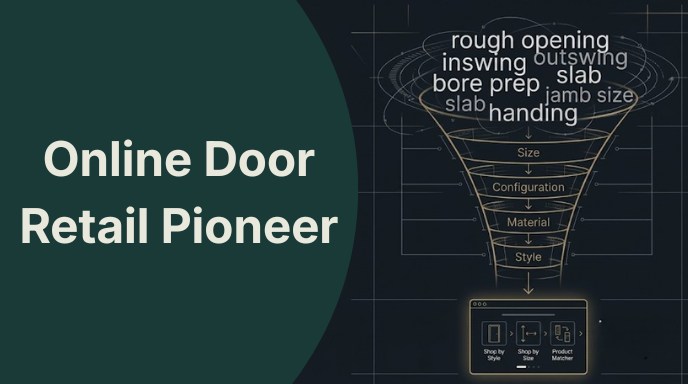
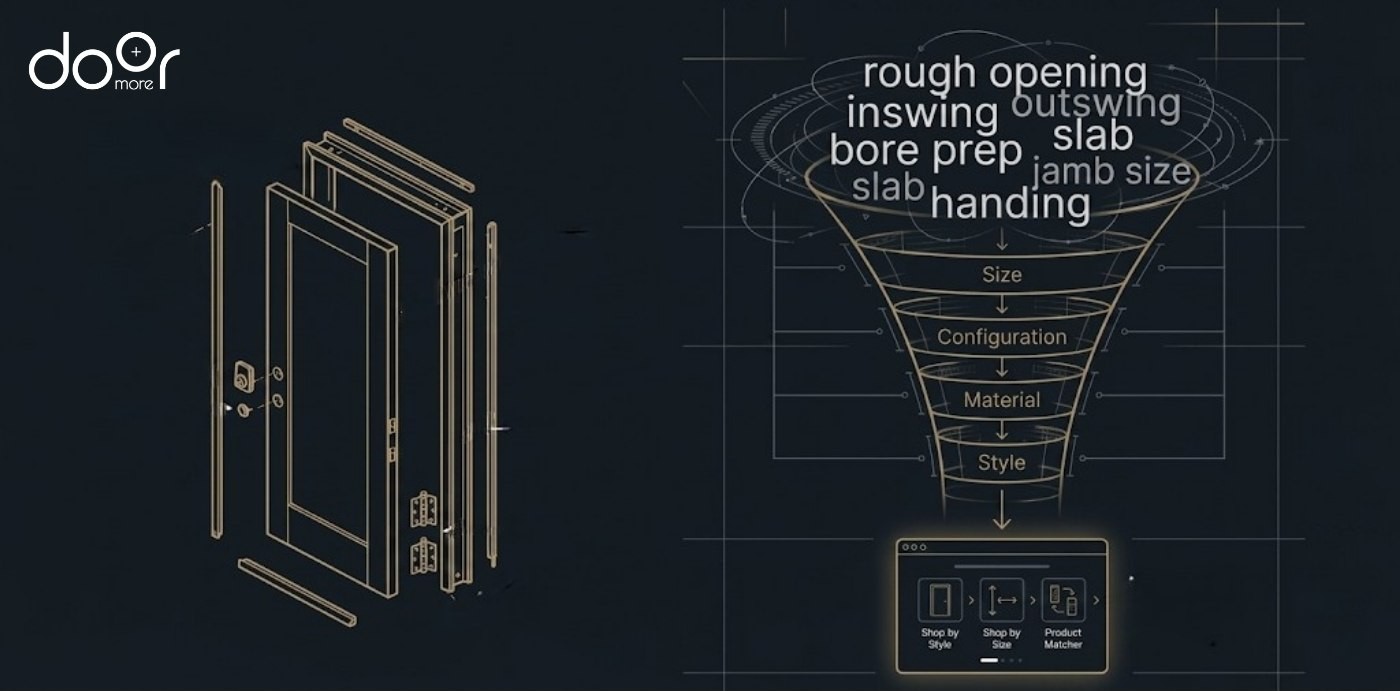
Blog banner graphic titled Online Door Retail Pioneer featuring a technical product specification and e-commerce configuration funnel diagram.
Door & Window Market Magazine DWM Logo November-December 2013 Issue

Door and Window Market (DWM) magazine recognized US Door & More Inc as an online distribution pioneer in its December 2013 issue.

"DWM is a formidable force in the fenestration industry. Manufacturers, fabricators, dealers and distributors of doors, windows, moulding and millwork products turn to DWM for information tailored directly to them."

Buying a door online was not always an obvious idea.

For years, doors were products people expected to buy through showrooms, lumberyards, local dealers, and trade counters. Customers wanted to see the material, confirm the size, understand the swing, check the frame, and talk through the project before making a major purchase.

Many people in the industry believed premium doors were too complex, too fragile, and too project-specific to be sold confidently online.

Door & More helped change that expectation.

When Door and Window Market magazine recognized US Door & More Inc as an online distribution pioneer in its December 2013 issue, the recognition reflected more than early participation in e-commerce. It reflected the work of making a difficult product category easier to understand, compare, deliver, receive, and support online.

Doors are unusually detailed retail products. A wrong size, handing, bore prep, jamb detail, swing direction, or configuration can create an expensive project problem. Shipping is difficult. Freight damage can be complicated. Manufacturers also needed confidence that online retail could represent their products properly.

Door & More helped pioneer online door retail by working through those challenges directly.

Solving the Complexity of Door Shopping Online

One of the biggest challenges in online door retail was customer confidence.

A door purchase involves details many customers do not handle every day. Terms such as rough opening, inswing, outswing, bore prep, slab, prehung unit, jamb size, handing, and swing direction can quickly become confusing.

For a homeowner, one misunderstood detail can lead to the wrong product. For a contractor or designer, the wrong configuration can delay an installation and affect the wider project schedule.

Door & More approached this challenge by making the website work more like a guided buying experience.

Instead of asking customers to sort through a large catalog on their own, the company developed shopping paths that helped organize the selection process. More Ways to Shop gave customers a clearer way to narrow options by the characteristics that mattered most, such as size, configuration, material, style, and other door features.

This was not only a convenience. It was a way to reduce guesswork.

By helping customers move from a broad search to a more focused set of options, Door & More made a technical product category feel more manageable. Customers could browse with more structure, review relevant products, and compare door options with better context before making a decision.

That shift was central to the company's early role in online door retail. Door & More did not simply place doors on a website. It helped build a more practical path for customers to understand, compare, and select them.


Making Door Selection Easier with More Ways to Shop
More Ways to Shop helped address one of the hardest parts of buying doors online: narrowing the field.

A customer may begin with a general idea. They may know they want an exterior door, a modern interior door, a wood door, a fiberglass door, or a specific size. But the full decision usually involves several layers of selection.

Door & More helped make that process more organized.

Through guided shopping paths and filtering, customers could focus on doors that matched the characteristics they wanted. That structure helped reduce irrelevant browsing and made the catalog easier to navigate.

The value was in helping customers reach the right products faster.

That kind of organization matters in a category where visual style, material, size, application, and configuration all influence the final decision. A better browsing experience helps customers feel less overwhelmed and more informed.

Helping Customers Compare Door Options
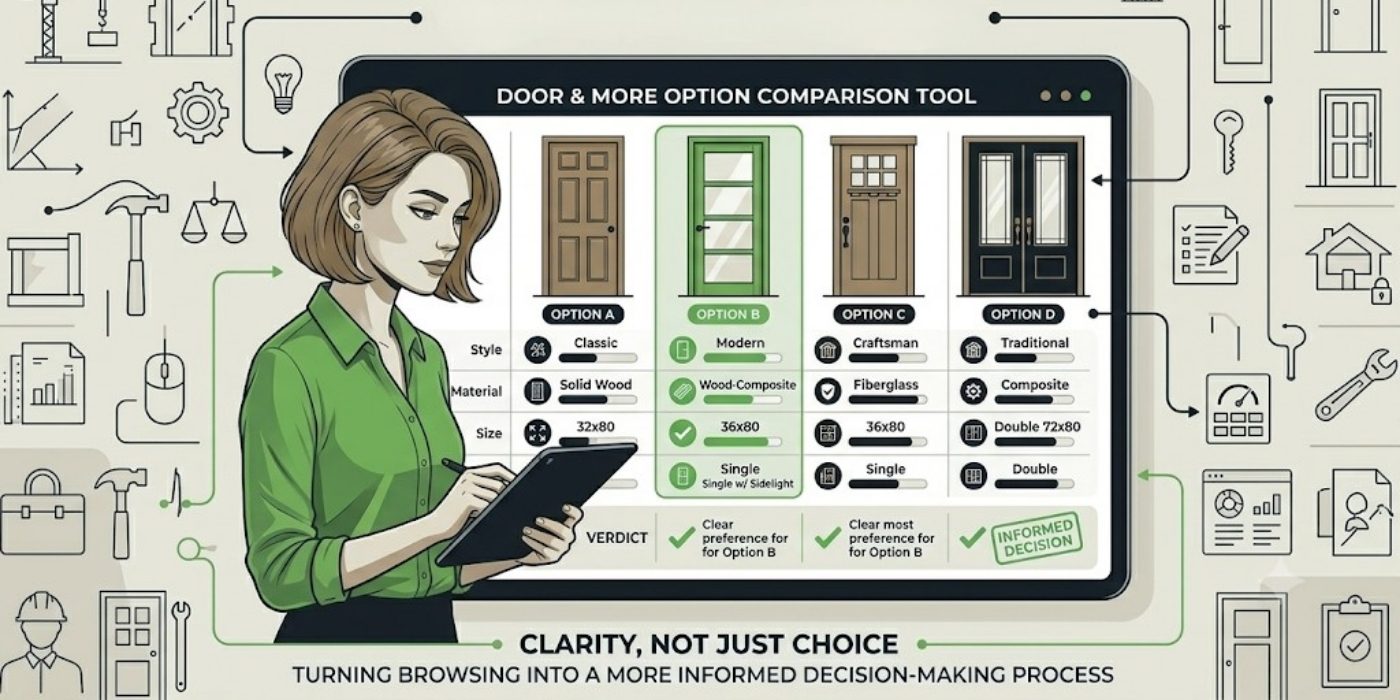
Door shopping often comes down to comparison.

A customer may be choosing between two styles, two materials, two sizes, or two configurations. Without a clear way to review those differences, it can be difficult to decide which door is the better fit for the project.

Door & More supported this process by helping customers evaluate options more clearly before making a selection.

That mattered because door buyers do not only need choice. They need clarity. A well-organized online experience helps customers understand how one option differs from another and why a particular door may be better suited to the opening, design goal, or application.

This helped turn online door shopping from simple browsing into a more informed decision-making process.

Reworking the Freight Problem

The next major challenge was logistics.

The e-commerce world was not built around large, heavy, fragile building products. Doors are difficult to handle, expensive to ship, and vulnerable to damage if they are not packaged and moved properly.

Residential delivery made the challenge even harder. Many freight systems were designed around commercial docks, not neighborhood deliveries. A customer ordering a door to a home needed a delivery process that accounted for size, weight, timing, access, unloading, and inspection.

Door & More helped make online door shipping more practical by treating freight as part of the customer experience.

The company worked through the realities of residential LTL freight, including scheduled delivery, liftgate needs, clearer receiving expectations, and stronger packaging practices. Crating and packaging standards mattered because the product had to arrive in good condition, not simply leave the warehouse correctly.

Door & More also helped make disassembled door shipping a more practical online retail solution where appropriate.

By shipping slabs, jambs, hardware, and related parts in a more efficient format when suitable, the freight footprint could be reduced. This helped control shipping complexity while lowering the risk of frame damage during transit.

That was a major part of making doors viable as an online product category. Door & More had to solve both sides of the experience: how doors were selected online and how they reached customers safely.


Building Stronger After-Sales Support

High-value e-commerce creates a different kind of responsibility after the sale.

A damaged or incorrect door cannot be handled like a small parcel. Doors are large, project-critical, and often connected to construction timelines. When something goes wrong, the solution needs to be accurate, documented, and practical.

Door & More responded by building a more disciplined after-sales process. Customers were guided to inspect freight before signing the delivery paperwork. This helped protect the customer and the company by making sure visible freight damage could be identified and documented at the right time.

The company also developed a more diagnostic approach to support.

Instead of assuming every issue required a full replacement, Door & More could review photos, speak with customers, identify the actual problem, and determine whether a replacement part, freight claim, adjustment, or another solution was the right path.

That mattered because door issues can come from several causes. Some are related to freight damage. Some may involve a manufacturing concern. Others may be connected to measurement, site conditions, handling, or installation.

By using photo review, verification, and careful diagnosis, Door & More helped make after-sales support more accurate and practical.

That kind of infrastructure is part of what made online door retail sustainable.

Earning Manufacturer Trust
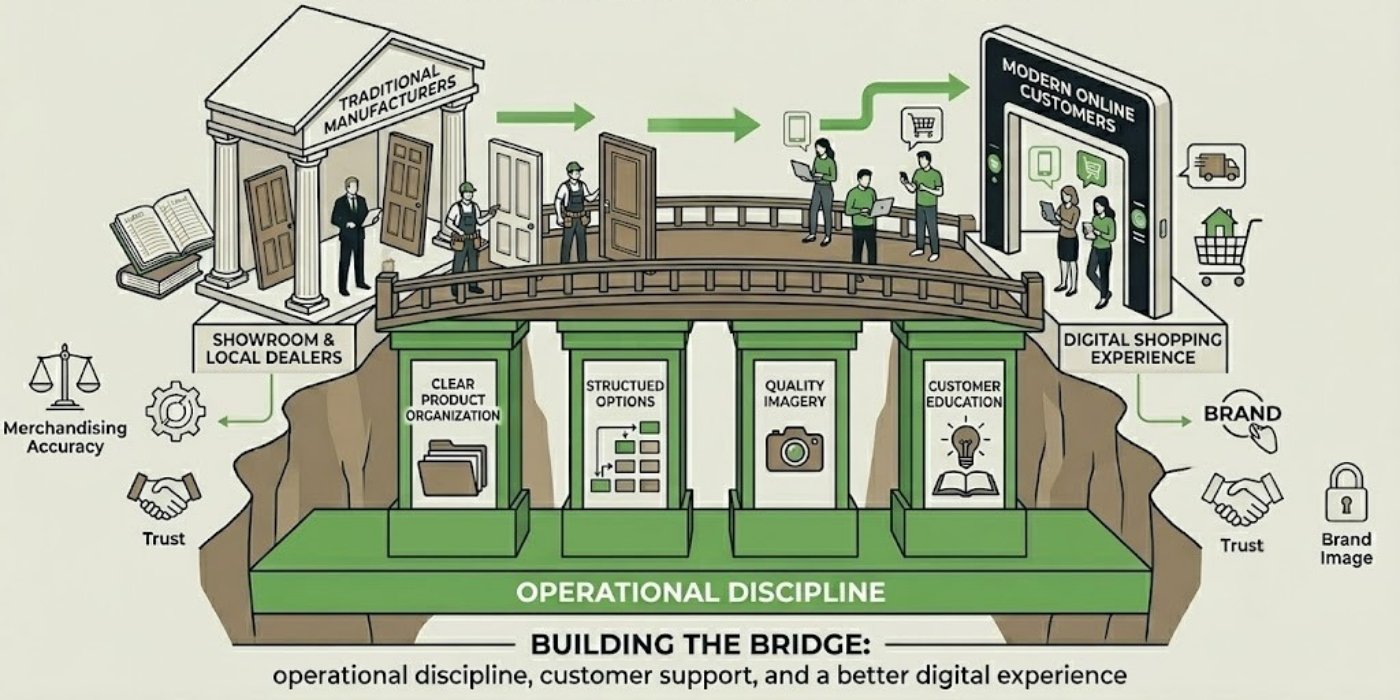
Another major challenge was changing industry culture.

Many door manufacturers came from a showroom-based sales environment. Premium doors were traditionally presented through physical displays, local dealers, and established trade relationships. For some manufacturers, online selling raised real concerns about product representation, customer understanding, brand image, and the quality of the buying experience.

Door & More had to earn that trust.

The company showed that digital retail could support premium products when the experience was built carefully. Clear product organization, structured options, quality imagery, customer education, and accurate merchandising helped prove that online presentation could be more than a basic listing page.

It could become a controlled, informative, and scalable way to introduce customers to the right doors.

Over time, Door & More helped build a bridge between traditional manufacturers and modern online customers. That bridge was not built through hype. It was built through operational discipline, customer support, and a better digital shopping experience.

A Blueprint for Online Door Retail

Door & More's legacy in online door retail came from solving the hard parts of the category.

The company helped customers navigate complex product decisions. It made online door selection more organized through More Ways to Shop, guided shopping paths, filtering, and comparison support. It worked through the freight realities of shipping large building products to residential addresses. It created stronger after-sales systems to handle receiving issues, documentation, replacement parts, and claim verification with more accuracy. It also helped manufacturers see that online door retail could protect and expand the way their products reached customers.

That is why the company's early recognition as an online distribution pioneer still matters.

Door & More was part of the shift that made buying doors online more practical, more organized, and more trustworthy. The work was not only about selling products through a website. It was about building the systems that made online door shopping possible for a category many believed could not move confidently into e-commerce.

Continuing the Standard Today
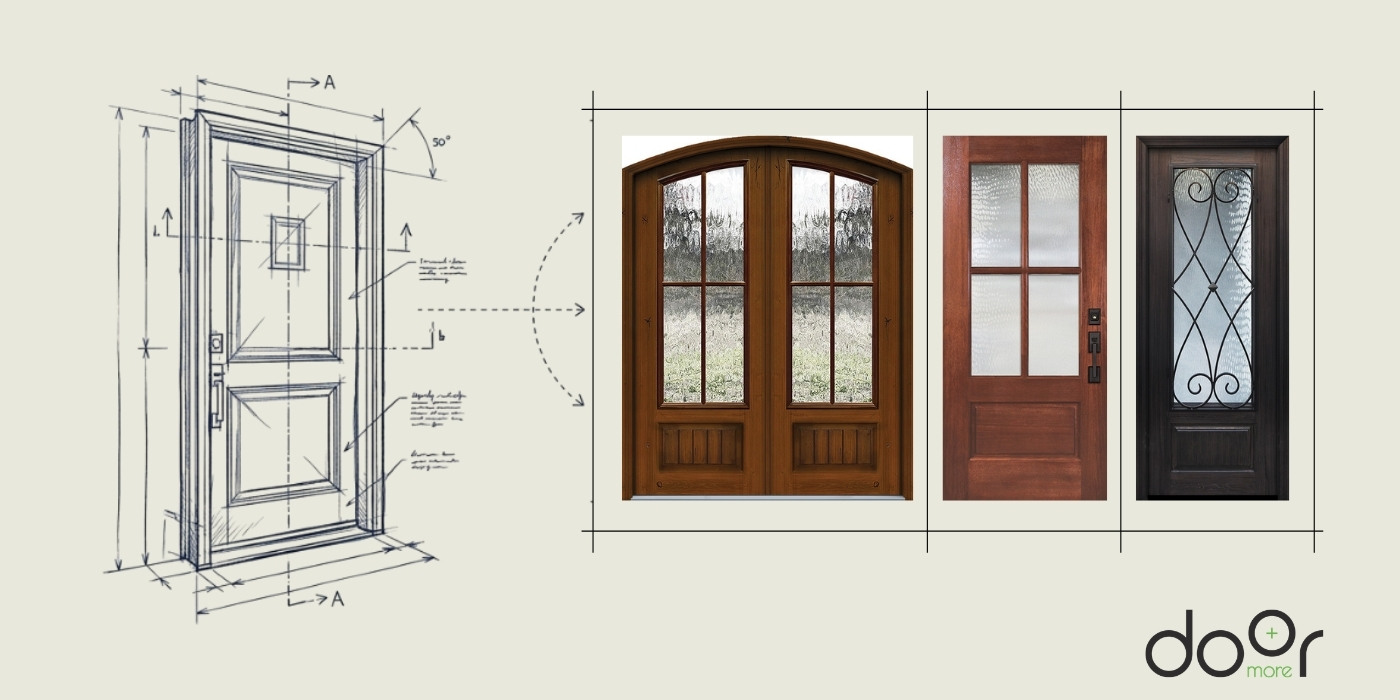
The same principle continues to guide Door & More today: make door selection clearer, easier, and more accessible for customers.

Whether a project calls for interior doors, exterior doors, modern styles, traditional profiles, wood doors, fiberglass doors, French doors, or barn doors, customers should be able to browse with confidence and compare options with better information.

Door & More's history as an online distribution pioneer is not only a milestone from the past. It is the foundation of the company's ongoing approach to online door retail.


Related Door Shopping Paths

After learning how Door & More helped shape online door retail, customers can continue exploring the shopping experience through related product paths.

Customers can browse broader product families through Interior Doors and Exterior Doors. They can also use shopping paths such as Shop by Size and Shop by Configuration to narrow the selection around the details that matter most.

Ready to Browse Door Options?

Explore Door & More's online selection of interior and exterior doors to find options that match your project, style, and installation needs.

Start with Interior Doors or Exterior Doors when you are ready to compare available product families. If you already know the characteristic you want to shop by, use paths such as Shop by Size or Shop by Configuration to narrow your options more efficiently.

FAQ

Online distribution pioneer refers to Door & More's early role in helping customers search, compare, and purchase doors through an online platform. The company helped make online door shopping more practical by improving product organization, comparison support, freight handling, and after-sales processes.

Buying doors online was difficult because doors involve many technical details, including size, swing direction, handing, material, bore prep, jamb size, and interior or exterior use. Customers also needed confidence that large and fragile products could be shipped safely to residential addresses.

Door & More made online door shopping easier by developing guided shopping paths, filtering, and comparison support. These features helped customers narrow large product selections and compare door options before making a decision.

Doors are large, heavy, and vulnerable to damage during shipping. Residential freight delivery also requires careful coordination, including scheduling, unloading, inspection, and packaging. Door & More helped address these challenges through freight protocols, packaging practices, clearer receiving expectations, and more efficient shipping approaches where appropriate.

Door & More supported customers through receiving procedures, photo-based issue review, and diagnostic support. This helped identify whether an issue required a replacement part, freight claim, adjustment, or another solution, making the after-sales process more accurate and practical.
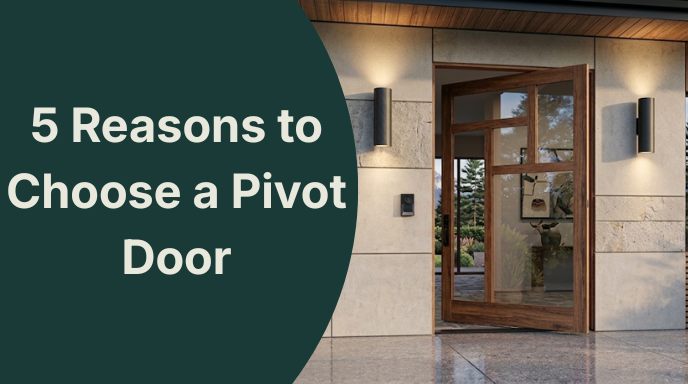
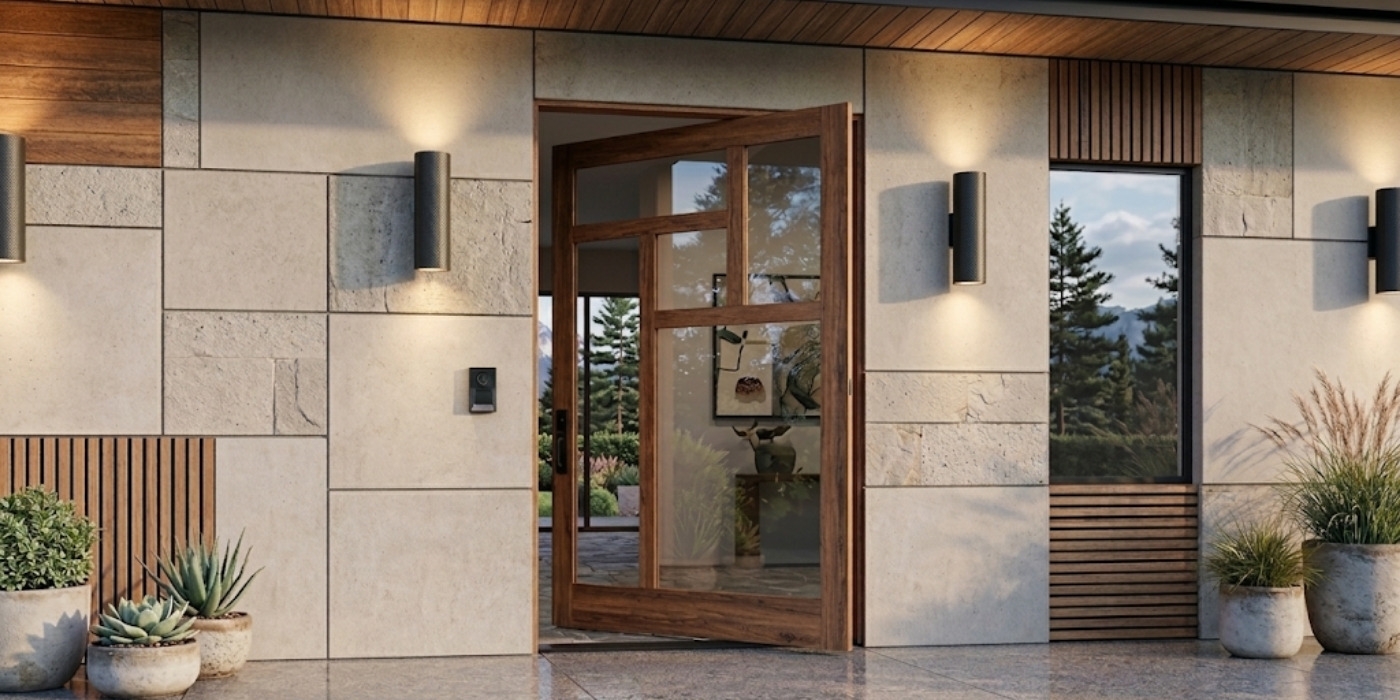
5 Reasons to Choose a Pivot Door

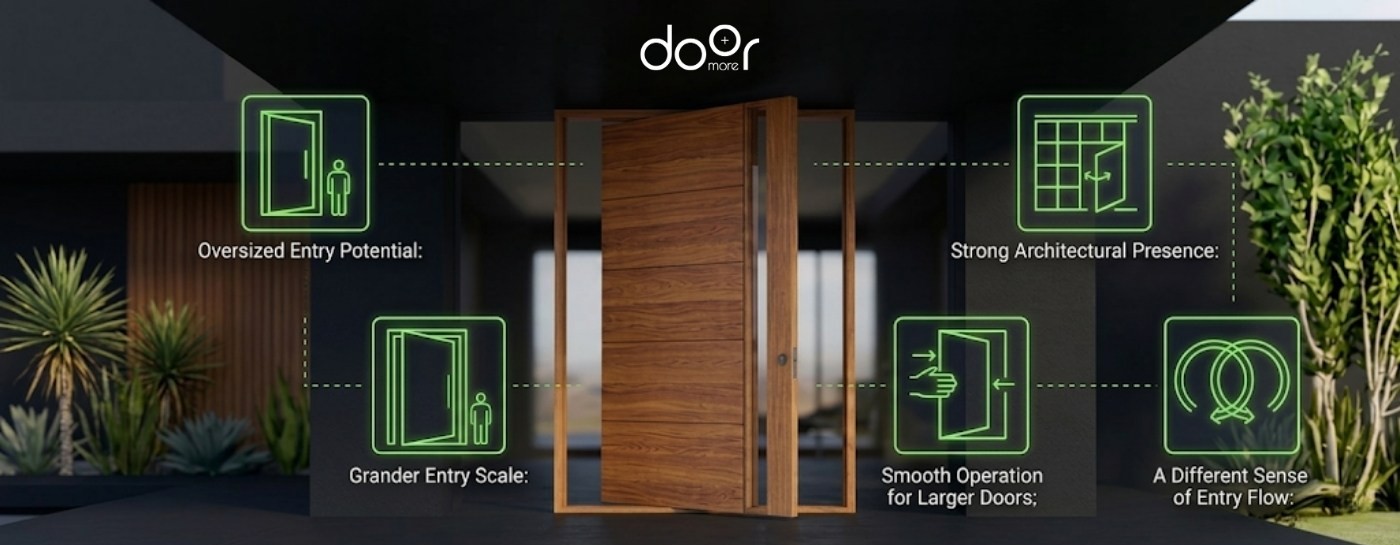
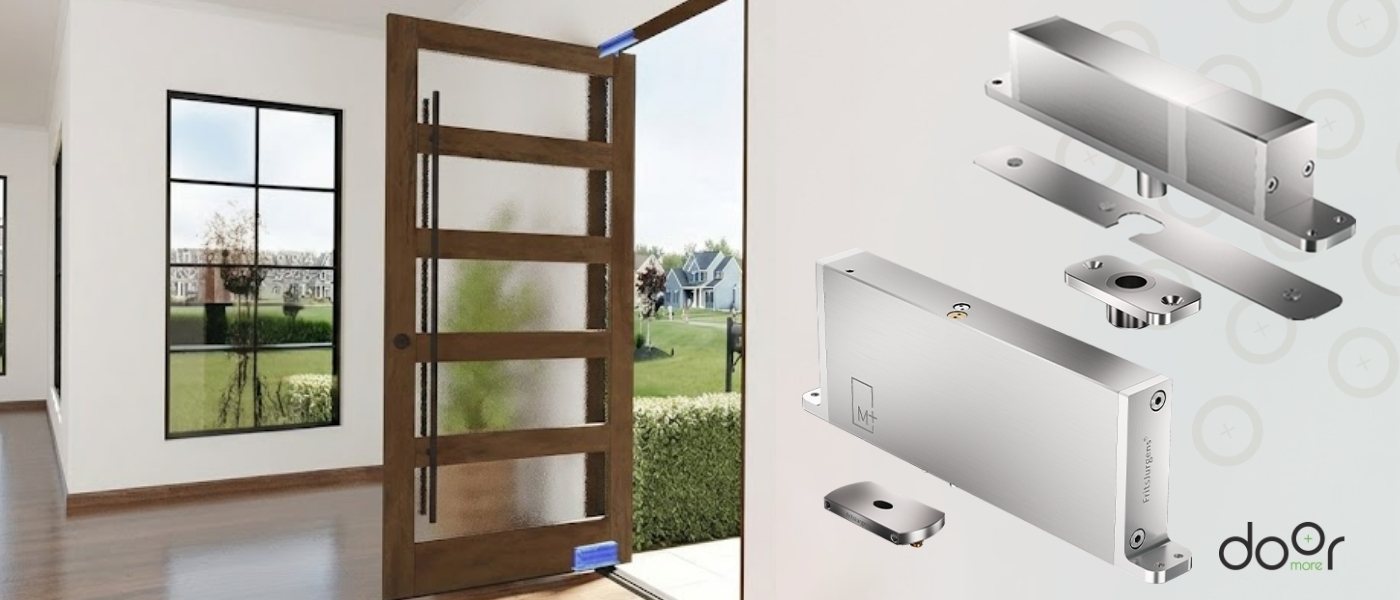
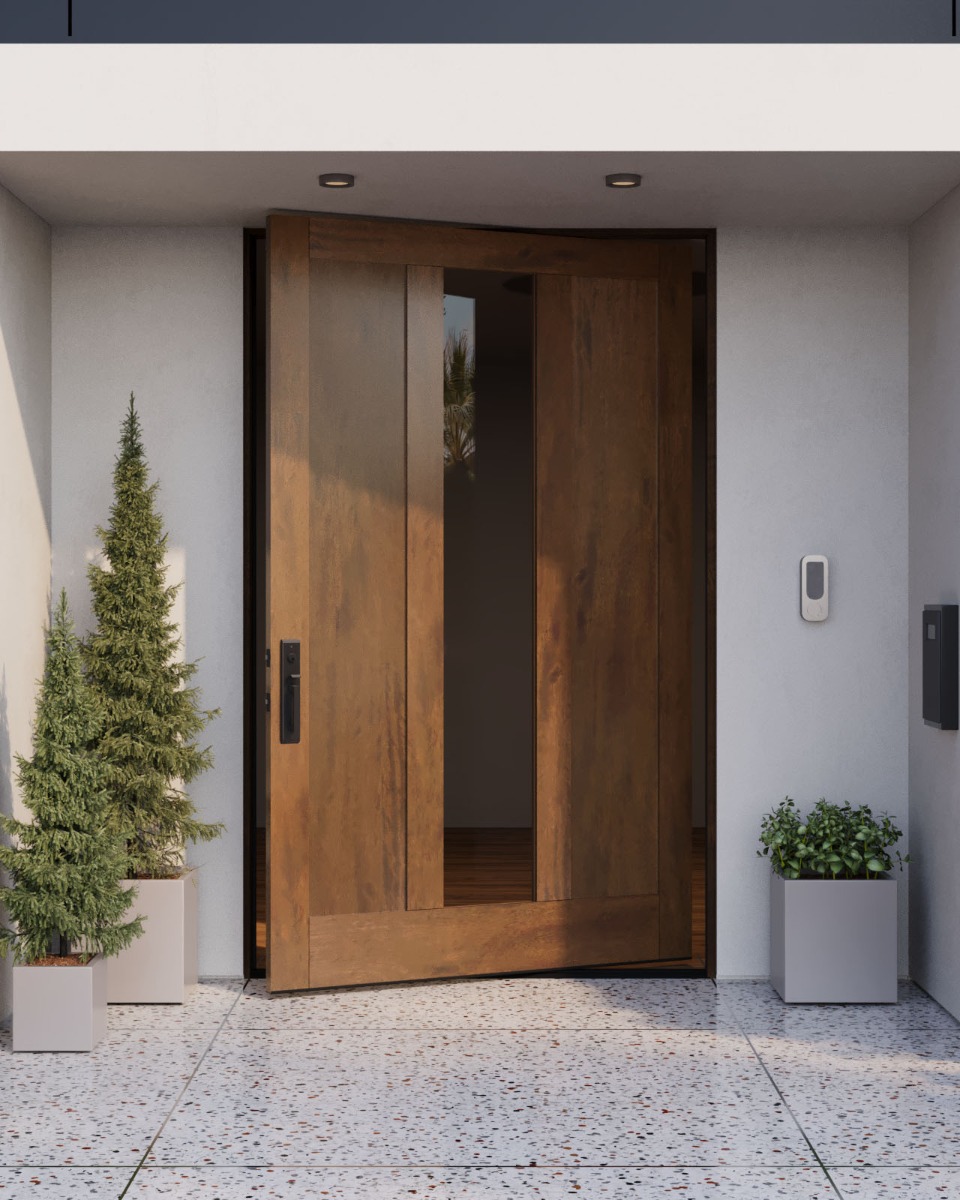
Blog banner graphic titled 5 Reasons to Choose a Pivot Door featuring a modern wood and glass pivot front door entrance.

What a pivot door is and how it works

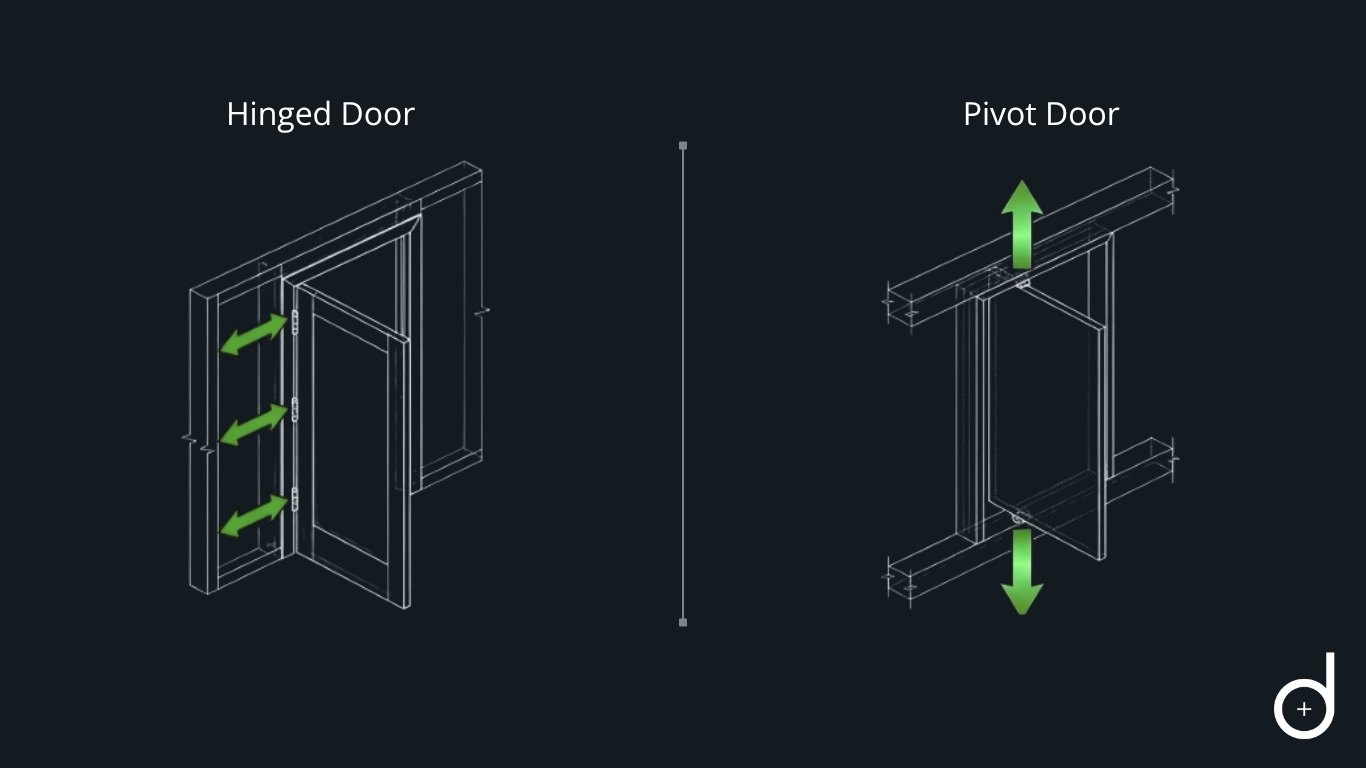
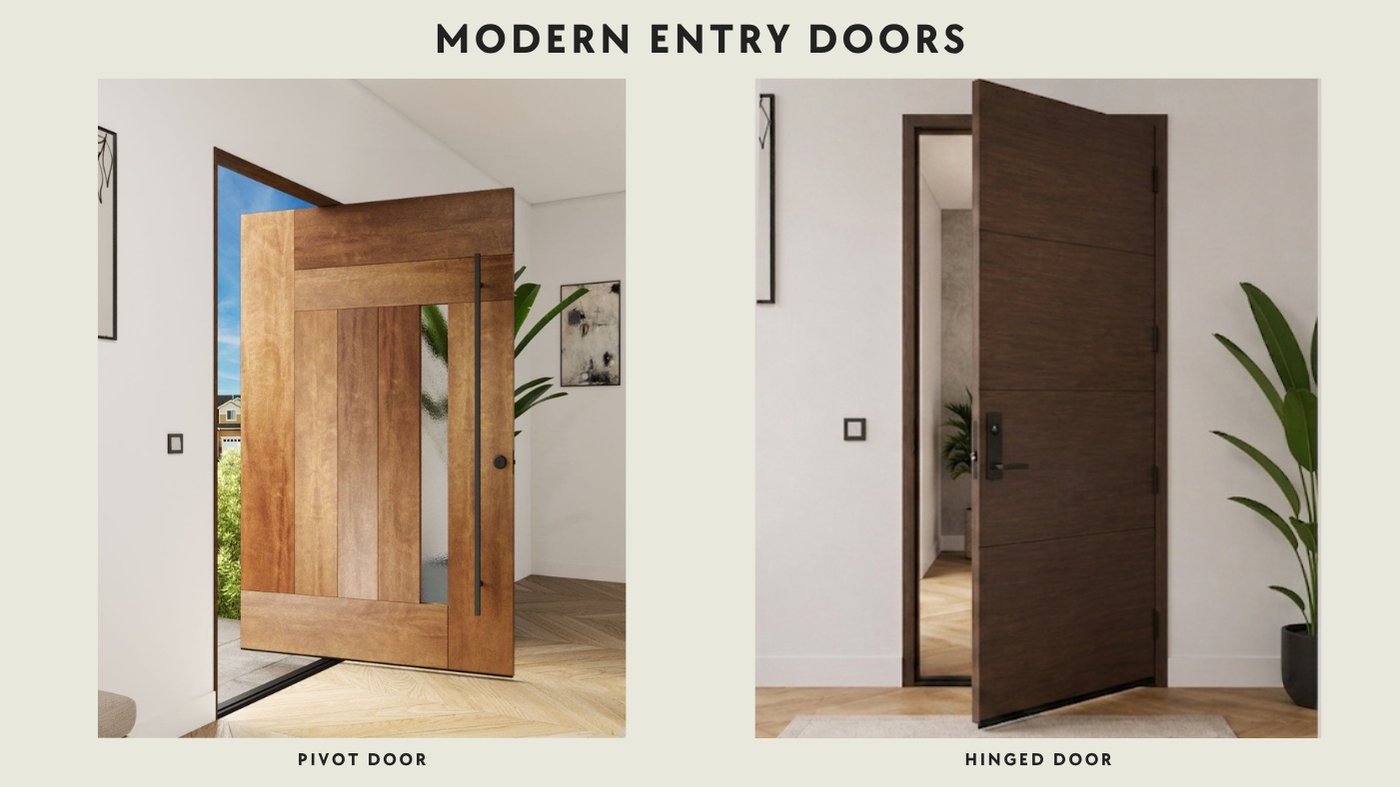
A pivot door rotates on a top and bottom pivot point instead of side-mounted hinges. The pivot point is usually set in from the door’s edge (often 100–300 mm, approx. 4–12 inches), which changes both how the door moves and how the entry feels.

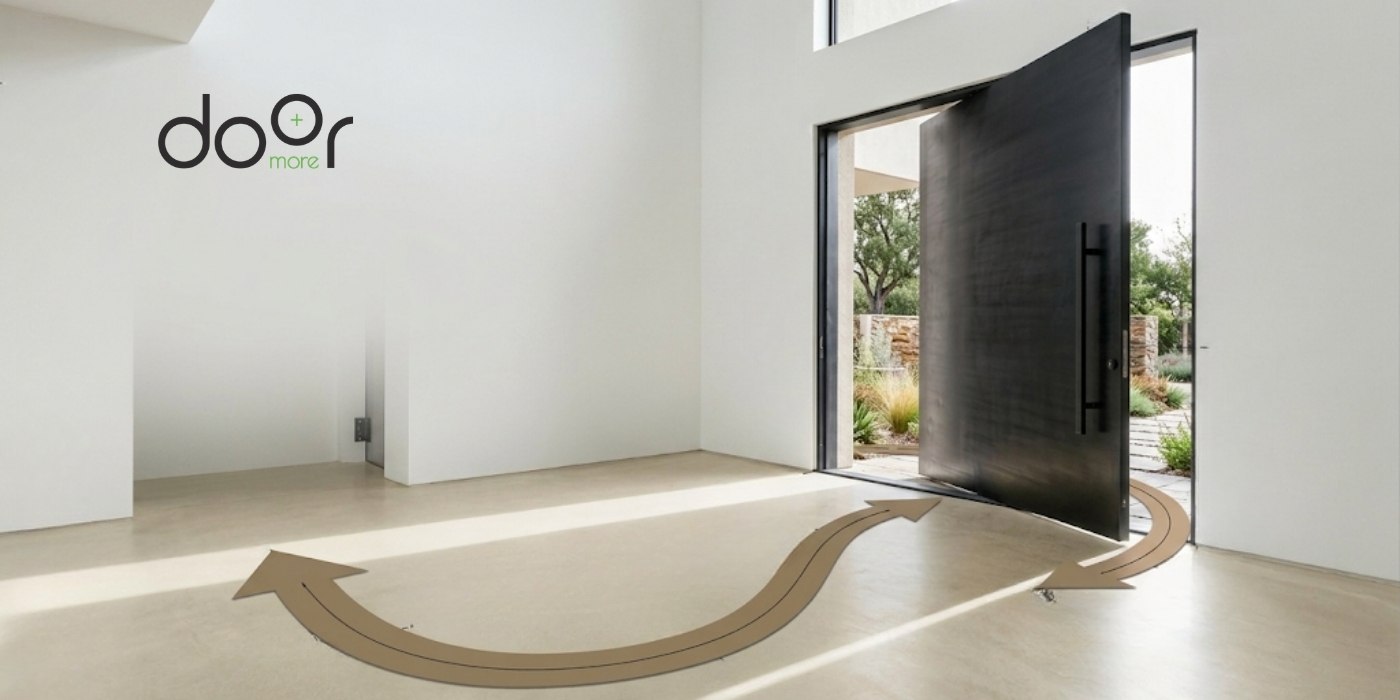
With an offset pivot, the door creates a split swing: part moves inward and part moves outward. The exact split depends on pivot placement.

This split-swing movement gives the door a surprisingly weightless, balanced feel, even with heavy, oversized panels. It is a key reason why pivot doors are a staple in modern, high-end design.

Explore pivot door systems

Pivot vs hinged doors: the difference that matters

That fundamental difference in movement affects a few key architectural decisions:

  • Weight and width: Pivot doors are commonly used for larger openings when the structure and hardware are designed for the load.
  • Clearance planning: The rotation creates a wider arc, so you must account for clearance space on both the interior and exterior of the threshold.
  • Grand scale: Pivot systems can support wider, heavier panels when the structure and hardware are properly designed.
  • Design flexibility: Offset pivots allow asymmetric proportions that are harder to achieve with standard hinges.
  • Main tradeoff: In tight entries, the larger swing arc can make a pivot door the wrong fit.

Who a pivot door is for

A pivot door is usually a strong fit if you want:

  • An oversized front door that feels intentional Often used for doors over 48 inches wide when the door, hardware, and structure are properly designed.
  • A statement entrance Scale and motion make the door part of the architecture.
  • A more custom-looking facade Offset pivots support asymmetric, more refined compositions.
  • A grander, more generous entry feel Pivot doors can support larger panels, making the entry feel more expansive when properly planned.
  • A more architectural opening motion The split swing can feel dynamic when space allows.

Before choosing: Confirm the clearance and swing arc. The right fit feels effortless; the wrong one creates daily friction.

When to skip a pivot door

Pivot doors are not the best choice for every entry.

If your entry is tight, the wider swing radius can interfere with walls, furniture, planters, steps, or foot traffic. Because the door may move both inward and outward, both zones need to stay clear.

If you need maximum airtightness or weather sealing, evaluate carefully. Pivot doors can have slightly larger gap tolerances than compression-sealed hinged doors, which may matter in exposed exterior conditions.

5 reasons homeowners love pivot doors

Reason 1: Oversized entry potential

Pivot doors are often chosen when a standard door would look undersized on a wide facade or tall entry wall. In the right application, pivot doors can exceed 8 feet tall and reach 10 feet or more, with widths beyond 48 inches when properly engineered.

Larger scale helps the entry feel proportionate and can reduce the need for sidelites—but it increases the importance of clearance planning.

Reason 2: Strong architectural presence

A pivot door turns the entrance into a design feature. Its scale, motion, and proportions create a stronger visual moment than a typical hinged door. Offset pivot placement also allows asymmetry, improving facade rhythm and making the opening feel intentional.
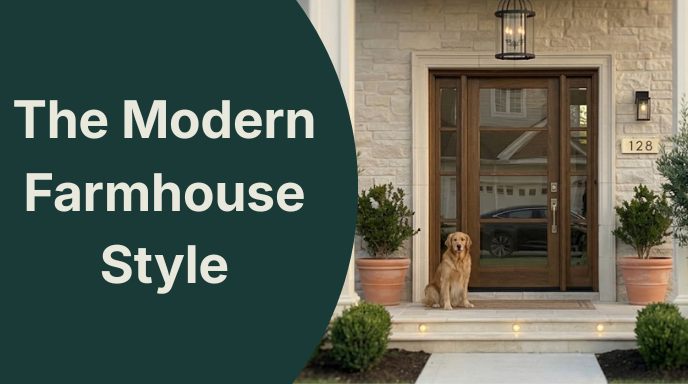
Compare modern entry door styles →

Reason 3: Grander entry scale

Pivot doors are often chosen when the goal is a more substantial entry experience, not just a wider door. Because the weight is carried through the pivot system, they can support larger and heavier panels when properly engineered. This helps the entrance feel more expansive and intentional.
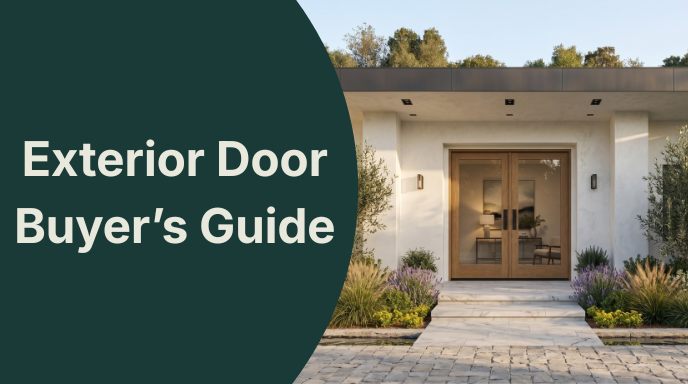
The usable clear opening still depends on total door width and pivot offset, so plan the pivot placement early if passage width matters.

Reason 4: Smooth operation for larger doors

With the right system, large pivot doors often feel easier to operate than expected. The weight is balanced around the pivot axis instead of hanging from hinges. Hardware quality matters—alignment and control determine how smooth the motion feels over time.

Reason 5: A different sense of entry flow

The split swing changes how the entry is experienced. Part of the door moves inward and part outward, affecting both sides of the opening. In open foyers, this can feel sculptural and refined. In tight entries, it can create conflicts.

The common mistake is choosing size first and checking the swing arc later. With pivot doors, fit should lead.

Practical checks before you commit

Use these fit validation checkpoints to confirm a pivot door will feel great after the first week, not just on day one.

  • Clearance and swing arc: Map the full rotation and protect both swing zones.
  • Door size: Larger doors increase both impact and planning complexity.
  • Floor anchoring and structure: Loads concentrate at the pivot point—support must be adequate.
  • Hardware match: Choose a system engineered for your door size and weight.
  • Code and ratings: Confirm local requirements for exterior performance.

FAQ

They rotate on a top and bottom pivot point. With an offset pivot, part of the door swings inward and part outward.

Yes. They are commonly used for oversized entrances when the door, hardware, and structure are properly designed.

Not always. The clear opening depends on total door width and pivot offset, so it should be planned early.

Often, yes. The split swing affects both interior and exterior zones, so clearance must be checked on both sides.

Avoid one when the entry is too tight for the swing arc or when maximum weather sealing is the top priority.

Not inherently. Security depends on the door construction, locking system, hardware quality, and installation.

Yes, but exposure matters. Review sealing, thresholds, drainage, and hardware ratings before specifying one.

How to Choose a Wood Entry Door

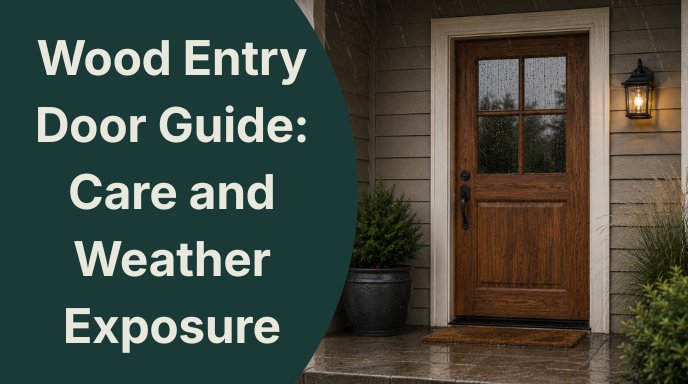
A high-quality wooden front door exposed to wet weather with text reading "Wood Entry Door Guide: Care and Weather Exposure" on a dark green background.

A wood entry door can give the front of a home a warm, natural look. It is often chosen when the homeowner wants an entry door with more visible character than a lower-maintenance material.

Wood also comes with ownership expectations. It is not a maintenance-free material, and exterior conditions can affect how much attention the finish needs over time. Moisture, direct sun, humidity, and regular weather exposure all matter.

For many homeowners, the key question is whether the look, care routine, and exposure around the doorway fit the way the home will be used and maintained.

Why Homeowners Choose Wood Entry Doors

Homeowners often choose wood because it gives the entry a warm, natural character. A wood front door can feel traditional, refined, or rustic depending on the design of the home.

The appeal of wood comes from its surface, grain, finish, and overall presence. These qualities can make the entry feel more crafted than a purely practical door choice.

That said, wood should be approached as a material that rewards attention. The surface and finish need to be watched over time, especially in exterior conditions. When that expectation is clear from the beginning, a wood entry door can be considered for what it does especially well: adding warmth, texture, and character to the front entry.

Consider Weather Exposure Before Choosing Wood

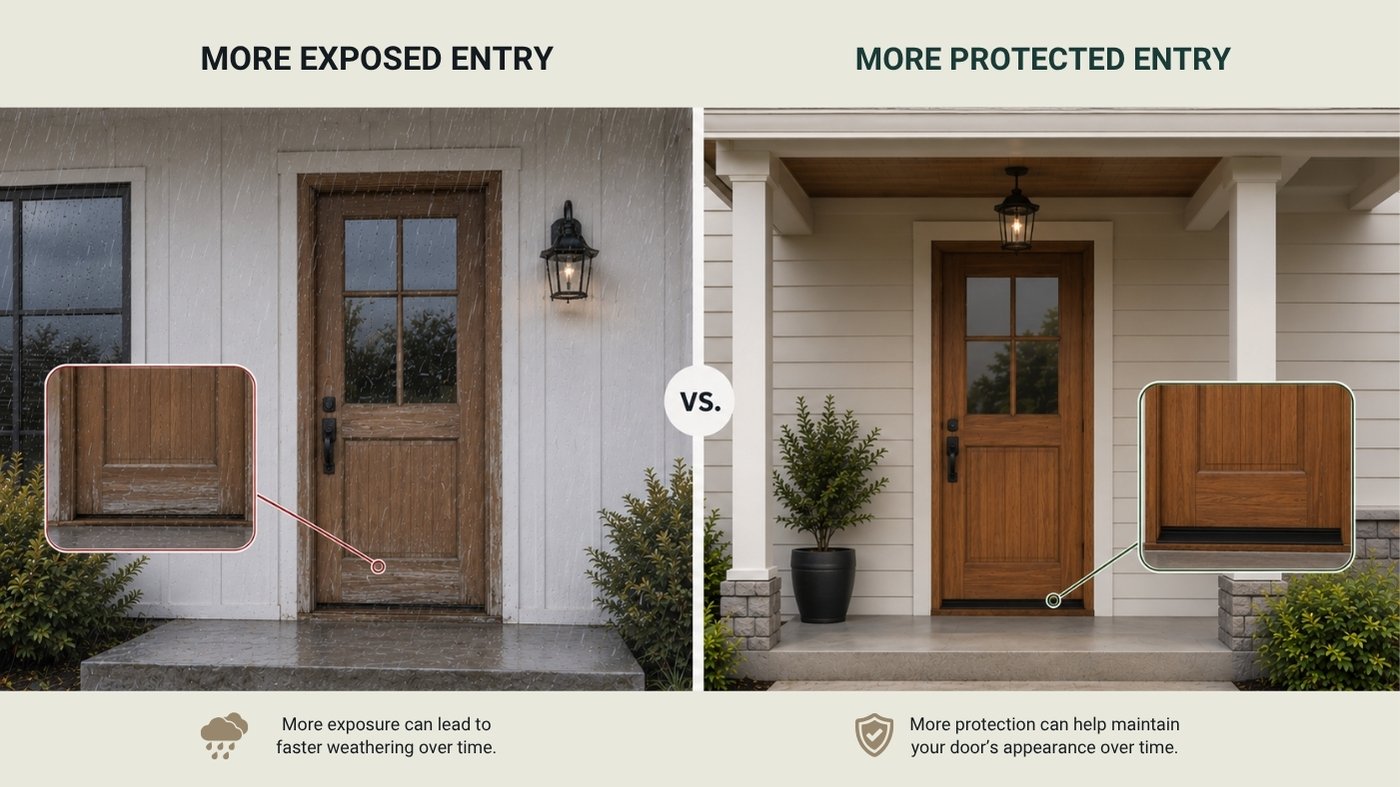
The conditions around the doorway can affect how a wood door performs over time. Moisture from rain, snow, humidity, or gaps can contribute to swelling, warping, finish wear, and in more severe cases, rot. Direct sunlight and ultraviolet exposure can also affect the finish, including fading, finish breakdown, or more frequent maintenance needs.

A protected entry may reduce direct exposure. For example, a doorway with overhead protection may receive less direct sun and rain than a fully exposed entry. However, care needs still depend on the door, finish system, climate, orientation, and local conditions.

A shaded entry in a humid climate may face different concerns than a sunny entry in a dry climate. The practical takeaway is to look at the actual doorway, not just the door material. Sun, moisture, airflow, and protection all shape how the door should be maintained.

Understand Wood Door Maintenance Expectations

A wood entry door usually needs more finish attention than a lower-maintenance material such as fiberglass, especially where moisture, sun, and regular exposure are factors. That does not mean every wood door follows the same maintenance schedule.

Recoating or refinishing timing can depend on exposure level, direct sunlight, harsh weather, finish type, and local climate.

Care starts with keeping the surface clean and watching for visible changes. Use mild soap and water with a soft cloth or sponge. Avoid abrasive cleaners and harsh chemicals, then dry the door after cleaning.

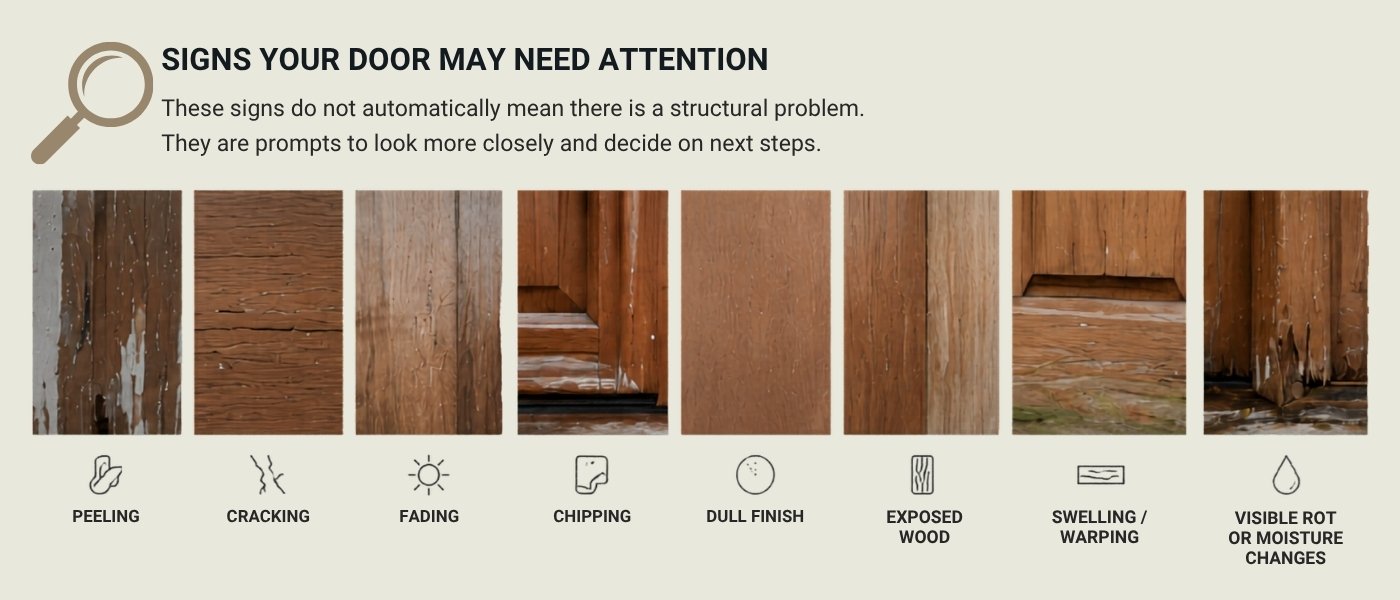
Peeling, cracking, fading, chipping, a dull finish, exposed wood, swelling, warping, visible rot, or moisture-related changes can all suggest that the door needs attention. These signs do not automatically mean there is a structural problem. They are prompts to look more closely, consider whether finish care is needed, and decide whether the condition should be evaluated by a professional.

Know When to Get Professional Help

Some visible changes can be handled as part of normal finish care, but more serious signs should be evaluated early.

Consider professional evaluation when a wood door shows visible rot, significant swelling or warping, sticking that affects operation, exposed wood, failed finish, or water-related deterioration.

These conditions can overlap with normal wear, exposure issues, finish failure, or moisture concerns. A professional can evaluate the door in context, so the homeowner does not have to guess at the cause or attempt repair steps.

Compare Wood with Lower-Maintenance Options

Wood is often chosen for warmth, character, and natural appearance. Fiberglass can be considered when lower maintenance and better moisture resistance are higher priorities in exterior conditions.

If the homeowner wants the look and ownership experience of wood, the main focus should be finish care, exposure, and timely attention to visible changes. If lower maintenance is the deciding factor, it may be worth reviewing broader exterior door material options.

Related Guides and Categories

Use these resources when you are ready to compare door options:

This guide explains wood door care and exposure expectations. The category pages are better suited for browsing door options.

FAQ

Yes. Wood entry doors can be a good choice when warmth, character, and a natural entry look are priorities. They should be chosen with clear expectations for finish care and weather exposure.

Yes. Exterior wood doors generally need more finish attention than lower-maintenance materials, especially when exposed to moisture, sun, and regular weather.

Moisture and sunlight are the main concerns. Rain, snow, humidity, gaps, direct sun, and UV exposure can affect the finish and may contribute to swelling, warping, fading, or more frequent care needs.

Peeling, cracking, fading, chipping, a dull finish, exposed wood, swelling, warping, visible rot, or moisture-related changes can signal that the door needs attention. Sticking, rot, exposed wood, or water-related deterioration should be professionally evaluated.

Use mild soap and water with a soft cloth or sponge. Avoid abrasive cleaners or harsh chemicals, then dry the door after cleaning. Follow any care guidance available for the specific door or finish.

Fiberglass is often considered when lower maintenance and moisture resistance are priorities. Wood may still be preferred for warmth, character, and natural appearance, but it generally requires more finish attention.

Choosing a Front Door for Your Home

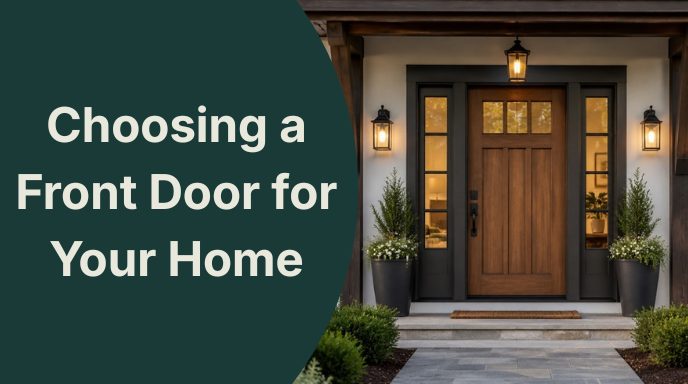
A web thumbnail for "Choosing a Front Door for Your Home" featuring a dark teal header overlay and an architectural render of a modern, black double-door entry with gold hardware and horizontal glass sidelites.

Choosing a front door can feel overwhelming because you are balancing several connected decisions at once. Rather than searching for one “best” option, it helps to work through the decision in a clear order so the final result feels intentional, cohesive, and right for your home.

A practical way to do that is to start with style, then move to configuration, material, glass, and finally proportion and balance. This keeps decisions focused while maintaining a clear overall direction.

Read more

Solid Wood Doors vs. Wood Doors with Glass

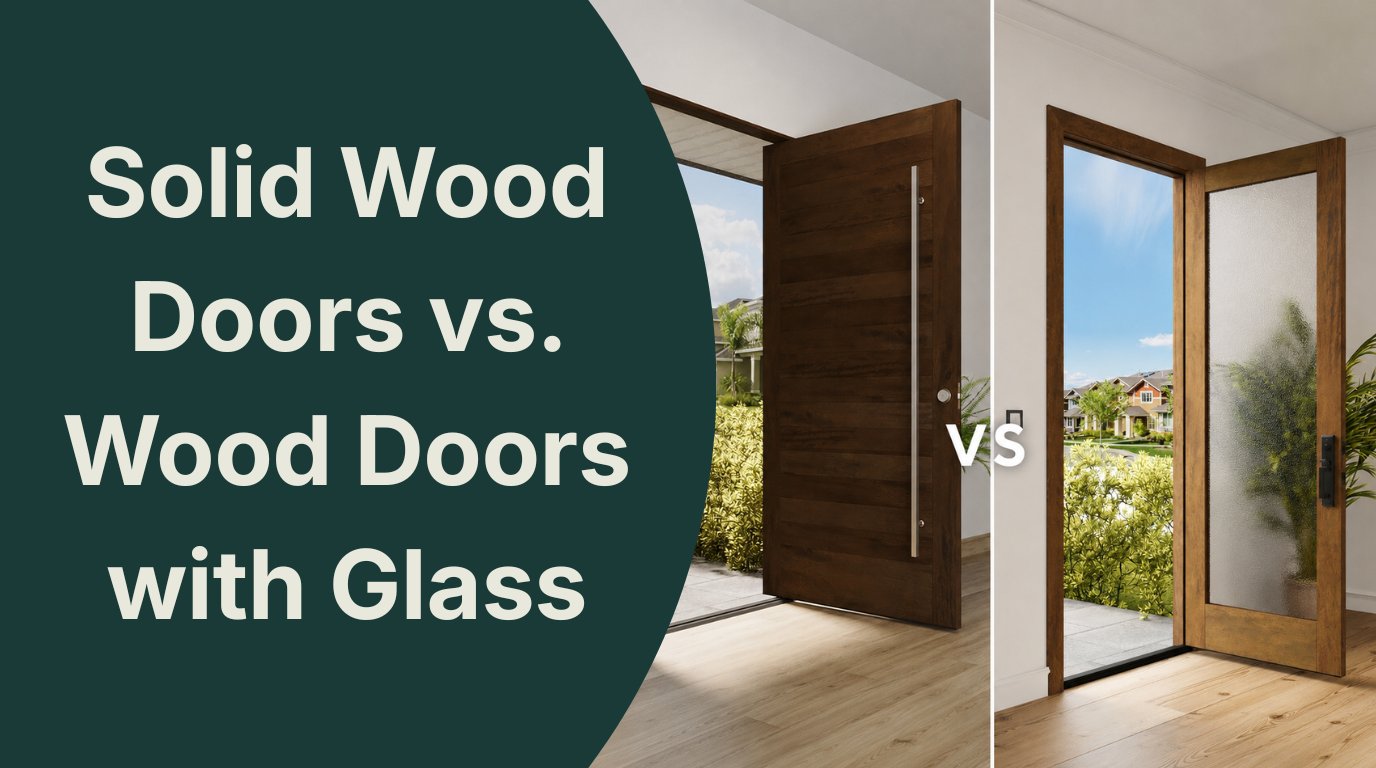
A split-screen comparison graphic showing a solid wood pivot door and a wood door with textured glass, with text reading "Solid Wood Doors vs. Wood Doors with Glass" on a dark green background.

For homeowners comparing solid wood doors vs wood doors with glass, the decision usually comes down to how the entry should feel and function.

A solid wood door can make the entry feel more private, grounded, and traditional. A wood door with glass can bring in daylight, increase visibility, and make the entry feel brighter and more open.

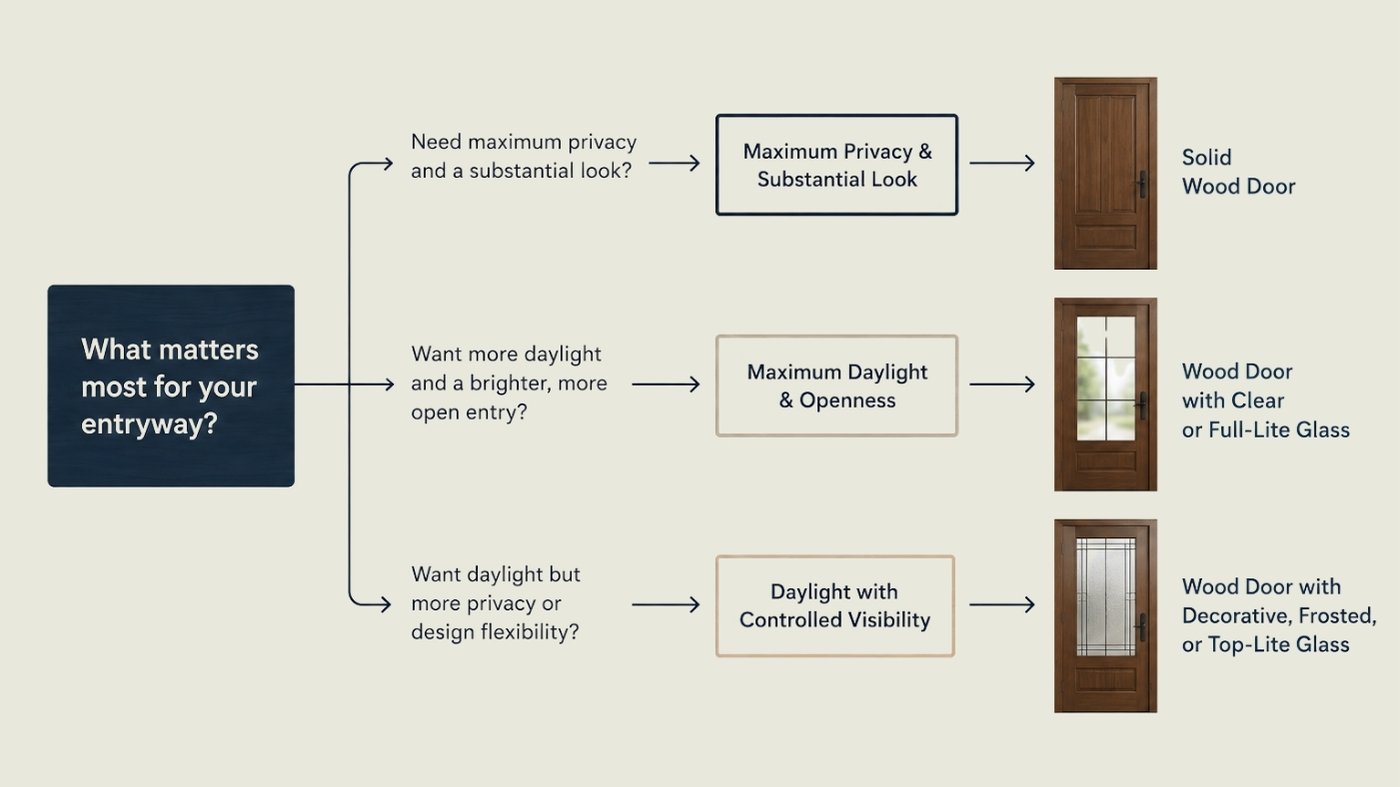
The better fit depends on your privacy needs, daylight goals, glass placement, style preference, finish appearance, and what the door may need over time. Neither option should be treated as the default winner. The right choice is the one that fits the entry, the home, and the level of visibility you feel comfortable with.

Main Differences to Consider

A practical comparison starts with how each option changes the entry in daily use. Solid wood doors and wood doors with glass can both support a strong entry design, but they create different effects.

Decision pointSolid wood doorWood door with glass
PrivacySupports a more closed visual feel.Can increase visibility depending on glass type and placement.
Natural lightKeeps the door surface visually solid.Can admit visible light through the glass area.
VisibilityCreates a more enclosed entry.Can make the entry feel more open.
StyleEmphasizes wood surface, tone, and door shape.Uses glass amount and pattern as part of the door style.
Everyday expectationsOften fits homeowners who want a quieter, more private entry.Often fits homeowners who want more daylight or a brighter look.

The overall look of the entry is shaped by the door surface, glass amount, wood tone, panel shape, and style. The decision is not only about privacy or daylight. It is also about whether the entry should feel more enclosed, more open, more traditional, or brighter.

Privacy and Natural Light

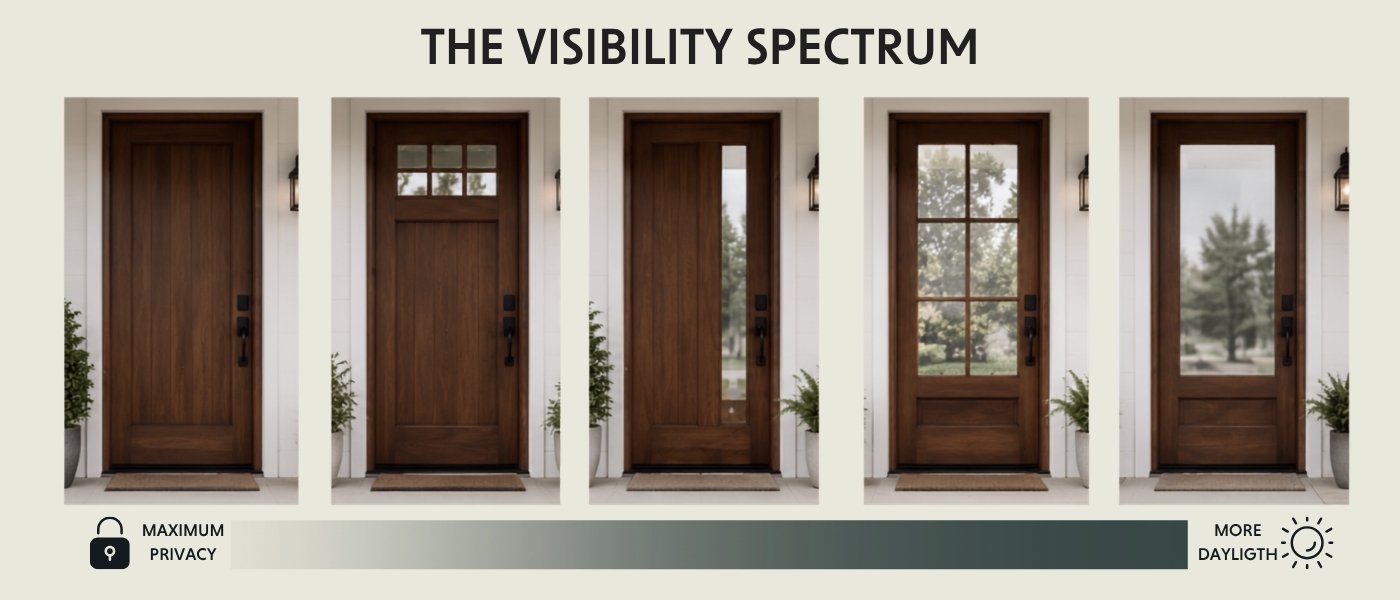
Privacy and natural light are the main tradeoff in this comparison. Glass can admit visible light, but it can also increase visibility depending on the glass type and where the glass sits in the door.

No glass style should be treated as a guarantee of privacy or security. A small glass area near the top of the door may feel different from a tall central glass panel. Divided glass can also change the look by breaking the glass area into smaller parts.

The exact privacy and daylight result depends on the door design and glazing. Rather than thinking in broad categories, ask practical questions:

  • How much daylight do you want at the entry?
  • How much visibility feels comfortable?
  • Does the glass placement support the privacy level you expect?
  • Should the entry feel more open or more enclosed?

For more glass-specific context, review Door Glass.

When a Solid Wood Door May Fit

A solid wood door may be a good fit when you want stronger visual privacy, a more enclosed entry, and a traditional or substantial look.

This can work well for entries where the door faces a sidewalk, street, neighbor, or another area where visibility comfort matters. It can also fit homeowners who prefer the look of a continuous wood surface rather than visible glass.

A solid wood door should not be described as inherently safer, longer lasting, or better for every home. It is best understood as a good fit when privacy and a solid wood look matter most.

When a Wood Door with Glass May Fit

A wood door with glass may be a good fit when you want to add daylight, create a more open entry, or use glass as part of the door’s style.

This can work well for entries that feel dark, narrow, or visually heavy and would benefit from a brighter look. It can also fit homeowners who like decorative glass, divided glass, or a door design where glass is part of the overall style.

A wood door with glass should not be assumed to perform better or worse on its own. The result depends on the glass size, placement, glazing, and specific door design.

Other Factors to Keep in Mind

A few related factors can shape the decision, but they should stay product-specific.

Energy comfort should be treated carefully. Doors, windows, and skylights can affect heating and cooling loads, and rated products may be compared with measures such as U-factor and SHGC. This page should not claim that one door type is broadly more efficient than the other.

Exterior wood doors also call for finish and exposure awareness. Sun, moisture, and weathering can affect exterior wood finishes over time. This is not a maintenance tutorial, but it is a useful reminder that exposure and finish direction can affect what the door may need over time.

Security language should stay focused on privacy and visibility comfort. A solid wood door should not be framed as inherently safer, and a door with glass should not be framed as unsafe.

Glass terms such as clear, privacy or frosted, decorative, divided-lite, full-lite, and blinds-glass can be useful when comparing styles. Treat those as examples, not as a claim about full catalog availability.

Wood species and finish direction can also shape the look of the door. For example, mahogany and paintable or smooth paths may be mentioned as appearance or finish cues, not as species rankings or durability claims.

Next Steps

Once you know whether privacy, daylight, glass placement, or entry feel matters most, you can move from comparison to browsing.

For broader wood entry options, review Wood Front Doors rather than treating this article as a category page.

For doors where glass is part of the design, review Doors with Decorative Glass.

Use those category pages as next steps while keeping this comparison focused on the choice between a more private solid wood door and a brighter wood door with glass.

FAQ

Not universally. A solid wood door supports a more private, closed entry, while a wood door with glass can add daylight and visibility. The better fit depends on privacy needs, daylight goals, glass placement, and style preference.

A solid wood door can support a more closed entry feel. A wood door with glass can increase visibility depending on glass placement and glazing. Neither option should be described as guaranteeing privacy.

Glass can admit visible light, but the result depends on the size, placement, and glazing used in the door design.

This comparison should not be framed as a security claim. It is safer to discuss privacy and visibility comfort rather than saying one door type is inherently safer.

Privacy or frosted glass, decorative glass, divided-lite glass, full-lite glass, and blinds-glass can all affect the privacy feel. The result also depends on where the glass sits in the door and how the design is glazed.

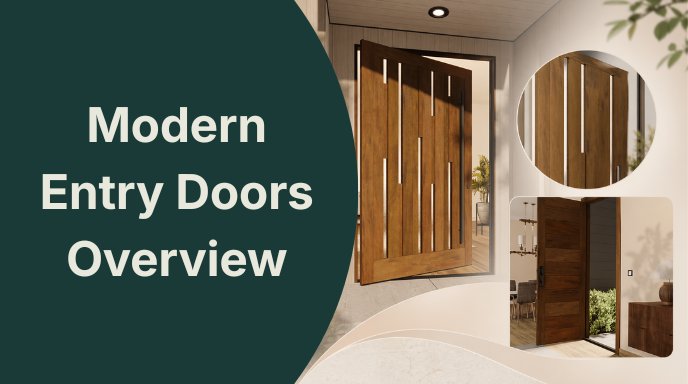
Modern Entry Doors Overview

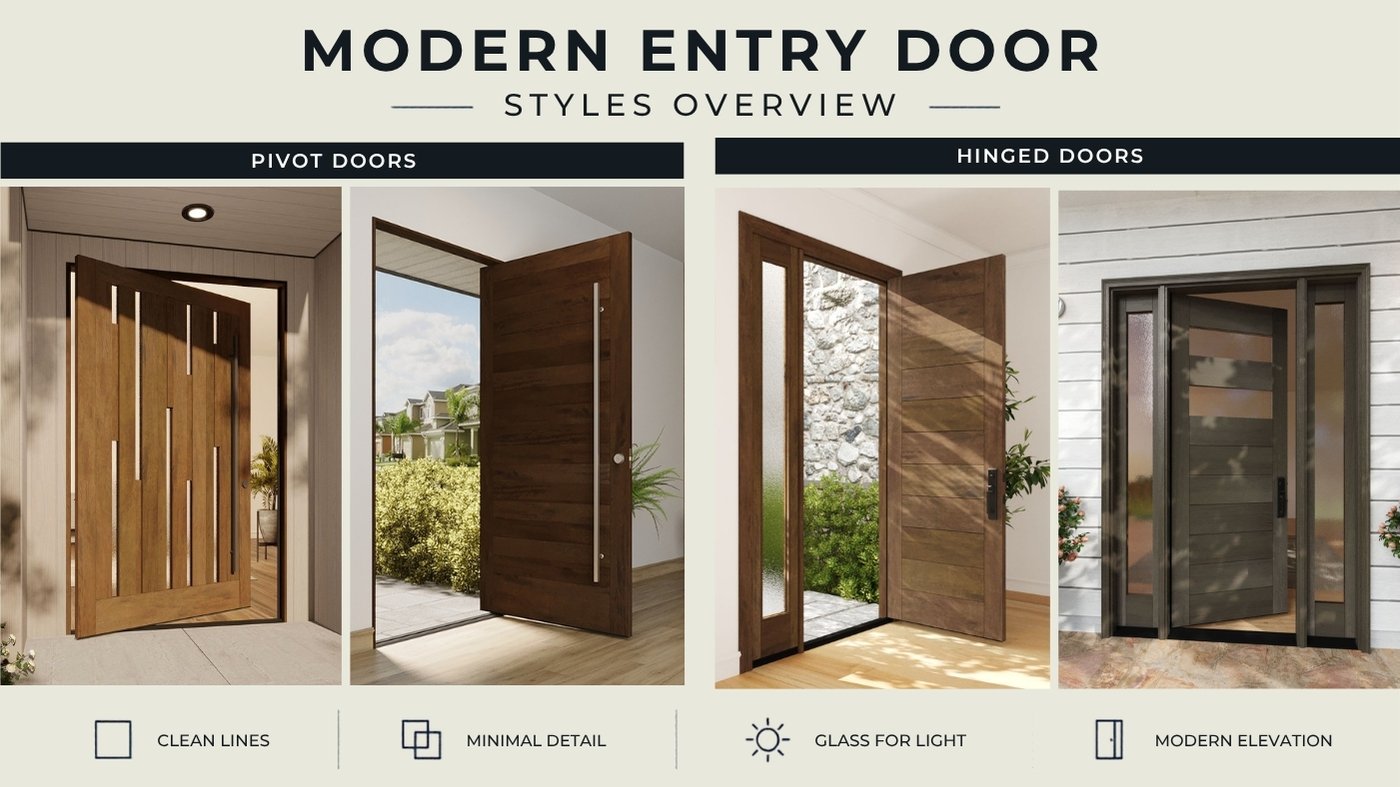
A modern entry door is defined by clean lines, minimal detail, and confident use of glass. Instead of decorative paneling, it relies on broad planes, crisp geometry, and a calm architectural presence that works well with a simple exterior. The result is a door that feels intentional, uncluttered, and visually quiet.

Here, modern means clean-lined, rectilinear, and often glass-forward when privacy allows. Contemporary can overlap, but it is a broader term for what feels current.

A pivot door can support that look, but it is not required. To narrow your direction, explore modern options or get a quick recommendation based on your facade.

Core Modern Design Characteristics

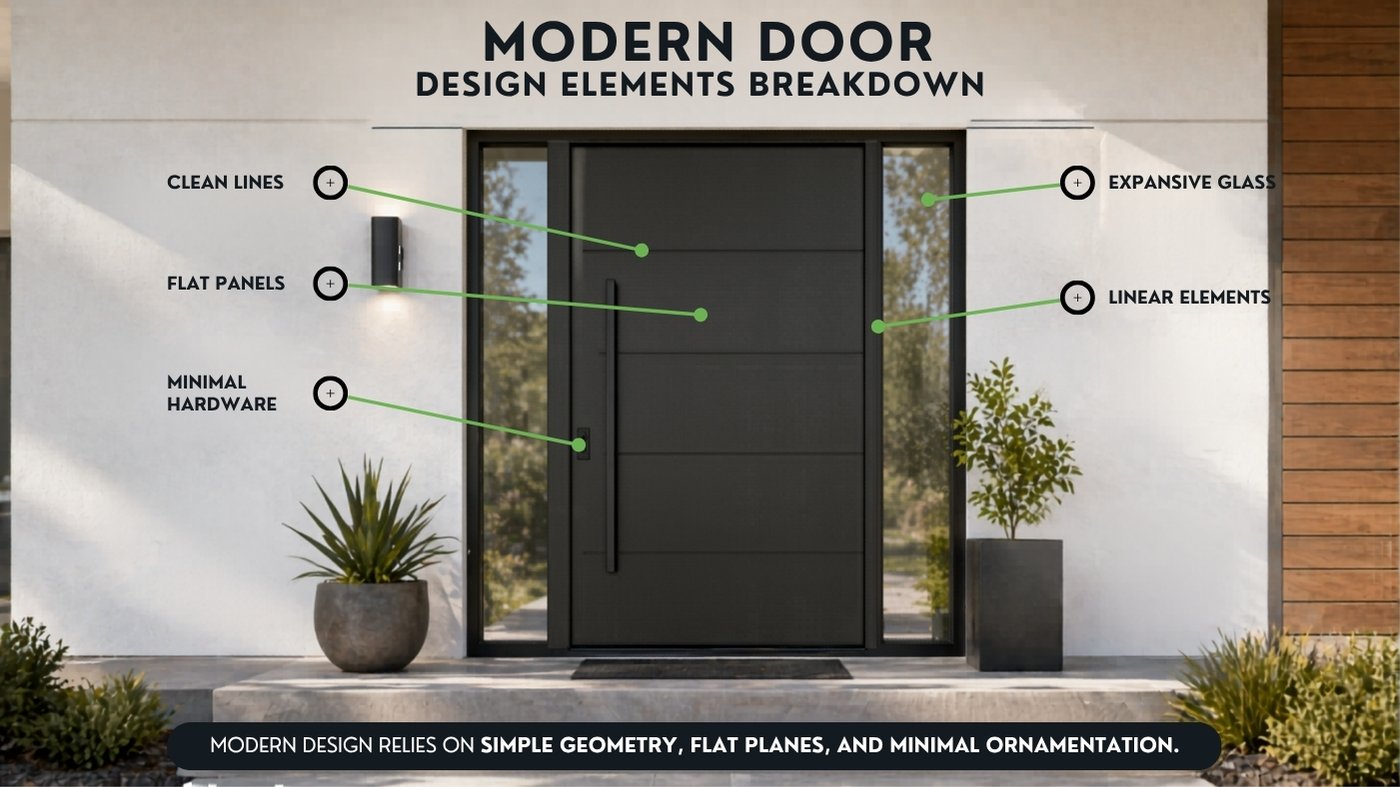
To make a door read modern from the street, start with the essentials: clean lines and minimal ornamentation. The more the design relies on simple planes and restrained detailing, the more modern it feels.

Modern exteriors tend to be rectangular, linear, and visually spare. That same language carries into the entry door. Look for rectilinear layouts, long vertical or horizontal elements, and little to no traditional detailing. When glass is used, it is often expansive and paired with sleek profiles that reinforce light, openness, and simplicity.

When reviewing product photos, focus on the overall impression. Does the door feel calm and architectural, or patterned and ornate? The quieter and more intentional it feels, the more it aligns with modern design.

Pivot Doors in Modern Design

Pivot front doors are most often used in modern design when the goal is a statement-scale entry. They can support very large door panels while reducing visible hinge lines, which creates a bold, seamless appearance.

Both pivot and hinged doors can look modern. A hinged door can feel just as clean and architectural when it uses slab-like geometry, restrained detailing, and well-placed glass.

Choose based on the visual effect you want, not the assumption that pivot is automatically more modern. For more detail, explore the Pivot Door Deep Dive.

Pivot vs Hinged for a Modern Entry

Choose based on your entry goals, not the assumption that one option is inherently more modern.

  • Statement scale vs standard scale: Pivot doors are often chosen for large, monolithic openings. Hinged doors remain a strong option for achieving a modern look in a more familiar size and format.
  • Dramatic vs restrained presence: If you want a bold, gallery-like entrance, pivot may fit that intent. If you want a quieter modern look, a hinged door can deliver clean design without oversized emphasis.
  • Facade fit: A large door works best when the home’s architecture supports it. Broad surfaces and large openings can carry the scale well, while smaller or more segmented facades may not.
  • Personal comfort: Some homeowners want modern design but prefer the familiarity of a hinged entry. That usually leads to a more balanced final choice.

If you are comparing the two, get help choosing pivot vs hinged based on your facade and privacy needs.

Materials That Read Modern

Fiberglass Doors

Durable and versatile, fiberglass doors are low-maintenance and available in smooth or textured finishes.

Wooden Doors

Classic and customizable, wooden doors bring warmth and character to any home.

Ironwork

Strong, secure, and modern, ironwork doors offer unmatched durability for exterior applications.

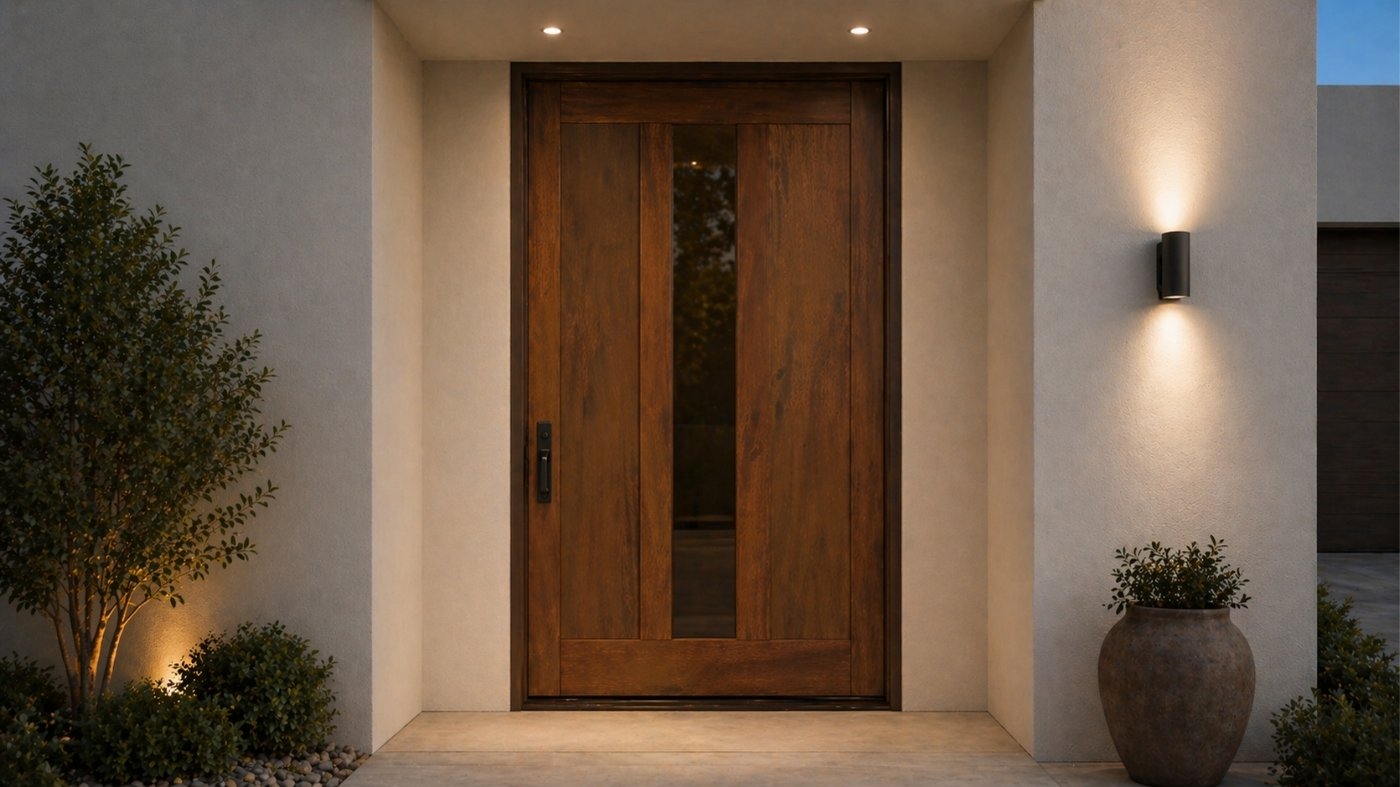
For modern exterior doors, materials should support clean geometry and simple surfaces. Common directions include warm wood with flat faces, dark metal-look finishes for a crisp appearance, smooth contemporary fiberglass, and restrained glass combinations.

The material itself matters less than how the design reads overall. Flat planes, clean edges, and low visual noise are what make a door feel modern.

To compare material types in more detail, explore guides for wood doors, fiberglass doors, or doors with ironwork.

Glass and Privacy Tradeoffs

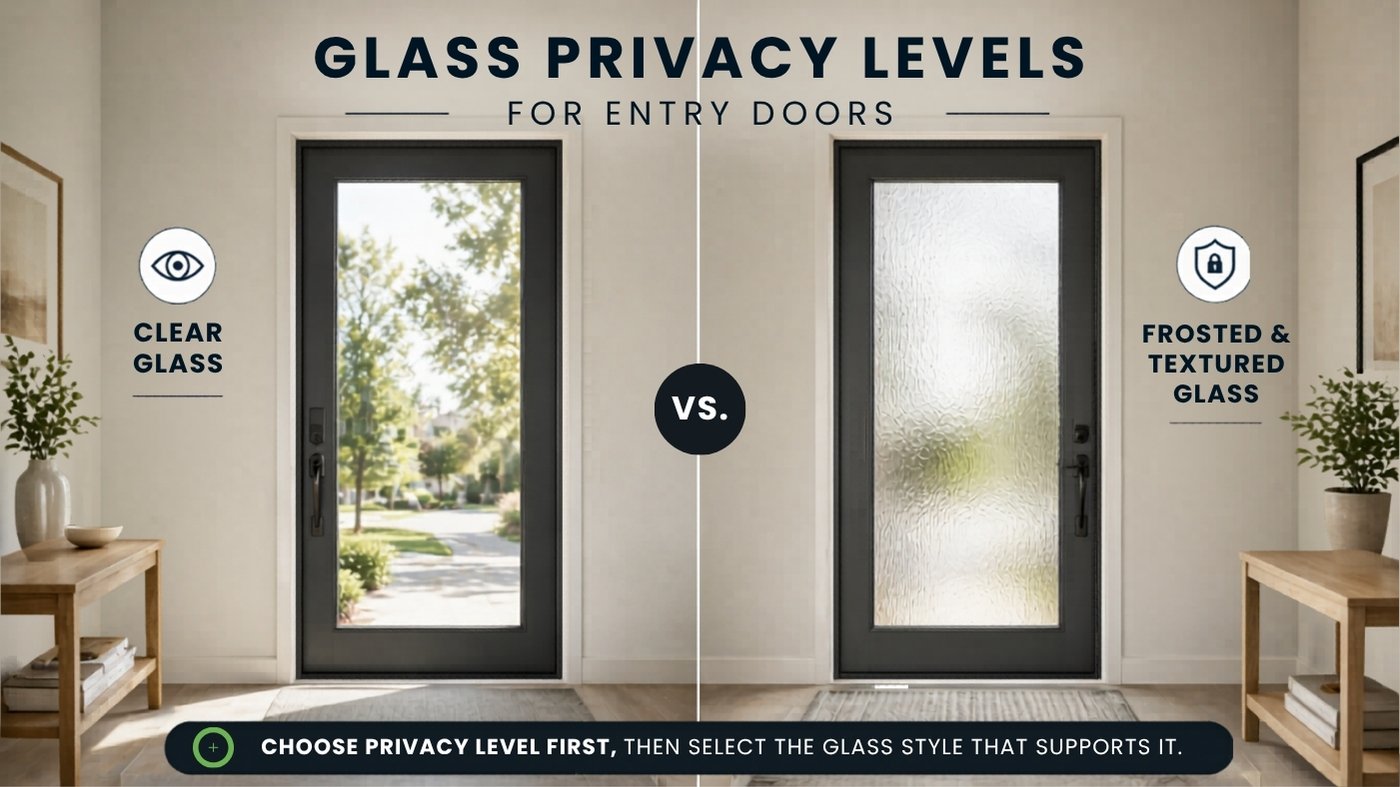
Glass is a defining feature in many modern front doors because it supports minimal lines and a brighter, more open entry. The tradeoff is straightforward: more openness usually means less privacy, especially when the door faces the street or direct approach.

You can keep the light, modern feel while improving privacy by choosing glass that reduces visibility, such as frosted, textured, or tinted options. A common mistake is choosing the look first and realizing later that the privacy level does not suit daily life. Start with privacy, then choose the glass style that supports it.

For help finding the right balance, visit the Glass and Light Guide Hub.

Scale and Proportion Guidance

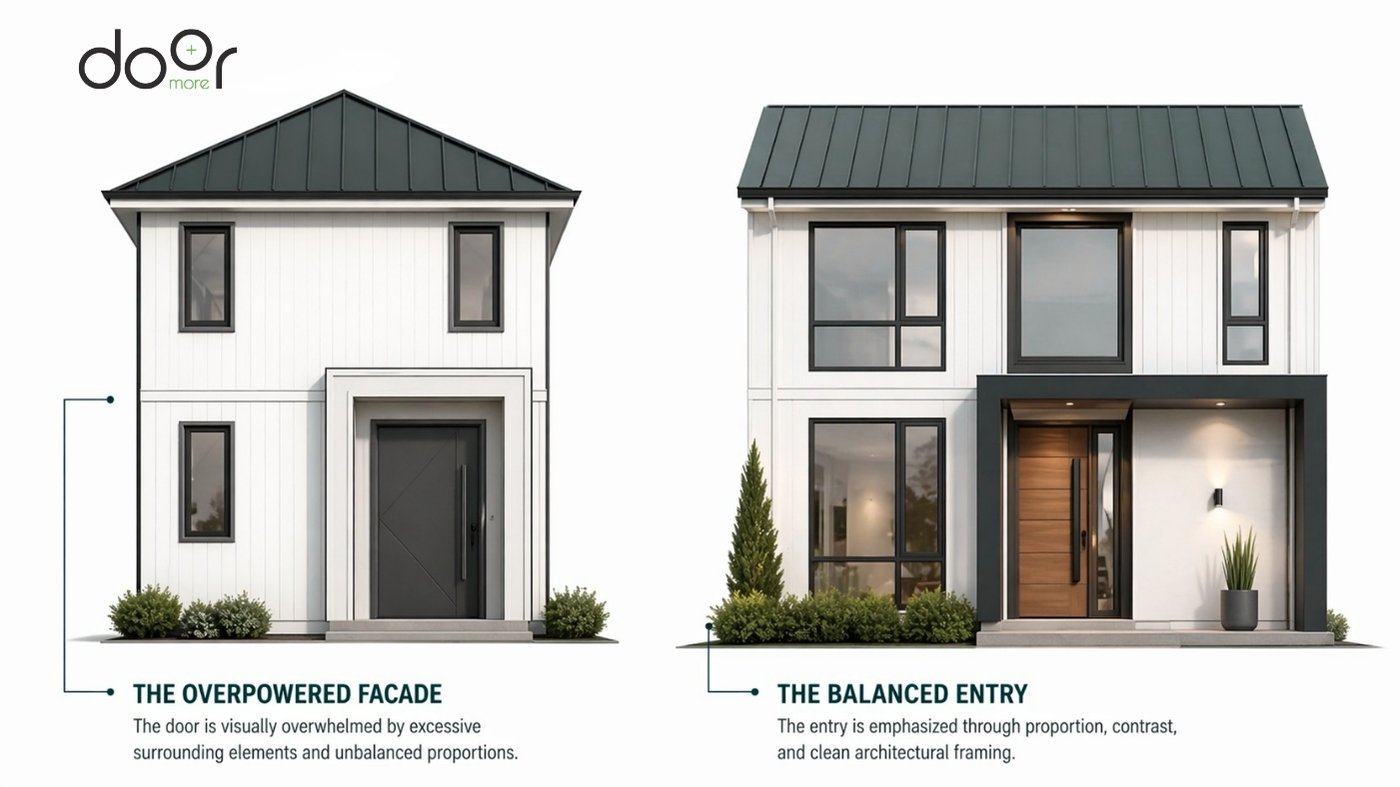
Door size has a major effect on how the entry looks and feels. In modern design, the best result usually comes when the door aligns with the larger geometry of the home instead of feeling oversized or undersized.

Use a few simple checks. Step back and look at the full facade. Does the door feel centered and composed, or does it pull attention away from everything else? Look at nearby windows and openings too. If the home uses large glass areas and wide surfaces, a larger door may feel natural. If the structure is more compact, an oversized door can feel disconnected.

To gut-check the scale, explore modern door options or share your facade for guidance.

Quick Decision Checklist

  • I want a modern entry door defined by clean lines and minimal ornamentation
  • I prefer rectilinear geometry over decorative paneling
  • I want glass for light and openness, and I have chosen my privacy level first
  • Privacy will be handled with obscure or textured glass, not guesswork
  • I want either statement scale or a modern look in a standard format
  • The door’s size aligns with my home’s overall proportions
  • Security will be evaluated separately based on configuration
  • Energy performance and maintenance will be confirmed after design direction

You can continue by browsing options or going deeper into specific topics: Shop Modern Entry Doors or explore the Pivot Door Deep Dive

FAQ

Clean, straight lines with minimal ornamentation define a modern entry door. Simple geometry and restrained detailing reinforce the look.

No. Glass is common because it supports a bright, minimal aesthetic, but a door can still feel modern without large glass panels if the geometry stays clean.

No. Pivot doors are optional. Hinged doors can achieve the same modern appearance when designed with clean lines and balanced proportions.

Pivot doors work best for large, statement-scale openings where the architecture can support a bold, monolithic look.

Choose glass that limits visibility, such as frosted or textured options, while still allowing light into the entry.

Assuming modern always means pivot. That can lead to a door that feels oversized or mismatched to the home.

Security depends on hardware and configuration, not style. It should be evaluated separately based on your needs.

Energy performance varies by product and glass choice. It is best reviewed after the design direction is finalized.

A Guide to Divided Lite Glass Types

I f you’re comparing divided lite glass for an exterior door, the key difference is not just the pattern. It is how the glass is built.

This guide explains the main construction approaches—TDL, SDL, GBG, fixed grilles, and the SDL + GBG hybrid—with a focus on maintenance, authenticity, and repair expectations rather than installation steps or exact pricing.

Read more

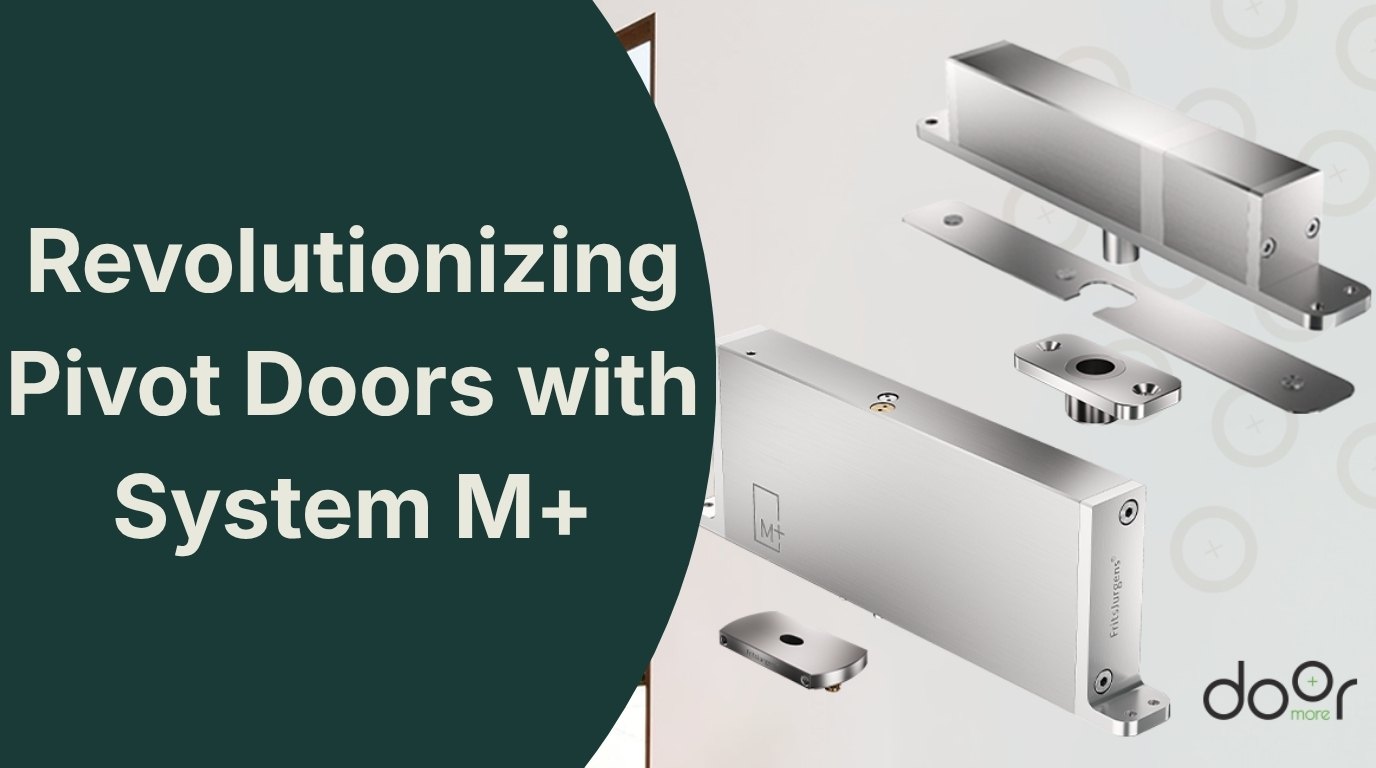
Unmatched Functionality and Elegance: Revolutionizing Pivot Doors with System M+

web thumbnail for "Unmatched Functionality and Elegance: Revolutionizing Pivot Doors with System M+" featuring detailed renders of hydraulic pivot hardware components, including the top pivot, floor plate, and integrated closer unit on a dark background.

what this means for you

System M+ is a hydraulic pivot door system with adjustable self-closing control. It is designed to make pivot door movement feel more predictable, refined, and consistent in everyday use.

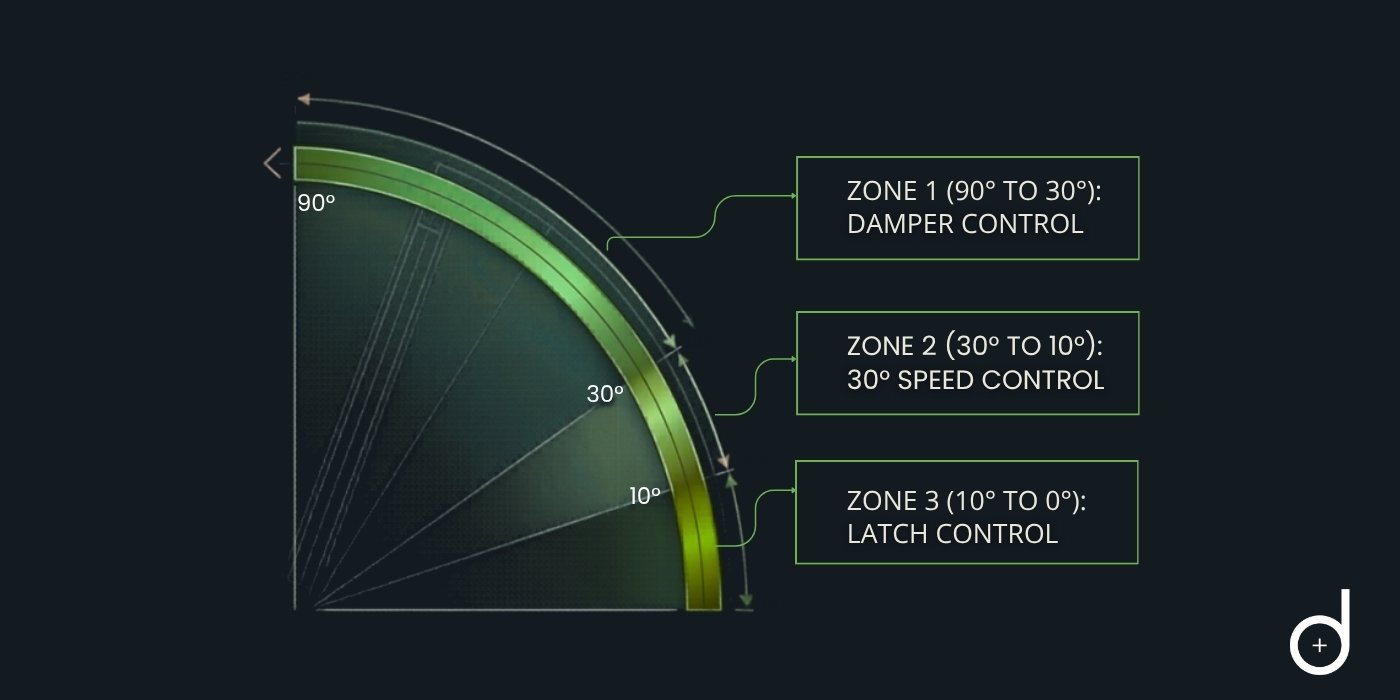
Its performance is shaped through three controls: Damper Control, 30° Speed Control, and Latch Control. Together, they tune how the door opens, returns, and settles into its final close.

If you like the architectural presence of a pivot door but worry that a large panel may feel heavy or abrupt, this system is designed to create a calmer, more deliberate motion. Rather than a simple swing followed by a hard stop, the movement can be adjusted so the door feels composed from open to close.

The hardware is concealed within the door and floor structure, helping preserve a clean pivot door appearance without exposed hinge hardware

What homeowners typically want from a premium pivot system

  • More control over how the door moves, so it feels calm and deliberate rather than abrupt
  • Smoother operation that stays consistent in daily use
  • Adjustability that supports a confident close
  • A quieter-feeling finish with less slam-like behavior near the end of travel
  • Practical hold-open positions and reliable return to closed

System M+ is typically suited to premium builds, heavier doors, and high-use openings where pivot door hardware needs to deliver both performance and a clean architectural look.

Key System M+ features and what they do

Damper Control

Damper Control helps the door feel composed rather than reactive. It manages movement during opening and supports a softer, more controlled return, which can make a large pivot door feel easier to live with every day.

This is especially noticeable on frequently used doors, where movement quality becomes part of the daily experience.

A technical diagram titled

Damper Control

Damper Control helps the door feel composed rather than reactive. It manages movement during opening and supports a softer, more controlled return, which can make a large pivot door feel easier to live with every day.

This is especially noticeable on frequently used doors, where movement quality becomes part of the daily experience.

A technical cross-section diagram of a laminated glass unit, showing two outer glass layers and a central PVB Interlayer designed for fragment retention and security.

30° Speed Control

30° Speed Control manages the final portion of the door’s closing motion before it reaches fully closed. This helps the door approach the frame in a steadier, less abrupt way.

On busy openings, that added consistency can make the door feel more settled and less temperamental.

A technical diagram titled

Latch Control

Latch Control focuses on the final engagement of the door. It helps the door complete its close with intention rather than hesitation.

For homeowners, that means fewer “almost closed” moments and less need to push the door again to make sure it has fully shut.

A technical diagram titled

30° Speed Control

30° Speed Control manages the final portion of the door’s closing motion before it reaches fully closed. This helps the door approach the frame in a steadier, less abrupt way.

On busy openings, that added consistency can make the door feel more settled and less temperamental.

A technical cross-section diagram of a laminated glass unit, showing two outer glass layers and a central PVB Interlayer designed for fragment retention and security.

Latch Control

Latch Control focuses on the final engagement of the door. It helps the door complete its close with intention rather than hesitation.

For homeowners, that means fewer “almost closed” moments and less need to push the door again to make sure it has fully shut.

A technical cross-section diagram of a laminated glass unit, showing two outer glass layers and a central PVB Interlayer designed for fragment retention and security.

Hold positions and self-closing behavior

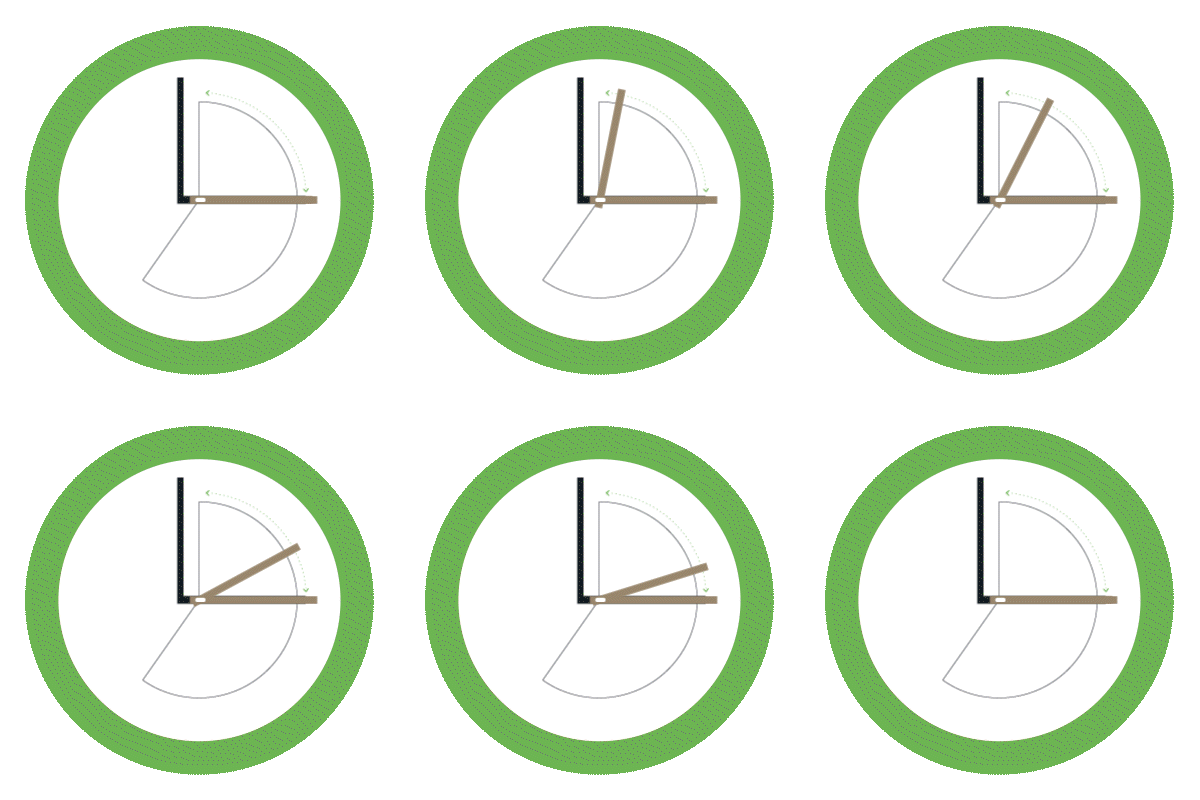
System M+ includes hold positions at 0° and 90°, with hold-open function in both swing directions. This allows the door to rest in clear, usable positions instead of drifting.

The system is also self-closing, returning toward the closed position from wide opening angles, with documented behavior up to 125°. In day-to-day use, that helps support smoother traffic flow and reduces the chance of a large door being left open unintentionally.

A technical diagram explaining System M+ hold positions at $0^\circ$, $90^\circ$, and $-90^\circ$. A circular green graphic shows the swing path, and the text describes how these resting points support smooth traffic flow and self-closing behavior up to $125^\circ$.

System M+ includes hold positions at 0° and 90°, with hold-open function in both swing directions. This allows the door to rest in clear, usable positions instead of drifting.

The system is also self-closing, returning toward the closed position from wide opening angles, with documented behavior up to 125°. In day-to-day use, that helps support smoother traffic flow and reduces the chance of a large door being left open unintentionally.

A technical cross-section diagram of a laminated glass unit, showing two outer glass layers and a central PVB Interlayer designed for fragment retention and security.

Compatibility and capacity checkpoints

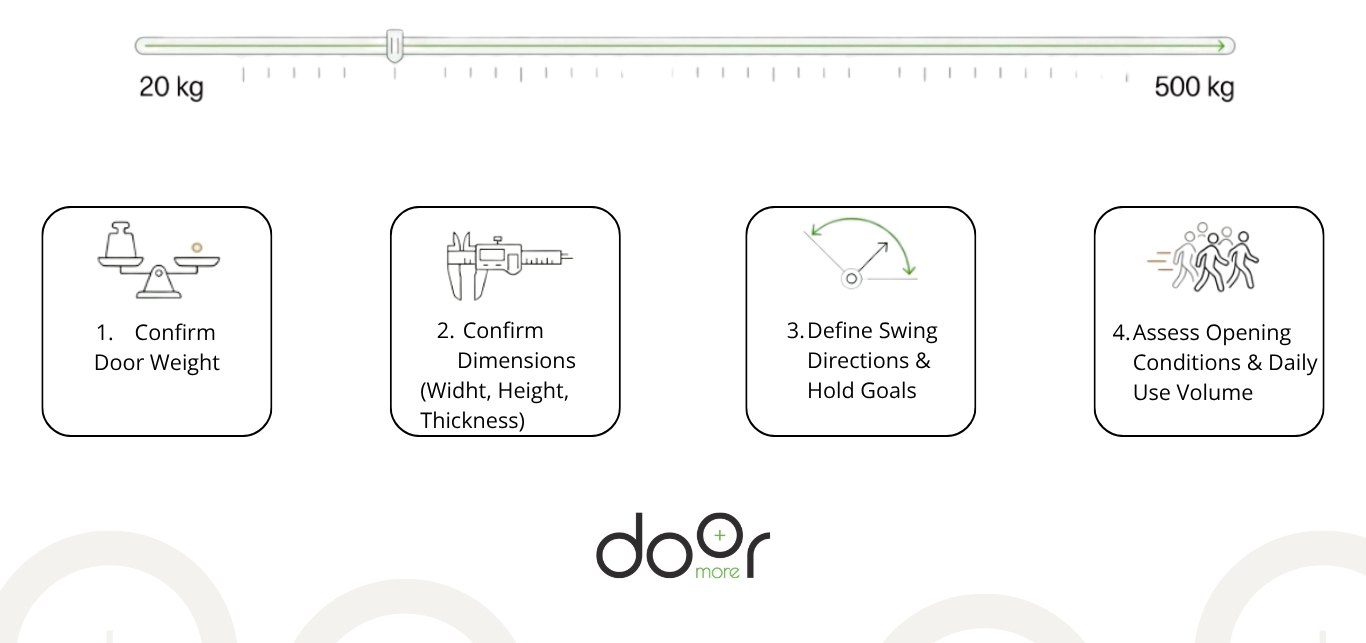
System M+ is designed for door weights ranging from 20 kg to 500 kg, depending on configuration. That upper range does not apply to every door by default. The correct setup needs to match the specific size and weight of your door.

A proper fit comes down to aligning the system with your project details:

  • Door weight: the system must match the weight of the door
  • Door size: width, height, and thickness affect which setup is suitable
  • Configuration choice: the system should be selected to suit the project, not forced into a one-size-fits-all solution

Before requesting specifications, have a basic project checklist ready:

  • Door width, height, and thickness
  • Estimated door weight
  • Swing direction and desired hold positions
  • Opening conditions and expected daily use

For a simple measurement reference, see how to measure a door.

If your project approaches the heavier end of the range, the next step is to review System M+ specifications using your exact door details so the correct configuration can be confirmed.

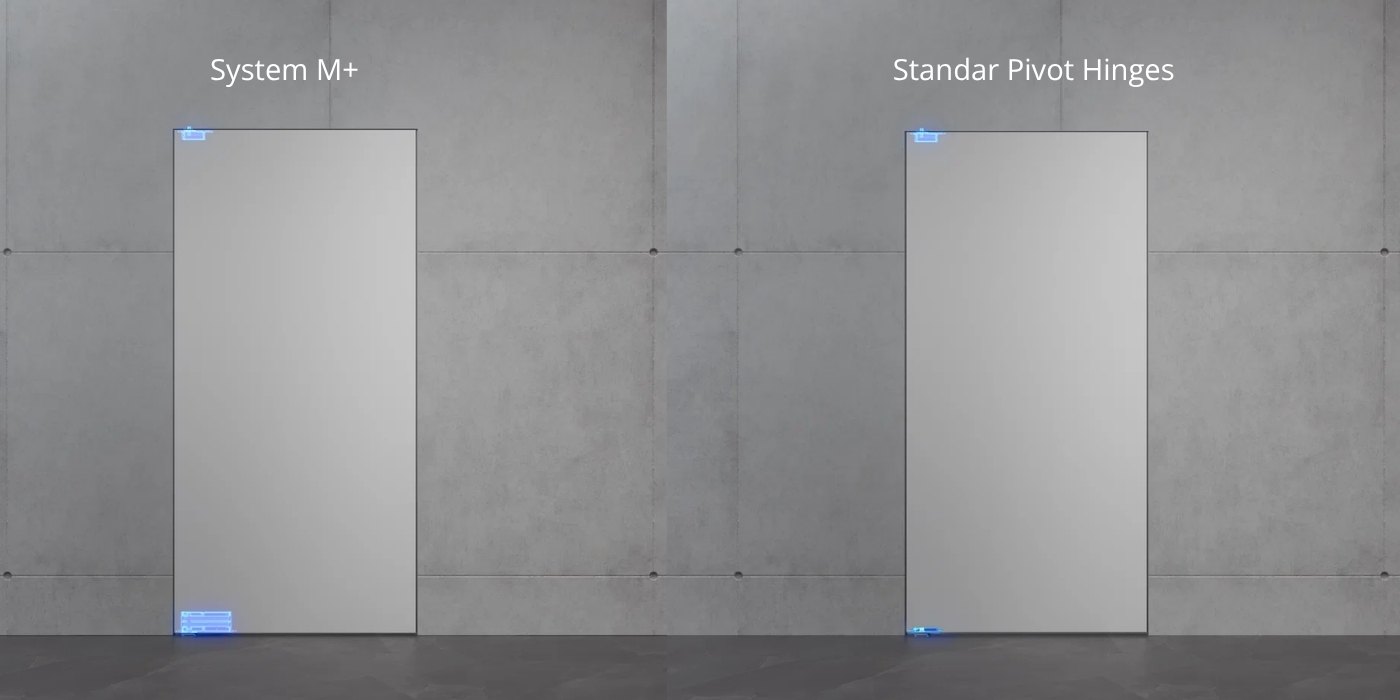
System M+ vs standard pivot hinges

A standard pivot hinge can support a pivot door, but it often gives you less control over how the door feels in motion. System M+ is built around hydraulic control and defined adjustment points, so movement can be tuned rather than simply accepted as installed.

Control and closing feel

System M+ is designed to govern movement more deliberately.

  • Damper Control helps soften and manage movement
  • 30° Speed Control helps regulate the final portion of closing travel
  • Latch Control helps the door finish its close more confidently

The difference is not just that the door swings. It is that the movement can be shaped.

Adjustability

With System M+, the adjustment points are built into the system: Damper Control, 30° Speed Control, and Latch Control. That makes it possible to fine-tune the door’s feel based on the actual door and setting.

Many basic pivot hinges can support the door structurally, but they are not designed around the same level of tunable hydraulic behavior.

Noise and user experience

When movement is controlled near the end of travel and supported by hydraulic damping, the closing experience often feels calmer and more composed.

The broader difference is predictability. The door behaves more like a deliberate architectural element and less like a large panel that needs constant management

Durability and daily use

A controlled, adjustable system becomes especially valuable on heavier doors and high-traffic openings because it is designed to support repeatable performance in real use.

If a refined, controlled experience is the priority, System M+ is the stronger fit.

Best fit applications

System M+ is well-suited to premium pivot door projects where movement quality is part of the design intent. It becomes especially relevant on high-use openings where you want the closing behavior to feel consistent throughout the day.

It also suits heavier door builds where proper configuration matters. Rather than treating every door the same, the system is selected to match the demands of the project.

Homeowners typically choose this type of system when:

  • They want a pivot door that feels intentionally controlled, not simply supported
  • They want the door to return toward closed from wide openings because the opening is used often
  • They value practical hold positions for entertaining and everyday flow
  • They prefer a concealed hardware look without exposed hinge hardware interrupting the design

Exterior vs. interior suitability

Pivot doors can be used in both interior and exterior settings. For exterior openings, controlled closing and reliable final engagement matter even more because they affect how the door seats in daily use.

Weatherstripping and jamb detailing should be considered alongside the pivot system for the best overall result.

If you want to confirm the right configuration for your project, Door & More can review your door size and estimated weight to help align the system with your movement and performance goals.

Installation and adjustment overview

System-M-Components_1a356079a1783abc47501b0963bc9629

Installation Components

1 - Top Pivot Reversed

Installed inside the head jamb. Designed for convenient installation and adjustment.

2 - Receiver

The receiver is mounted inside the top of the pivot door. The pin of the top pivot Reversed is rotated downwards into the Receiver during the installation.

3 - Bottom Pivot

The main driver of the pivot door, fitted at the bottom side.
Supports doors up to 500 kg and offers features like hold positions and self-closing.

4 - Floor Plate

Mounted 8 mm into the floor, compatible with various floor types. Made of solid tempered steel, scratch-resistant, and available in brushed stainless steel and PVD black finishes.

Installation Components

1 - Top Pivot Reversed

Installed inside the head jamb. Designed for convenient installation and adjustment.

2 - Receiver

The receiver is mounted inside the top of the pivot door. The pin of the top pivot Reversed is rotated downwards into the Receiver during the installation.

3 - Bottom Pivot

The main driver of the pivot door, fitted at the bottom side.
Supports doors up to 500 kg and offers features like hold positions and self-closing.

4 - Floor Plate

Mounted 8 mm into the floor, compatible with various floor types. Made of solid tempered steel, scratch-resistant, and available in brushed stainless steel and PVD black finishes.

System M+ uses pivot components at both the top and base of the door assembly. At the top, it includes a ceiling plate and top pivot. At the base, it includes a bottom pivot and floor plate. Because the system is concealed within the door and floor structure, it helps preserve a clean pivot door aesthetic.

Adjustment centers on three controls:

  • How the door is damped during movement
  • How it behaves as it approaches closed
  • How it completes final engagement at the latch

Adjustment is typically handled by the installer or a qualified door professional, who can calibrate the system based on the actual door weight, site conditions, and desired feel.

If you want the refined experience System M+ is designed to deliver, the right first step is to request specifications using your project details before installation.

Simple mechanism explanation

System M+ uses hydraulic control to influence how the door behaves throughout its motion. The named controls are the tuning points that shape opening feel, end-of-close behavior, and final engagement for the project.

If System M+ aligns with your project, choose your next step based on where you are in the process:

For the most accurate fit confirmation, review System M+ specifications using your door size and estimated weight so the appropriate configuration can be validated before ordering.

FAQ

System M+ is a hydraulic pivot door system that helps a pivot door open and close in a more controlled, refined way. It includes adjustable controls that shape how the door moves, how it slows near the end of travel, and how it finishes the final close.

System M+ is designed for doors from 20 kg up to 500 kg, depending on configuration. The correct setup depends on the actual size and weight of your door.

Yes. System M+ includes hold positions at 0° and 90°, with hold-open function in both swing directions.

Yes. System M+ returns the door toward the closed position from wide opening angles, with documented behavior up to 125°.

The system includes top and bottom pivot components integrated into the door assembly, with concealed hardware at the head and floor for a cleaner look.

Mastering Pivot Doors: A Comprehensive Technical Overview

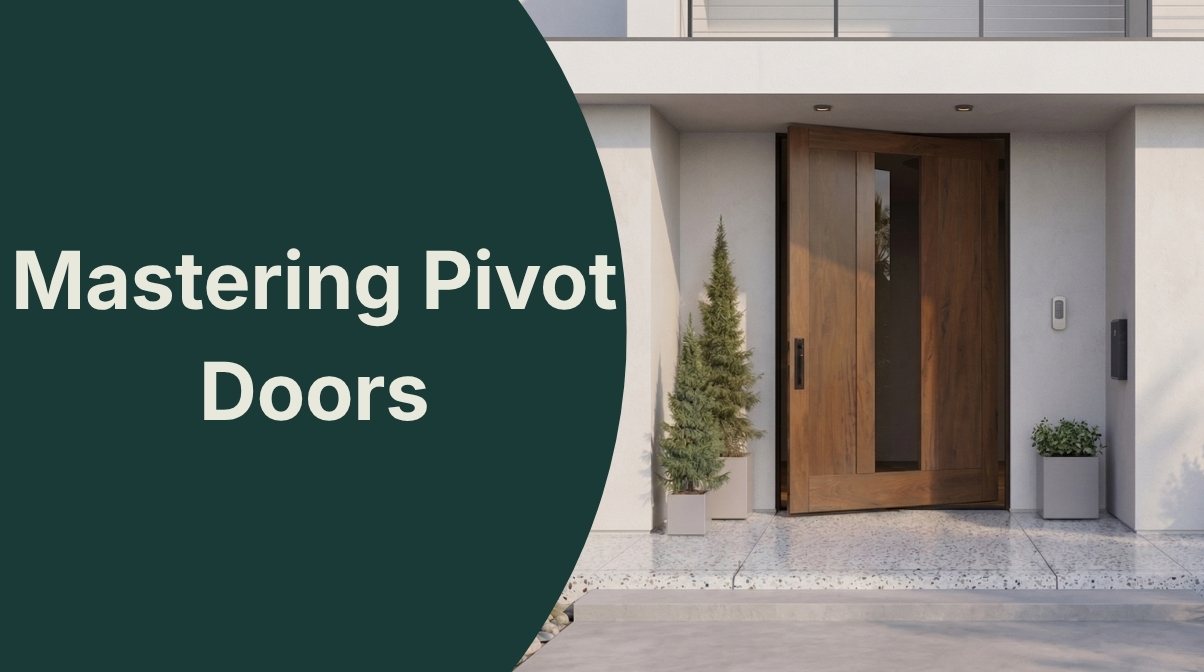
A web thumbnail for "Mastering Pivot Doors: A Comprehensive Technical Overview" featuring a large, modern wood pivot door with a vertical glass lite installed in a minimalist white concrete entryway.

Pivot doors look simple, but the mechanics change how you specify handing, swing behavior, pivot placement, sealing strategy, and what must be structurally ready before installation. This guide helps you speak “spec” with confidence, so you can describe what you want clearly, spot risks early, and know when a decision should move into pivot system selection.

Read more

Comparing Safety Features of Laminated, Tempered, and Annealed Glass

A web thumbnail for "Comparing Safety Features of Laminated, Tempered, and Annealed Glass" featuring close-up photography of three glass types: a solid edge, a textured safety panel, and a shattered shard pattern on a dark teal background.

In this laminated vs tempered vs annealed glass guide, “safest” refers to how the glass breaks, how it reduces injury risk, and whether it can help maintain a barrier after breakage.

This guide focuses on door applications, including entry door lites, sidelites, and patio doors where people may come into contact with the glass or where a broken pane has immediate consequences.

By the end, you will have a side-by-side comparison table, a scenario-based chooser for real homes, and a buyer checklist to help confirm the glass type specified in your quote.

Read more

1 2 3 4 5 ... 9 Next Page