Mastering Pivot Doors: A Comprehensive Technical Overview
-
 By Shayan Behjati
 - Jun 1, 2026


What You Will Be Able to Specify
Pivot doors look simple, but the mechanics change how you specify handing, swing behavior, pivot placement, sealing strategy, and what must be structurally ready before installation. This guide helps you speak “spec” with confidence, so you can describe what you want clearly, spot risks early, and know when a decision should move into pivot system selection.
- handing and swing direction for a pivot configuration
- how offset pivots change swing behavior and where the leaf travels as it opens
- pivot placement intent and the clearance consequences near walls, furniture zones, and sidelights
- the component roles that drive expectations for support, control, and weather interfaces
- the pivot-specific sealing points that often fail when detailing is weak
- installation sensitivity checks that reduce binding and misalignment risk
- provide a full step-by-step installation manual
- turn into a broad door buying guide unrelated to pivot-specific constraints
Pivot Doors vs Hinged Doors
A hinged door transfers its load through side-mounted hinges anchored to the jamb. A pivot door, by contrast, carries its load through pivot points at the top and bottom of the slab. The weight is directed vertically into the floor and head structure rather than concentrated along the side frame.
That shift in load path changes how the door feels in motion, what must be structurally prepared before installation, and where issues appear if alignment is off.
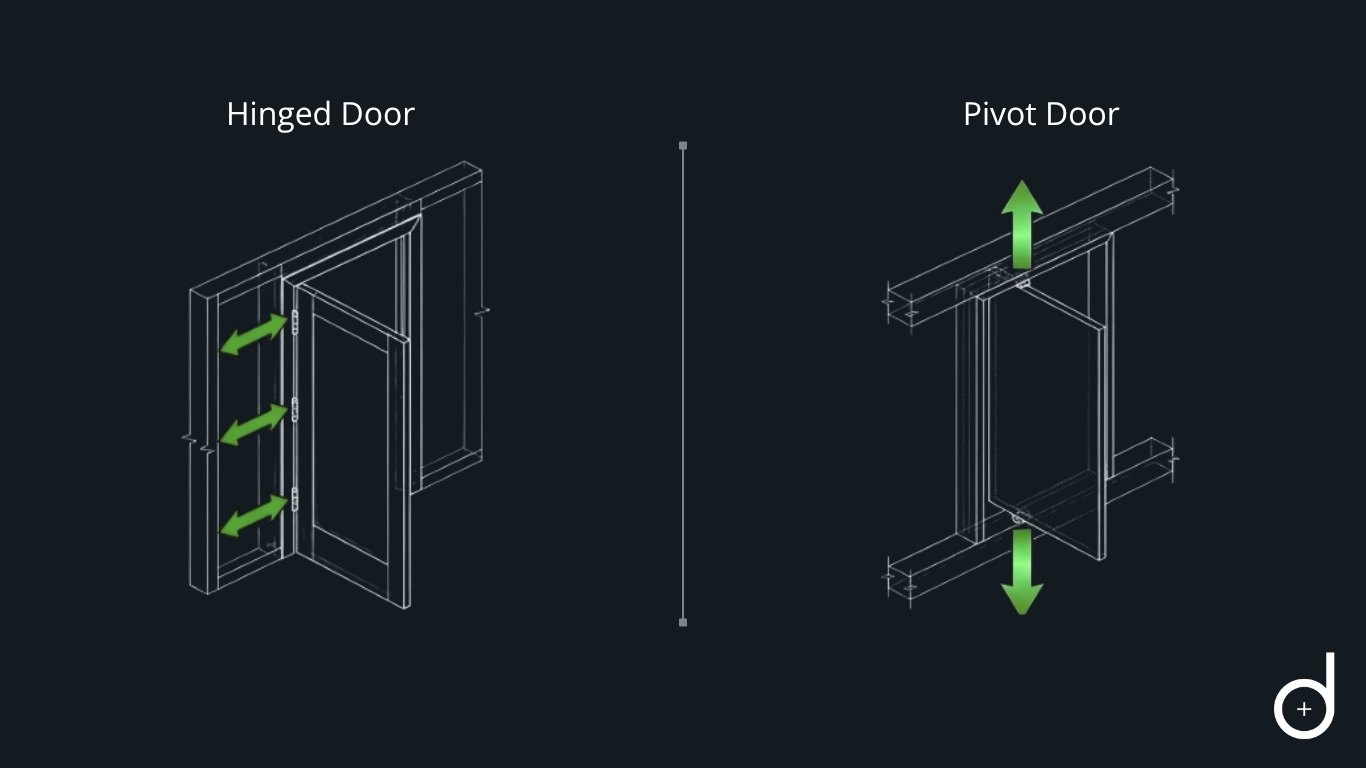
Load path and support points
The bottom bearing point typically carries the primary vertical load. Substrate readiness, anchoring method, and structural support at the threshold become critical specification items rather than afterthoughts.
Framing expectations and thresholds
Exterior pivot configurations depend heavily on threshold detailing. Water management at the bottom interface, and sealing at the pivot penetration, must be coordinated early to avoid performance gaps.
Swing path feel and clearance
Because many residential pivots are offset from the jamb, the slab rotates around an inward axis rather than swinging from the side edge. This creates a different movement profile and different clearance consequences compared to a side-hung leaf.
Pivot assemblies are also commonly grouped into weight classes, since hardware capacity is a primary indicator of what the system can support and control.
If you already know your opening size and approximate door weight, you are ready to move from conceptual understanding into pivot system selection.
Pivot Door Handing Options
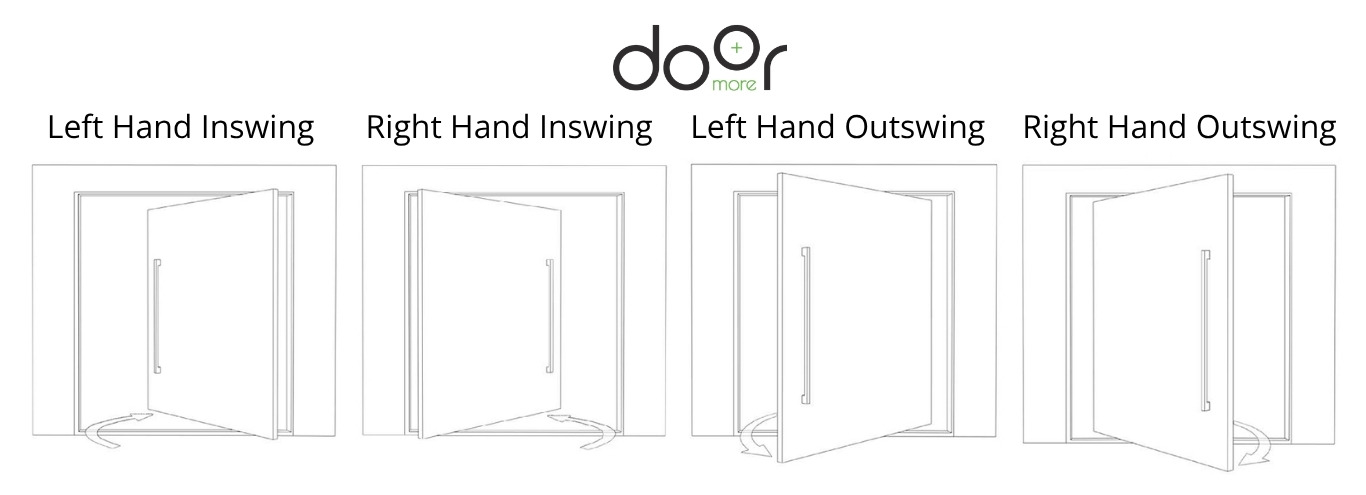
Handing becomes less intuitive with pivot doors because the axis is not always located at the jamb edge. With offset pivots, the leaf can appear to share movement to both sides of the opening during rotation. Clear specification language is essential so the fabricator, builder, and hardware selection stay aligned.
Inswing vs outswing, framed by swing path, clearances, and exposure
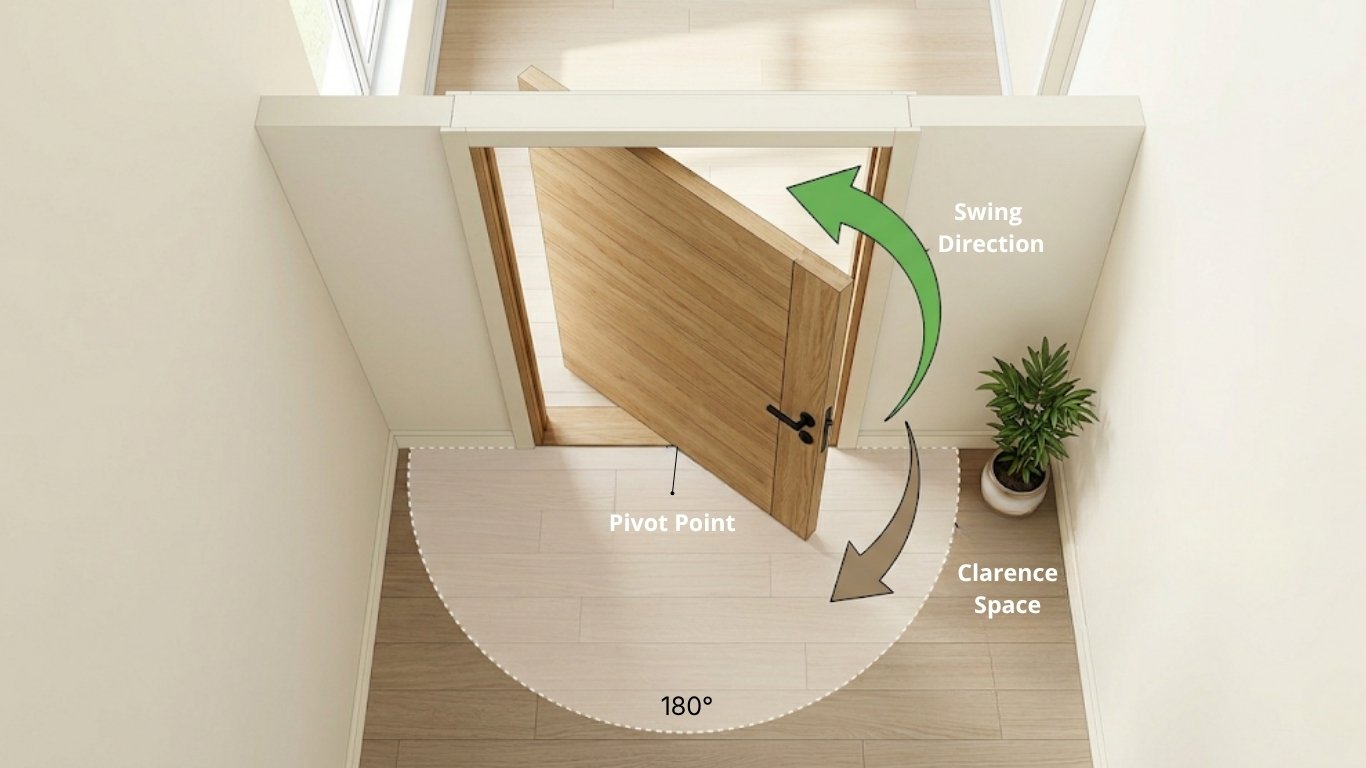
Swing behavior
In offset pivot configurations, rotation around an inward axis creates a dual movement pattern. As the door opens, one portion of the slab may move inward while another portion projects outward. The door does not follow the same single-arc logic as a side-hinged leaf.
Clearances
Because movement is not confined to one predictable arc, think in terms of where the slab travels throughout rotation, not only which direction it opens. Check walls, sidelights, planters, lighting fixtures, and interior furniture zones accordingly.
Exposure
For exterior applications, swing direction should be discussed alongside pivot-specific sealing and threshold water management. Weather exposure increases the importance of detailing at the bottom bearing point and head interface.
Decision prompt before placement
Once handing and swing direction are clearly defined, the next specification step is pivot placement. Offset distance directly influences clearance, projection, and the door’s visual balance within the opening.
Pivot Placement
Pivot placement is the core decision that defines swing path, clearance, and usable opening in daily use. In an offset configuration, the pivot axis is set inward from the jamb edge. That single choice reshapes the door’s geometry and where the slab projects as it rotates.
What offset changes in swing geometry
With an inward axis, the slab rotates around a point that is not at the edge, creating a dual swing path during opening.
In many residential contexts, offsets are commonly discussed in a range of roughly 75 mm to 150 mm from the edge. The more important takeaway is not the number itself, but how the chosen offset alters movement, projection, and clearances.
Clearance impacts at the latch side and nearby walls or furniture
Increasing offset expands the arc radius at the latch side. That change affects clearances at:
- adjacent interior walls
- furniture zones
- exterior planters or steps
- sidelites and trim elements
Larger offsets can increase early swing projection beyond the nominal door width. This is where tight vestibules or shallow exterior landings can create surprises.
How pivot placement affects perceived and measurable opening
Pivot placement also affects clear opening in real use. Depending on offset and stop position, part of the slab may remain within the opening at partial open angles.
If your concern is moving furniture, strollers, or larger items through the entry, discuss usable opening in terms of actual operating angles, not only a theoretical full-open condition.
If accessibility or clearance codes apply, verify requirements locally. Jurisdictional standards vary, and pivot placement can influence measurable clear width.
Essential measuring — focused on offset and swing path
Measure only what informs placement decisions:
- distance from the opening to adjacent walls
- location of sidelites or fixed panels
- the clearance zone where the slab will travel
Avoid generic door-measuring exercises here. The objective is to validate the swing path created by your chosen offset.
Get Help Choosing the Right Pivot System Weight Class
If you know your opening size and have a directional sense of slab weight, the next step is aligning pivot placement with the correct hardware capacity and system configuration.
Pivot Door Details
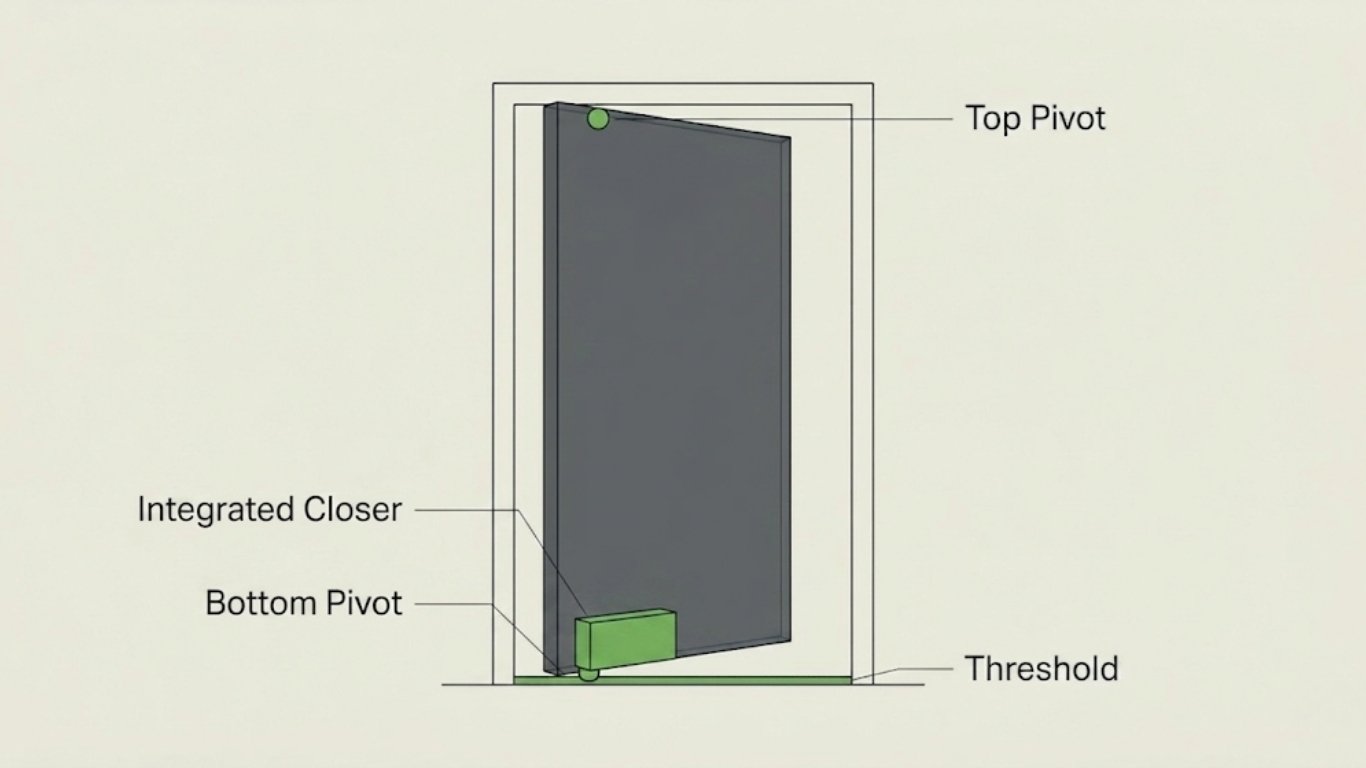
A pivot system is a coordinated set of components. Each part carries a defined role: supporting the slab, guiding rotation, controlling closing behavior, and managing weather interfaces where pivot geometry differs from a hinged door.
Top pivot role
The top pivot primarily stabilizes the door laterally and guides rotation. It typically transfers minimal vertical load compared to the bottom bearing point.
Because of that role, head alignment and the top interface matter for smooth motion and consistent reveals. Small misalignments at the head can translate into visible gaps or uneven movement.
Bottom pivot role
The bottom pivot, or floor bearing, typically carries the primary vertical load. It anchors the rotation axis into the structural substrate and absorbs both static door weight and dynamic forces during movement.
Substrate capability is not optional. The bottom bearing point must be detailed to support the door’s mass and its motion without deflection or settlement over time.
Integrated closer role and adjustment concept
Many pivot systems integrate concealed hydraulic closers within the bottom assembly. These manage closing speed and, where supported, hold-open behavior.
Adjustment features vary by manufacturer, but the underlying concept remains consistent: closing control is often integrated into the pivot assembly itself rather than added as a surface-mounted device.
Threshold interface role
On exterior doors, the threshold is not simply a finish transition. It is part of the water management strategy at the bottom of the opening and around pivot penetration points.
Because pivot geometry differs from side hinges, threshold design and installation become primary performance drivers, particularly in exposed conditions.
Sidelite Options
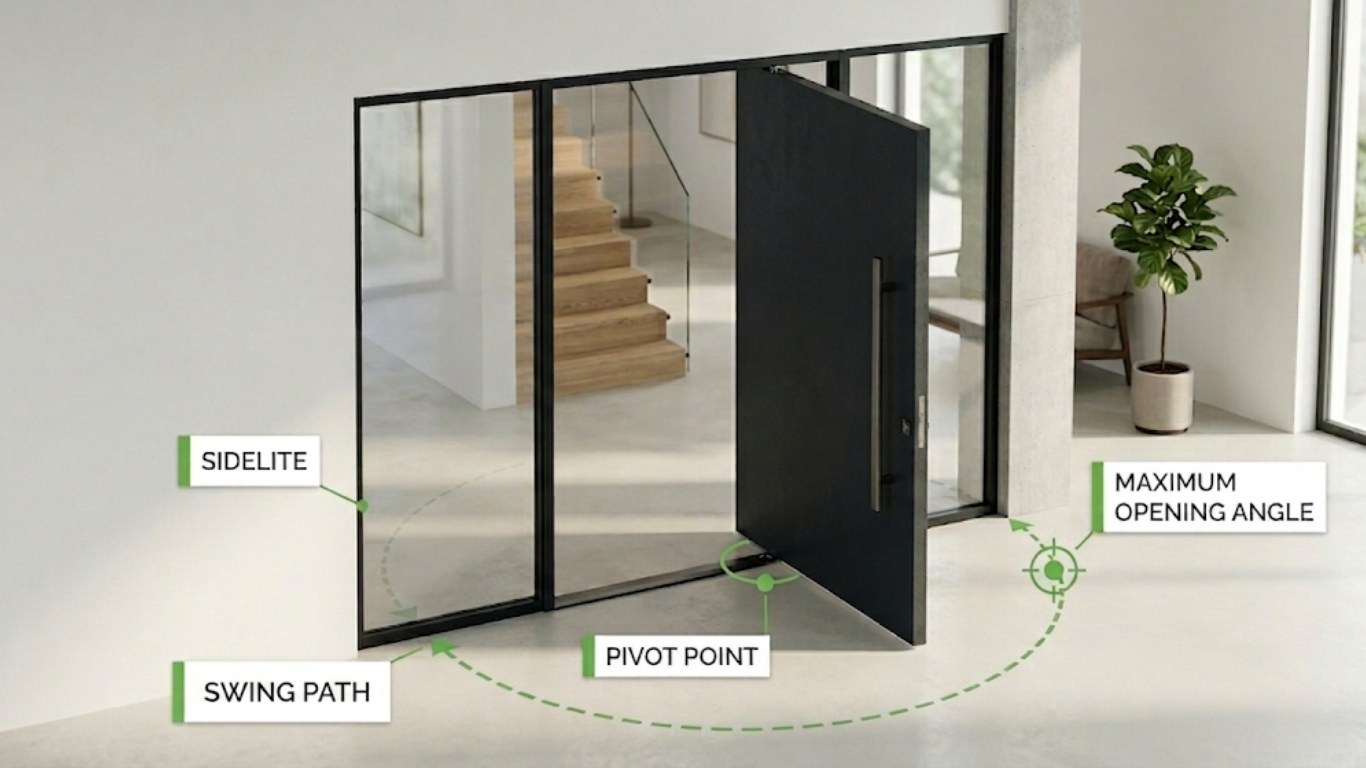
Sidelites can strengthen the entry composition, but in an offset pivot configuration they also introduce clearance constraints. A fixed glass panel placed beside a rotating slab changes where the door can travel and may limit the maximum opening angle, depending on pivot offset and reveal.
Where sidelites create clearance constraints
A sidelite positioned close to either the pivot side or the latch side can become the effective collision boundary during swing.
In many cases, the limiting factor is not the door’s full rated opening angle, but the point where the slab edge physically meets the sidelite frame.
How offset and reveal impact maximum opening angle
Offset directly changes swing geometry. As offset increases, the latch edge may project into the sidelite zone sooner during rotation.
Reveal and setback are not cosmetic decisions in this context. They influence whether the slab clears the sidelite cleanly or stops short of the intended open position.
Planning implications for layout and approach path
Treat sidelites as part of the clearance strategy rather than as independent design elements. Consider:
- furniture or casework near the entry
- exterior railings or planters
- the walking path where the slab will travel
If your layout is tight, validate swing clearance early, before finalizing hardware selection, so pivot placement and sidelite positioning align with real operating space.
Exterior Sealing and Weatherproofing at Pivot Interfaces
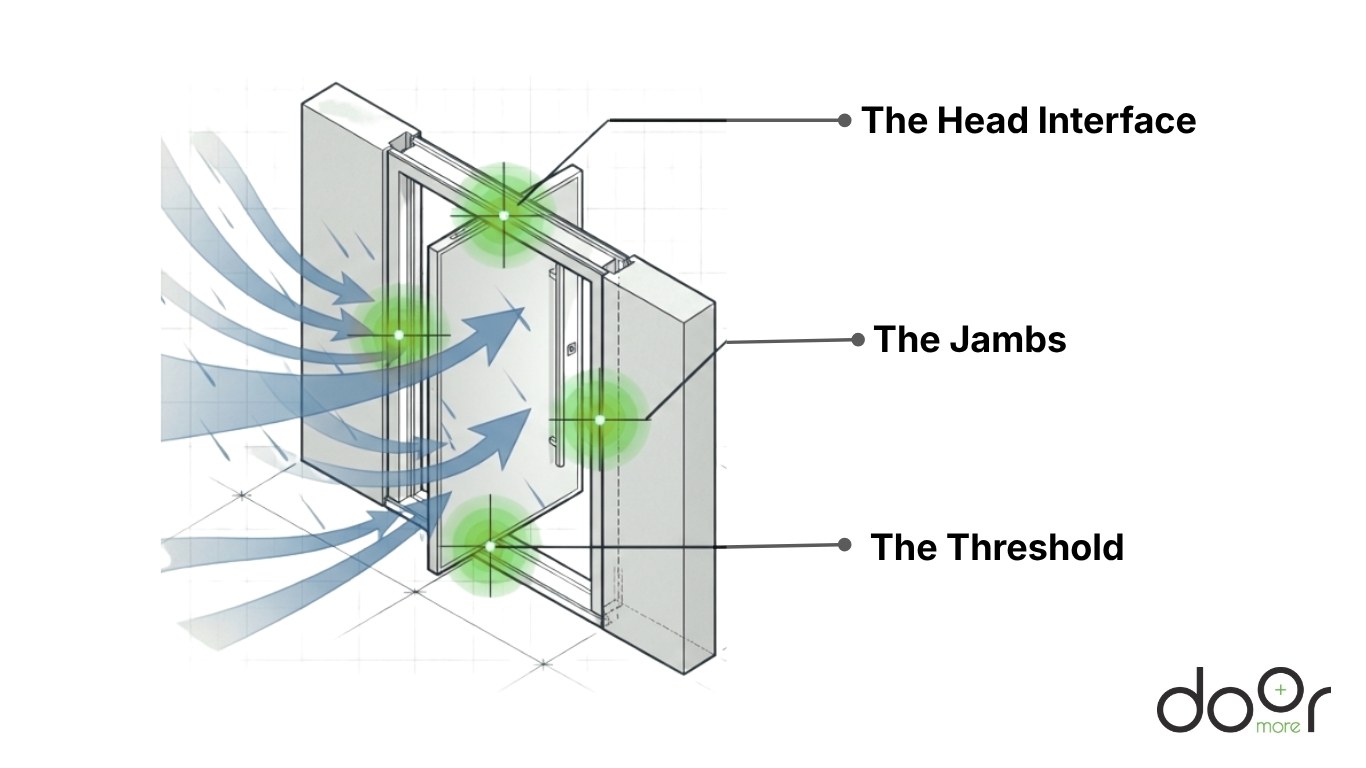
Exterior pivot doors can perform well, but sealing differs from hinged doors because head gaps and pivot interfaces behave differently. In offset pivot configurations, the head interface can experience variable gap geometry during swing, which increases sealing complexity.
Head interface gap behavior
Variable gaps across the arc can make it harder to maintain consistent compression at the head compared to a side-hung door.
When head sealing is weak, symptoms can include air movement, drafts, or water intrusion under certain wind and rain conditions.
Framing expectations and thresholds
Exterior pivot doors require thresholds that manage water at the bottom interface and around the pivot penetration. There is no universal threshold rating that guarantees performance in every condition. Outcomes depend on design coordination and installation detailing.
Threshold water management and pivot penetration sensitivity
Typical failure patterns include air leakage and water infiltration tied to weak sealing interfaces or inadequate installation readiness.
Prioritize pivot-specific risk points:
-
head interface behavior
-
threshold water management
-
consistent alignment so seals maintain contact
Installation Overview and Risk Checks
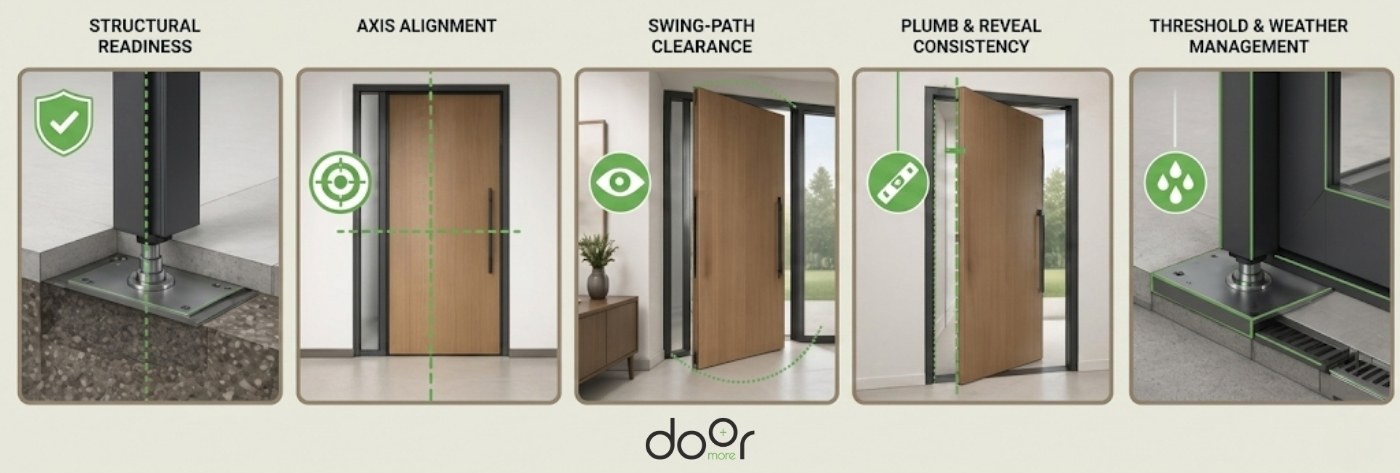
Pivot assemblies reward precision and expose shortcuts. Misalignment shifts the rotation axis and bearing load. Even minor out-of-plumb conditions can cause binding and uneven reveals. The bottom pivot also requires a structurally capable substrate because it carries the primary vertical load.
Installation steps — high level only
- confirm structural readiness at the floor or threshold bearing location for primary load support
- verify the head condition is stable and suitable for the top pivot guidance point
- establish the intended pivot axis location and confirm it aligns with your clearance plan
- dry-fit and verify swing path clearance near walls, furniture zones, and sidelites
- set the bottom bearing point and anchor the axis into the structural substrate
- align the top pivot for stable guidance and consistent rotation
- check plumb and reveal consistency through the swing to detect binding early
- for exterior installations, confirm threshold water management and pivot penetration detailing are addressed
- if an integrated closer is present, confirm closing behavior conceptually per system design
Risk checks to treat as non-negotiable
- plumb and axis alignment sensitivity check to reduce binding risk
- substrate support and deflection risk assessment at the bottom bearing point
- reveal consistency through operation to catch settling or axis drift early
When to involve a professional
- very heavy or large-format doors where alignment sensitivity and dynamic loads increase risk
- exterior exposures where threshold water management and sealing interfaces must be executed cleanly
- any scenario where substrate support is uncertain at the bottom bearing point
If you want matched components, route pivot door selection through the pivot door configuration page so capacity and control align with your door.
Common Objections and Failure Modes
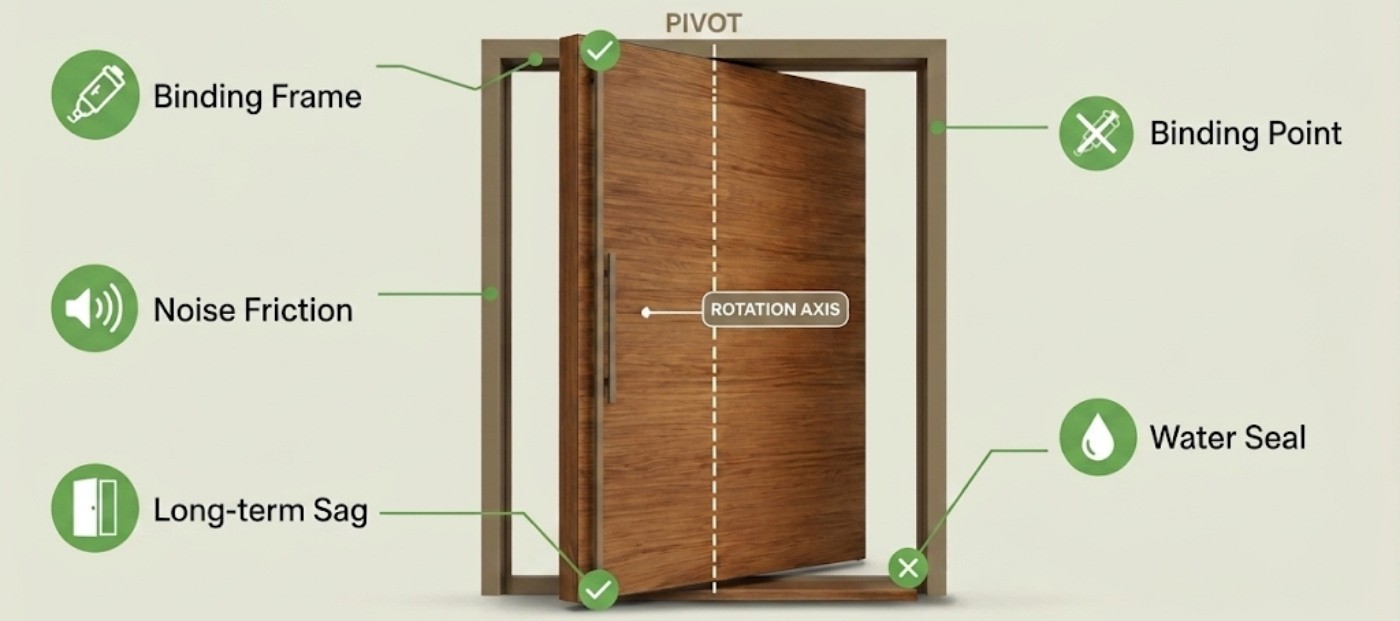
Two common concerns surface quickly: “Do they leak more?” and “Are they safe or stable?” The useful answer lies in mechanics, sealing interfaces, and installation precision, not marketing claims.
“Leaks more than hinged”
Offset pivot doors can present variable head gap geometry during swing, which increases sealing complexity compared to a side-hung door.
Exterior performance depends heavily on threshold water management, especially around the pivot penetration and bottom interface.
When detailing is weak, typical outcomes include air leakage and water infiltration.
“Unsafe or unstable”
A pivot door is supported at both the top and bottom, transferring weight vertically into the floor and head structure rather than relying on side jamb hinges.
Instability complaints are more often tied to alignment, substrate readiness, or structural settling than to the pivot concept itself.
System One
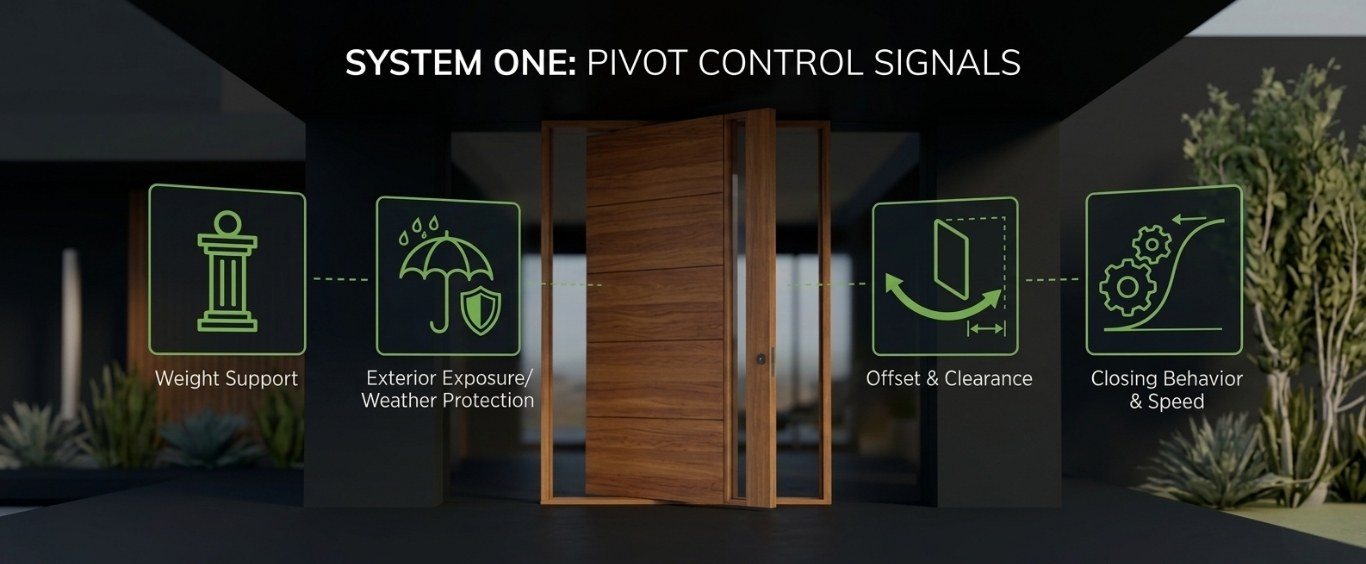
Think of “System One” as a constraint-based way to describe what your pivot setup needs to do: support weight, manage exposure, clear nearby constraints, and behave predictably when closing. Hardware capacity and configuration are selection signals, not marketing labels.
Weight class signal
Pivot hardware systems are typically grouped by maximum door weight capacity. This informs substrate readiness, structural expectations, and closer suitability.
Exterior exposure signal
Exterior installations should be paired with threshold and water management strategies suited to pivot penetrations and the bottom interface.
Offset and clearance signal
Offset influences movement profile and clearance requirements near walls, furniture, and sidelites.
Closer behavior signal
Many systems integrate concealed hydraulic closers within the bottom assembly, shaping closing control and hold-open behavior where supported.
System Class Signals (conceptual comparison)
| System class signal | What it implies for spec and sensitivity |
|---|---|
| Higher weight class | Greater emphasis on substrate readiness, axis alignment, and controlled closing behavior |
| Exterior exposure | Threshold and pivot penetration detailing become primary performance drivers |
| Larger offset intent | Increased latch-side projection and more careful clearance planning |
| Integrated closer | Closing behavior is integral to the pivot assembly, not a surface add-on |
Named variants, such as System M Plus, may appear within a lineup. Treat them as configuration options and route selection through the pivot door configuration page so capacity, placement, and closer needs align with your opening.
If you are ready to evaluate systems, use this page as your specification foundation and move selection intent to the pivot door configuration page.
Pivot Manual
This is a specification checklist and readiness filter, not a procedural installation manual. Use it to clarify intent, reduce back-and-forth with your builder, and surface risks early.
Spec checklist — what to decide and communicate
- Handing, using exterior view: left-hand or right-hand, plus inswing or outswing
- Swing behavior for offset pivots: acknowledge the dual swing path and how the slab travels to both sides during rotation
- Pivot offset intent: confirm offset selection with full awareness of clearance consequences
- Desired opening angle: validate against sidelite frames, adjacent walls, and collision points
- Sidelite constraints: plan for setback, reveal, and collision risk
- Exterior exposure: identify pivot-specific sealing priorities at the head and threshold
- Closer expectations: confirm whether controlled closing behavior is expected from an integrated system
- Usable opening intent: if passage width matters in daily use, confirm how pivot placement affects clear width at partial open positions
Install readiness checklist — what must be true before setting the door
- 1 bottom substrate support: bearing point must support primary vertical load and dynamic movement
- 2 plumb and deflection awareness: pivot systems are alignment-sensitive because axis accuracy affects bearing load
- 3 sealing interfaces planned: head interface behavior and threshold water management must be detailed, not improvised
Maintenance notes
- inspect alignment and reveals for early signs of axis drift or settling
- confirm closer function and expected closing behavior remain consistent
- check weather seals for compression, continuity, and visible degradation
- for exterior doors, perform an operational and visual check at least annually
- address changes early; misalignment can escalate into binding or leakage over time
Code and clearance note
Clear opening width and threshold height requirements vary by jurisdiction and should be verified locally, especially for required egress doors. Pivot placement can influence measurable clear opening.
Explore Pivot Door Systems
If you are ready to move from specification into selection, explore pivot door systems configured for weight capacity, offset placement, and controlled closing behavior.
Related Links


FAQ
Yes. Exterior performance depends on pivot-specific threshold water management and head sealing, especially where gap geometry can vary during swing.
Usually, yes. The bottom bearing point carries the primary vertical load, so substrate readiness and alignment matter more than they do with a typical side-hinged door.
Use the exterior-view convention: identify the pivot side from outside, then state left-hand or right-hand plus inswing or outswing.
Greater offset generally increases latch-side projection and changes where the slab travels during opening, so nearby walls, furniture, and sidelites need to be checked against the real swing path.
It can. Depending on pivot placement and stop position, part of the slab may remain within the opening at partial or even typical operating angles.
Yes, but sidelites can limit opening angle and create collision points if offset, reveal, and spacing are not coordinated early.
Not always. Many systems integrate a concealed closer within the bottom assembly, but inclusion varies by system and weight class.
Check alignment, operation, closer behavior, and weather seals periodically. For exterior doors, an annual visual and operational review is a practical minimum.
Yes. Clear opening width and threshold requirements vary by jurisdiction, and pivot placement can affect measurable clear opening.