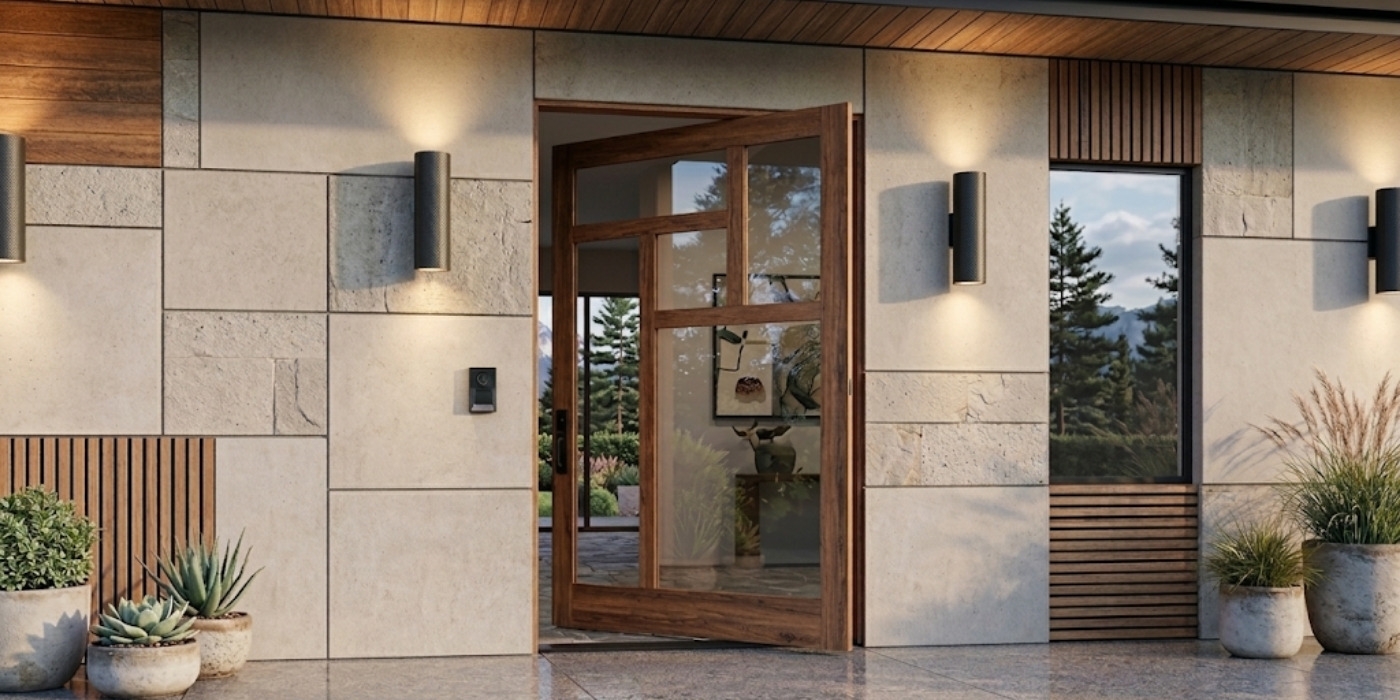
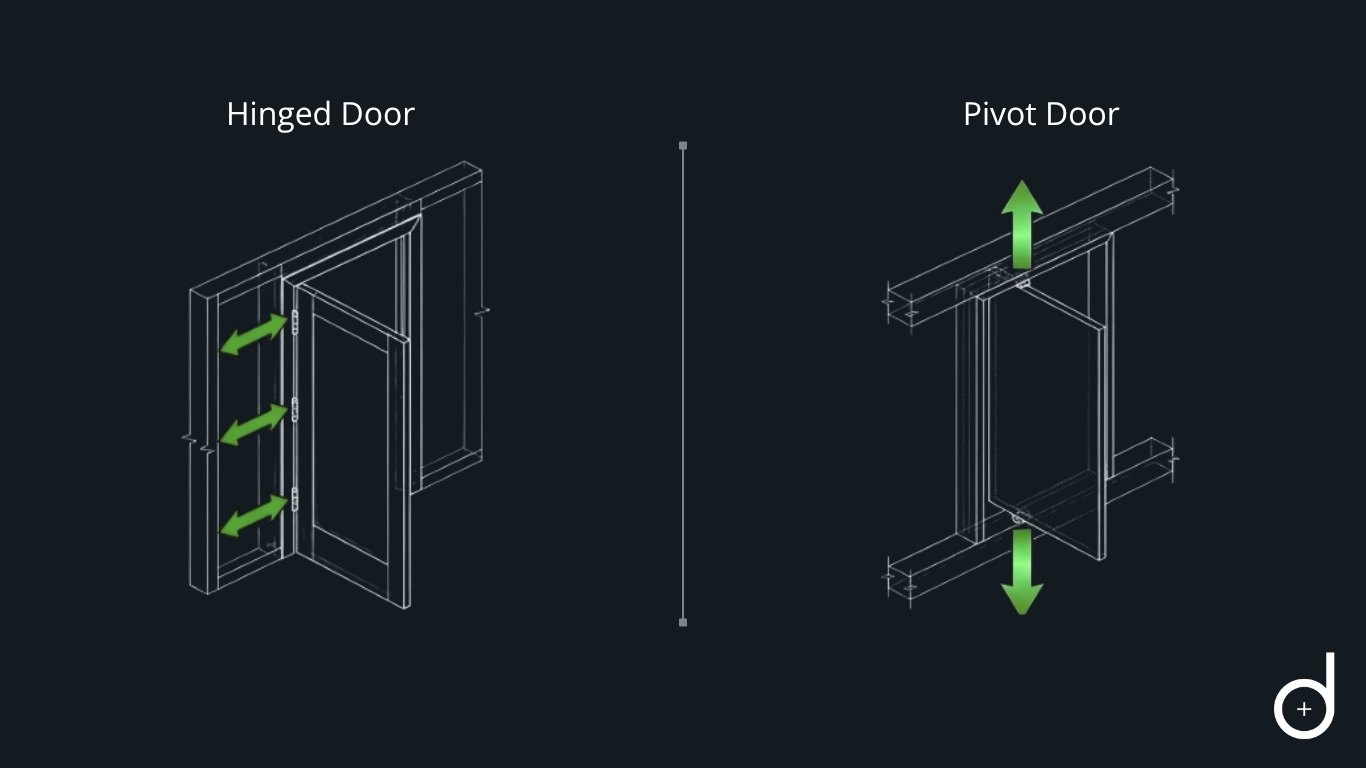
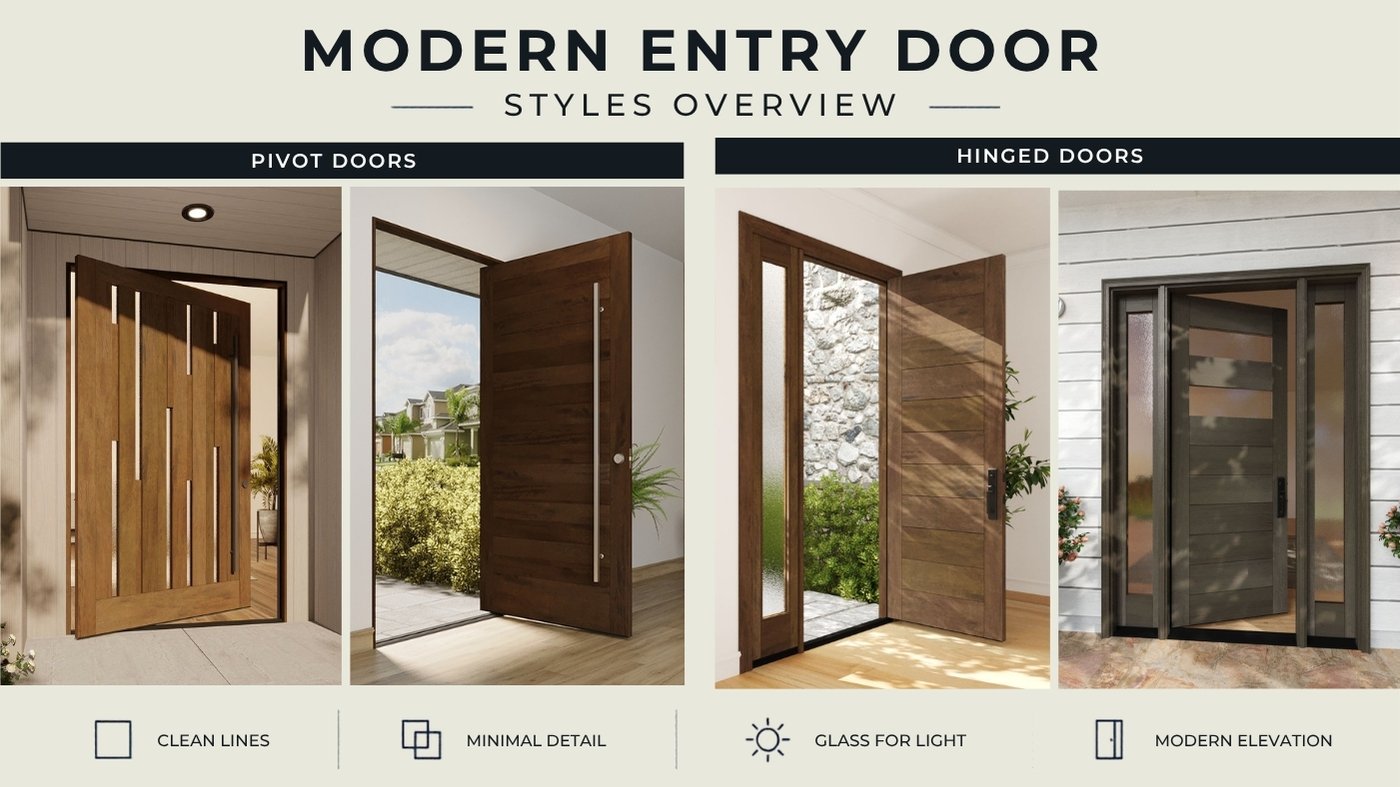
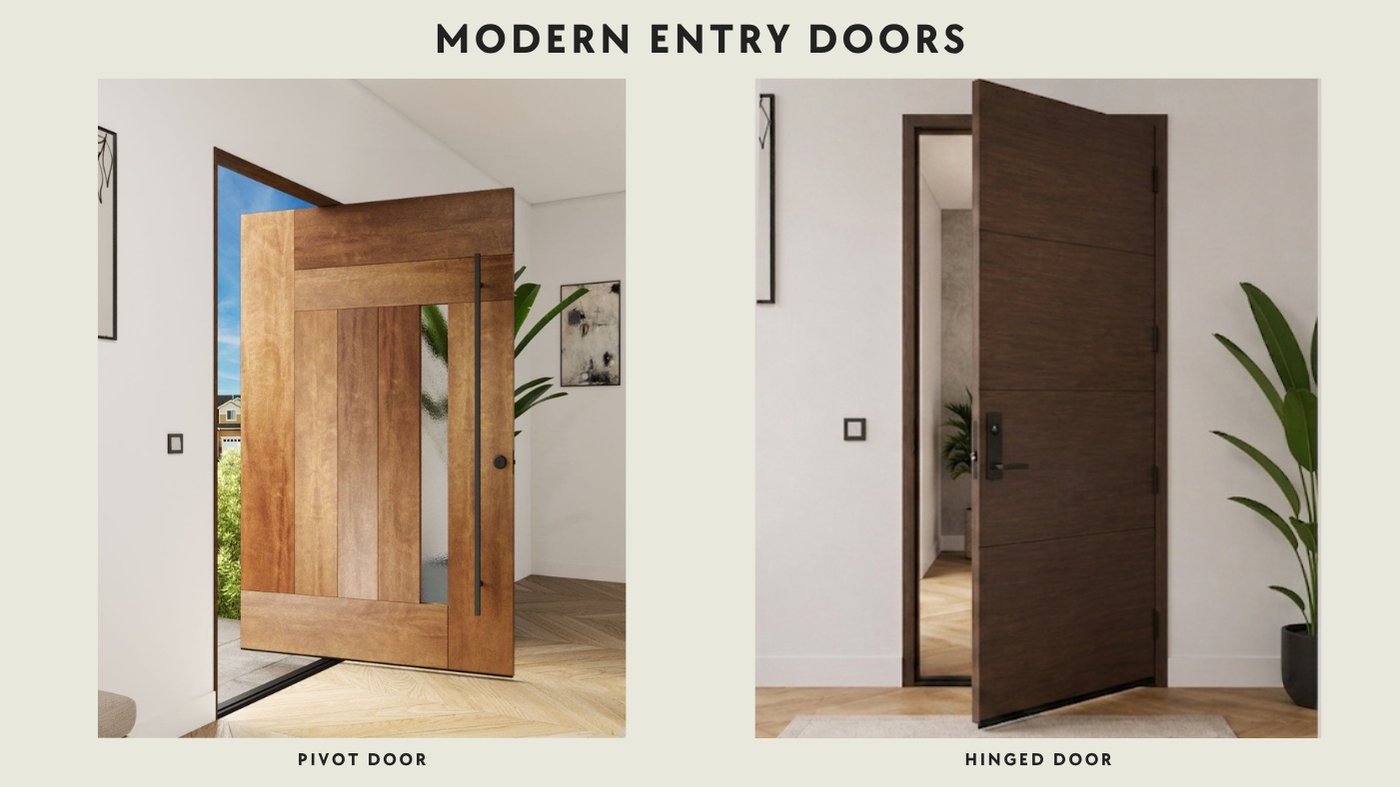
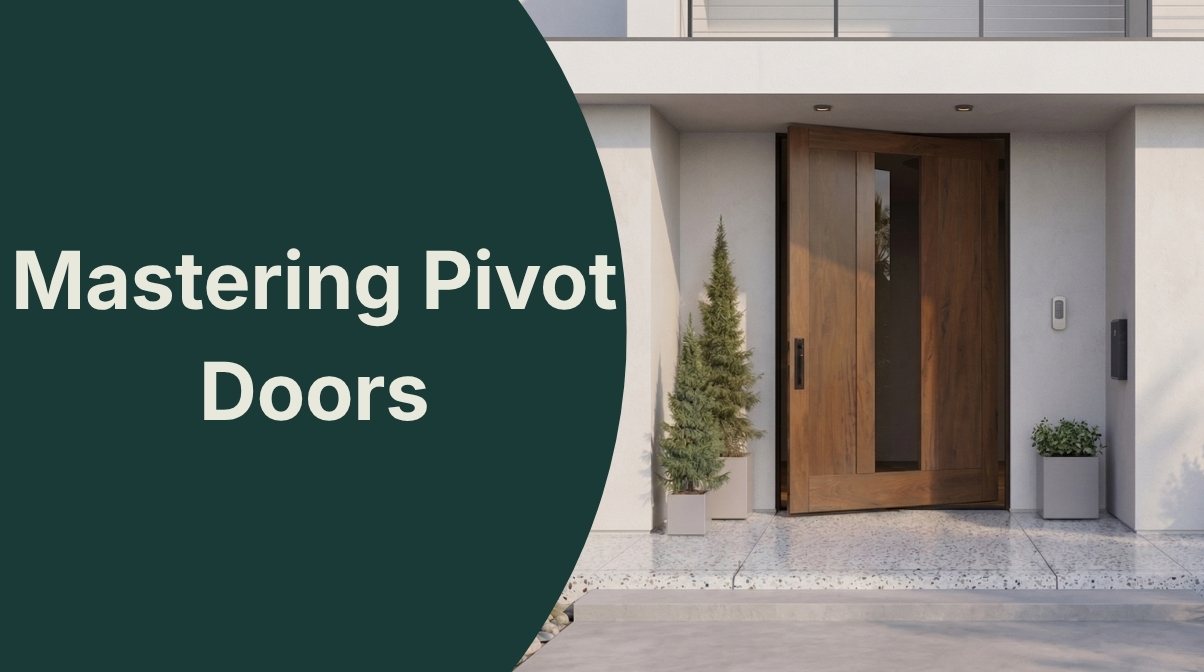
A pivot door rotates on a top and bottom pivot point instead of side-mounted hinges. The pivot point is usually set in from the door’s edge (often 100–300 mm, approx. 4–12 inches), which changes both how the door moves and how the entry feels.
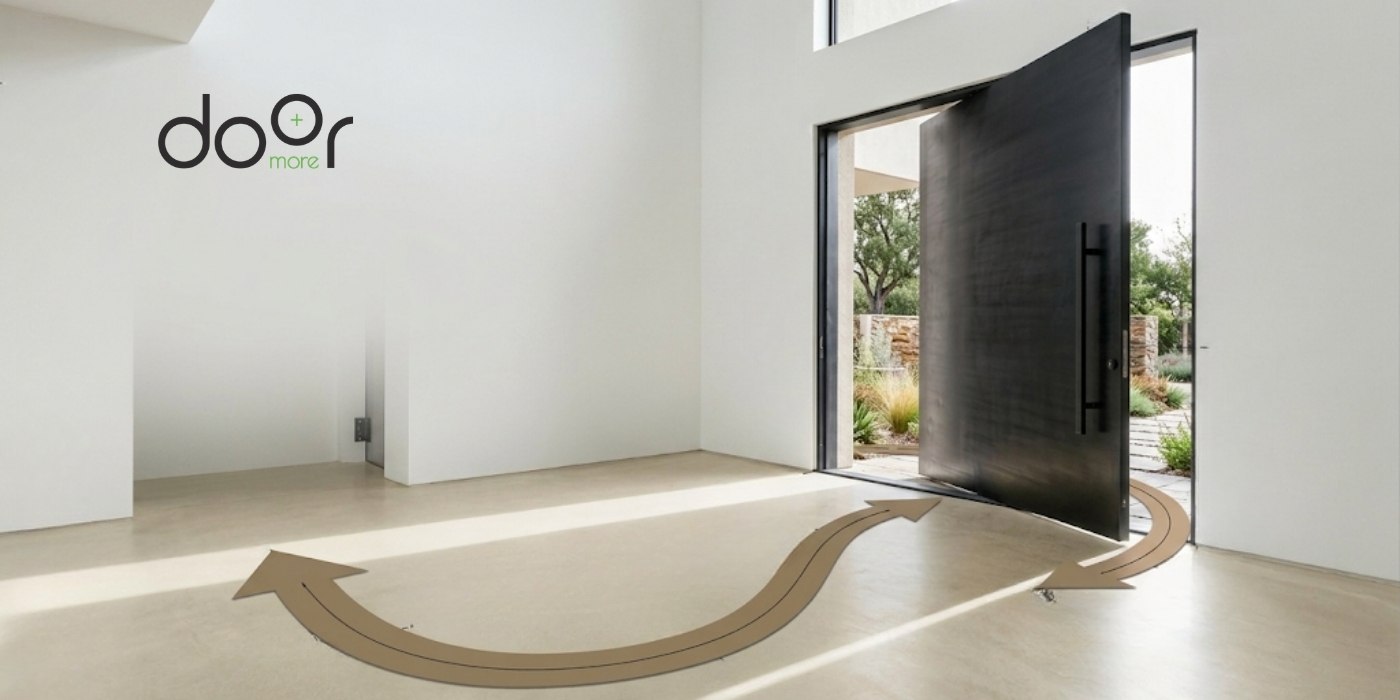
With an offset pivot, the door creates a split swing: part moves inward and part moves outward. The exact split depends on pivot placement.
This split-swing movement gives the door a surprisingly weightless, balanced feel, even with heavy, oversized panels. It is a key reason why pivot doors are a staple in modern, high-end design.
Before choosing: Confirm the clearance and swing arc. The right fit feels effortless; the wrong one creates daily friction.
When to skip a pivot door
Pivot doors are not the best choice for every entry.
If your entry is tight, the wider swing radius can interfere with walls, furniture, planters, steps, or foot traffic. Because the door may move both inward and outward, both zones need to stay clear.
If you need maximum airtightness or weather sealing, evaluate carefully. Pivot doors can have slightly larger gap tolerances than compression-sealed hinged doors, which may matter in exposed exterior conditions.
5 reasons homeowners love pivot doors
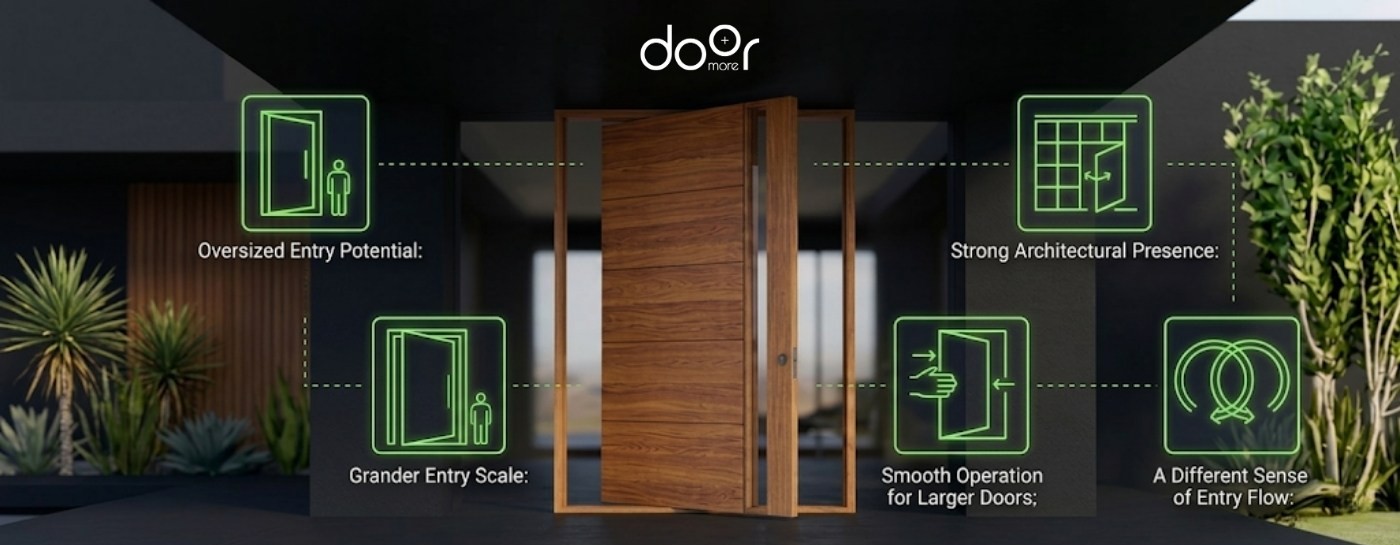
Reason 1: Oversized entry potential
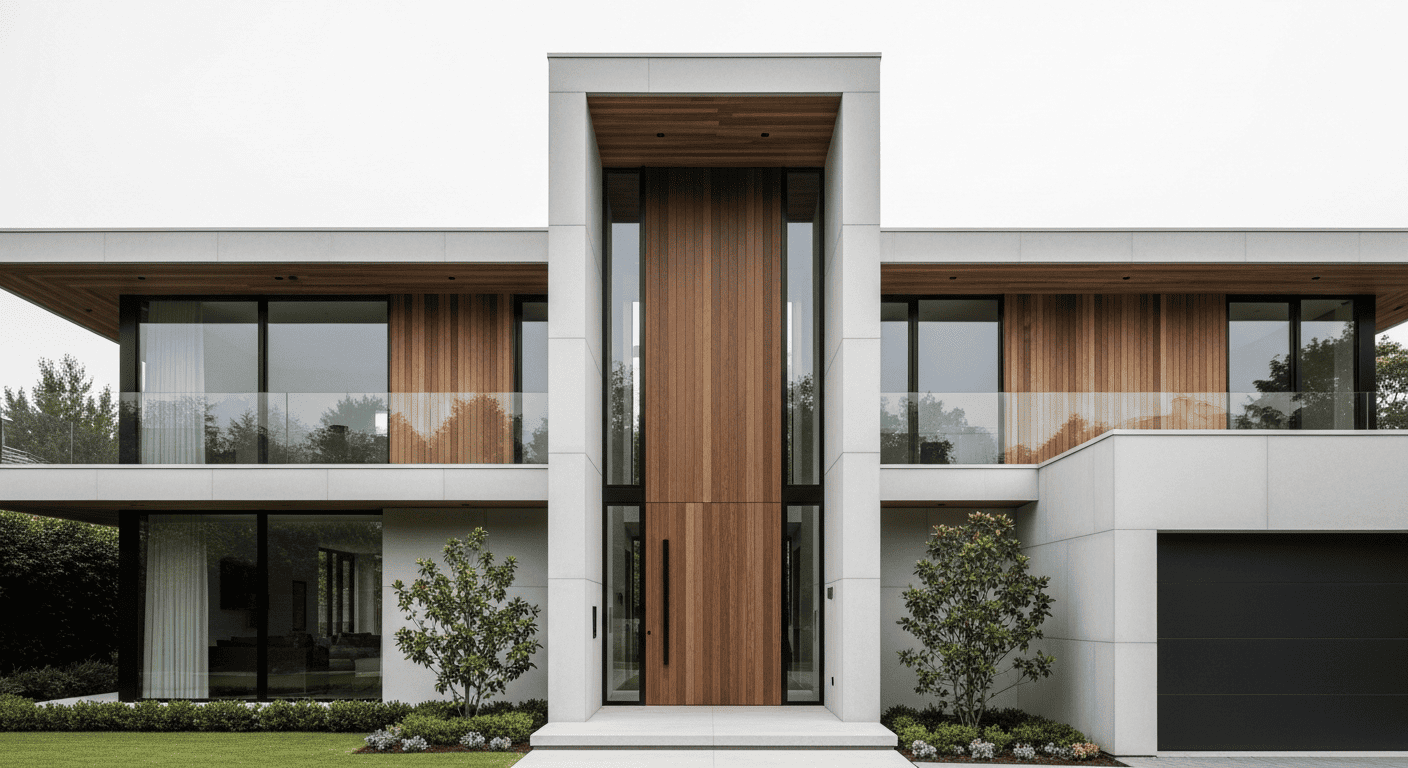
Pivot doors are often chosen when a standard door would look undersized on a wide facade or tall entry wall. In the right application, pivot doors can exceed 8 feet tall and reach 10 feet or more, with widths beyond 48 inches when properly engineered.
Larger scale helps the entry feel proportionate and can reduce the need for sidelites—but it increases the importance of clearance planning.
Reason 2: Strong architectural presence
A pivot door turns the entrance into a design feature. Its scale, motion, and proportions create a stronger visual moment than a typical hinged door. Offset pivot placement also allows asymmetry, improving facade rhythm and making the opening feel intentional.
Pivot doors are often chosen when the goal is a more substantial entry experience, not just a wider door. Because the weight is carried through the pivot system, they can support larger and heavier panels when properly engineered. This helps the entrance feel more expansive and intentional.
The usable clear opening still depends on total door width and pivot offset, so plan the pivot placement early if passage width matters.
Reason 4: Smooth operation for larger doors
With the right system, large pivot doors often feel easier to operate than expected. The weight is balanced around the pivot axis instead of hanging from hinges. Hardware quality matters—alignment and control determine how smooth the motion feels over time.
The split swing changes how the entry is experienced. Part of the door moves inward and part outward, affecting both sides of the opening. In open foyers, this can feel sculptural and refined. In tight entries, it can create conflicts.
The common mistake is choosing size first and checking the swing arc later. With pivot doors, fit should lead.
Practical checks before you commit
Use these fit validation checkpoints to confirm a pivot door will feel great after the first week, not just on day one.
•Clearance and swing arc: Map the full rotation and protect both swing zones.
•Door size: Larger doors increase both impact and planning complexity.
•Floor anchoring and structure: Loads concentrate at the pivot point—support must be adequate.
•Hardware match: Choose a system engineered for your door size and weight.
•Code and ratings: Confirm local requirements for exterior performance.
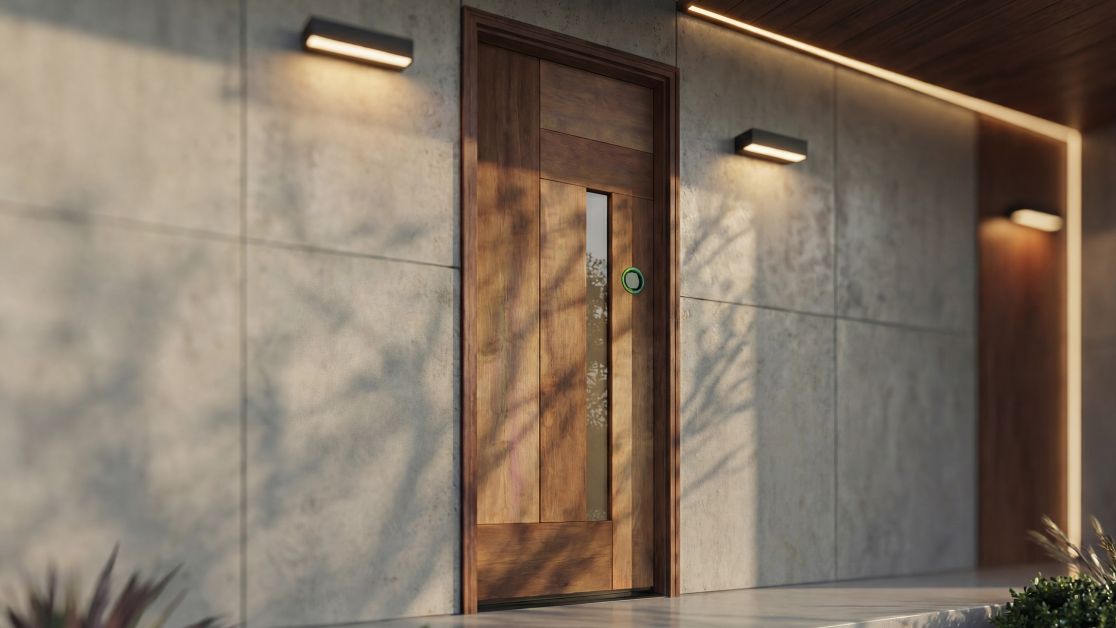
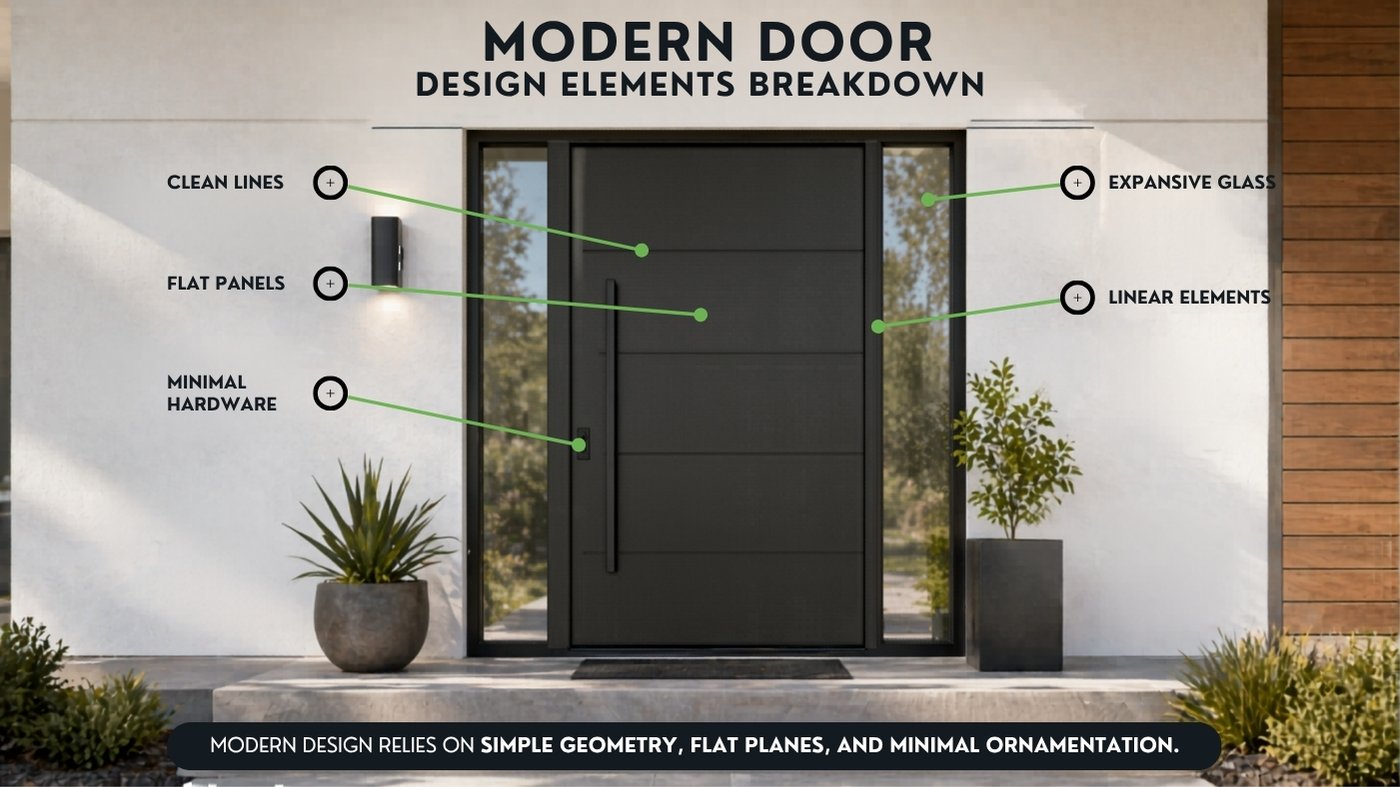
A modern entry door is defined by clean lines, minimal detail, and confident use of glass. Instead of decorative paneling, it relies on broad planes, crisp geometry, and a calm architectural presence that works well with a simple exterior. The result is a door that feels intentional, uncluttered, and visually quiet.
Here, modern means clean-lined, rectilinear, and often glass-forward when privacy allows. Contemporary can overlap, but it is a broader term for what feels current.
A pivot door can support that look, but it is not required. To narrow your direction, explore modern options or get a quick recommendation based on your facade.
Core Modern Design Characteristics
To make a door read modern from the street, start with the essentials: clean lines and minimal ornamentation. The more the design relies on simple planes and restrained detailing, the more modern it feels.
Modern exteriors tend to be rectangular, linear, and visually spare. That same language carries into the entry door. Look for rectilinear layouts, long vertical or horizontal elements, and little to no traditional detailing. When glass is used, it is often expansive and paired with sleek profiles that reinforce light, openness, and simplicity.
When reviewing product photos, focus on the overall impression. Does the door feel calm and architectural, or patterned and ornate? The quieter and more intentional it feels, the more it aligns with modern design.
Pivot Doors in Modern Design
Pivot front doors are most often used in modern design when the goal is a statement-scale entry. They can support very large door panels while reducing visible hinge lines, which creates a bold, seamless appearance.
Both pivot and hinged doors can look modern. A hinged door can feel just as clean and architectural when it uses slab-like geometry, restrained detailing, and well-placed glass.
Choose based on the visual effect you want, not the assumption that pivot is automatically more modern. For more detail, explore the Pivot Door Deep Dive.
Pivot vs Hinged for a Modern Entry
Choose based on your entry goals, not the assumption that one option is inherently more modern.
Statement scale vs standard scale:Pivot doors are often chosen for large, monolithic openings. Hinged doors remain a strong option for achieving a modern look in a more familiar size and format.
Dramatic vs restrained presence: If you want a bold, gallery-like entrance, pivot may fit that intent. If you want a quieter modern look, a hinged door can deliver clean design without oversized emphasis.
Facade fit: A large door works best when the home’s architecture supports it. Broad surfaces and large openings can carry the scale well, while smaller or more segmented facades may not.
Personal comfort: Some homeowners want modern design but prefer the familiarity of a hinged entry. That usually leads to a more balanced final choice.
If you are comparing the two, get help choosing pivot vs hinged based on your facade and privacy needs.
Materials That Read Modern
Fiberglass Doors
Durable and versatile, fiberglass doors are low-maintenance and available in smooth or textured finishes.
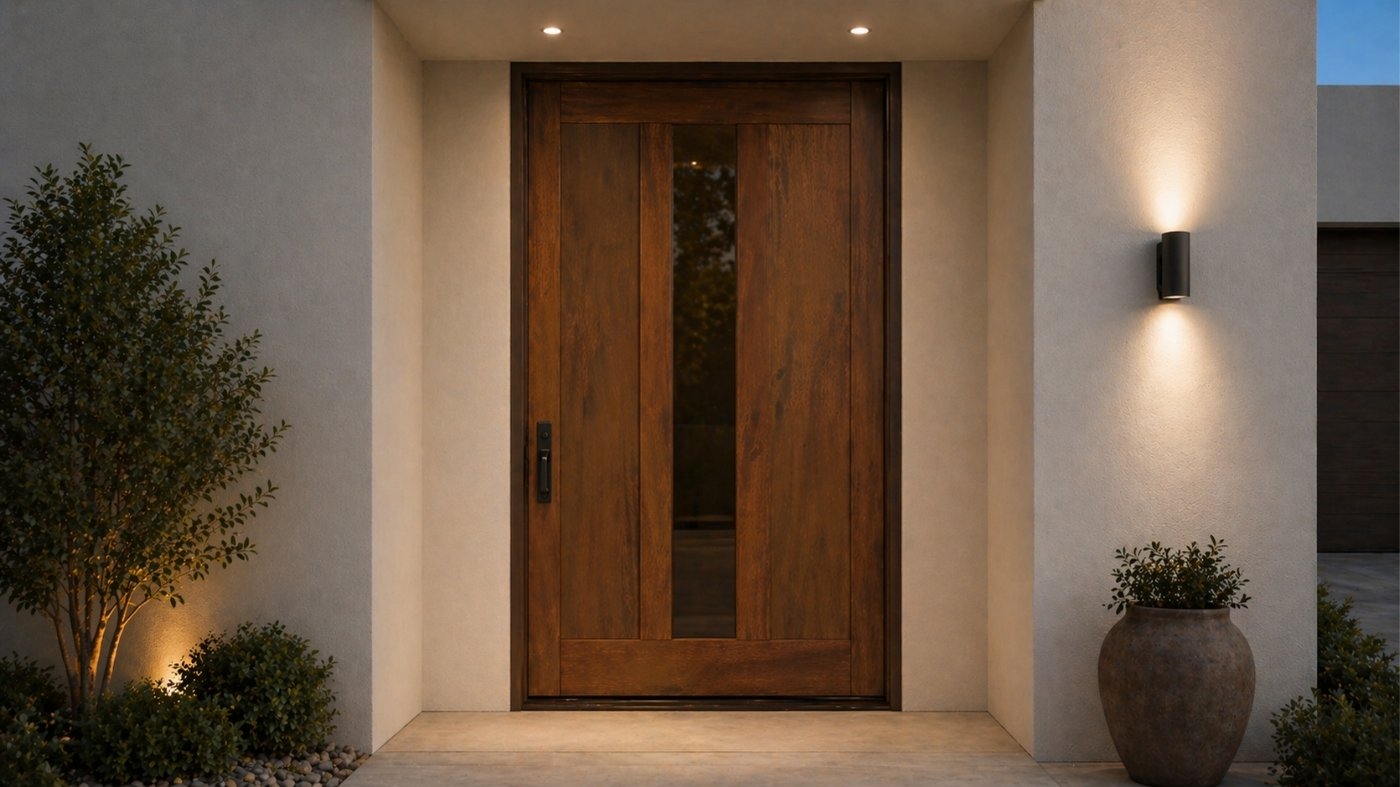
For modern exterior doors, materials should support clean geometry and simple surfaces. Common directions include warm wood with flat faces, dark metal-look finishes for a crisp appearance, smooth contemporary fiberglass, and restrained glass combinations.
The material itself matters less than how the design reads overall. Flat planes, clean edges, and low visual noise are what make a door feel modern.
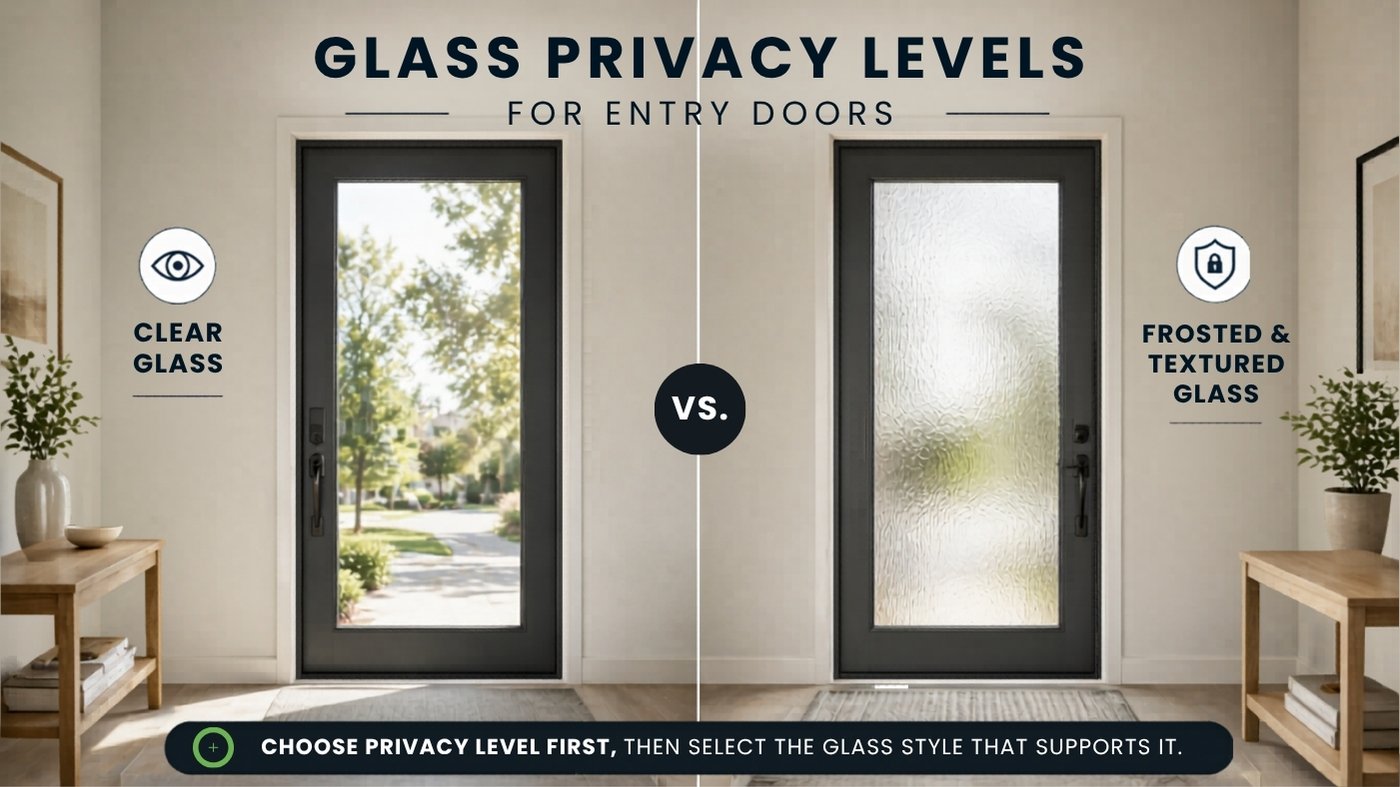
Glass is a defining feature in many modern front doors because it supports minimal lines and a brighter, more open entry. The tradeoff is straightforward: more openness usually means less privacy, especially when the door faces the street or direct approach.
You can keep the light, modern feel while improving privacy by choosing glass that reduces visibility, such as frosted, textured, or tinted options. A common mistake is choosing the look first and realizing later that the privacy level does not suit daily life. Start with privacy, then choose the glass style that supports it.
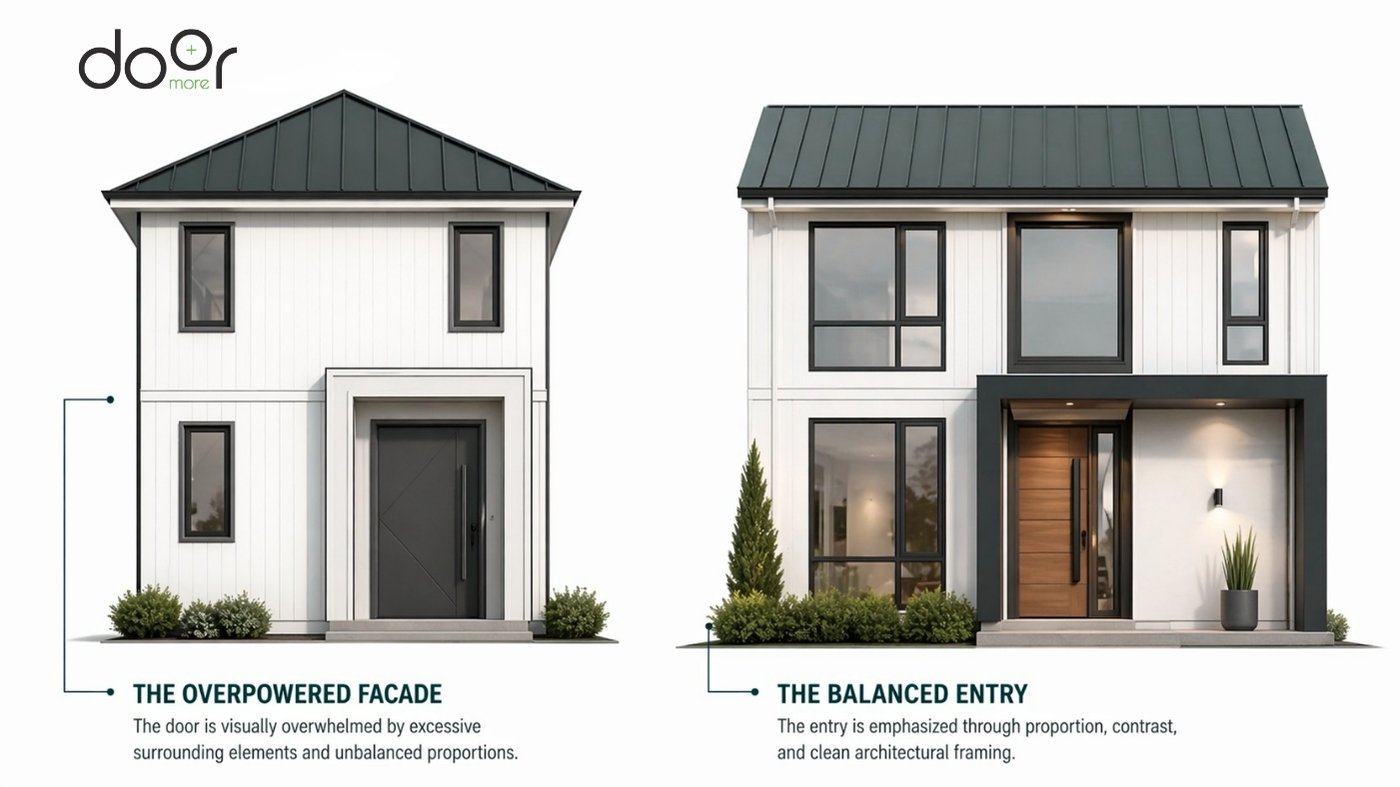
Door size has a major effect on how the entry looks and feels. In modern design, the best result usually comes when the door aligns with the larger geometry of the home instead of feeling oversized or undersized.
Use a few simple checks. Step back and look at the full facade. Does the door feel centered and composed, or does it pull attention away from everything else? Look at nearby windows and openings too. If the home uses large glass areas and wide surfaces, a larger door may feel natural. If the structure is more compact, an oversized door can feel disconnected.
To gut-check the scale, explore modern door options or share your facade for guidance.
Quick Decision Checklist
I want a modern entry door defined by clean lines and minimal ornamentation
I prefer rectilinear geometry over decorative paneling
I want glass for light and openness, and I have chosen my privacy level first
Privacy will be handled with obscure or textured glass, not guesswork
I want either statement scale or a modern look in a standard format
The door’s size aligns with my home’s overall proportions
Security will be evaluated separately based on configuration
Energy performance and maintenance will be confirmed after design direction
No. Glass is common because it supports a bright, minimal aesthetic, but a door can still feel modern without large glass panels if the geometry stays clean.
Pivot doors look simple, but the mechanics change how you specify handing, swing behavior, pivot placement, sealing strategy, and what must be structurally ready before installation. This guide helps you speak “spec” with confidence, so you can describe what you want clearly, spot risks early, and know when a decision should move into pivot system selection.
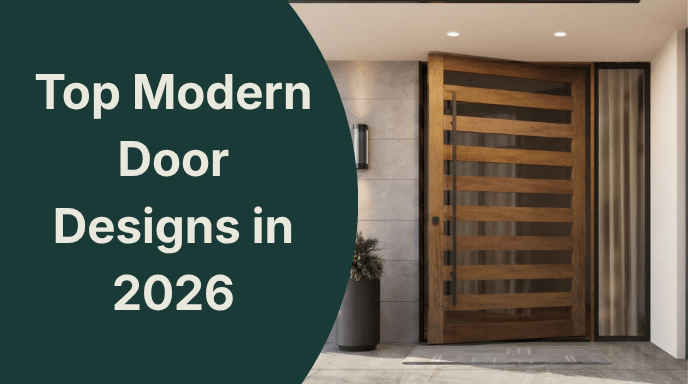
Modern door designs shape how a home is experienced from the exterior. Before anyone steps inside, the door sets the tone through its scale, its material, and how light moves across it. A well-proportioned modern door can make an entry feel more intentional and composed rather than busy or overdone.
Traditional doors often rely on heavier paneling and decorative detail. Modern doors simplify the face. They use clearer lines, fewer elements, and considered glass placement. The result often feels calmer, sharper, and more current without needing extra ornament.
Below, you’ll find 20 modern door designs selected for 2026, including options suited to both entryways and interiors. Each design includes a short note to help you understand where it fits and what direction to explore next.