Door Installation Cost in 2026
-
 By Shayan Behjati
 - Mar 30, 2026
Door installation cost in 2026 is a budgeting range—not a guarantee. Your location, the scope of work, and the condition of the opening can move the total quickly.
In this guide, “installed cost” means the door, labor, and common quote items such as hardware, removal of the old door, disposal, trim work, and basic adjustments—not just the door slab. Full repainting, refinishing, or stain work is often priced separately.
Costs vary by location, installer, and scope. The ranges below are for budgeting—not fixed pricing.
Use this guide to compare itemized quotes line by line—before you sign.
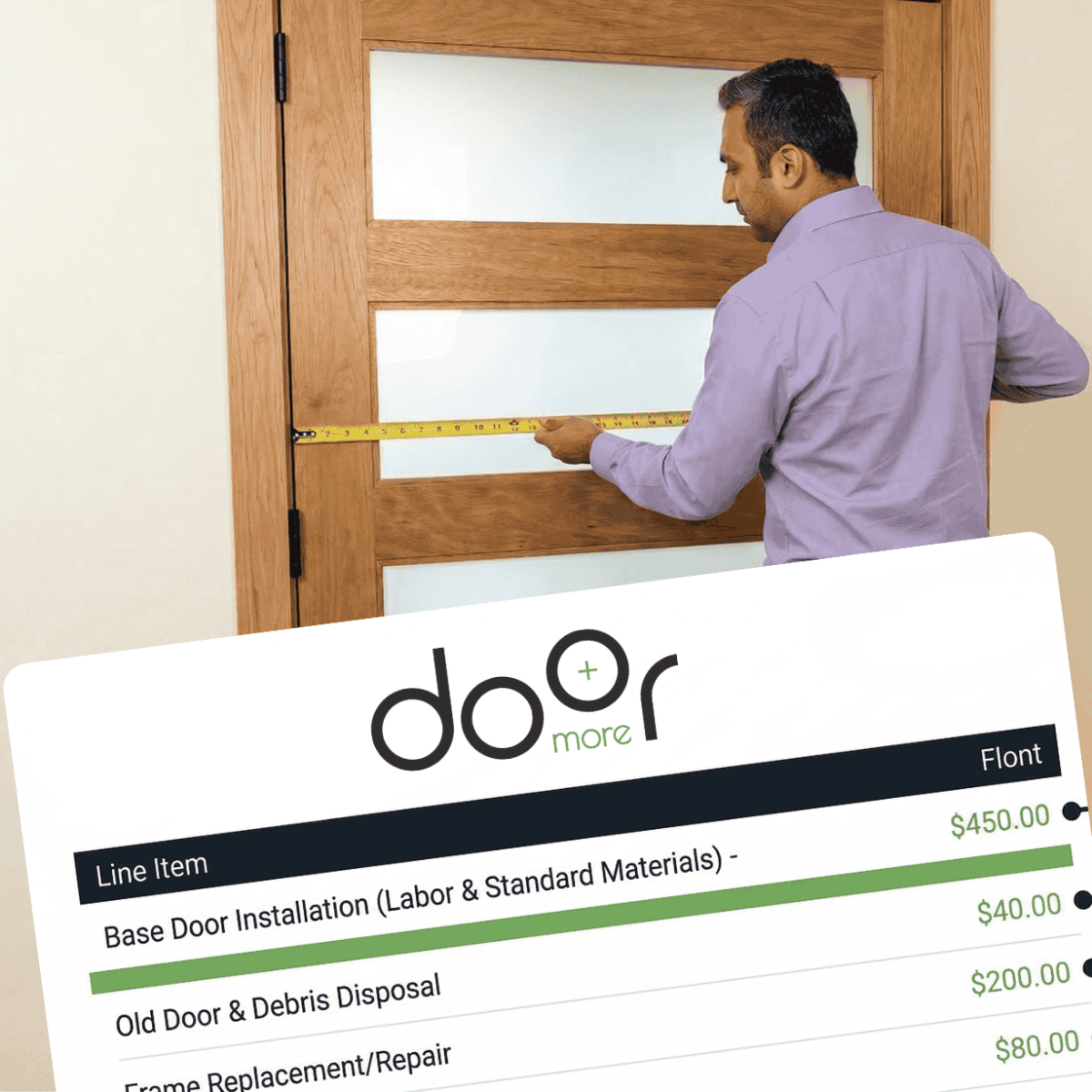
- • Budgeting ranges for interior and exterior door installation in 2026
- • How to read an itemized quote:door cost vs labor vs common extras
- • Price range tables by door type and material, using consistent assumptions
- • Interior doors (bedroom, bathroom, and closet doors)
- • Exterior doors (front entry, back doors, patio doors)
- • French / Patio doors
- • Budgeting ranges for interior and exterior door installation in 2026
- • How to read an itemized quote:door cost vs labor vs common extras
- • Price range tables by door type and material, using consistent assumptions
- • Interior doors (bedroom, bathroom, and closet doors)
- • Exterior doors (front entry, back doors, patio doors)
- • French / Patio doors
How Much Does Door Installation Cost in 2026?
Most “national average” numbers mix too many door types and scopes to be useful. For budgeting, match your project to a clear scenario first—then compare quotes against that scenario.
Overall budgeting range (all door types combined):
A widely cited range across common door projects is about $500 to $2,000 per door, with an average around $1,200. Use this as a starting point. Specialty doors and structural changes can push totals well beyond typical ranges.
Interior door installation (typical):
Most budgeting references place interior installation roughly between $350 and $1,250 installed, with an average around $800. Interior projects are usually less expensive than exterior installs because they don’t require weatherproofing or security hardware.
Exterior door installation (typical):
Exterior installation is commonly budgeted around $550 to $2,400 per door, with an average around $1,450. Projects that involve frame replacement, opening changes, or larger glass assemblies can run higher.
Two Scope Factors That Most Affect Your Total
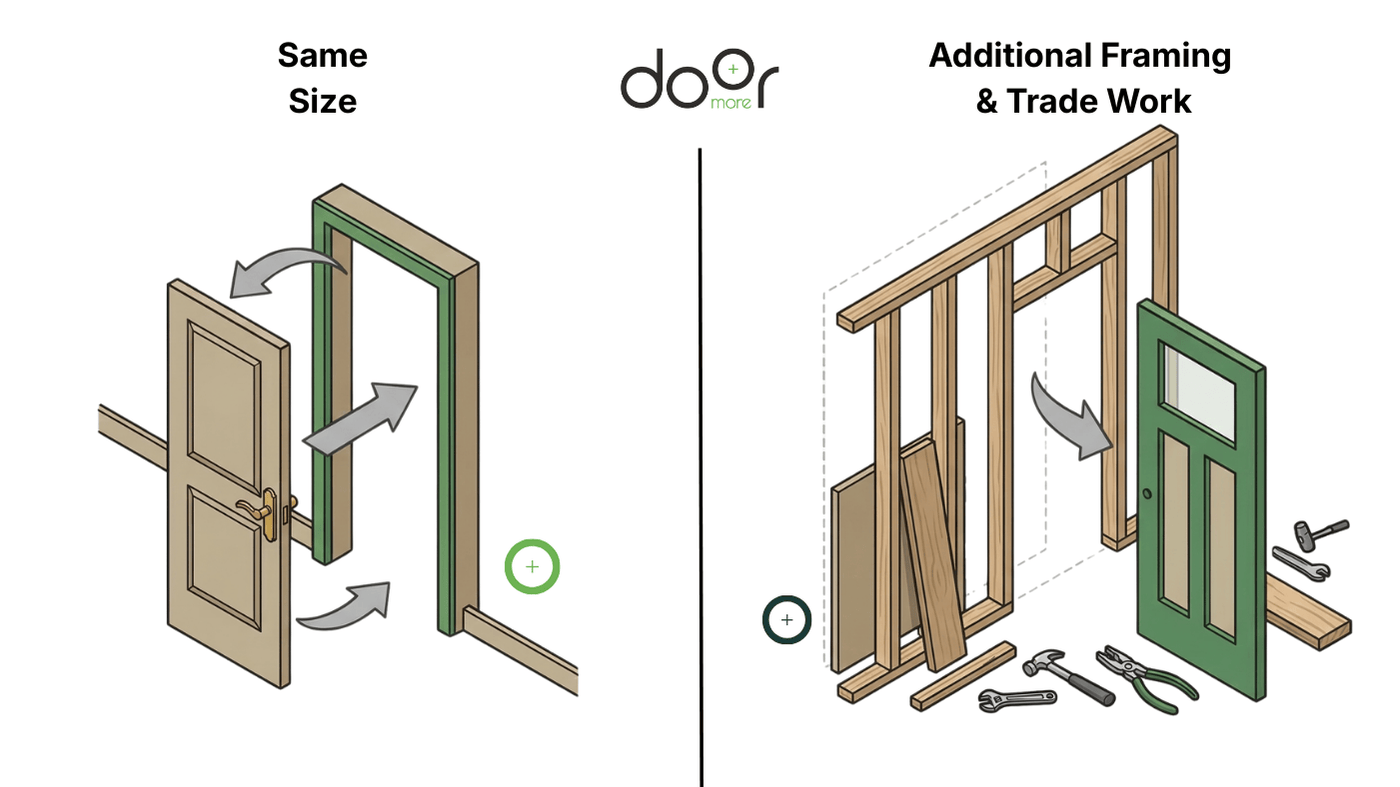
Reusing a serviceable frame and keeping the same size keeps your project closer to standard replacement pricing.
Resizing the opening or adding wall and trade work increases scope—and the total—because it’s no longer a simple swap.
Before You Compare Quotes
Label your project clearly:
- Interior vs exterior
- Existing-opening replacement vs new or resized opening
That simple classification prevents apples-to-oranges comparisons—and makes quote review faster and clearer.
Cost breakdown overview: door cost vs labor vs common extras
Most door quotes have three parts: the door and related parts, labor, and common extras that may be priced separately. The biggest surprises usually come from scope assumptions that aren’t written down—especially around frame condition, disposal, trim, hardware, glass assemblies, weather sealing, and opening changes.
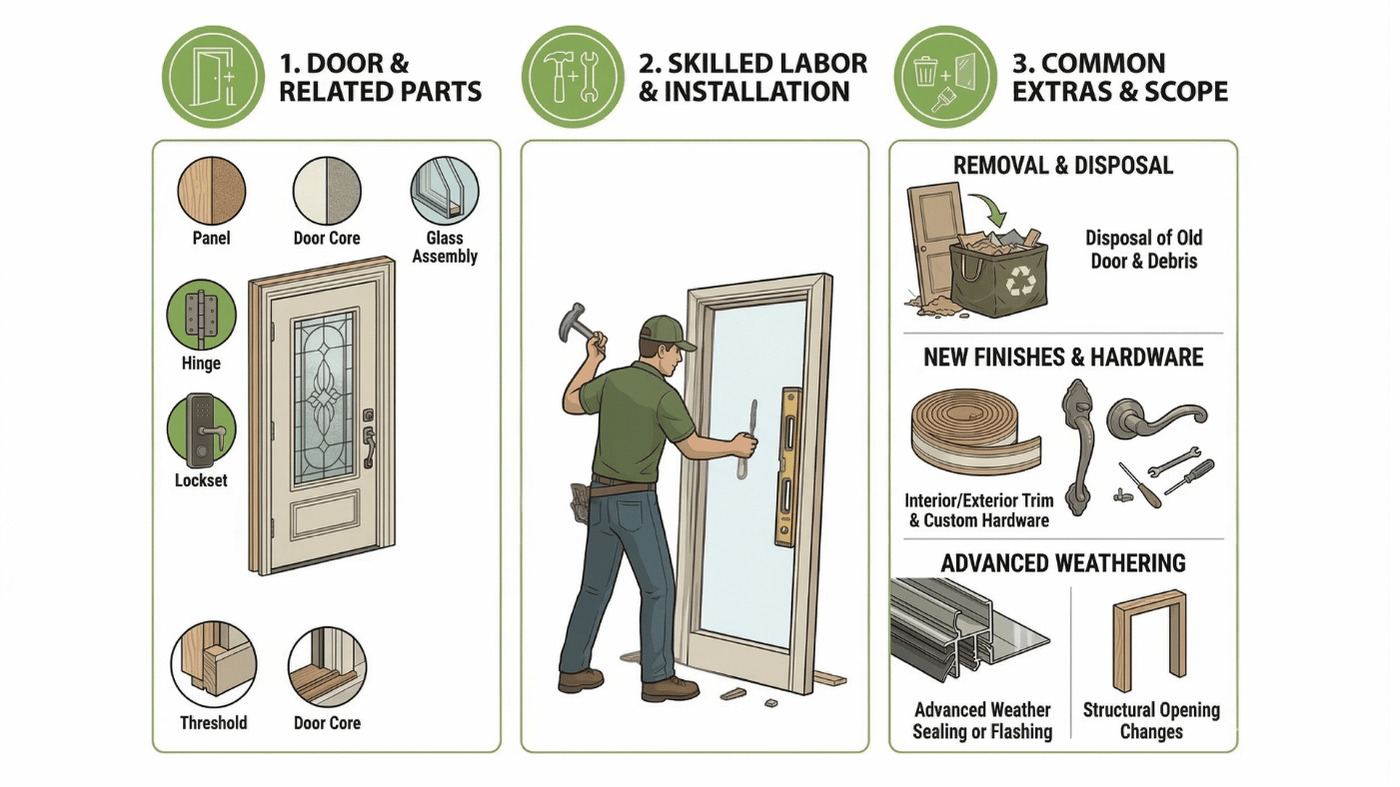
The door system can vary widely in price depending on type and complexity, from a basic single door to a multi-panel system.
Hardware packages can add cost, especially if you change locksets or upgrade to smart locks.
Glass panels, sidelights, and transoms can materially increase cost and complexity because they often require a larger rough opening and a more involved installation.
For exterior installs, major cost guides commonly place labor at roughly 30% to 35% of the total bill.
Time is a major factor. A straightforward installation may take a few hours, while reframing and customizations can stretch the job to multiple days.
Common extras to review in the quote:
- Removal and disposal: Often itemized. Some guides show haul-away around $40 to $200 and disposal around $60, while others cite smaller removal line items (for example $20 to $50).
- Trim and casing: Often priced per linear foot and may be added or replaced if existing trim is removed or damaged during the work.
- Weather sealing components: Exterior installs often include basic sealing and may include items like a door bottom sweep in some itemized examples. Ask what weatherstripping, sweeps, and related sealing materials are included versus priced separately.
- Threshold changes: If the threshold is damaged, incompatible with the new door system, or needs adjustment for fit or water control, it may appear as a separate line item (replacement or modification).
- Scope shift from swap to structural work: If the job changes from using an existing frame to resizing an opening or adding a door in a new location, the quote often expands to include wall work and possibly other trades.
A clean, comparable quote should clearly spell out what’s included and excluded—especially finishing, trim, hardware, disposal, and any glass or weather-seal components. If you don’t see those details, ask whether they’re bundled into other lines or omitted.
Installed Cost by Door Type
The costs below are budgeting ranges pulled from published guides. Most assume basic, mid-range work in serviceable conditions. Use the scope assumptions and what can raise the price columns to line up the table with your quote.
How to read this table
- Treat ranges as budget planning, not guaranteed pricing.
- Serviceable opening means the existing opening and frame are in usable condition, with no structural changes needed.
- If your quote includes opening changes, wall work, or glass assemblies, compare it to the what can raise the price column—not just the base range.
Interior doors (bedroom, bathroom, closet)
| Door type (examples) | Installed cost range (planning) | Scope assumptions | What can raise the price |
|---|---|---|---|
| Interior slab door (bedroom or bathroom) | $450 to $700 per door | Installing a slab into an existing jamb opening in a serviceable opening | Frame repair or replacement, trim and moldings, finishing or painting, hardware changes beyond basic fit |
| Interior prehung door (bedroom or bathroom) | $525 to $800 per door | Installing a prehung unit in a serviceable opening | Opening changes, expanded trim work, finishing |
| Bifold door (closet) | $425 to $850 per unit | Typical bifold installation in a serviceable opening | Nonstandard assemblies, opening changes, expanded finish carpentry |
| Pocket door (interior, often bathroom or closet) | $800 to $2,500 installed | Pocket doors are typically treated as higher-complexity interior work | Wall and framing changes that move the job beyond a simple swap |
Exterior doors (front entry, back door, patio)
| Door type (examples) | Installed cost range (planning) | Scope assumptions | What can raise the price |
|---|---|---|---|
| Steel entry door (front entry or back door) | $650 to $950 per door | Standard steel entry install without major framing changes; itemized examples may include common entry hardware elements and a door bottom sweep or seal | New opening work, glass assemblies, significant exterior finish repair, or frame replacement |
| Fiberglass entry door (front entry or back door) | $700 to $1,050 per door | Standard fiberglass entry install in a serviceable opening | Multi-panel systems, extensive reframing, added assemblies |
| Wood entry door (front entry or back door) | $650 to $975 per door | Standard wood entry door install in a serviceable opening | High-end custom doors, expanded finishing scope, structural changes |
| Exterior installation (typical, broad planning) | $550 to $2,400 per door (average about $1,450) | Aggregated national exterior door install ranges for typical projects | Complex installs can run well above typical ranges, especially with structural changes |
Exterior doors (front entry, back door, patio)
Specialty doors (sliding, French, pocket, barn)
| Door type (examples) | Installed cost range (planning) | Scope assumptions | What can raise the price |
|---|---|---|---|
| Sliding patio door (patio, set into rough opening) | $1,000 to $1,525 per unit | Sliding patio door unit installed into a rough opening under basic assumptions | Structural opening modifications, exterior finish repair |
| Replacement patio door (patio, fit to existing jamb) | $1,000 to $1,550 per unit | Replacement scope to fit an existing jamb under basic assumptions; itemized examples may include debris disposal as a separate line | Jamb rebuild, wall finish repair, disposal and hauling if not bundled |
| French doors (patio) | $1,700 to $2,600 per unit | French doors installed in a serviceable opening; optional opening framing may appear as an add-on | New opening framing, glass assemblies, custom systems, expanded finish work |
| Barn door (interior, often bedroom or closet) | Varies by scope | Specialty interior door using surface-mounted track hardware | Track and hardware package, wall backing or reinforcement, trim repair where old casing was removed, and finishing scope may appear as separate line items (Confirm inclusions on the quote). |
Specialty doors (sliding, French, pocket, barn)
Bring the row that matches your door type into your quote review, and confirm the scope assumptions in writing.
- If you’re comparing two quotes for the “same” door, confirm whether both assume frame reuse, or whether one includes frame work. Frame work can be a separate cost driver.
- Patio and French door totals often shift with opening condition and surrounding finishes, so ask whether exterior finish repair and disposal are included or priced separately.
- If your project includes sidelights, transoms, or large window panel assemblies, don’t compare it to a standard single-door row. Those assemblies can materially increase cost and installation complexity.
Installed Cost by Material
Material affects installed cost through how the door system is built and what the installation scope typically includes. Published ranges also assume mid-range work in serviceable conditions, so treat them as budgeting estimates, not guaranteed pricing.
- Handling and fit: The door’s material and construction can affect how much on-site adjustment and fitting is needed under real conditions.
- Finishing scope: Some quotes exclude finishing, paint, or stain—even when your door choice makes finishing a bigger share of the total.
- Hardware package assumptions: Hardware choices can shift both parts cost and labor, especially for exterior security hardware and smart locks.
- Glass and assemblies: Glass panels, sidelights, and transoms can materially increase complexity and cost when they expand the opening or change the overall assembly.
| Material | Installed cost range (budgeting) | Scope assumptions | What can raise the price |
|---|---|---|---|
| Wood (exterior examples) | $650 to $975 per door | Standard wood entry door install in a serviceable opening | High-end custom doors, expanded finishing scope, structural changes |
| MDF / engineered (common interior applications) | Varies by scope | Often used for interior doors where the install looks similar to other interior door installs | Finishing scope and trim work may still be priced separately depending on the quote (Confirm what finishing and trim are included.) |
| Steel (exterior examples) | $650 to $950 per door | Standard steel entry install without major framing changes; itemized examples may include a door bottom sweep or seal | Glass assemblies, new opening work, expanded exterior finish repair, or frame replacement |
| Fiberglass (exterior examples) | $700 to $1,050 per door | Standard fiberglass entry install in a serviceable opening | Multi-panel systems, extensive reframing, added assemblies |
| Glass (full-lite doors, sliding glass doors, and other glazed-heavy designs) | Varies by door type and assembly | Cost depends on whether the glass is part of a standard unit or part of a larger assembly | Sidelights, transoms, and large window panel assemblies can materially increase installed cost due to larger openings and more complex installation |
Confirm what material your quote assumes, and what prep, finishing, weather sealing, and hardware are included before you compare totals.
Labor Costs in 2026: Hourly vs Flat Rate, What’s Included vs Extra
Installers typically price door labor either as an hourly rate (often with a minimum charge) or as a flat rate per door with stated inclusions and exclusions.
Hourly labor pricing
A commonly cited hourly range for door installers is about $30 to $90 per hour. Even with the same hourly rate, the total still depends on scope, job complexity, and site conditions.
Flat-rate labor pricing
Flat-rate quotes are easier to compare—if they clearly state what’s included and what’s extra.
Flat-rate pricing often reflects minimum labor charges or service minimums. That’s one reason a single-door project can look higher per door than a multi-door bundle.
Minimum charges and why small jobs can surprise you
Itemized estimating examples often show a minimum labor concept (for example, a two-hour minimum). This helps explain why a single-door project may price higher per door than installing several doors at once.
Timeline drivers that affect labor
- Hanging a prehung door is commonly cited at about 2 to 3 hours in typical conditions.
- Professionals often take about 2 to 4 hours to install a new exterior door in typical conditions.
- Reframing and customizations can extend a job to multiple days.
A quick scope note on terms you’ll see on quotes
A prehung door is sold already mounted in a frame. A slab is the door alone. Labor and common extras can differ depending on whether the frame is part of the scope. For a deeper explanation, see the prehung vs slab guide.
Licensed vs unlicensed installers
In some areas and scopes, contractors may be required to be licensed, bonded, or insured. That can influence how a quote is structured and what documentation is provided.
For example, it can affect:
- How permits are handled (when applicable)
- Whether proof of insurance is available
- What accountability looks like if follow-up adjustments are needed
Requirements vary by location and job scope. Treat this as a verification step: ask what credentials apply to your project, and request that any permit-related scope appear as a separate line item when relevant.
What labor usually includes (high level)
- Removing the old door
- Preparing the frame
- Setting the new door and ensuring it is square and sealed
- Basic setup and cleanup
What is often extra (high level)
- Lockset installation
- Door finishing
- Moldings
- Trim, painting, reframing, glass accents, and disposal
Ask the installer which scope your quote assumes, and request that inclusions and exclusions be written as line items so you can compare bids fairly.
Factors That Affect the Installed Price
Use this checklist to annotate your quote and spot missing line items before you approve the work
- ✓Interior vs exterior:
Exterior installs usually cost more because they include weatherproofing and higher-security hardware that most interior doors don’t require. - ✓Door type and complexity:
Pocket doors and multi-panel systems can add labor and materials compared with a straightforward slab swap. - ✓Existing frame condition:
If the frame is damaged, out of square, or incompatible with the new door, replacement can add real cost compared with reusing a serviceable frame. - ✓Need for a new exterior frame:
Some guides cite exterior frame add-ons in the low hundreds, especially when the door size changes. - ✓New frame installation:
Itemized estimates often list frame installation as its own scope item that may be priced separately. - ✓Resizing the opening or adding a new opening:
Structural changes increase cost because the job can expand into framing and wall work, and may involve other trades. - ✓Opening framing costs:
Itemized framing estimates commonly treat new opening work as a distinct cost component, separate from the door installation itself. - ✓Disposal, haul-away, and debris:
Often itemized, and it may be bundled or separate depending on the contractor. - ✓Trim and casing work:
Frequently priced per linear foot and may be added if trim is disturbed or replaced. - ✓Hardware choices:
Hinges, deadbolts, and smart locks can add cost, and hardware choices can also affect labor time. - ✓Glass panels, sidelights, and transoms:
These assemblies can materially increase installed cost and complexity because they often require larger openings and more involved installation. - ✓Weather stripping and sealing details:
Exterior installs involve sealing, and some itemized examples include a door bottom sweep or seal. Ask what weatherstripping, sweeps, and related sealing components are included versus priced separately. - ✓Threshold replacement or modification:
Threshold condition and fit can change the scope and may be itemized if replacement or adjustment is needed. (Confirm what the quote includes.) - ✓Time and schedule complexity:
A straightforward install may take a few hours, while reframing and customizations can stretch to days, which affects labor. - ✓Scope clarity on finishing:
Many examples and guides treat finishing, paint, and moldings as add-ons, so confirm what your quote includes.
New Installation vs Replacement: What Changes in Scope and Price
The biggest pricing jump usually happens when a project moves from a like-for-like replacement in an existing opening to new opening work or resizing. Think in terms of components and scope—not a single “price difference.”
Replacement in an existing opening
Interior replacements are commonly budgeted in ranges like $375 to $1,125 installed for typical interior doors, assuming the scope stays straightforward.
Exterior replacements are commonly budgeted around $550 to $2,400 per door for typical projects, with wide variability driven by door type and scope.
Replacement projects are more likely to stay within typical ranges when the existing frame is reusable and the new door fits the current opening.
New installation or resizing an opening
When you add a door in a new location or resize an opening, cost guides tie higher totals to framing work, modifying surrounding wall materials, and possible involvement of other trades.
Itemized estimates often show door opening framing as its own cost component, separate from the door installation itself.
Some guides also cite example hourly rates for additional trades that may be involved when wall work expands—such as drywall, electrical, or plumbing.
Checklist to classify your scope
- Is the door going into an existing opening or a new location?
- Are you keeping the same door size and reusing the existing frame?
- Is there visible frame damage or out-of-square alignment that suggests frame replacement?
- Does the quote include wall repair or additional trades, signaling the job is more than a simple door swap?
If your quote includes wall changes, request itemized trade line items so you can compare bids fairly. For rough opening sizing guidance, see the rough opening guide for bifold doors.
Commercial vs Residential: Cost Drivers That Can Change the Total
Commercial installs can look similar to residential on the surface, but the total price often shifts because hardware requirements, site access, and scheduling constraints can change labor time and line items.
Hardware packages
Locks and hardware are often more complex in commercial settings, which can increase both parts cost and labor time.
Access and scheduling
Limited access windows, coordination with tenants or building management, and restricted work hours can increase labor time—even if the door itself is similar.
Disposal and site rules
Removal and debris handling may be more strictly itemized depending on site requirements and building policies, which can affect the total.
Glass assemblies
Commercial entries more often include sidelights, transoms, or larger glazed assemblies, which can increase installation complexity and overall cost.
Some projects may also involve accessibility-related requirements or rated door assemblies, which can change hardware, materials, and overall scope. (Requirements vary depending on your location and the type of project)
Ask whether your quote assumes residential or commercial hardware, access conditions, and site constraints so you can compare bids on the same scope—and compare totals fairly.*
Costs Often Priced Separately
Most surprise add-ons aren’t truly hidden—they’re either omitted from the base scope or bundled without being clearly spelled out. This checklist highlights scope items that are often omitted or priced separately.
Budget checklist
- ✓Removal, haul-away, and disposal fees:
Often itemized, these costs cover the labor and fees associated with getting rid of your old door and project debris. - ✓Frame replacement or a new frame:
Additional costs apply if the existing frame isn’t reusable, is damaged, or if the door size changes. - ✓Trim and casing replacement:
Costs may increase if interior or exterior trim is disturbed during installation or if you choose to upgrade to a new style. - ✓Hardware upgrades:
Premium choices beyond a basic fit, including high-security deadbolts or smart locks, can add to both material and labor costs. - ✓Glass assemblies (Sidelights or Transoms):
These features require a larger opening and more complex installation, materially increasing the total project cost. - ✓New opening work or resizing:
Structural changes and surrounding wall repairs add complexity if the project isn’t a straightforward slab or pre-hung replacement. - ✓Finishing scope:
Final details like paint, stain, and finish moldings are often excluded from base install quotes and may be treated as add-ons. - ✓Weather stripping and sealing:
Confirm if sweeps, seals, and other weatherproofing components are included in your base quote or priced separately. - ✓Threshold replacement or modification:
Adjustment or replacement may be necessary if the existing threshold is worn or incompatible with the new door system.
Sample quote line items to look for

- +“Remove existing door” or “Demo and haul-away”:
Estimates typically cite roughly $40 to $200 for haul-away and about $60 for disposal; some contractors may list specific removal labor as a separate line item. - +“Install door frame” or “Replace frame”:
Frame replacement commonly averages $200 to $650. Itemized installation for basic setups often falls within the $350 to $600 range. - +“New exterior frame” add-on:
When a new frame is required due to size adjustments or poor condition, costs are frequently cited between $130 and $380. - +“Trim or casing” work:
Interior trim typically runs $0.50 to $1.50 per linear foot, while exterior casing averages $0.60 to $1.20, with ornate profiles increasing the price. - +“Hardware allowance” or “Lockset install”:
Costs vary by choice; while basic installs are minimal, high-end or smart lock hardware is often cited up to $300 in many pricing guides. - +“Sidelights” or “Window panel assemblies”:
Reflecting higher complexity and larger structural openings, these add-ons range from several hundred to low thousands of dollars.
Permits and inspections may apply—especially when you change an opening or alter structural elements. Requirements vary depending on your location and the type of project. Confirm locally, ask your installer what applies to your scope, and request that any permit-related costs be clearly itemized.
DIY vs Hiring a Pro: Savings vs Risk
DIY can reduce labor cost on paper, but the real budget risk is the cost of mistakes—especially with exterior doors, where security and sealing matter. Some guides cite potential DIY labor savings in the rough range of $75 to $150 or more on certain exterior installs, depending on scope.
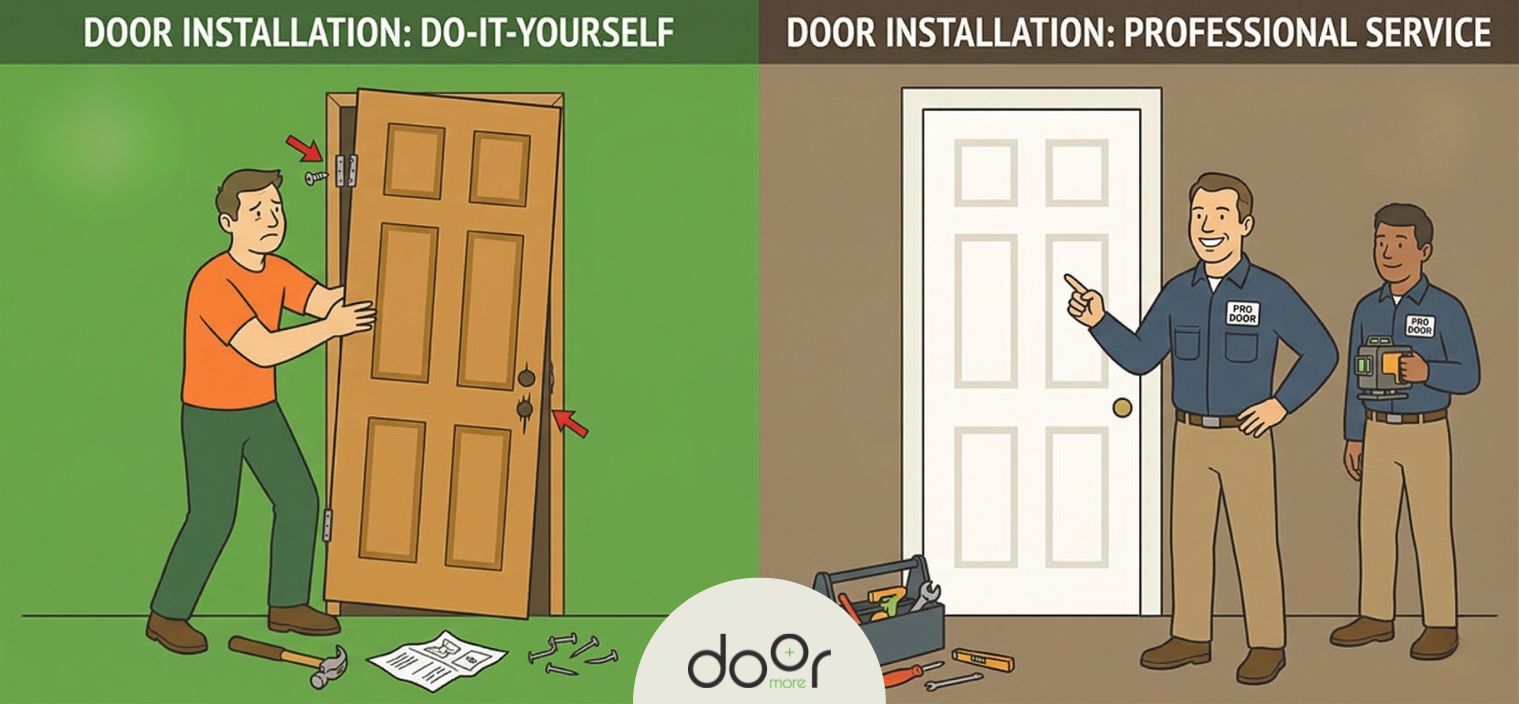
Incorrect installation can lead to performance problems such as drafts or water intrusion, which may create additional repair costs later.
Quotes often separate “basic install” from finishing, trim, and hardware. If you handle the install yourself, you may still need to pay for some of those add-ons separately.
Labor is commonly cited at roughly 30% to 35% of typical exterior installation totals, so your actual savings depend on which labor items you truly remove—and which ones remain.
Time is another factor. A straightforward install may be manageable, but reframing or customizations can expand the job quickly.
If you’re looking for step-by-step instructions, see the dedicated door installation and assembly guide. That page focuses on procedure, while this guide stays focused on budgeting and quote comparison.
Cost Reduction Without Shortcuts
Lowering the installed total is usually about reducing scope drivers and clarifying what’s included—not cutting sealing, durability, or safety.
- Keep the existing frame when it’s serviceable. Frame replacement adds cost, so reusing a sound, square frame can help keep the total closer to standard replacement ranges instead of moving into new-opening or structural pricing.
- Choose a door that fits the current opening when possible. Resizing an opening increases scope and may require wall work and additional trades.
- Bundle multiple doors if you have them. Some guides note that multi-door projects can soften minimum charges, which tend to hit harder on single-door jobs.
- Confirm what’s included versus priced separately. Pay close attention to disposal, trim, finishing, hardware allowances, and weather sealing components before you sign.
- Ask whether removal and disposal are bundled or itemized. Published examples frequently show these as separate line items, which can affect the total.
FAQ
A widely cited budgeting range across common door projects is about $500 to $2,000 per door, with an average around $1,200. Actual totals vary based on scope and site conditions.
Interior door installation is commonly budgeted around $350 to $1,250 installed, with an average around $800. Totals vary based on frame condition and whether finishing or trim work is included.
Exterior door installation is commonly budgeted around $550 to $2,400 per door, with an average around $1,450. Projects that involve opening changes, frame replacement, or larger assemblies can run higher.
Door installer labor is commonly cited around $30 to $90 per hour, though many jobs are quoted as flat rates per door. In typical conditions, hanging a prehung door is often cited around 2 to 3 hours, and installing a new exterior door around 2 to 4 hours. Reframing and customizations can extend a job to multiple days.
Common drivers include disposal and haul-away, trim and casing work, hardware upgrades, glass panels and sidelights, and any shift from a simple replacement to opening changes or wall work.
It depends on scope. A prehung door includes the frame, which can change labor and common extras compared with a slab-only swap. Price comparisons depend on whether the quote assumes a slab into an existing jamb or a prehung unit.
Sometimes. Some quotes include basic installation and fit, while hardware allowances, lockset installation, or upgrades may be listed separately.
Published budgeting ranges vary widely by product and wall condition. Totals depend on track hardware, wall reinforcement, trim repair, and finishing scope.
French door installation is often cited around $1,700 to $2,600 per unit under basic assumptions. Sliding patio door installation set into a rough opening is often cited around $1,000 to $1,525 per unit, and replacement patio door scope to fit an existing jamb around $1,000 to $1,550 per unit.
Sometimes. Permits are more likely if the project changes the size of the opening, adds a new opening, or involves structural wall work. A straightforward replacement in an existing opening often does not require a permit, but rules vary by location. If you’re unsure, ask your installer whether a permit applies to your scope and confirm with your local building department.