Exterior Front Entry Door Design Trends, 2025–2026
-
 By Shayan Behjati
 - Dec 18, 2025
Abstract
This design brief examines how exterior front entry doors are being composed in contemporary residential architecture for 2025–2026. It focuses on scale, proportion, material expression, glazing strategies, geometry, and the integration of concealed access technology as architectural decisions rather than product features. The intent is to document prevailing design directions shaping the residential threshold in design-driven homes.
In contemporary residential architecture, the front entry door has evolved from a functional closure into a primary architectural element. It is now treated as a threshold — a deliberate moment of transition that communicates scale, material intent, and spatial hierarchy before the interior is revealed. Across recent residential work, the entry door increasingly operates as an extension of the façade itself, shaping first impression through proportion, surface, and light rather than ornament or excess detail. The following sections outline the dominant directions shaping exterior front entry doors in 2025–2026. These are not stylistic prescriptions or product categories. They describe how architects and designers are currently composing the threshold in design-driven residential projects, and what considerations are shaping those decisions.
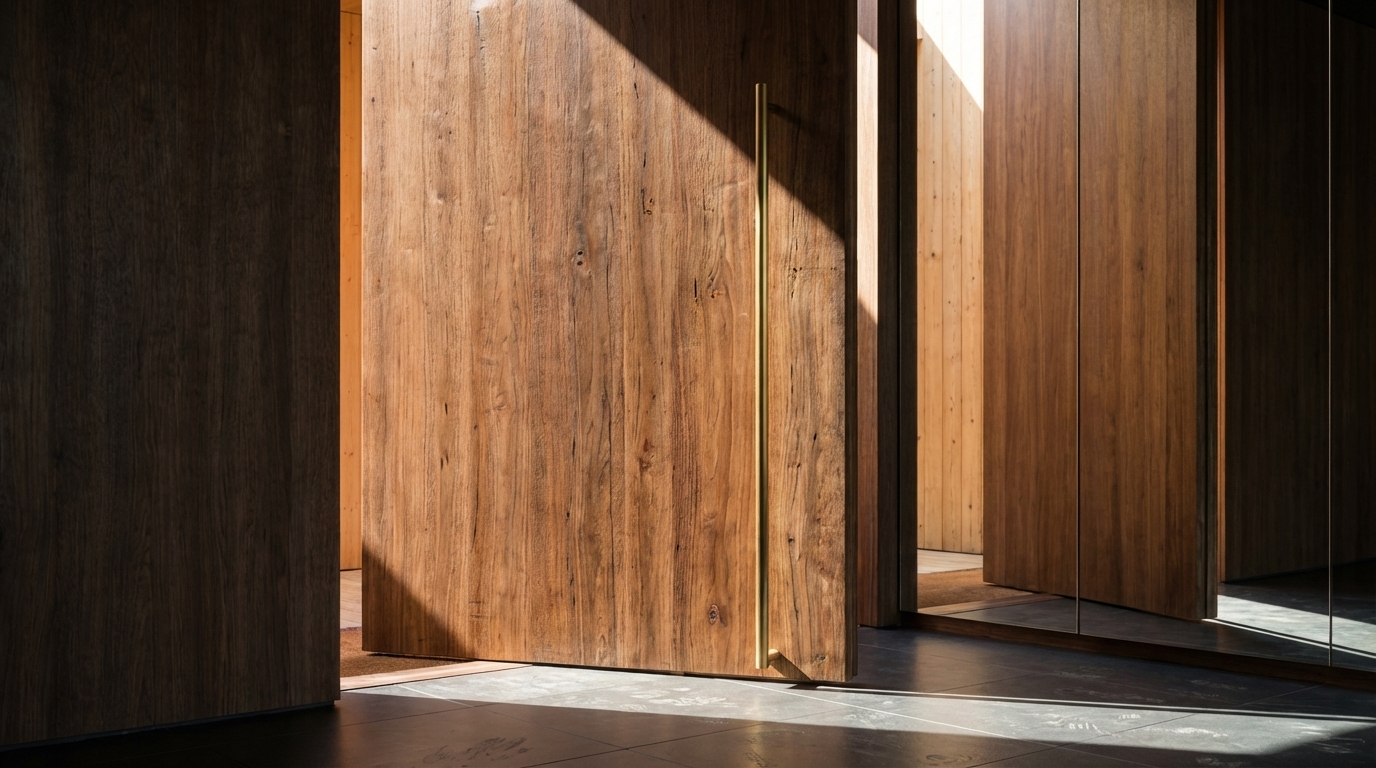
1. Scale as the primary design gesture
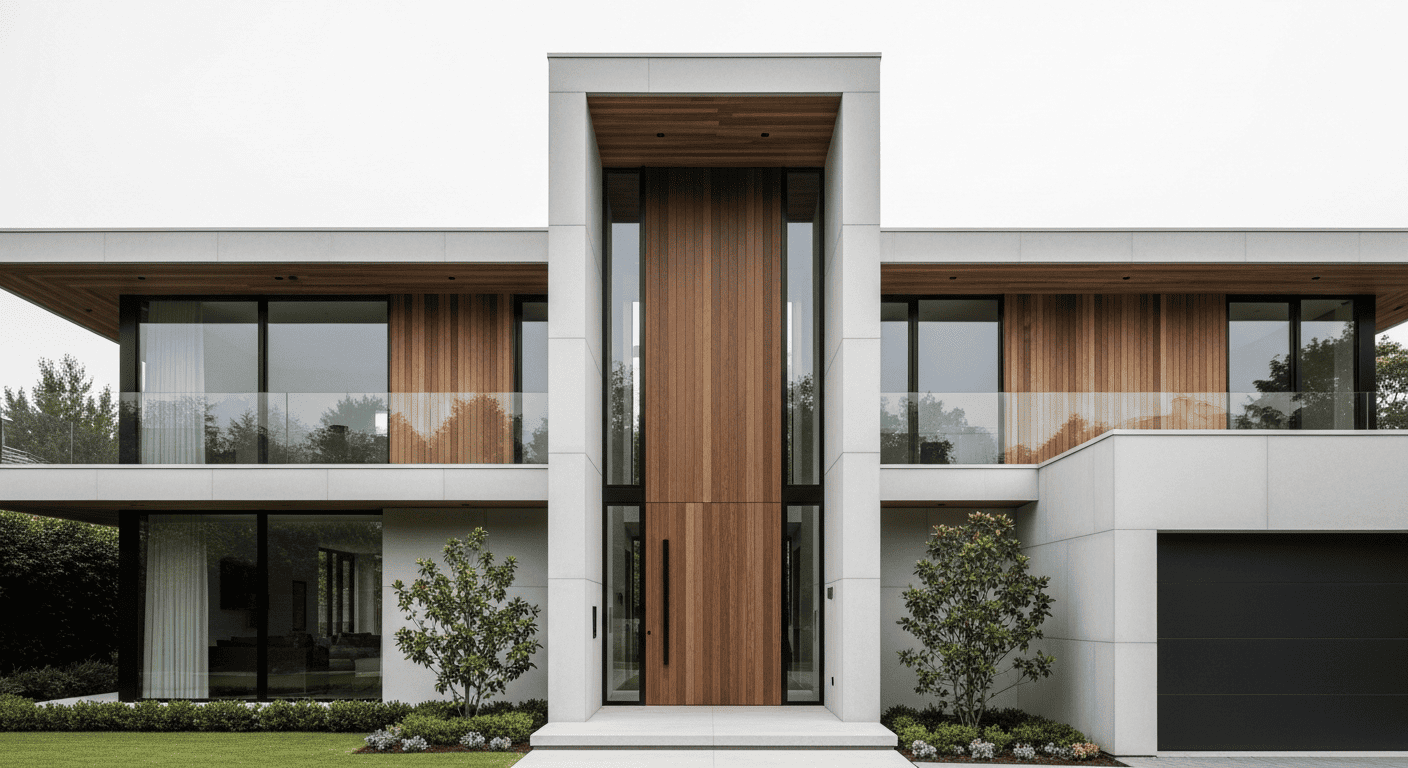
The defining characteristic of the contemporary entry is scale. Conventional door dimensions increasingly read as insufficient when placed within taller volumes, larger fenestration systems, and more expansive entry sequences. Designers are responding by treating the door as a portal rather than an opening.
Height, width, and visual thickness are used to establish presence before detail is perceived. In the strongest projects, scale replaces ornament. A single large surface, uninterrupted and precisely aligned, anchors the elevation and brings proportional clarity to the façade.
This shift is not decorative. It reflects an architectural recalibration in which the entry aligns with the overall massing of the building rather than functioning as a secondary element applied to it.
Design considerations
- Door height aligned with window head heights and vertical datum lines
- Increased panel width to reinforce the sense of arrival
- Expressed thickness through edge detailing rather than applied trim
2. Pivot doors as spatial choreography
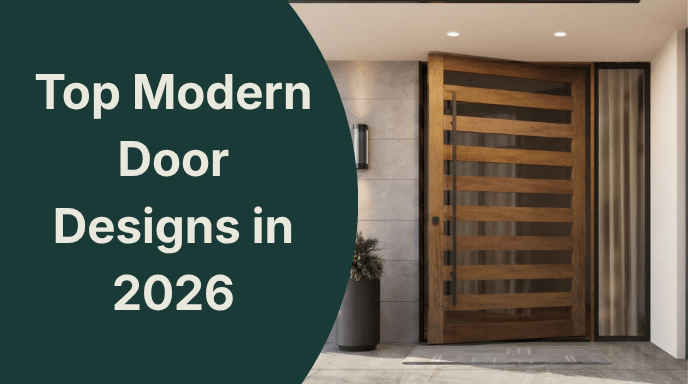
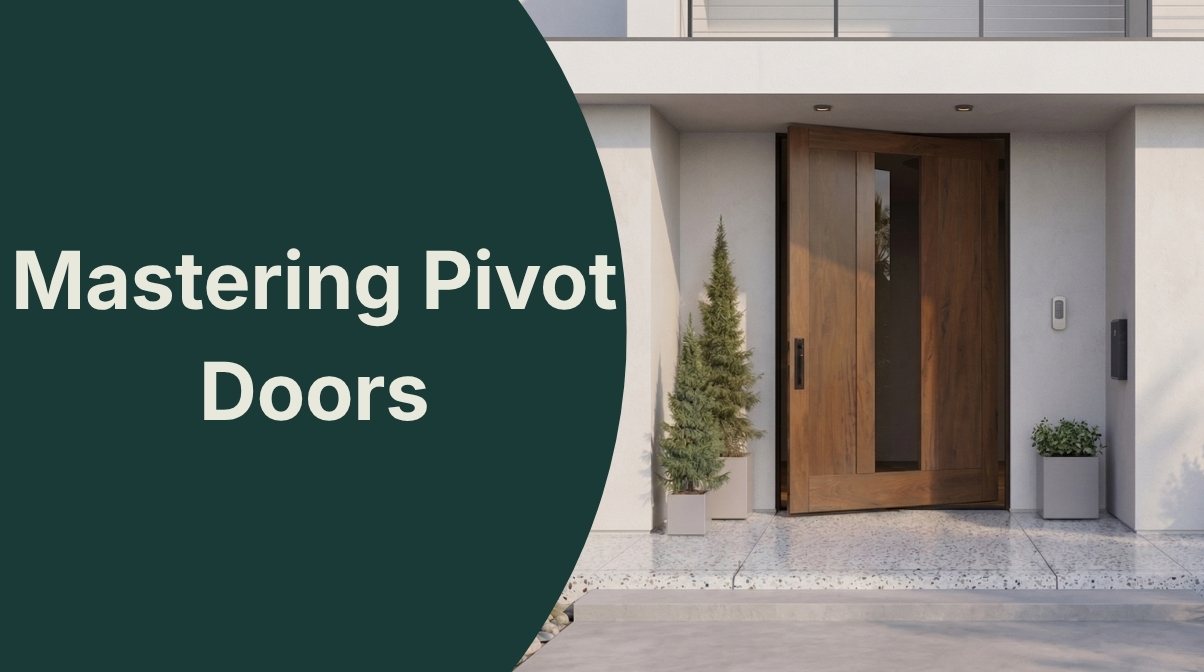
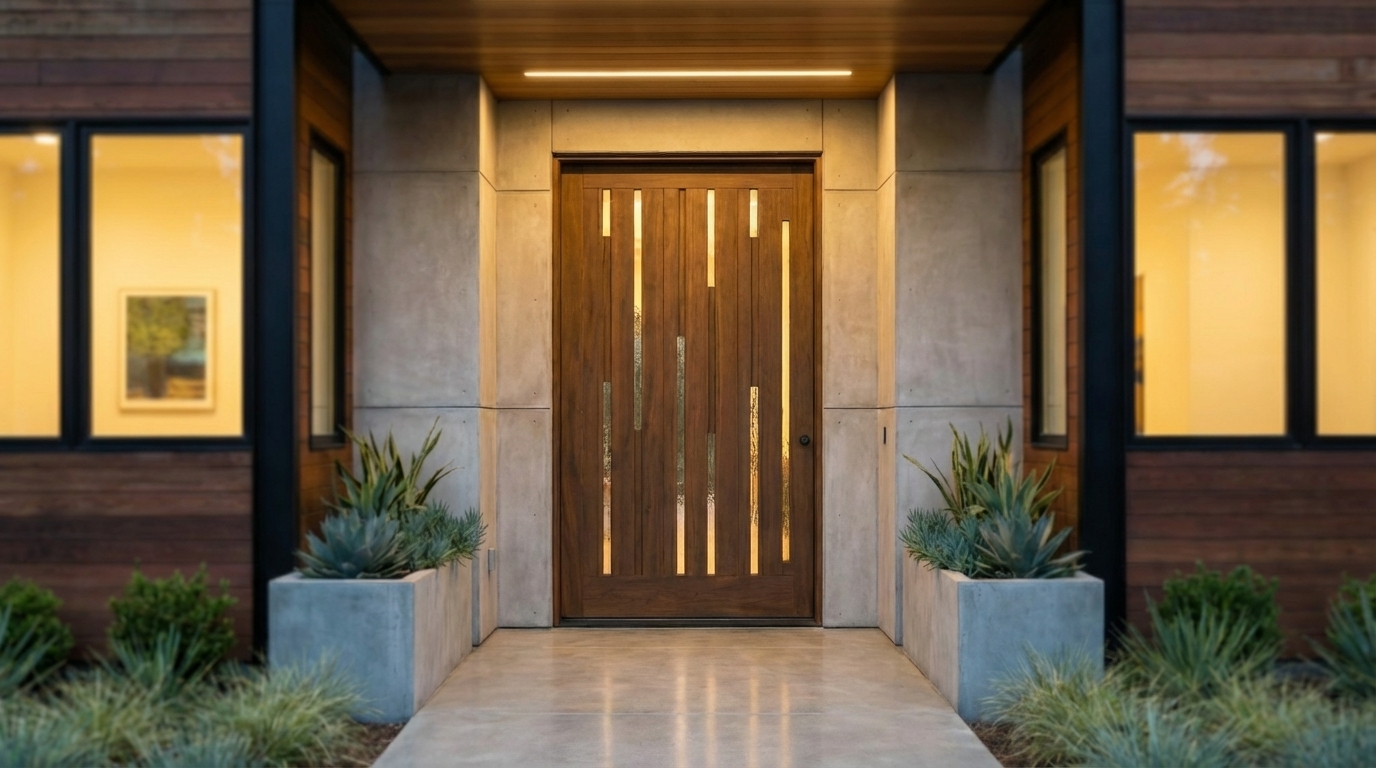
Pivot doors have become a standard architectural device in premium residential work. Their relevance lies less in novelty and more in how they alter the experience of entry. Unlike hinged doors, pivot systems introduce a slower, more deliberate movement that reinforces the act of crossing a threshold.
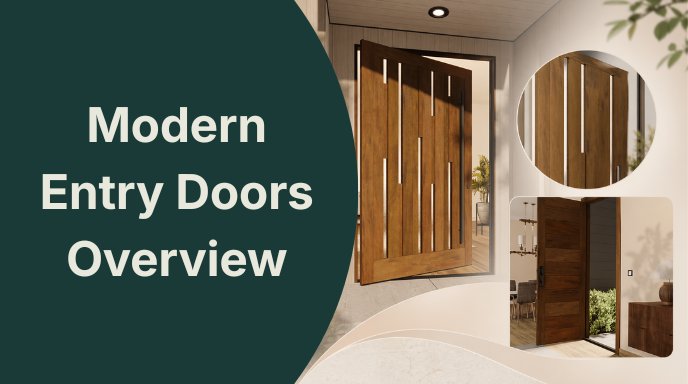
From a compositional standpoint, pivot operation supports larger panels with fewer visual interruptions. This allows the door to read as a plane within the façade rather than a framed object. When closed, the door often appears static and monolithic; when opened, it reveals a controlled rotation that feels intentional and ceremonial.
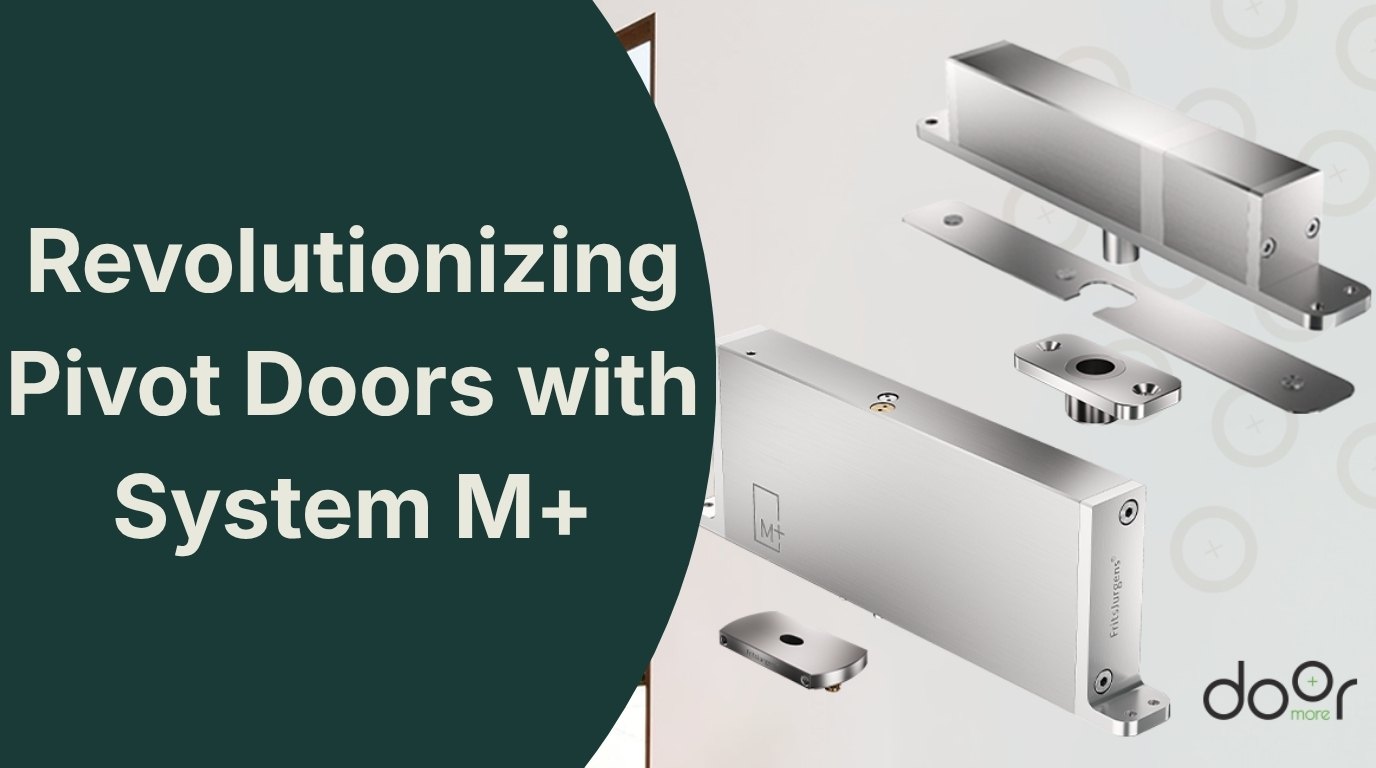
In current practice, the pivot is treated as invisible infrastructure. The door’s surface and proportion carry the design expression, while the mechanism remains subordinate.
Design considerations
- Clear, uninterrupted surfaces across the door plane
- Careful placement of the pivot axis to control approach and clearance
- Hardware scaled to the door, not to residential defaults
3. Light at the threshold: glass as an architectural material
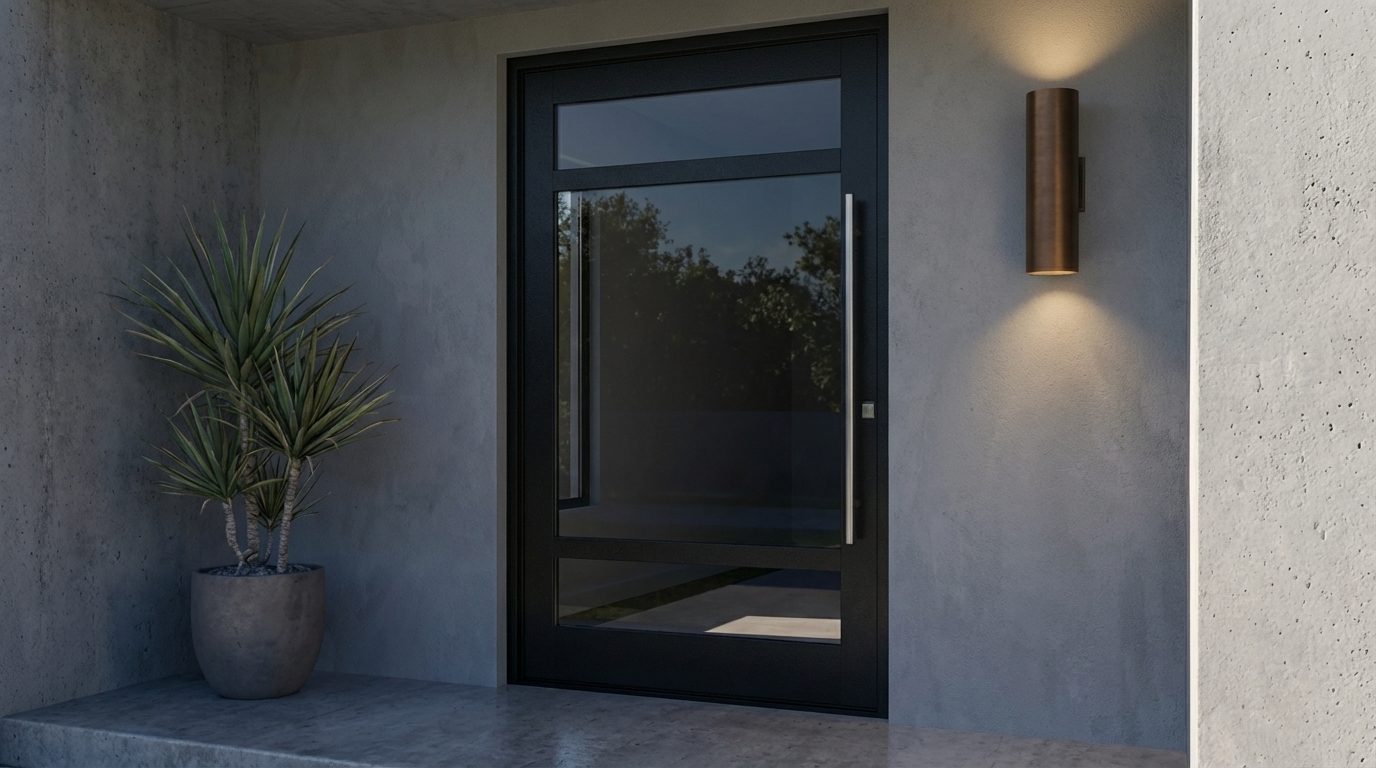
Entry glass doors are increasingly used to introduce daylight into the interior sequence. Rather than relying on decorative glazing, designers favor large areas of glass that function as material components within the composition.
This approach treats glass not as ornament but as a spatial tool. Large lites, full-height sidelights, and transoms extend the entry vertically and visually connect interior and exterior zones. The door becomes part of a larger light strategy rather than a solitary object. At the same time, privacy and composure remain central. Transparency is moderated through placement, proportion, and surface treatment rather than reduction of glass area.
4. Reeded and textured glass for controlled transparency
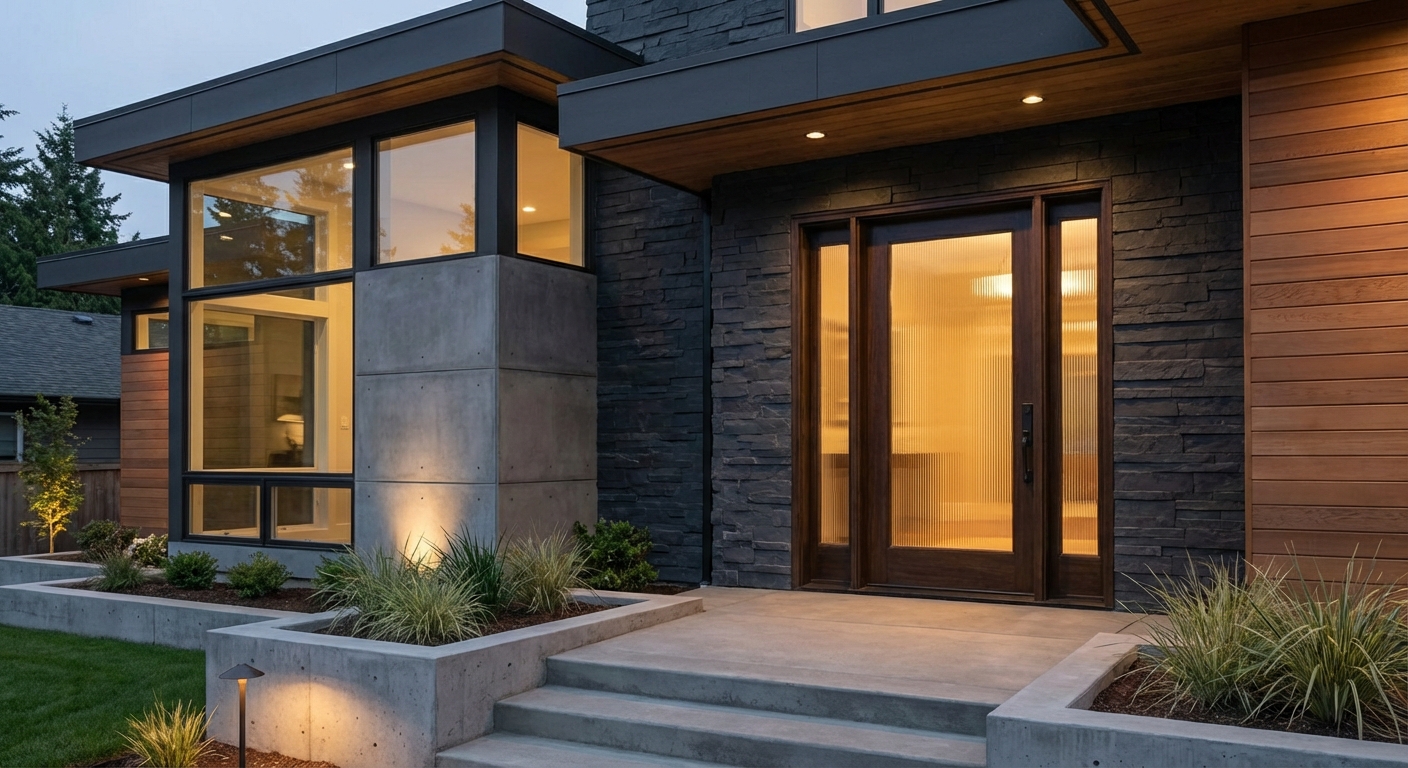
Textured glazing, particularly reeded or fluted glass, has re-emerged as a preferred solution at the entry. Its appeal lies in its ability to diffuse views while preserving depth and light.
Vertical ribbing softens transparency without flattening the surface, allowing daylight to enter while obscuring direct sightlines. This quality makes reeded glass especially suited to entry doors and sidelights, where openness must be balanced with discretion.
Unlike traditional frosted or ornamental glass, reeded glazing reads as architectural rather than decorative. Its texture becomes a quiet surface condition that adds depth without visual noise.
Design considerations
- Larger panes rather than multiple small divisions
- Slim framing to emphasize continuity
- Consistent texture across door and adjacent glazing
5. Material expression: authenticity over simulation
Material choice at the entry increasingly emphasizes authenticity and tactile presence. Rather than disguising materials, current work allows wood, metal, and glass to express their inherent qualities.
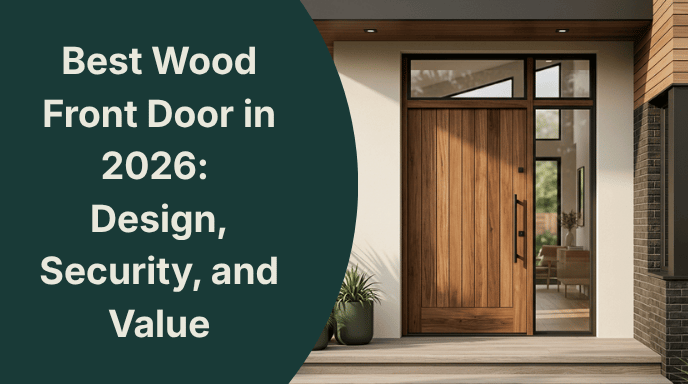
Wood remains a primary material in design-driven entries. Its value lies in grain, warmth, and depth — qualities that reinforce the threshold as a human, tactile moment. Contemporary applications favor restrained geometry and calm surfaces, allowing the material itself to carry expression.
Modified and engineered wood
Modified timbers enable larger formats and tighter tolerances while preserving the visual language of real wood. Their use supports architectural scale without compromising surface integrity, making them particularly suited to large doors and pivot systems.
Metal appears either as a structural frame for glass or as a surface material with patina and depth. Increasingly, wood and metal are combined to establish hierarchy: metal for precision and structure, wood for warmth and scale.
Across all material choices, finishes tend toward matte or low-sheen treatments that absorb light and age gracefully rather than reflect it.
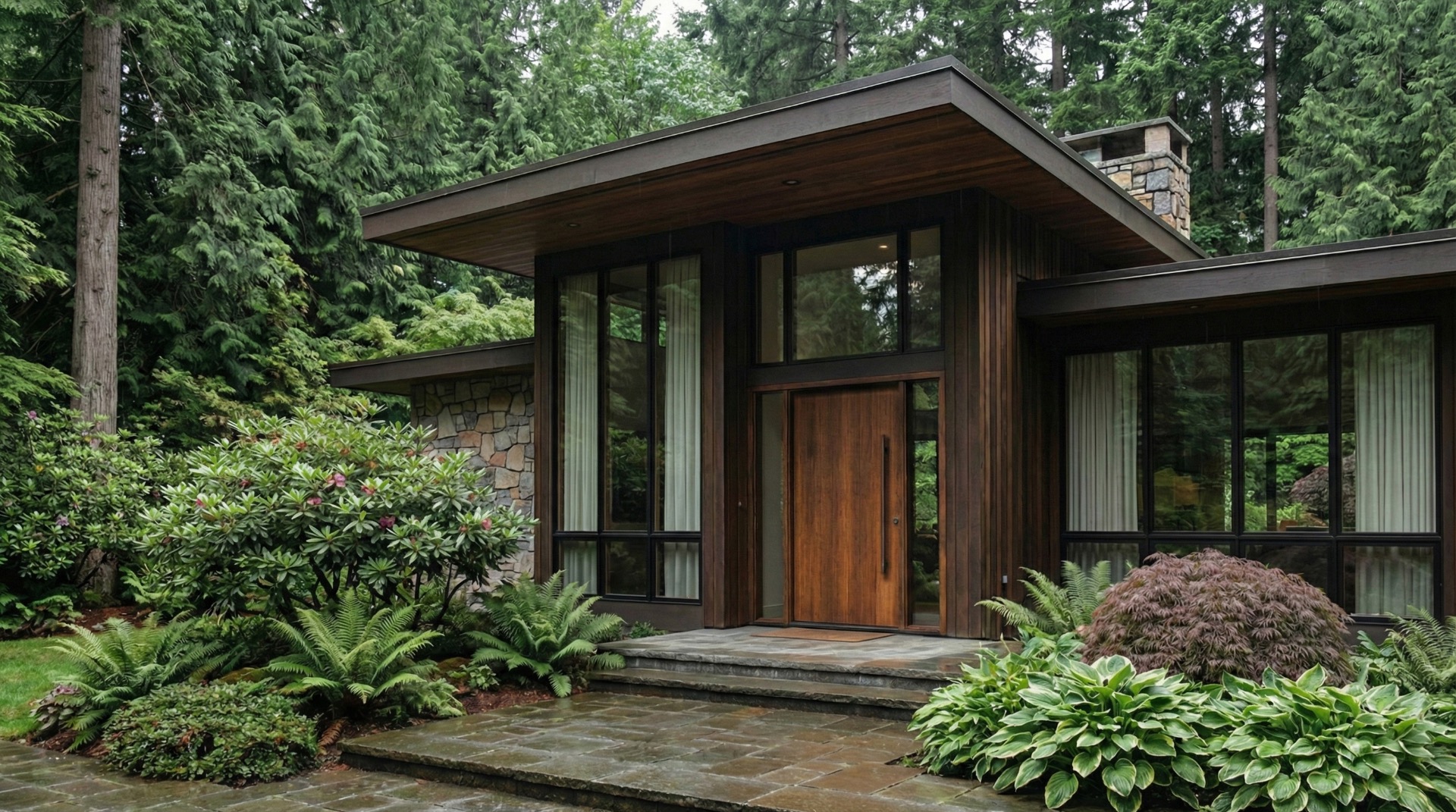
6. Color and finish: warmer neutrals and material tones
The palette of the contemporary entry is shifting away from stark contrasts toward warmer, more materially grounded finishes.
Natural wood tones, deep greens, clay-based hues, and muted dark finishes dominate current work. Black remains present, but increasingly as a stain or patinated surface rather than flat paint. Color is used to reinforce material identity rather than to assert novelty.
The door’s finish is often selected in dialogue with surrounding materials — stone, plaster, brick, or metal — allowing the entry to sit cohesively within the façade rather than as an isolated accent.
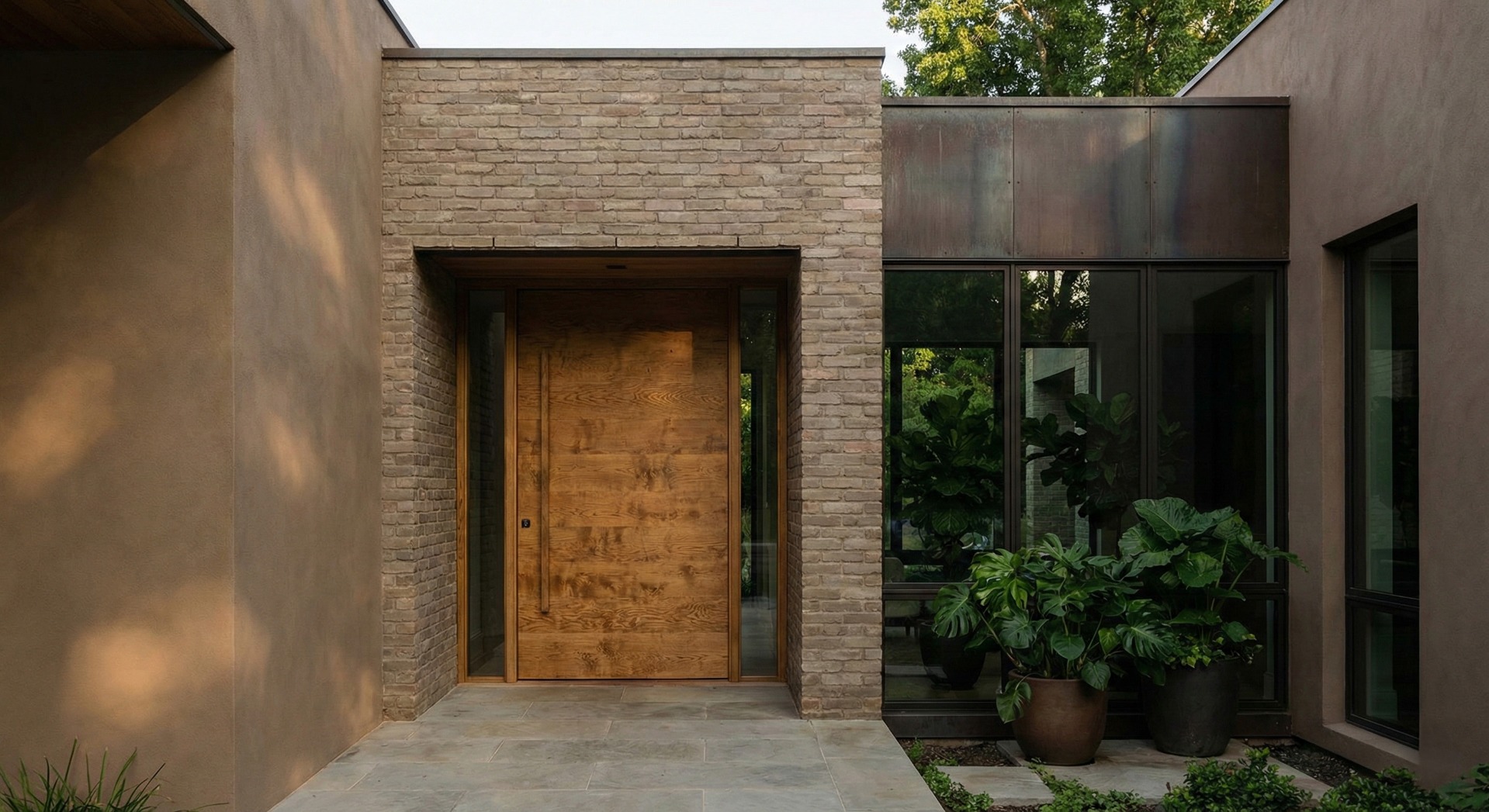
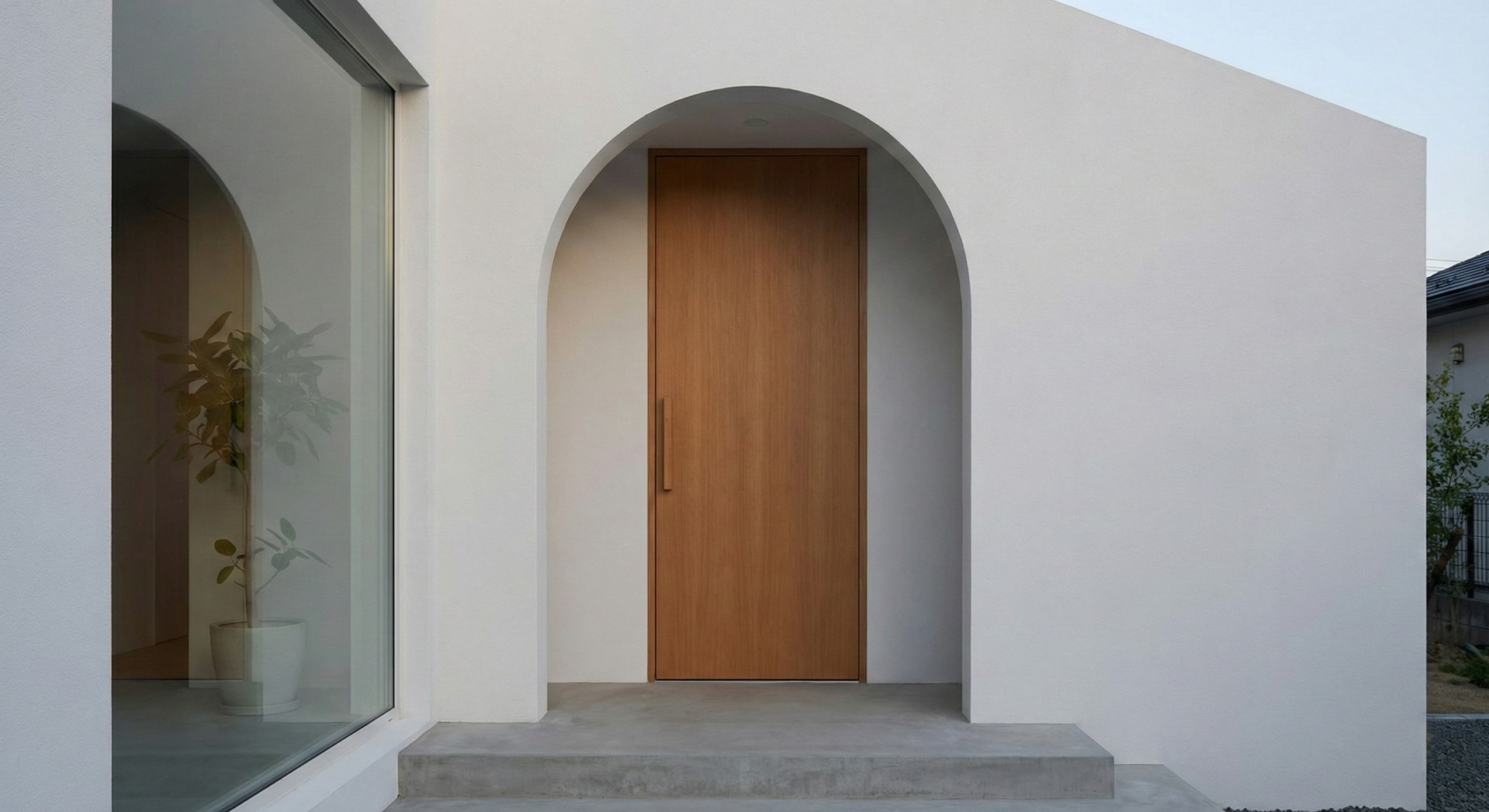
7. Geometry: planar restraint and intentional curvature
Two formal approaches consistently appear in current entry design: planar minimalism and purposeful curvature.
Flush, planar doors
Flush doors without panels or applied detail continue to define contemporary entries. Their success depends on precision: tight tolerances, clean edges, and hardware restraint. The door reads as a plane within the architectural composition.
Arched openings
Curved openings are returning as a means of introducing softness and depth. Executed with restraint, arches operate as formal gestures rather than historic ornament. They are most effective when geometry alone carries expression, without added detailing.
Both approaches prioritize clarity of form over decoration.
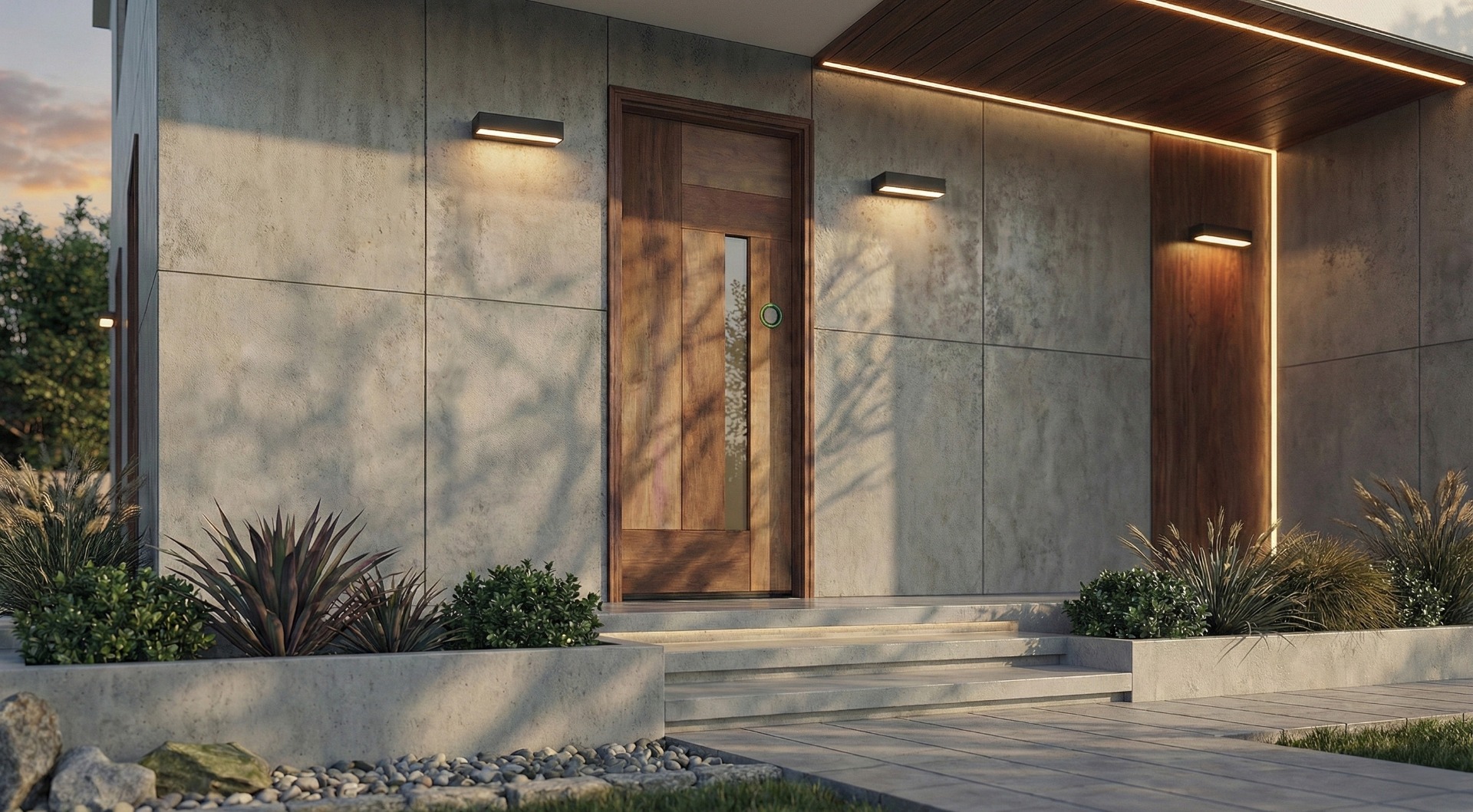
8. Smart access as invisible infrastructure
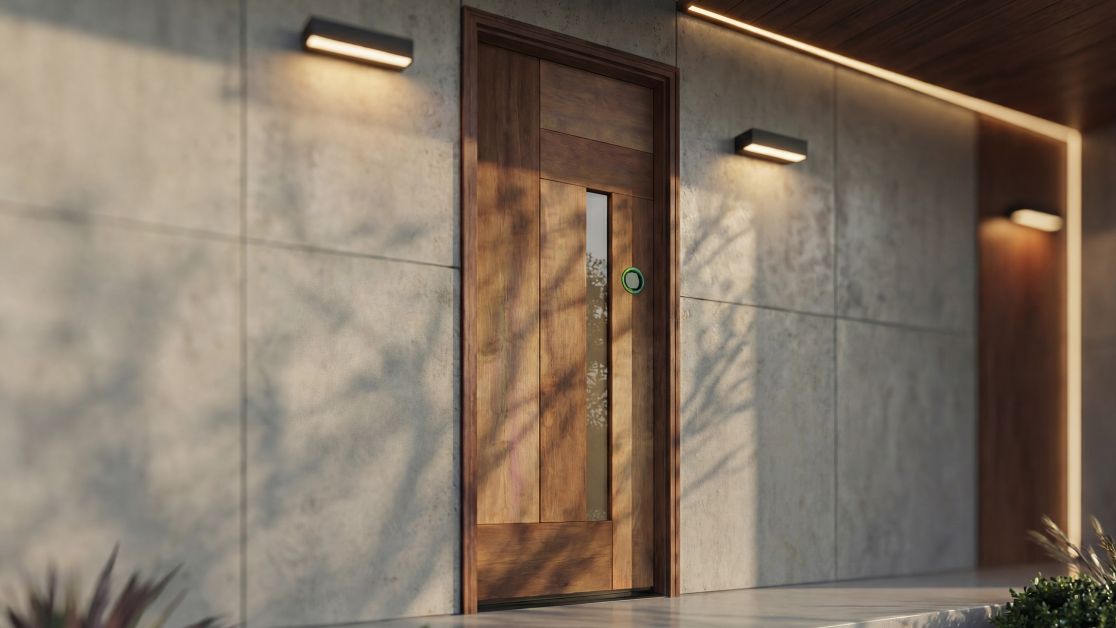
Integrated access technology is now assumed in contemporary residential entries. The defining requirement is invisibility. Smart locks, sensors, and access systems are expected to disappear into the door assembly so the entry remains legible as architecture rather than interface.
Visible keypads, indicators, or gadgetry are avoided. Instead, technology is embedded within hardware or concealed within the door and frame, allowing the threshold to function intelligently without altering its visual language.
Conclusion
The exterior front entry door in 2025–2026 is defined by restraint, scale, and material clarity. The strongest work treats the door not as a product but as an architectural element — one that mediates between public and private space through proportion, surface, and light.
Oversized doors establish presence. Pivot systems choreograph entry. Glass introduces daylight with control. Reeded textures manage transparency. Wood and metal express authenticity. Color reinforces material honesty. Geometry replaces ornament. Technology disappears into infrastructure.
Together, these directions define a clear path forward: the front door as a composed threshold — deliberate, enduring, and fully integrated into the architecture it serves.