Door Stoppers: Types, Uses, and How to Choose the Right One
-
 By Shayan Behjati
 - Jun 29, 2026
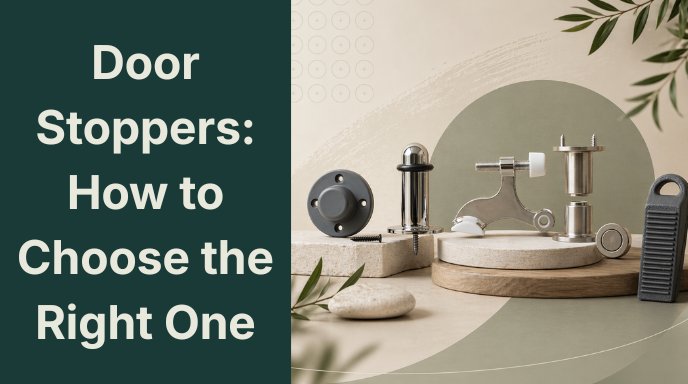
A door stopper controls how far a hinged door opens so it does not hit walls, trim, furniture, or nearby fixtures. Choosing the right type depends on what you need it to do—stop impact, limit the swing, or hold the door open.
This guide helps you quickly match the right door stopper to your space, door behavior, and daily use.

Quick comparison: door stopper types at a glance
| Type | Best for | Holds Door Open | Installation |
|---|---|---|---|
| Wall-mounted | Protecting walls from handle impact | No | Fixed |
| Floor-mounted | Creating a consistent stop point | No | Fixed |
| Hinge pin | Limiting how far a door opens | No | Fixed |
| Magnetic | Keeping a door open | Yes | Fixed |
| Wedge | Temporary stopping without installation | Sometimes | Portable |
Types of door stoppers
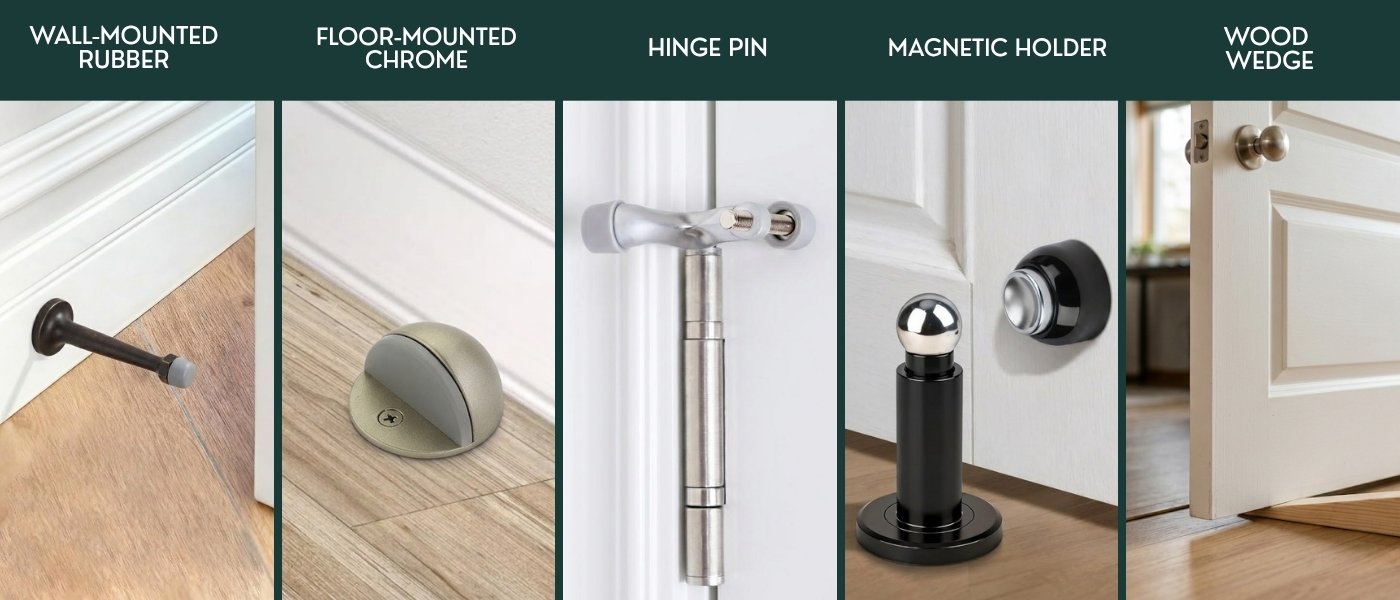
- Wall-mounted: Mounted to a wall or baseboard to stop the door before the handle makes contact.
- Floor-mounted: Installed on the floor to stop the door at a fixed point along its swing path.
- Hinge pin: Limits how far the door opens by restricting hinge movement.
- Magnetic: Uses magnetic force to hold the door open in position.
- Wedge: Slides under the door and uses friction to resist movement without installation.
When to use each type
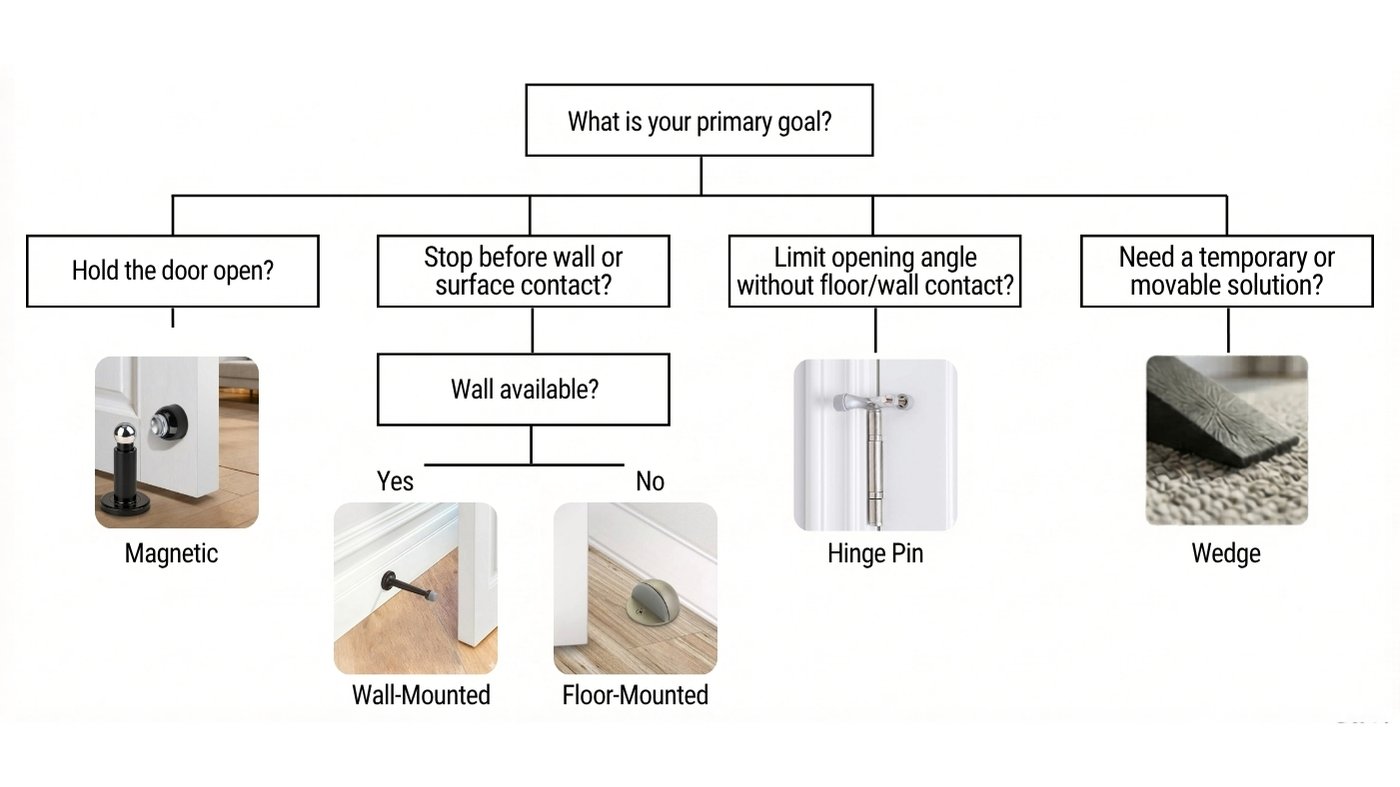
Wall-mounted
Use when:
- the handle would otherwise hit the wall
- you want to absorb impact before contact
Skip when:
- there is no wall or baseboard in the swing path
Floor-mounted
Use when:
- you want a consistent stop point
- floor mounting is suitable for the surface
Skip when:
- installing into the floor is not practical
Hinge pin
Use when:
- you need to limit how far the door opens
- there is no suitable wall or floor contact point
Skip when:
- the door is unusually heavy
Magnetic
Use when:
- you want the door to stay open
- airflow or movement between rooms matters
Wedge
Use when:
- you need a portable, no-install option
- the use is occasional
Skip when:
- the floor is smooth or slippery
- the doorway gets frequent use
How to choose the right door stopper
| Symptom | Cure |
|---|---|
| Wedge slipping on smooth flooring. | Use fixed stopper or ensure reliable floor grip. |
| Door still hits wall/trim. | Re-check stopping distance (ensure 50–100 mm clearance). |
| Magnetic stopper fails to hold. | Check door weight and draft/airflow conditions. |
| Constant adjustments in busy doorway. | Switch from wedge to a fixed solution. |
| Wall or trim is scuffing. | Swap to stoppers with soft rubber contact points. |
| Door movement/sagging persists. | Do not use stoppers for alignment; address hinges separately. |
Common mistakes and quick corrections
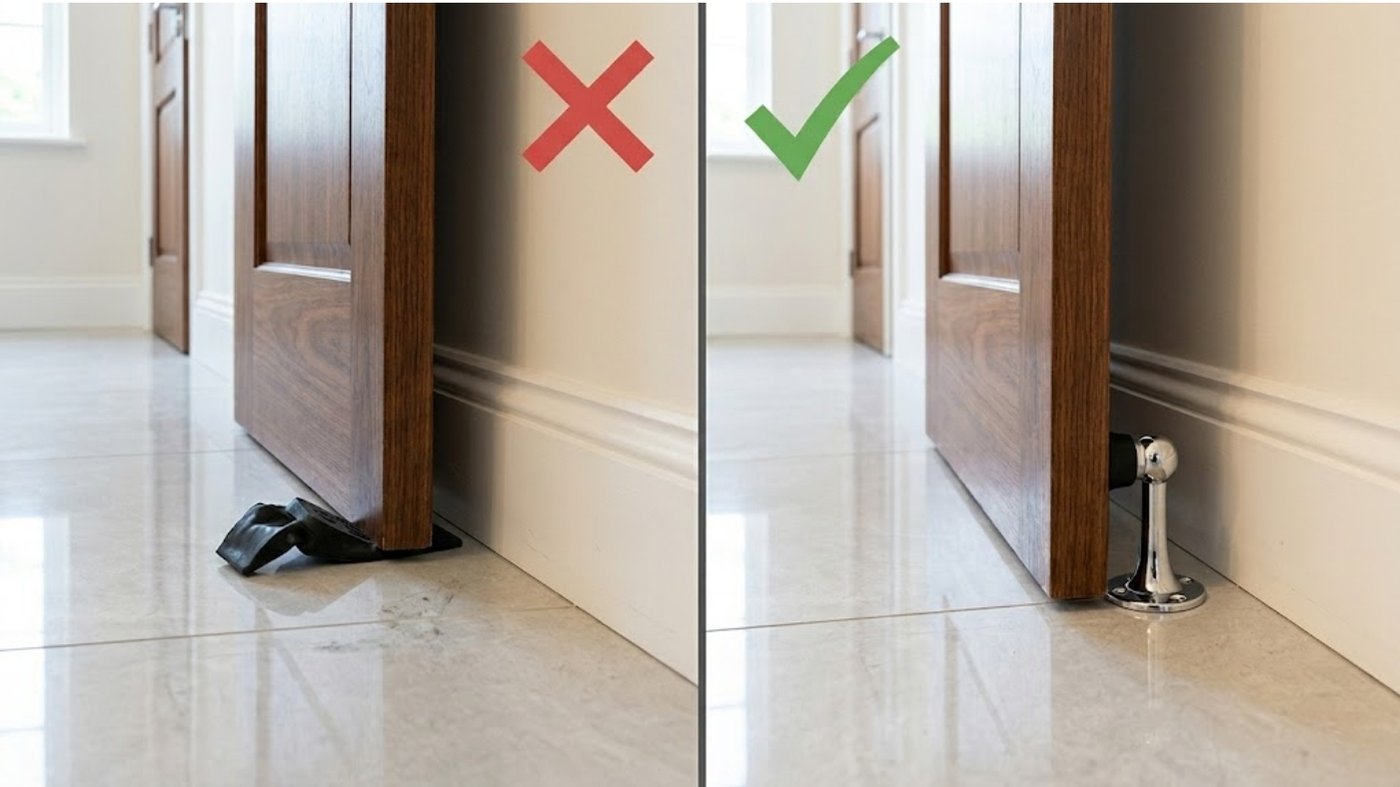
- 1Mistake: Wedge slipping on smooth flooring
Fix: Use a fixed stopper or only use wedges where floor grip is reliable - 2Mistake: Scuffing at contact points
Fix: Choose rubber or soft-contact stoppers - 3Mistake: Magnetic stopper not holding
Fix: Check door weight and airflow conditions - 4Mistake: Using wedges in busy doorways
Fix: Switch to a fixed solution - 5Mistake: Not allowing enough stopping distance
Fix: Re-check stopping distance (typically around 50–100 mm / 2–4 inches) so the door stops before contact - 6Mistake: Trying to fix door movement with a stopper
Fix: Address hinge or alignment issues separately
Quick decision checklist
- Need to hold a door open — magnetic
- Door may hit a wall — wall-mounted
- Want a fixed stop point — floor-mounted
- Need to limit swing angle — hinge pin
- Need a portable option — wedge
- Smooth floors — avoid wedges
- Heavy or frequently used doors — choose fixed types
- Want less marking — choose rubber contact
- Drafty areas — be cautious with magnetic hold
- Tight clearance — size stopper to stop before contact
FAQ
It controls how far a door opens to prevent contact with walls, trim, furniture, or fixtures.
Wall-mounted, floor-mounted, hinge pin, magnetic, and wedge door stoppers.
Magnetic stoppers are designed to hold doors open in a set position.
They work well for light or temporary use but are less consistent on smooth floors or in high-traffic areas.
When you need to limit how far a door opens and do not want to install anything on the wall or floor.
Yes. They improve grip and help reduce marking on contact surfaces.