Solid Wood Doors vs. Wood Doors with Glass
-
 By Shayan Behjati
 - Jul 6, 2026
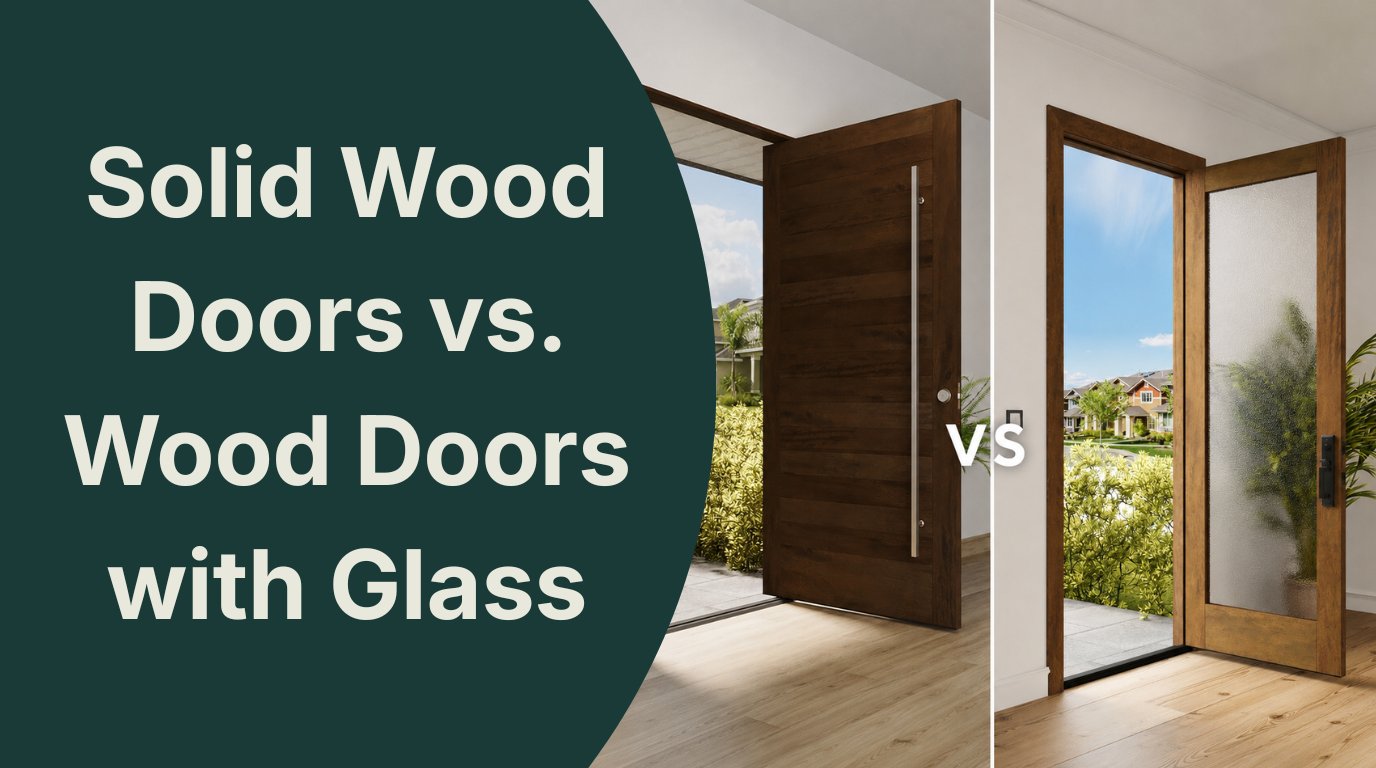
For homeowners comparing solid wood doors vs wood doors with glass, the decision usually comes down to how the entry should feel and function.
A solid wood door can make the entry feel more private, grounded, and traditional. A wood door with glass can bring in daylight, increase visibility, and make the entry feel brighter and more open.
The better fit depends on your privacy needs, daylight goals, glass placement, style preference, finish appearance, and what the door may need over time. Neither option should be treated as the default winner. The right choice is the one that fits the entry, the home, and the level of visibility you feel comfortable with.

Main Differences to Consider
A practical comparison starts with how each option changes the entry in daily use. Solid wood doors and wood doors with glass can both support a strong entry design, but they create different effects.
| Decision point | Solid wood door | Wood door with glass |
|---|---|---|
| Privacy | Supports a more closed visual feel. | Can increase visibility depending on glass type and placement. |
| Natural light | Keeps the door surface visually solid. | Can admit visible light through the glass area. |
| Visibility | Creates a more enclosed entry. | Can make the entry feel more open. |
| Style | Emphasizes wood surface, tone, and door shape. | Uses glass amount and pattern as part of the door style. |
| Everyday expectations | Often fits homeowners who want a quieter, more private entry. | Often fits homeowners who want more daylight or a brighter look. |
The overall look of the entry is shaped by the door surface, glass amount, wood tone, panel shape, and style. The decision is not only about privacy or daylight. It is also about whether the entry should feel more enclosed, more open, more traditional, or brighter.
Privacy and Natural Light
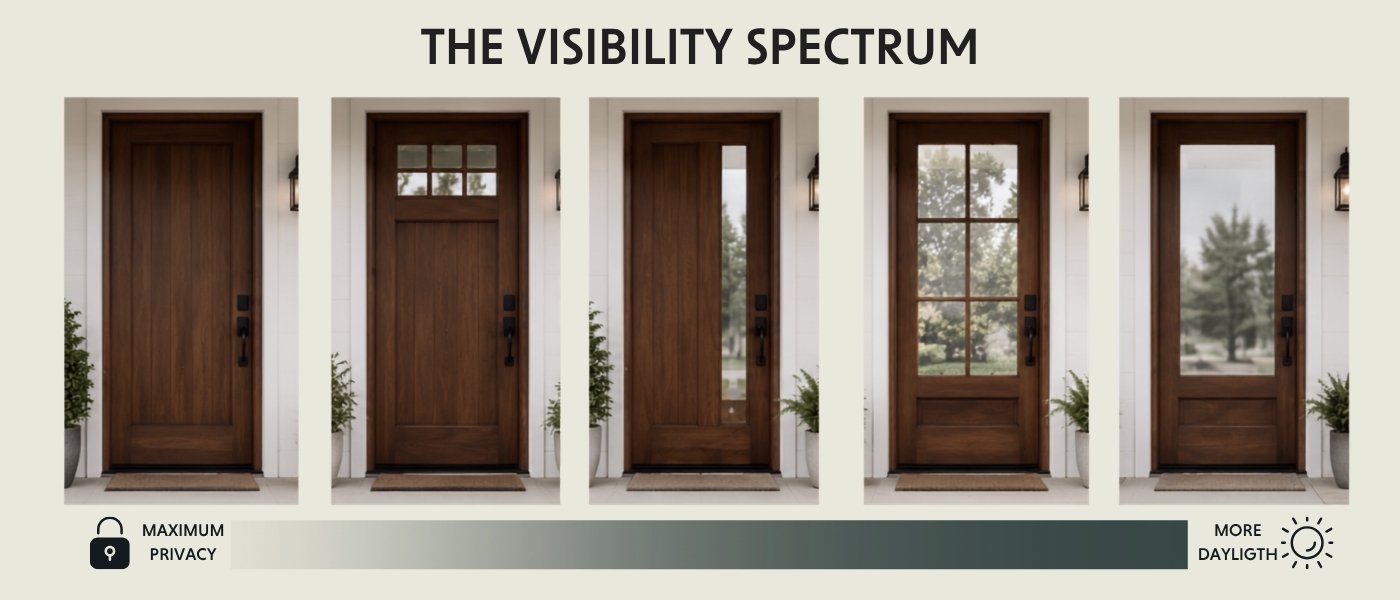
Privacy and natural light are the main tradeoff in this comparison. Glass can admit visible light, but it can also increase visibility depending on the glass type and where the glass sits in the door.
No glass style should be treated as a guarantee of privacy or security. A small glass area near the top of the door may feel different from a tall central glass panel. Divided glass can also change the look by breaking the glass area into smaller parts.
The exact privacy and daylight result depends on the door design and glazing. Rather than thinking in broad categories, ask practical questions:
- How much daylight do you want at the entry?
- How much visibility feels comfortable?
- Does the glass placement support the privacy level you expect?
- Should the entry feel more open or more enclosed?
For more glass-specific context, review Door Glass.
When a Solid Wood Door May Fit
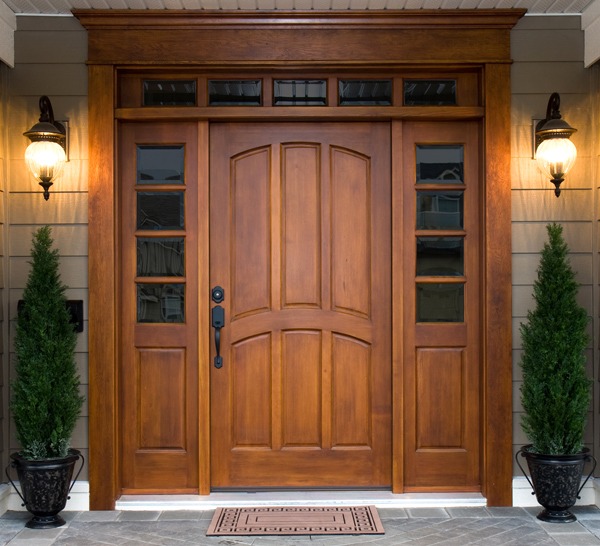
A solid wood door may be a good fit when you want stronger visual privacy, a more enclosed entry, and a traditional or substantial look.
This can work well for entries where the door faces a sidewalk, street, neighbor, or another area where visibility comfort matters. It can also fit homeowners who prefer the look of a continuous wood surface rather than visible glass.
A solid wood door should not be described as inherently safer, longer lasting, or better for every home. It is best understood as a good fit when privacy and a solid wood look matter most.
When a Wood Door with Glass May Fit
A wood door with glass may be a good fit when you want to add daylight, create a more open entry, or use glass as part of the door’s style.
This can work well for entries that feel dark, narrow, or visually heavy and would benefit from a brighter look. It can also fit homeowners who like decorative glass, divided glass, or a door design where glass is part of the overall style.
A wood door with glass should not be assumed to perform better or worse on its own. The result depends on the glass size, placement, glazing, and specific door design.
Other Factors to Keep in Mind
A few related factors can shape the decision, but they should stay product-specific.
Energy comfort should be treated carefully. Doors, windows, and skylights can affect heating and cooling loads, and rated products may be compared with measures such as U-factor and SHGC. This page should not claim that one door type is broadly more efficient than the other.
Exterior wood doors also call for finish and exposure awareness. Sun, moisture, and weathering can affect exterior wood finishes over time. This is not a maintenance tutorial, but it is a useful reminder that exposure and finish direction can affect what the door may need over time.
Security language should stay focused on privacy and visibility comfort. A solid wood door should not be framed as inherently safer, and a door with glass should not be framed as unsafe.
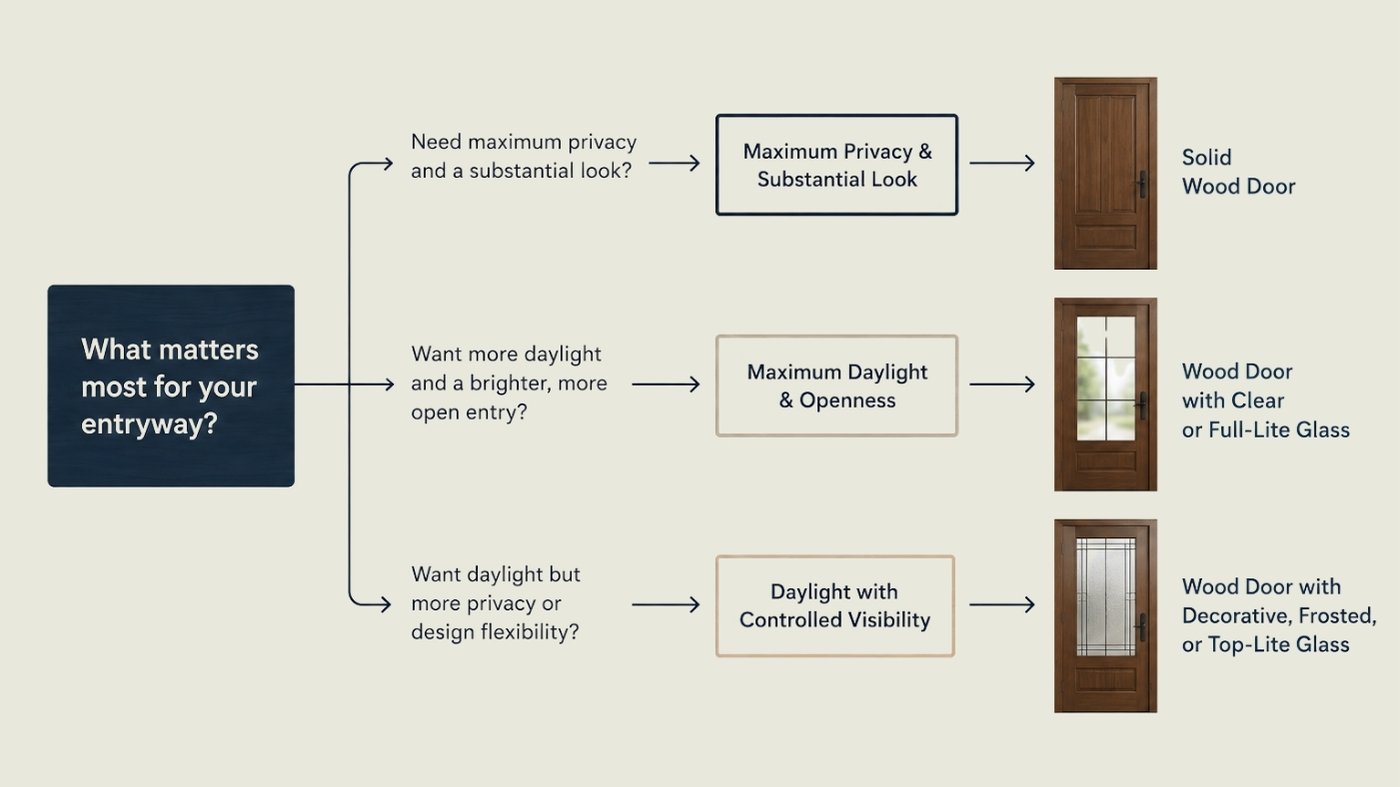
Glass terms such as clear, privacy or frosted, decorative, divided-lite, full-lite, and blinds-glass can be useful when comparing styles. Treat those as examples, not as a claim about full catalog availability.
Wood species and finish direction can also shape the look of the door. For example, mahogany and paintable or smooth paths may be mentioned as appearance or finish cues, not as species rankings or durability claims.
Next Steps
Once you know whether privacy, daylight, glass placement, or entry feel matters most, you can move from comparison to browsing.
For broader wood entry options, review Wood Front Doors rather than treating this article as a category page.
For doors where glass is part of the design, review Doors with Decorative Glass.
Use those category pages as next steps while keeping this comparison focused on the choice between a more private solid wood door and a brighter wood door with glass.
FAQ
Not universally. A solid wood door supports a more private, closed entry, while a wood door with glass can add daylight and visibility. The better fit depends on privacy needs, daylight goals, glass placement, and style preference.
A solid wood door can support a more closed entry feel. A wood door with glass can increase visibility depending on glass placement and glazing. Neither option should be described as guaranteeing privacy.
Glass can admit visible light, but the result depends on the size, placement, and glazing used in the door design.
This comparison should not be framed as a security claim. It is safer to discuss privacy and visibility comfort rather than saying one door type is inherently safer.
Privacy or frosted glass, decorative glass, divided-lite glass, full-lite glass, and blinds-glass can all affect the privacy feel. The result also depends on where the glass sits in the door and how the design is glazed.