Top Modern Door Designs in 2026
- By Shayan Behjati
- Mar 19, 2026
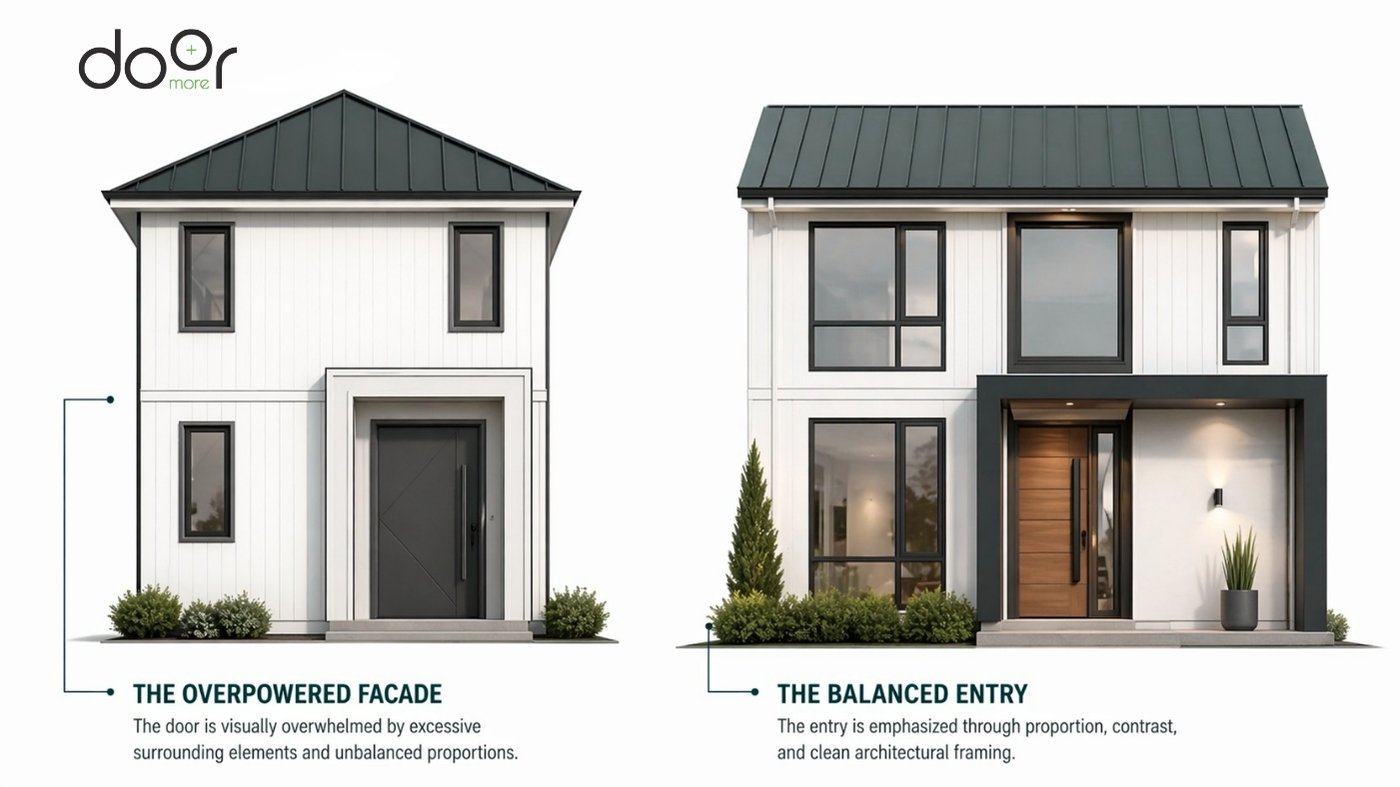
Modern door designs shape how a home is experienced from the exterior. Before anyone steps inside, the door sets the tone through its scale, its material, and how light moves across it. A well-proportioned modern door can make an entry feel more intentional and composed rather than busy or overdone.
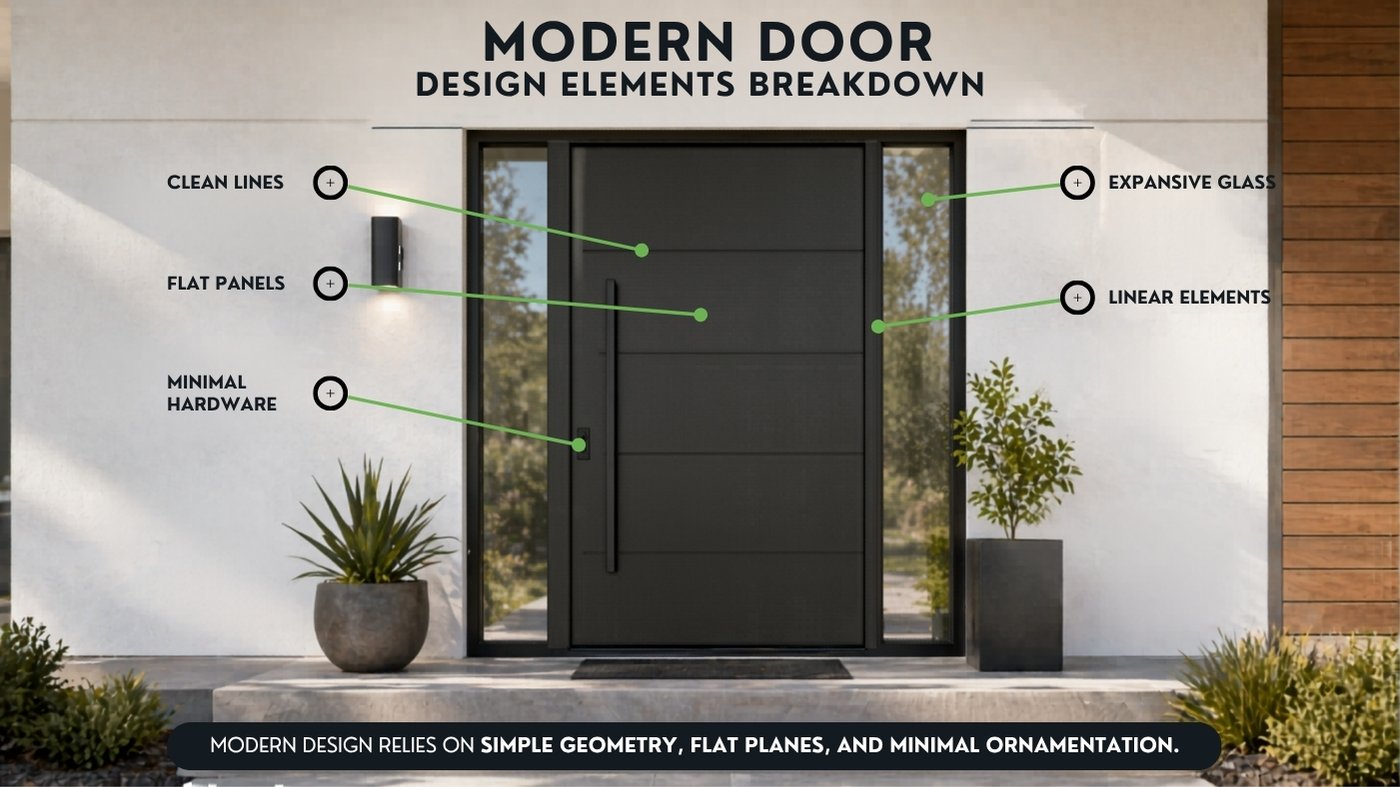
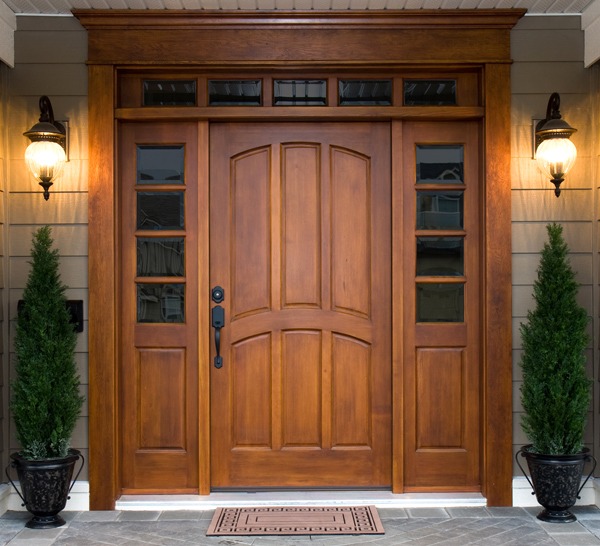
Traditional doors often rely on heavier paneling and decorative detail. Modern doors simplify the face. They use clearer lines, fewer elements, and considered glass placement. The result often feels calmer, sharper, and more current without needing extra ornament.
Below, you’ll find 20 modern door designs selected for 2026, including options suited to both entryways and interiors. Each design includes a short note to help you understand where it fits and what direction to explore next.
20 Modern Door Directions for 2026
Start with the modern direction that matches your space. Then refine by warmth, light, and how much visual detail you want at the entry.
Category 1: minimalist
If you prefer modern that feels quiet and composed, start here. Minimalist doors reduce visual noise. They rely on proportion, surface, and subtle detailing rather than ornament.
Explore more in the Minimalist Modern Door Collection.
Flush Slab Modern
- Material feel: smooth, uninterrupted surface with no raised panels.
- Design language: simple, flat face with very little detailing.
- Finish direction: matte black, charcoal, or a deep blue for contrast.
- Best use case: entry when you want a calm first impression that doesn’t compete with the façade.
- Home fit: contemporary homes with clean lines and simple massing.
Horizontal Line Modern
- Material feel: flat surface with subtle horizontal grooves or plank divisions.
- Design language: low-profile lines that echo horizontal architecture.
- Finish direction: black for contrast or warm wood for balance.
- Best use case: entry where the home already emphasizes width.
- Home fit: streamlined façades and modern ranch-style exteriors.
Vertical Line Modern
- Material feel: smooth face with vertical planks or grooves.
- Design language: vertical lines that draw the eye upward.
- Finish direction: bold black, soft neutrals, or natural wood tones.
- Best use case: entry where you want to emphasize height.
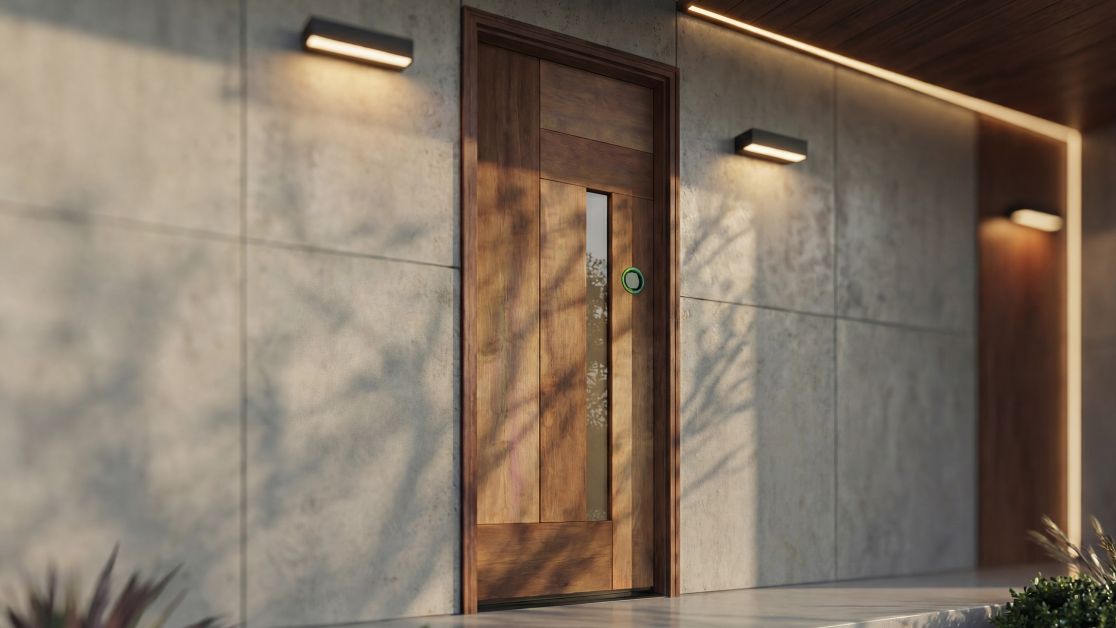
Warm Minimal Modern
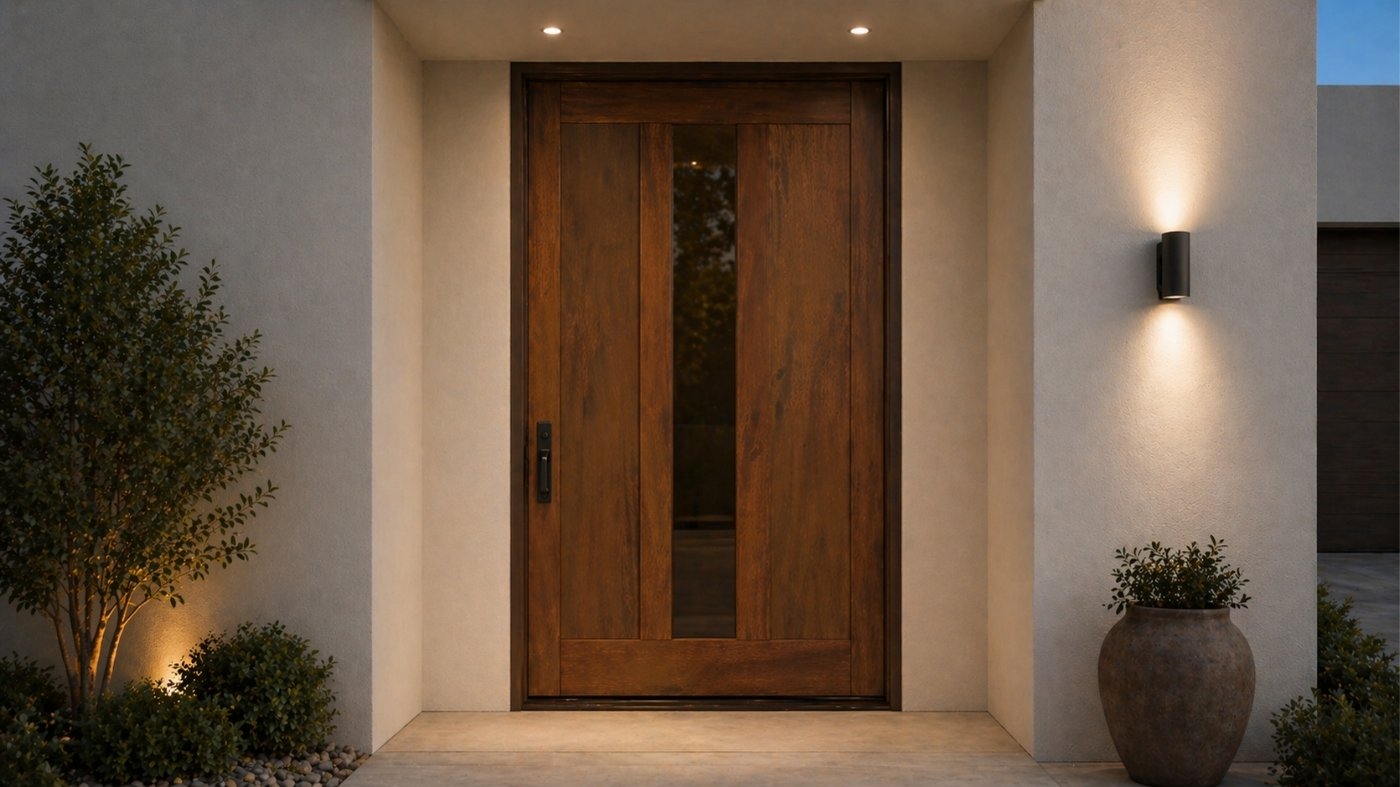
- Material feel: minimalist surface softened by wood grain or subtle texture.
- Design language: clean lines paired with warmth.
- Finish direction: natural mahogany, walnut tones, or muted earth hues.
- Best use case: entry or interior when you want modern without it feeling stark.
If you prefer modern that feels quiet and composed, start here. Minimalist doors reduce visual noise. They rely on proportion, surface, and subtle detailing rather than ornament.
Explore more in the Minimalist Modern Door Collection.
Flush Slab Modern
- Material feel: smooth, uninterrupted surface with no raised panels.
- Design language: simple, flat face with very little detailing.
- Finish direction: matte black, charcoal, or a deep blue for contrast.
- Best use case: entry when you want a calm first impression that doesn’t compete with the façade.
- Home fit: contemporary homes with clean lines and simple massing.
Horizontal Line Modern
- Material feel: flat surface with subtle horizontal grooves or plank divisions.
- Design language: low-profile lines that echo horizontal architecture.
- Finish direction: black for contrast or warm wood for balance.
- Best use case: entry where the home already emphasizes width.
- Home fit: streamlined façades and modern ranch-style exteriors.
Vertical Line Modern
- Material feel: smooth face with vertical planks or grooves.
- Design language: vertical lines that draw the eye upward.
- Finish direction: bold black, soft neutrals, or natural wood tones.
- Best use case: entry where you want to emphasize height.
Category 2: Wood-forward
Wood-forward modern balances warmth with clean structure. The material becomes the focus, while the detailing stays restrained.
Browse the full Wood-Forward Modern Door Collection.
These directions range from full slab wood faces to subtle horizontal or vertical plank layouts. Some highlight natural grain and tone. Others use deeper stains or darker finishes for contrast. Wood-forward designs work well when you want the entry to feel warm and substantial without adding decorative detail.
Warm Wood Tone Modern Slab Look
- Material feel: wood-forward appearance with a slab-like modern face.
- Design language: simple and restrained, allowing the tone and grain to lead.
- Finish direction: warm wood tones that feel livable and natural.
- Best use case: entry when you want a welcoming modern look that doesn’t feel severe.
- Home fit: pairs well with stone, stucco, or clean siding where warmth balances crisp lines.
Wood Tone with Horizontal Rhythm
- Material feel: wood tone surface with subtle horizontal grooves or plank divisions.
- Design language: horizontal lines that echo the home’s width while staying clean.
- Finish direction: warm wood tones, or darker accents around the entry for contrast.
- Best use case: entry where the architecture already emphasizes horizontal lines.
- Home fit: modern massing and long, streamlined exteriors where continuity matters.
Wood Tone with Vertical Rhythm
- Material feel: wood-forward surface with vertical plank or groove detailing.
- Design language: vertical lines that help the entry feel taller.
- Finish direction: warm wood tones, or softer natural hues for a subtle effect.
- Best use case: entry where the opening feels wide and you want more height presence.
- Home fit: clean façades with simple geometry and vertical emphasis.
Timeless Modern Wood-Forward Balance
- Material feel: warm wood tone presented with a calm, minimalist face.
- Design language: clean lines paired with warmth for a balanced look.
- Finish direction: natural wood tones or deep greens for a grounded, nature-inspired feel.
- Best use case: entry for homeowners who want modern without it feeling stark.
- Home fit: homes that combine crisp architecture with warmer exterior materials.
Wood-forward modern balances warmth with clean structure. The material becomes the focus, while the detailing stays restrained.
Browse the full Wood-Forward Modern Door Collection.
These directions range from full slab wood faces to subtle horizontal or vertical plank layouts. Some highlight natural grain and tone. Others use deeper stains or darker finishes for contrast. Wood-forward designs work well when you want the entry to feel warm and substantial without adding decorative detail.
Warm Wood Tone Modern Slab Look
- Material feel: wood-forward appearance with a slab-like modern face.
- Design language: simple and restrained, allowing the tone and grain to lead.
- Finish direction: warm wood tones that feel livable and natural.
- Best use case: entry when you want a welcoming modern look that doesn’t feel severe.
- Home fit: pairs well with stone, stucco, or clean siding where warmth balances crisp lines.
Wood Tone with Horizontal Rhythm
- Material feel: wood tone surface with subtle horizontal grooves or plank divisions.
- Design language: horizontal lines that echo the home’s width while staying clean.
- Finish direction: warm wood tones, or darker accents around the entry for contrast.
- Best use case: entry where the architecture already emphasizes horizontal lines.
- Home fit: modern massing and long, streamlined exteriors where continuity matters.
Wood Tone with Vertical Rhythm
- Material feel: wood-forward surface with vertical plank or groove detailing.
- Design language: vertical lines that help the entry feel taller.
- Finish direction: warm wood tones, or softer natural hues for a subtle effect.
- Best use case: entry where the opening feels wide and you want more height presence.
- Home fit: clean façades with simple geometry and vertical emphasis.
Timeless Modern Wood-Forward Balance
- Material feel: warm wood tone presented with a calm, minimalist face.
- Design language: clean lines paired with warmth for a balanced look.
- Finish direction: natural wood tones or deep greens for a grounded, nature-inspired feel.
- Best use case: entry for homeowners who want modern without it feeling stark.
- Home fit: homes that combine crisp architecture with warmer exterior materials.
Category 3: Wood plus glass
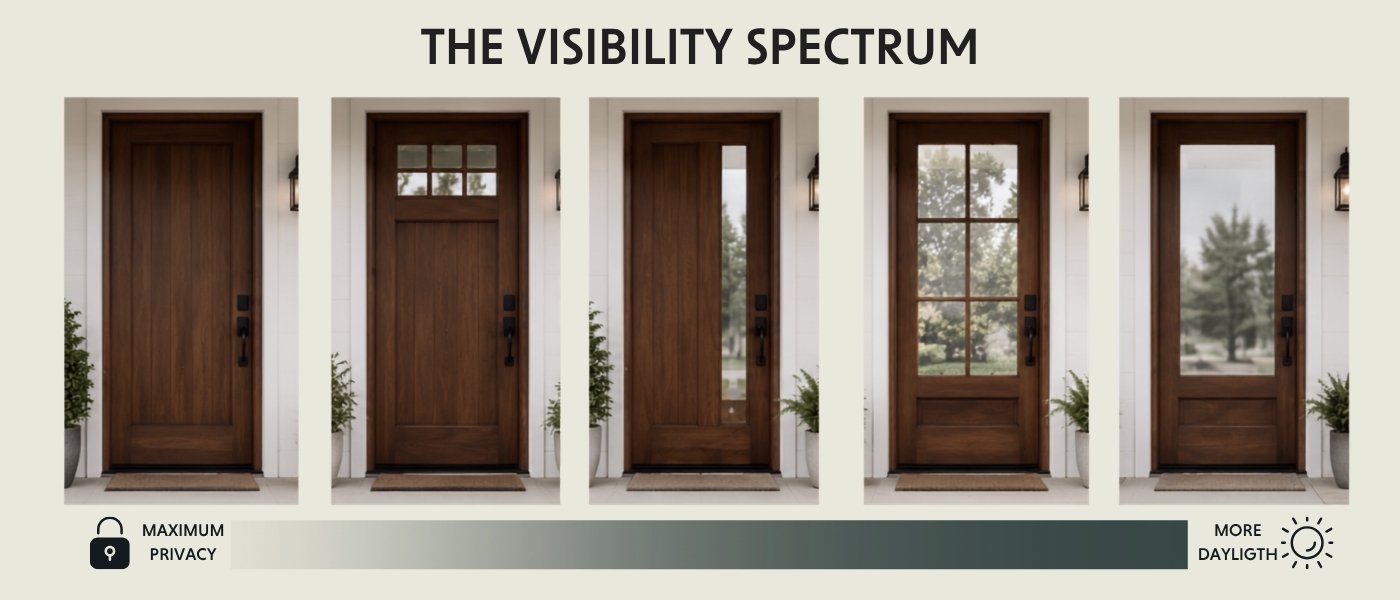
Wood plus glass brings together material warmth and controlled daylight. The wood frame anchors the design, while the glass placement determines how open the door feels.
See variations in theWood and Glass Modern Collection.
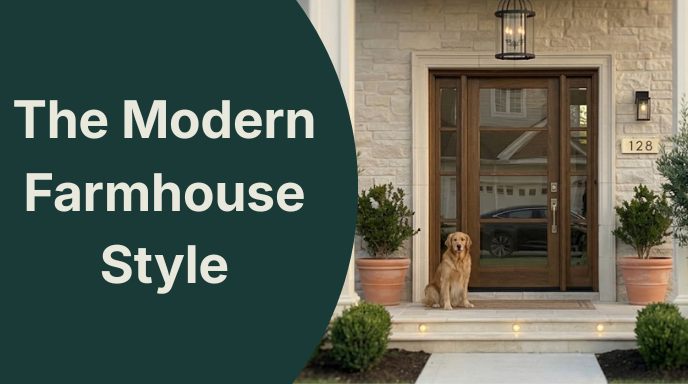
These directions include narrow vertical lites, centered glass panels, or larger glazed areas. Clear glass increases brightness. Textured or obscured glass softens direct sightlines while still allowing light through. This approach suits homes that want both warmth and openness at the entry.
Wood Tone with Clean Framed Lite
- Material feel: warm wood tone paired with a cleanly framed glass lite.
- Design language: simple glazing that brings in daylight and lightens the entry.
- Finish direction: warm wood for softness, or a deep blue for contrast.
- Best use case: entry when you want brightness without going fully glass-forward.
- Home fit: contemporary exteriors where warmth balances crisp geometry.
Wood Tone with Large Simple Glass Area
- Material feel: wood tone frame with a larger, simple glass panel.
- Design language: glass-forward approach that opens up the entry and brightens the interior.
- Finish direction: warm wood, or darker tones for a stronger contrast.
- Best use case: entry when the foyer or hall feels dark and you want more daylight.
- Home fit: modern and contemporary façades with clean lines that suit larger glazing.
Wood Tone with Textured Modern Glass
- Material feel: warm wood tone paired with reeded or fluted glass as the feature.
- Design language: texture softens light and reduces direct sightlines.
- Finish direction: warm wood tones, or nature-leaning hues for a calm, grounded look.
- Best use case: entry when you want light without feeling too exposed.
- Home fit: warmer modern homes where texture feels considered, not busy.
Warm Modern with Privacy-Softening Glass
- Material feel: warm modern face paired with glass that obscures the view through texture.
- Design language: restrained detailing with clean glass placement.
- Finish direction: warm wood tones, or deep blues for warmth with contrast.
- Best use case: entry for homeowners who want daylight but prefer a more private feel.
- Home fit: homes that mix crisp lines with warmer finishes and layered exterior palettes.
Wood plus glass brings together material warmth and controlled daylight. The wood frame anchors the design, while the glass placement determines how open the door feels.
See variations in theWood and Glass Modern Collection.
These directions include narrow vertical lites, centered glass panels, or larger glazed areas. Clear glass increases brightness. Textured or obscured glass softens direct sightlines while still allowing light through. This approach suits homes that want both warmth and openness at the entry.
Wood Tone with Clean Framed Lite
- Material feel: warm wood tone paired with a cleanly framed glass lite.
- Design language: simple glazing that brings in daylight and lightens the entry.
- Finish direction: warm wood for softness, or a deep blue for contrast.
- Best use case: entry when you want brightness without going fully glass-forward.
- Home fit: contemporary exteriors where warmth balances crisp geometry.
Wood Tone with Large Simple Glass Area
- Material feel: wood tone frame with a larger, simple glass panel.
- Design language: glass-forward approach that opens up the entry and brightens the interior.
- Finish direction: warm wood, or darker tones for a stronger contrast.
- Best use case: entry when the foyer or hall feels dark and you want more daylight.
- Home fit: modern and contemporary façades with clean lines that suit larger glazing.
Wood Tone with Textured Modern Glass
- Material feel: warm wood tone paired with reeded or fluted glass as the feature.
- Design language: texture softens light and reduces direct sightlines.
- Finish direction: warm wood tones, or nature-leaning hues for a calm, grounded look.
- Best use case: entry when you want light without feeling too exposed.
- Home fit: warmer modern homes where texture feels considered, not busy.
Warm Modern with Privacy-Softening Glass
- Material feel: warm modern face paired with glass that obscures the view through texture.
- Design language: restrained detailing with clean glass placement.
- Finish direction: warm wood tones, or deep blues for warmth with contrast.
- Best use case: entry for homeowners who want daylight but prefer a more private feel.
- Home fit: homes that mix crisp lines with warmer finishes and layered exterior palettes.
Category 4: Glass-driven
Glass-driven modern puts light at the center of the design. The glazing becomes the dominant element, supported by minimal framing.
Explore the Glass-Driven Modern Door Collection.
These doors often feature larger glass panels and clean proportions. They suit homes where natural light is part of the overall plan. For more privacy, frosted or patterned glass can reduce visibility while maintaining brightness.
Clean Lite, Airy Modern Entry
- Material feel: door face where glass becomes the dominant element.
- Design language: large, simple glazing that brightens the entry.
- Finish direction: deep blues or darker tones for contrast.
- Best use case: entry when you want the threshold to feel lighter and more open during the day.
- Home fit: modern homes with minimal trim and simple forms that suit larger glass areas.
Textured Glass Modern with Soft Light
- Material feel: glass-forward door featuring reeded or fluted texture.
- Design language: textured glazing that diffuses light and softens visibility.
- Finish direction: black for contrast, or natural tones for a calmer feel.
- Best use case: entry when you want daylight without full transparency.
- Home fit: works well on both minimalist and warmer modern homes because the texture adds depth without ornament.
Minimal Frame Glass-Forward Modern
- Material feel: cleanly framed glass with restrained detailing.
- Design language: simple proportions and minimal trim around the lites.
- Finish direction: bold black for crisp lines, or deeper hues for a current look.
- Best use case: entry when you want brightness while keeping the overall design understated.
- Home fit: contemporary façades where clean framing matches the home’s lines.
Warm-Toned Glass-Forward Modern
- Material feel: glass-forward design balanced by warm material tone.
- Design language: simple lines paired with warmth for a softer modern feel.
- Finish direction: warm wood tones or nature-inspired greens.
- Best use case: entry for homeowners who want light without the space feeling stark.
- Home fit: homes that blend clean forms with inviting exterior materials.
Glass-driven modern puts light at the center of the design. The glazing becomes the dominant element, supported by minimal framing.
Explore the Glass-Driven Modern Door Collection.
These doors often feature larger glass panels and clean proportions. They suit homes where natural light is part of the overall plan. For more privacy, frosted or patterned glass can reduce visibility while maintaining brightness.
Clean Lite, Airy Modern Entry
- Material feel: door face where glass becomes the dominant element.
- Design language: large, simple glazing that brightens the entry.
- Finish direction: deep blues or darker tones for contrast.
- Best use case: entry when you want the threshold to feel lighter and more open during the day.
- Home fit: modern homes with minimal trim and simple forms that suit larger glass areas.
Textured Glass Modern with Soft Light
- Material feel: glass-forward door featuring reeded or fluted texture.
- Design language: textured glazing that diffuses light and softens visibility.
- Finish direction: black for contrast, or natural tones for a calmer feel.
- Best use case: entry when you want daylight without full transparency.
- Home fit: works well on both minimalist and warmer modern homes because the texture adds depth without ornament.
Minimal Frame Glass-Forward Modern
- Material feel: cleanly framed glass with restrained detailing.
- Design language: simple proportions and minimal trim around the lites.
- Finish direction: bold black for crisp lines, or deeper hues for a current look.
- Best use case: entry when you want brightness while keeping the overall design understated.
- Home fit: contemporary façades where clean framing matches the home’s lines.
Warm-Toned Glass-Forward Modern
- Material feel: glass-forward design balanced by warm material tone.
- Design language: simple lines paired with warmth for a softer modern feel.
- Finish direction: warm wood tones or nature-inspired greens.
- Best use case: entry for homeowners who want light without the space feeling stark.
- Home fit: homes that blend clean forms with inviting exterior materials.
Category 5: Pivot or statement
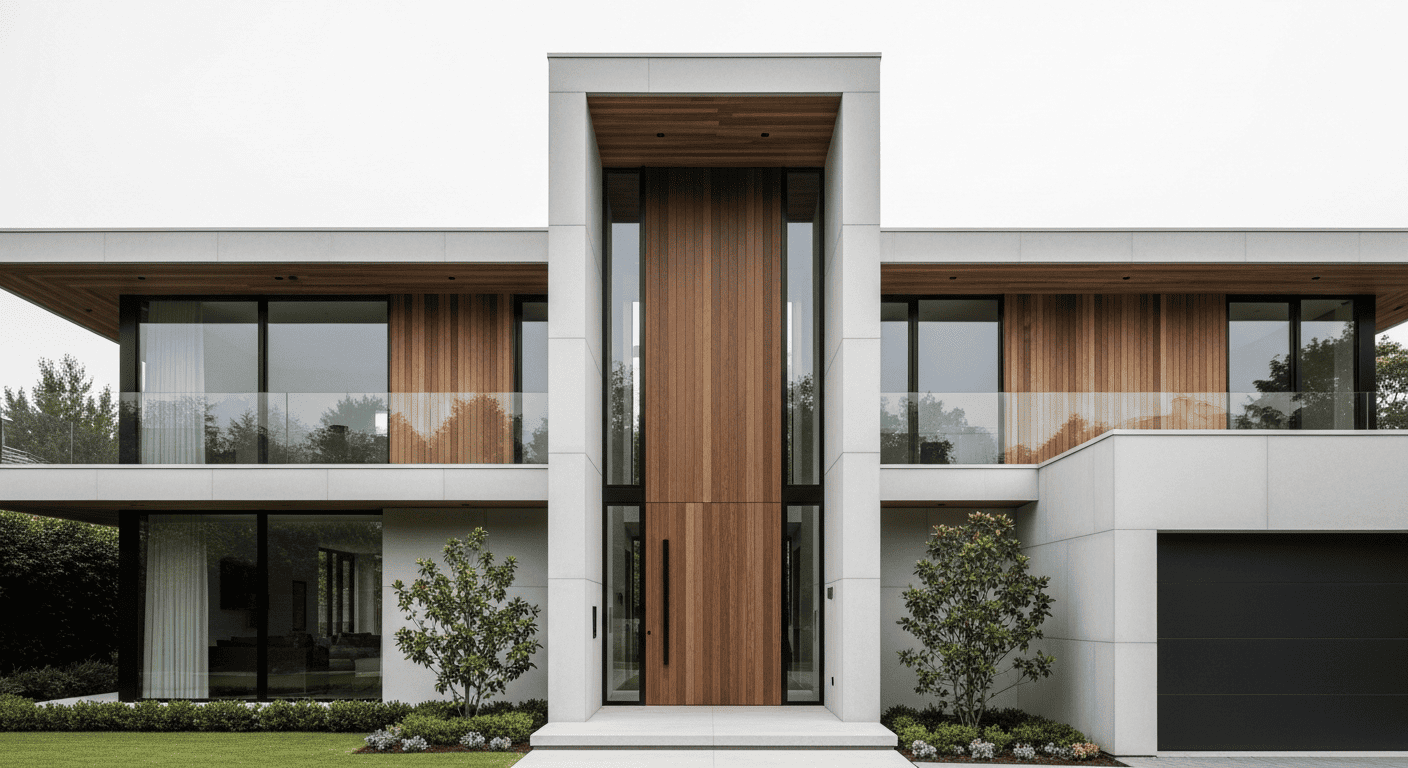
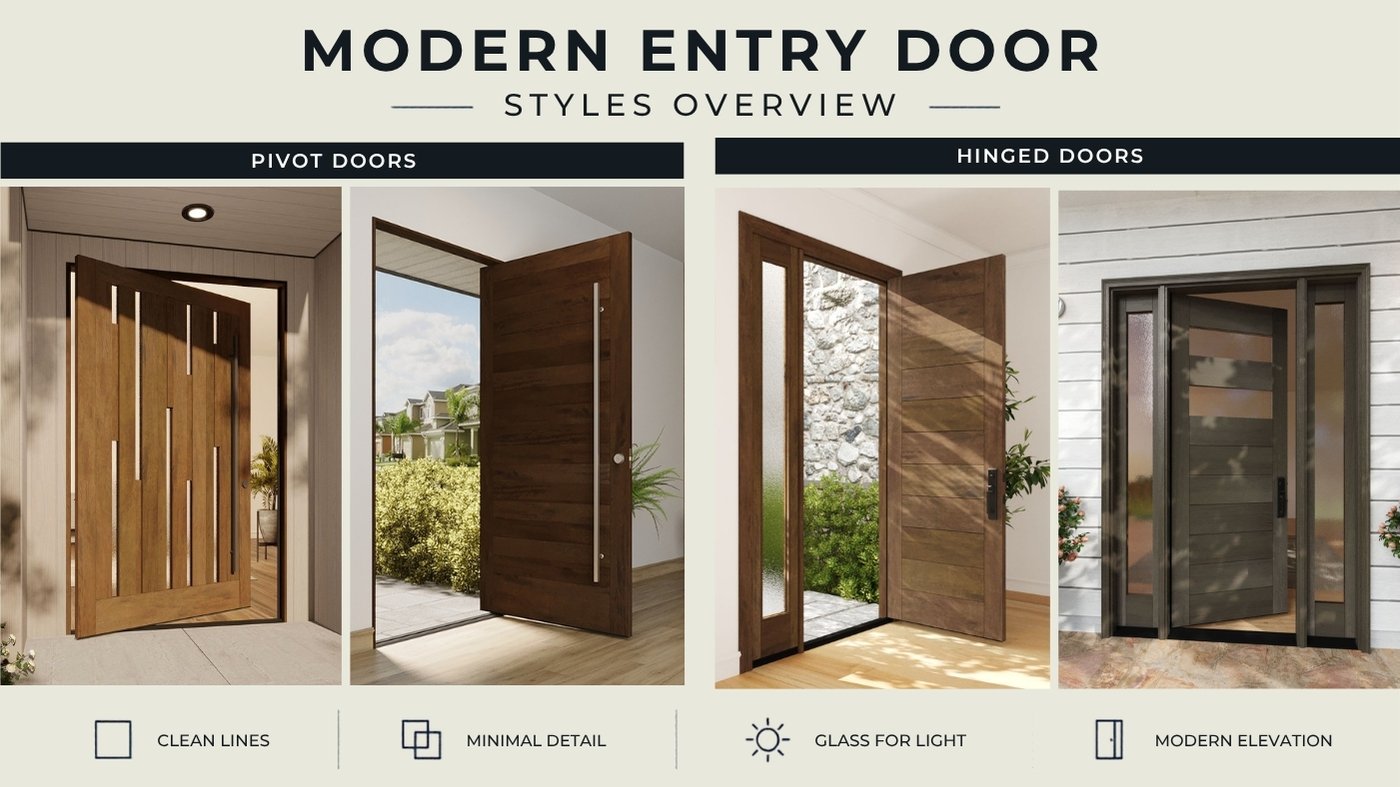
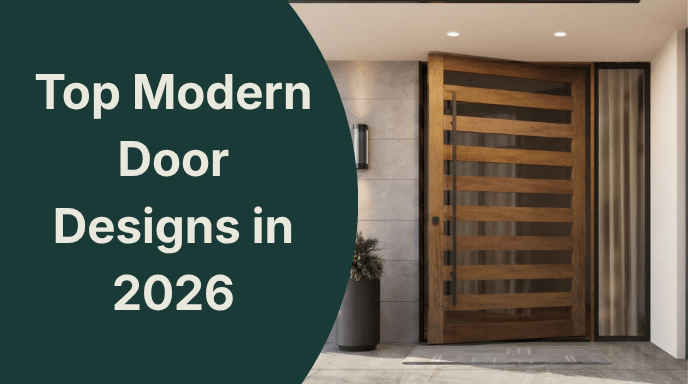
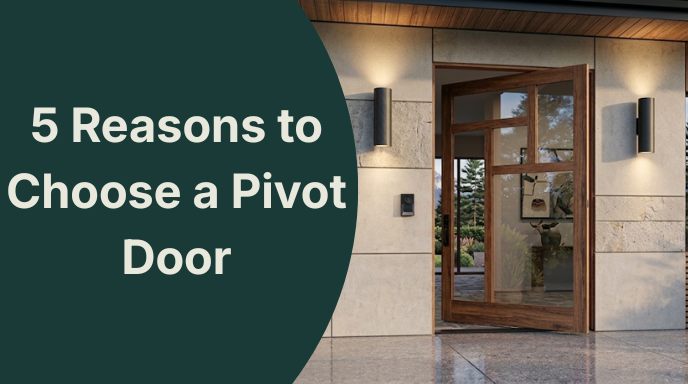
Statement modern focuses on scale and proportion. These doors are often taller or wider, and pivot hardware changes how the door opens and closes.
See more in the Pivot and Statement Door Guide.
This direction suits contemporary homes where the entry is meant to feel deliberate and grounded. The emphasis is on size, balance, and movement rather than ornament.
Clean Statement Pivot Presence
- Material feel: larger-scale door with a calm, minimal face.
- Design language: oversized proportion used intentionally, without added ornament.
- Finish direction: bold black for contrast, or deeper blues for a modern tone.
- Best use case: entry when you want the door to anchor the façade.
- Home fit: contemporary homes where a taller or wider opening feels aligned with the overall scale.
Warm-Toned Pivot with Balanced Scale
- Material feel: statement-scale door softened by warm material tone.
- Design language: pivot movement paired with restrained detailing.
- Finish direction: warm wood tones or natural greens for a grounded look.
- Best use case: entry when you want impact while keeping the approach welcoming.
- Home fit: warm modern homes where natural materials are part of the exterior palette.
Pivot with Glass Emphasis
- Material feel: large-scale door combined with simple, clean glazing.
- Design language: pivot framing paired with minimal glass placement.
- Finish direction: black for a crisp outline, or deeper tones for contrast.
- Best use case: entry when you want scale and daylight together.
- Home fit: contemporary façades with simple geometry and limited trim.
Oversized Statement Without Pivot
- Material feel: larger door presence achieved through proportion rather than hardware.
- Design language: clean framing and balanced scale.
- Finish direction: bold black for drama, or natural tones for a quieter presence.
- Best use case: entry when you want a focal point without using pivot hardware.
- Home fit: homes that support a strong entry moment through proportion and layout.
Statement modern focuses on scale and proportion. These doors are often taller or wider, and pivot hardware changes how the door opens and closes.
See more in the Pivot and Statement Door Guide.
This direction suits contemporary homes where the entry is meant to feel deliberate and grounded. The emphasis is on size, balance, and movement rather than ornament.
Clean Statement Pivot Presence
- Material feel: larger-scale door with a calm, minimal face.
- Design language: oversized proportion used intentionally, without added ornament.
- Finish direction: bold black for contrast, or deeper blues for a modern tone.
- Best use case: entry when you want the door to anchor the façade.
- Home fit: contemporary homes where a taller or wider opening feels aligned with the overall scale.
Warm-Toned Pivot with Balanced Scale
- Material feel: statement-scale door softened by warm material tone.
- Design language: pivot movement paired with restrained detailing.
- Finish direction: warm wood tones or natural greens for a grounded look.
- Best use case: entry when you want impact while keeping the approach welcoming.
- Home fit: warm modern homes where natural materials are part of the exterior palette.
Pivot with Glass Emphasis
- Material feel: large-scale door combined with simple, clean glazing.
- Design language: pivot framing paired with minimal glass placement.
- Finish direction: black for a crisp outline, or deeper tones for contrast.
- Best use case: entry when you want scale and daylight together.
- Home fit: contemporary façades with simple geometry and limited trim.
Oversized Statement Without Pivot
- Material feel: larger door presence achieved through proportion rather than hardware.
- Design language: clean framing and balanced scale.
- Finish direction: bold black for drama, or natural tones for a quieter presence.
- Best use case: entry when you want a focal point without using pivot hardware.
- Home fit: homes that support a strong entry moment through proportion and layout.
Design categories to explore next
If you’re deciding between a few modern door designs, start with the direction that feels most natural to your space. Then explore that collection in more detail.
- → Minimalist Modern Doors
- → Wood-Forward Modern Doors
- → Wood and Glass Modern Doors
- →Glass-Driven Modern Doors
- → Pivot and Statement Doors
Each collection expands on the direction you’ve selected, with more variations in material, scale, and glass placement.
Get Help Choosing Your Next Door
How to Choose: Match Direction to Entry, Light, Warmth, and Home
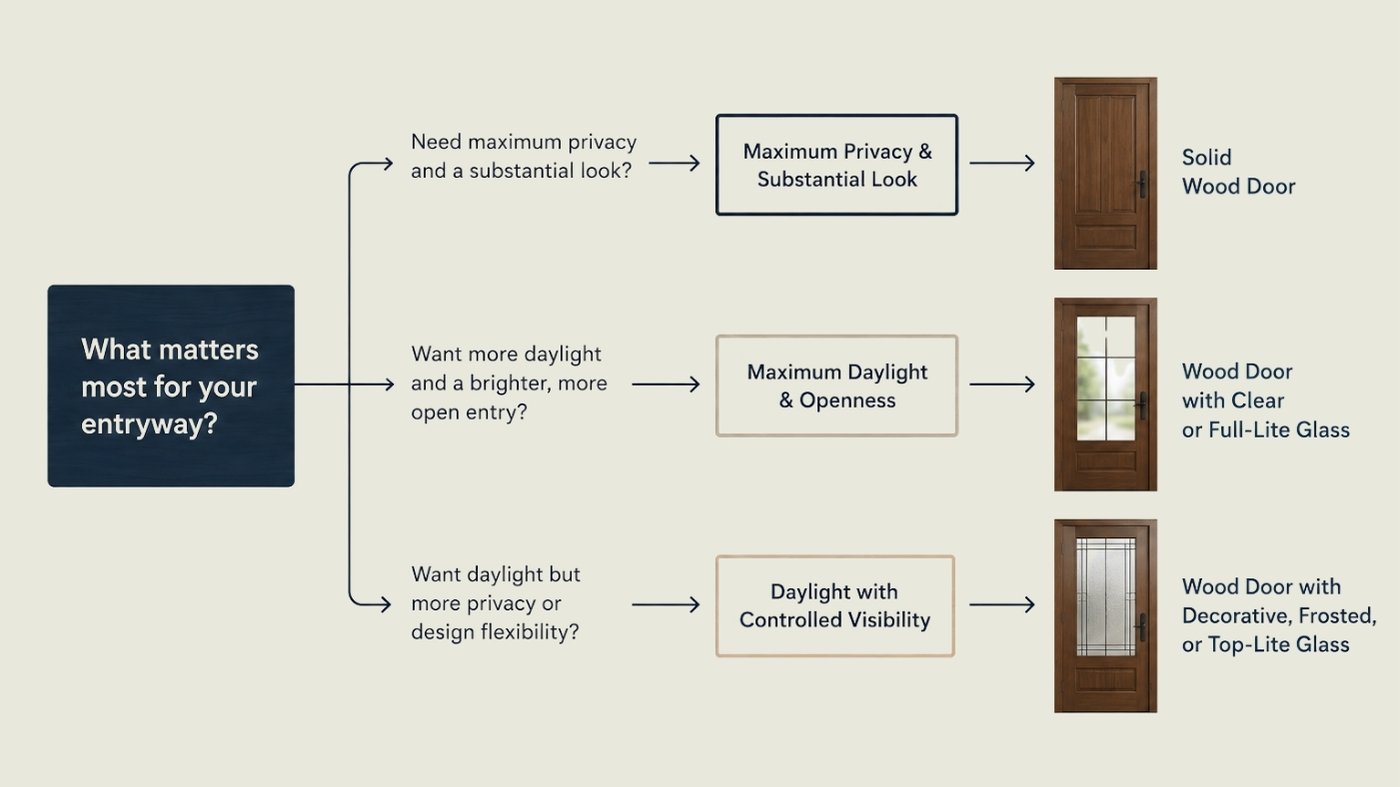
Decide whether you’re shopping modern front door designs or modern interior door designs first. Entry doors usually carry more presence and durability expectations, while interior doors focus more on proportion and light-sharing.
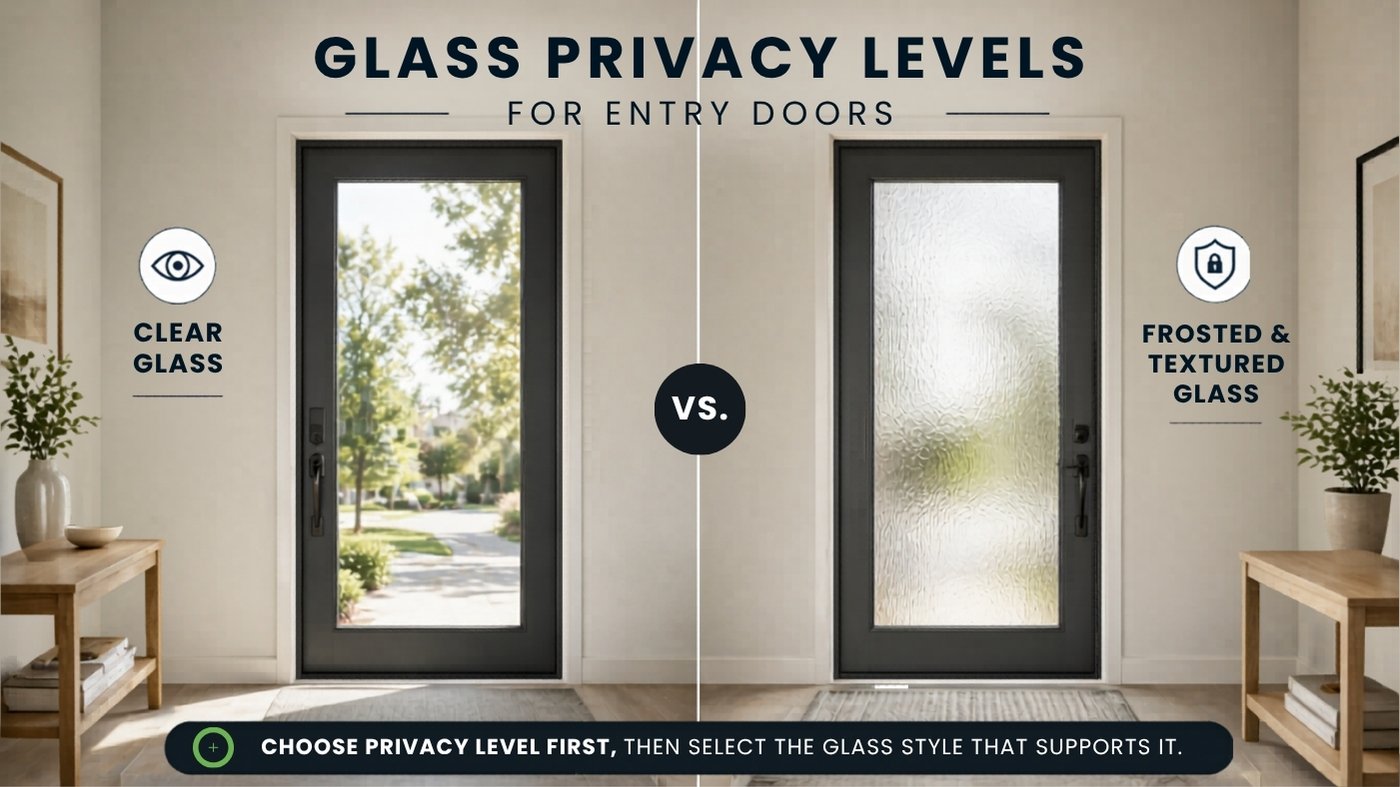
Reeded or fluted glass softens light while reducing direct visibility compared to clear glass. Choose clear glass for brightness, textured glass for comfort.
Balance clean lines with warmth cues such as wood tones or textured glass if you want modern without it feeling stark.
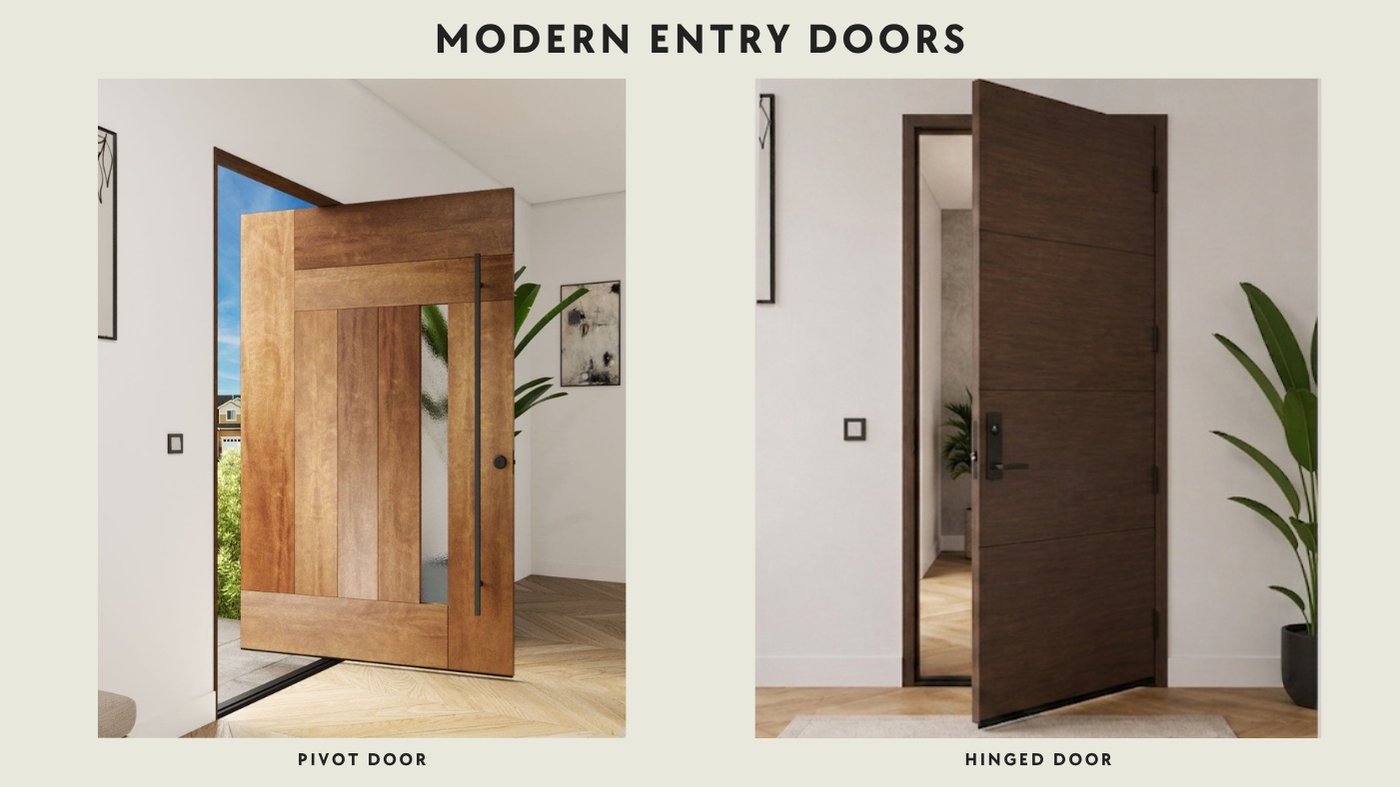
A pivot door rotates on a pivot point rather than side hinges. It’s often used for larger entries and tends to feel heavier and more deliberate when opened.
Bold black, deep blues, warm wood tones, and muted nature-inspired hues are common choices. The right one depends on how much contrast you want against your exterior materials.
FAQ
A modern door is defined by clean lines and minimal detailing. Slab or flush faces communicate simplicity immediately. Proportion, glass placement, and finish tone support the look without added ornament.
Modern refers to a consistent design language built on simplicity and structure. Contemporary changes more often with trends. If you want something that feels steady over time, modern is usually the safer direction.
Start by deciding whether the door is an exterior focal point or an interior transition. Once that context is clear, narrow your direction by light preference and warmth level. Staying within one style family usually creates a more cohesive result.
Textured glass, such as reeded or fluted styles, softens incoming light and reduces direct visibility compared to clear glass. This allows brightness while maintaining comfort. The size and placement of the glass also affect how open the entry feels.
Bold black, deep blues, warm wood tones, and muted nature-inspired hues are common choices. Darker greens and rich blues are especially popular. The best option depends on how much contrast you want against your exterior materials.
A pivot door rotates on a pivot point instead of traditional side hinges. It’s often used for larger entries and tends to feel heavier and more deliberate when opened.
Modern can feel cold when there’s no warmth in the material or tone. Wood finishes, textured glass, and softer colors help balance clean lines. The goal is simplicity that still feels comfortable to live with.