Best Wood Front Door in 2026: Design, Security, and Value
-
 By Shayan Behjati
 - Mar 17, 2026
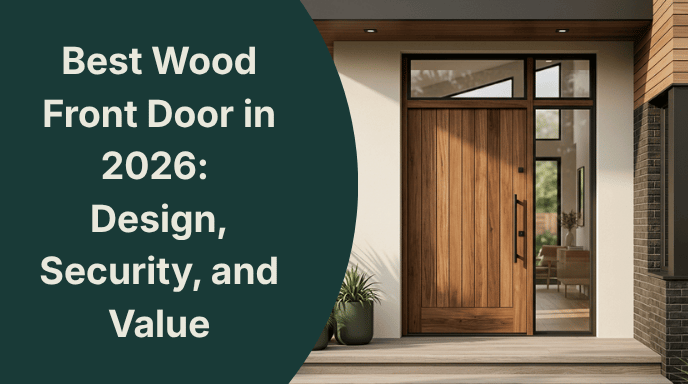
Best is not a single winner. The best wood front door is the one that fits your home’s design, supports your security and hardware plan, holds up to the sun and rain your entry actually gets, matches the upkeep you’re willing to maintain, and still makes sense for the price over time.
You’ll move through three steps: a clear definition of what “best” means, a five-point checklist, and a quick use-case guide to help you shortlist doors based on exposure and maintenance tolerance.
What “best” really means for a wood front door in 2026
Definition:
The “best” wood front door fits your home’s design and glass preference. It supports your security and hardware plan, performs in the sun and rain your entry receives, and matches the maintenance you realistically plan to do. Long-term value matters too. The right choice makes sense over time, given the price. It is not a universal ranking. It is a match across the criteria you can confirm on product pages.
Explore Entry Door Collection →
A 5-point checklist to choose the right wood front door
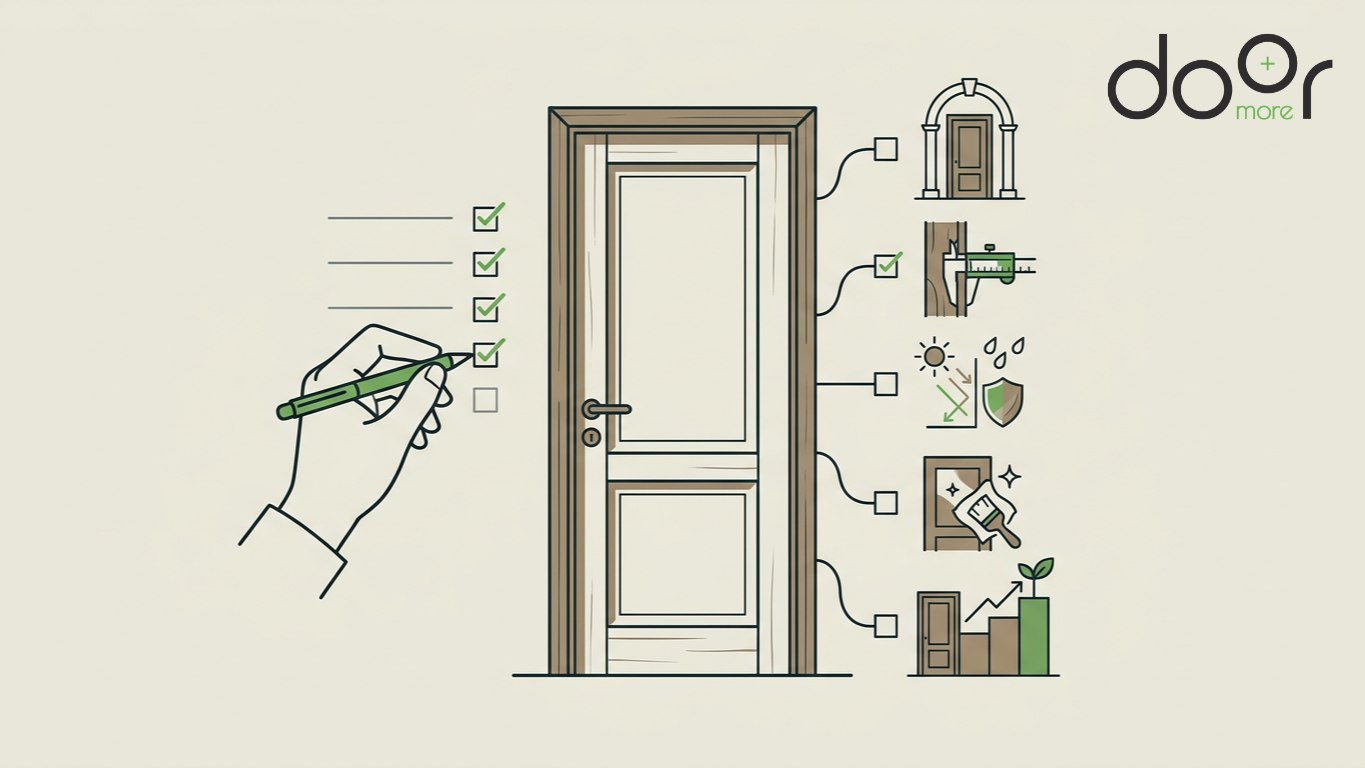
Use this checklist to avoid mismatches—especially between your entry’s exposure and what wood requires to perform over time.
1) Design fit (how it actually looks on your home)
Design fit isn’t generic curb appeal. It’s whether the door’s proportions, panel depth, and glass feel right on the elevation. A door can look good on its own and still feel wrong once installed.
Selection Cues:
- Overall lines: clean, minimal lines read modern. Arched or more detailed profiles read traditional. Heavier rails and stiles often lean craftsman.
- Panel profile: raised panels read more classic. Recessed or flatter panels read cleaner and more contemporary.
- Glass amount: decide early whether you want privacy-first or daylight-first. Then choose a glass proportion you can live with every day.
- If glass is included: more glass brings light and visual interest, but adds edge seals to maintain and is generally less impact-tolerant than a solid panel.
2) Security readiness (hardware and fit, not hype)
Security is less about wood species and more about the door as a system. Thickness, lock preparation, hinge pairing, and frame fit matter most. The goal is a door that supports your hardware plan and feels appropriate for your entry.
Selection Cues:
- Thickness: exterior wood doors are commonly around 1.75–2.25 inches. Thickness is a practical cue for hardware compatibility and overall feel.
- Lock preparation: look for notes that clarify lock prep (how the door is drilled for the lock and handle). This reduces last-minute site adjustments.
- System pairing: security improves when slab, frame, hinges, and hardware are designed to work together—especially with prehung doors.
3) Durability based on your entry’s exposure
Durability depends less on “wood is wood” and more on what your entry faces. Sun, wind-driven rain, and humidity drive finish wear and wood movement. Over time, that can show up as sticking, gaps, and warping—especially on exposed entries.
Start here: Is your entry protected, or does it take weather directly?
Wood doors are generally easiest to live with under a porch, recessed doorway, or overhang that reduces prolonged sun and direct rain.
Selection Cues:
- Rain and humidity: wind-driven rain increases moisture cycling and swelling risk.
- Direct sun: strong sun accelerates finish breakdown and can become a maintenance issue, not just an appearance issue.
- Temperature swings: larger swings increase movement stress, especially when combined with moisture.
4) Maintenance you’re willing to live with
Wood doors are not “set and forget.” They require periodic finish checks to protect both appearance and performance. This isn’t about perfection—it’s about catching wear early before it turns into refinishing or fit problems.
If your entry is exposed, expect more frequent attention. Sun accelerates finish wear. Moisture cycling increases swelling and sticking risk. Exposure doesn’t just change how often you maintain—it changes how forgiving the door is if you don’t.
What maintenance usually involves (at decision level):
-
Inspect: Check sun-facing edges and bottom rails annually.
-
Touch-up: Fix small worn areas early to prevent major damage.
-
Glass: Periodically check seals and trim for wear.
-
Selection: Match your door's finish and glass amount to your realistic maintenance habits.
-
Low Upkeep: Choose sheltered entries and simple designs for the least work.
5) Long-term value (not just price)
Value isn’t just price. “Best value” is the door that fits your criteria without creating avoidable costs later—especially those tied to exposure and maintenance.
Price tends to move with door size, glass area, prehung vs slab-only, finish level, wood species, and customization. The decision is less about minimizing cost and more about choosing which factors are worth paying for in your situation.
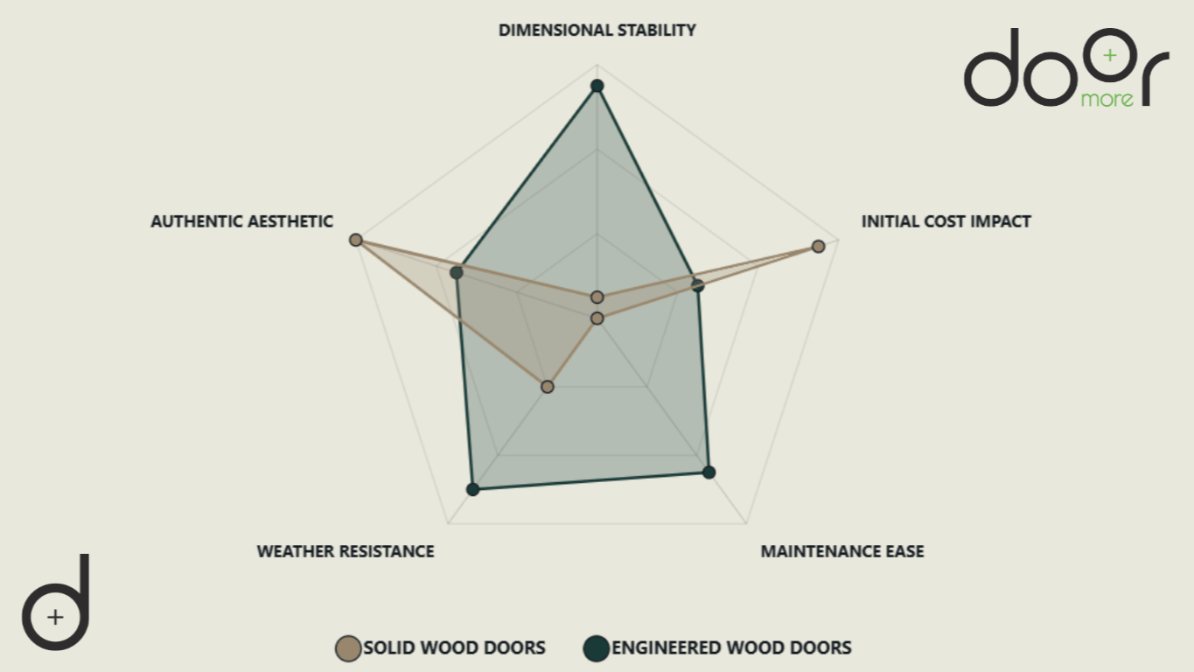
Value also includes the tradeoff between solid wood and engineered construction. In many cases, engineered wood doors offer better dimensional stability and lower maintenance risk at comparable price points, particularly for entries exposed to strong sun, wind-driven rain, or high humidity.
A useful way to think about value is to invest in features that reduce your highest risk: exposure, a glass-forward design, or avoiding a configuration mismatch that complicates installation and long-term fit.
Choose based on your situation (60-second guide)
Choose based on your situation
Use this section to quickly identify your situation. Find the description that matches your entry and priorities, then use the cues to start shortlisting. This is specific to exterior wood front doors and focused on practical decision-making.
Security readiness depends more on the door as a system than on wood species. Focus on details you can verify: thickness, lock preparation, and how slab, frame, and hinges work together.
Wood doors need regular inspections and refinishing to prevent swelling or sticking, especially in exposed areas where weather accelerates wear.
-
Annual Care: Glass-heavy designs are fine with yearly upkeep.
-
Low Risk: Stick to stable construction and modest glass.
-
No Upkeep: Avoid exterior wood if you won't maintain it.
-
High Traffic: Prioritize durable finishes and long-term stability.
-
Kids/Pets: Use moderate glass and avoid fragile details to resist scuffs.
-
Privacy: Balance glass size for daylight versus living room comfort.
-
Exposed/Busy: Choose stability-focused construction and realistic maintenance levels.
Choose a style direction (without overthinking it)
Style is a routing tool. Pick a direction, then use a small set of cues to shortlist doors that match your home and your glass preference.
If glass is part of your vision, treat it as a tradeoff: it can bring light and visual interest, but it typically adds edge seals to maintain and is generally less impact-tolerant than a solid panel.
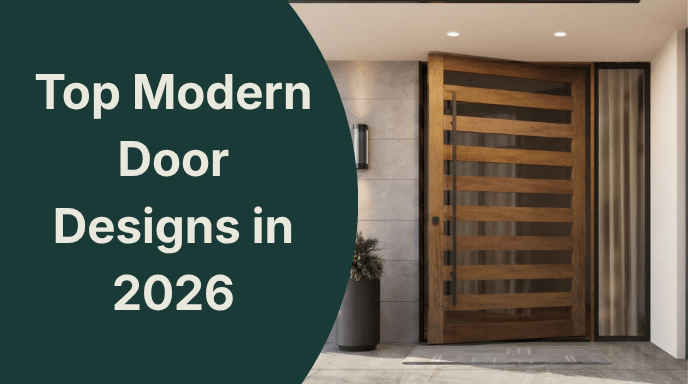
Modern wood doors feel deliberate through restraint. Look for clean lines, simpler panel geometry, and controlled glass use.
Selection cues:
- Flat or minimal panel profiles, often with a strong horizontal or vertical emphasis
- Crisp proportions without heavy ornament
- Glass used as a design element (often narrower or more geometric), rather than a large decorative lite
- If glass is included, choose a proportion that fits privacy needs and upkeep tolerance
Traditional wood doors show stronger panel definition and classic proportion. Aim for a door that sits comfortably with your home’s trim, symmetry, and detailing, so it reads as part of the elevation rather than a separate feature.
Selection cues:
- Raised or clearly framed panels with more depth
- Balanced, often symmetrical panel layouts and glass placement
- If glass is included, classic divided-lite patterns or decorative framing in a proportion that still suits privacy
Farmhouse wood doors emphasize warmth and sturdy, simple geometry through straightforward layouts and practical glass.
Selection Cues:
-
Simple, bold shapes: Fewer panels with stronger proportions.
-
Balanced glass: Provides daylight without becoming a full-glass face.
-
Sturdy lines: Welcoming and clean rather than ornate.
-
Practical proportions: Realistic for daily use and upkeep.
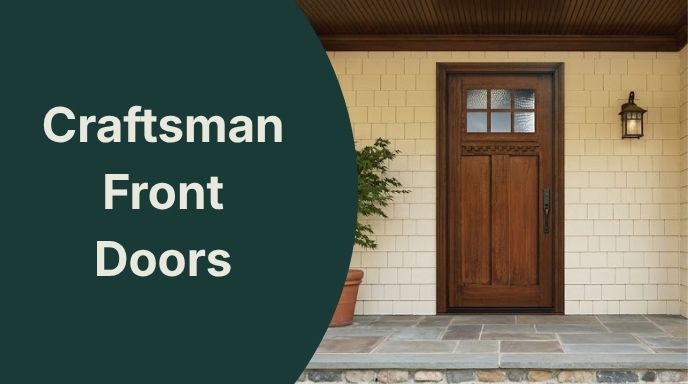
Craftsman wood doors tend to feel grounded through proportion and expressed components rather than applied ornament. Look for visible structure, pronounced framing, and glass that reads as functional.
Selection cues:
- Strong stiles and rails with clear framing
- Panel layouts that feel balanced and sturdy, often with a clear hierarchy
- Glass that is typically smaller and placed deliberately rather than expansive
- If glass is included, keep proportion aligned with privacy and maintenance tolerance
If you want wood plus glass, decide what the glass is for: daylight, visibility, or design. Then choose a proportion and placement that fits your privacy needs and sightlines into living spaces.
Selection cues:
- Glass proportion that matches daylight goals without overexposing interior privacy
- Glass placement that works with the entry layout and typical sightlines
- Practical upkeep: more glass means more perimeter seals and more cleaning, and is generally less impact-tolerant than a solid panel
Curated Door & More Wood Front Door shortlists
These shortlists reflect common buyer situations. Each one clarifies what to prioritize and what to verify on product pages. “Best” remains a match across criteria—not a universal ranking.
Shortlist 1: Sheltered-entry style upgrade
Who it’s for
Your entry is protected by a porch, recessed doorway, or overhang that limits direct rain and prolonged sun.
Prioritize
Design direction first, then hardware readiness and value alignment.
Check on product pages
- Panel profile and glass layout
- Door thickness and hardware compatibility notes
- Finish level that matches your upkeep habits
Shortlist 2: Exposed-entry durability-first choice
Who it’s for
Your door faces rain, strong sun, humidity, or significant temperature swings.
Prioritize
Weather tolerance, stability-focused construction, and upkeep realism.
Check on product pages
- Notes suggesting engineered or laminated construction
- Panel construction details (stile-and-rail vs large flat faces)
- Finish expectations
- Glass proportion tradeoffs if included
Shortlist 3: Security-first hardware fit
Who it’s for
You want a wood door that integrates cleanly with your locks and hardware and feels solid in daily use.
Prioritize
Thickness, hinge and frame pairing, and lock preparation clarity.
Check on product pages
- Door thickness
- Lock preparation notes and hardware compatibility
- Whether prehung is available (frame + hinges included)
Shortlist 4: Value-focused, lower-risk pick
Who it’s for
You want long-term stability and manageable maintenance at a sensible price point.
Prioritize
Construction choices that reduce regret—especially if exposure is a factor.
Check on product pages
- Signs of engineered or laminated construction
- Prehung vs slab-only configuration
- Finish level aligned with your upkeep tolerance
Shortlist 5: Light-loving, glass-forward entry
Who it’s for
You want daylight and a more open feel at the entry.
Prioritize
Glass proportion that fits privacy and daily comfort, with realistic expectations about upkeep and impact tolerance.
Check on product pages
- Glass placement and proportion
- Notes about glass construction or seal maintenance
- Exposure fit if the entry is not sheltered
Shortlist 6: Busy-household practical pick
Who it’s for
High traffic, kids, pets, and daily wear are part of life.
Prioritize
Durability in everyday use, realistic upkeep, and practical glass proportions.
Check on product pages
- Finish level and maintenance expectations
- Glass layout and overall glass proportion
- Any notes pointing to stability-focused construction
Construction details you can actually check on product pages
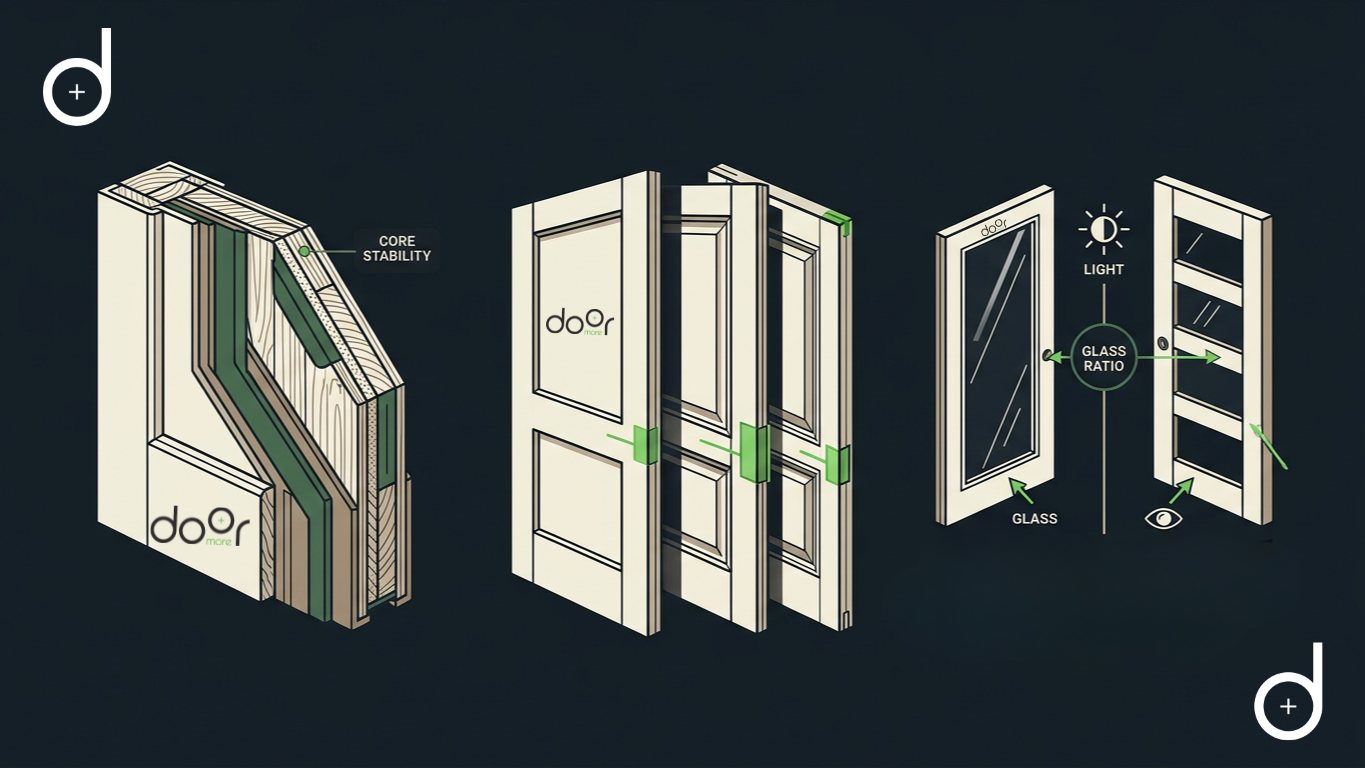
Construction details only help if they translate into simple checks you can confirm while browsing. Use the cues below to compare doors with more confidence—especially if your entry sees strong sun or wind-driven rain.
1) Engineered or laminated construction cues
Engineered or laminated builds use layered components rather than a single solid slab. This approach is often chosen for improved dimensional stability while maintaining a real-wood appearance.
What to look for on product pages
- Mentions of engineered, laminated, or layered construction
- Notes describing stability-focused design (often framed as reduced warping risk)
- References to stile-and-rail construction rather than a single solid slab
Why it matters for your choice
Layered construction can reduce swelling and warping risk in entries that face moisture cycling, strong sun, or temperature swings.
From a value perspective, it can offer better long-term stability at comparable price points.
2) Panel construction cues
Panel-style doors (stile-and-rail construction with inset panels) are often more forgiving of seasonal movement than large flat slab faces. The panel system allows controlled expansion and contraction within the frame.
What to look for on product pages
- Clearly defined raised or recessed panels
- Construction language referencing stile-and-rail or panel structure
- Visual confirmation that the door is not a single flat face
How to use it in your shortlist
If your entry experiences humidity shifts or seasonal changes, panel construction can help manage long-term fit more gracefully than wide, uninterrupted faces.
If your entry is sheltered, panel construction still adds stability, but design fit can carry more weight in your decision.
3) Glass placement tradeoffs
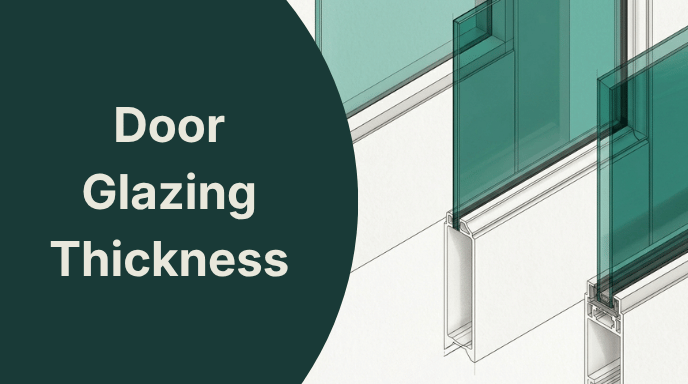
Glass increases daylight and visual openness. It also introduces perimeter seals and maintenance points, and is generally less impact-tolerant than a solid panel. The decision is not whether to avoid glass, but how much and where.
Selection-oriented tradeoffs
- More glass increases light and openness
- More glass typically reduces impact tolerance compared to solid panels
- More glass means more perimeter seals and more cleaning over time
If your entry is exposed, treat glass proportion as part of your durability calculation—not just a design choice.
Cost and value: what’s worth paying for?
Clear cost logic helps you spend where it changes outcomes for your home. This section explains what tends to move pricing and which upgrades are actually worth prioritising.
What drives the price
Wood front door pricing usually moves with the same variables: door size, glass area, prehung vs slab-only, finish level, wood species, and customisation. Because custom sizing and larger glass areas can raise cost quickly compared to stock solid doors, it helps to decide early where your budget should go.
Price factors to watch while shopping:
- Size: larger doors and non-standard sizing generally increase cost.
- Glass area: more glass often increases cost and changes upkeep expectations.
- Prehung vs slab-only: prehung units cost more but include the frame and hinges, which can improve fit predictability and hardware readiness.
- Finish level: more complete finishing can increase cost and reduce early finishing work.
- Wood species and customisation: material choice and custom details can shift pricing quickly.
What upgrades change outcomes
The upgrades that matter most are tied to stability, upkeep load, and long-term fit.
Outcome-changing upgrades (selection-focused):
- Stability-focused construction: engineered or laminated builds are often chosen for better dimensional stability than a single solid slab.
- Panel construction: stile-and-rail doors with panels are often more forgiving of seasonal movement than large flat faces.
- Glass choices: glass adds light, but increases seal perimeter and is generally less impact-tolerant than a solid panel—so proportion and placement matter.
- Finish level matched to exposure: more exposed entries demand more from finishes; choosing a finish level you can maintain matters as much as initial appearance.
A useful way to prioritize is to choose one upgrade that reduces your biggest risk—exposure, maintenance tolerance, or a glass-forward design—then evaluate options through that lens.
Solid wood vs engineered wood: the value tradeoff
This is a tradeoff, not a winner. Engineered or laminated construction is often used to limit movement and fit issues compared to a single solid slab while keeping a real-wood look. In many cases, engineered wood doors offer better long-term dimensional stability and lower maintenance risk than solid wood doors at comparable price points.
How to decide:
- If your entry is exposed to strong sun, wind-driven rain, high humidity, or temperature swings, stability-focused construction usually matters more.
- If reducing maintenance risk is part of “value” for you, engineered construction is often the practical choice.
- If you prefer traditional solid construction for its own sake, treat exposure and upkeep expectations as part of the decision—not an afterthought.





FAQ
The best wood front door is the one that matches your needs across five criteria: design fit, security readiness, durability under your entry’s exposure, upkeep tolerance, and long-term value. It’s a match across verifiable criteria—not a universal ranking.
They can be, but durability depends less on climate labels and more on exposure conditions at the entry: direct sun, wind-driven rain, humidity, and moisture cycling. Wood doors are generally easier to live with on sheltered entries. Fully exposed entries typically require more frequent finish inspection and upkeep.
Neither is a universal winner. Engineered or laminated construction is often chosen for improved dimensional stability compared to a single solid slab, which can reduce movement-related issues and long-term maintenance risk—especially where exposure is demanding.
They can, but glass changes the tradeoff. More glass increases daylight and visual openness, while adding perimeter seals and maintenance points and generally reducing impact tolerance compared to a solid panel. On exposed entries, glass proportion and placement matter more.
Focus on details you can verify: door thickness, clear lock preparation notes (how the door is drilled for lock and handle), and system-level fit. If a prehung option is available, it can simplify hinge/frame pairing and overall readiness.
The biggest price drivers are door size, glass area, prehung vs slab-only configuration, finish level, wood species, and customisation. Custom sizing and larger glass areas tend to raise cost quickly compared to stock solid doors