RTA vs. Pre-Hung Doors: Which Is the Smarter Choice?
- Aug 7, 2025
RTA vs. Pre-Hung Doors: Which Is the Smarter Choice?
At US Door & More Inc., we believe in transparency and craftsmanship. When selecting the right door system, understanding the difference between Ready-to-Assemble (RTA) and Pre-Hung (Fully Assembled) doors is crucial for homeowners, contractors, and builders. Here's a comprehensive look at how these two systems compare from every angle.
Homeowners: What You Need to Know
RTA Doors: Flexible & Cost-Effective
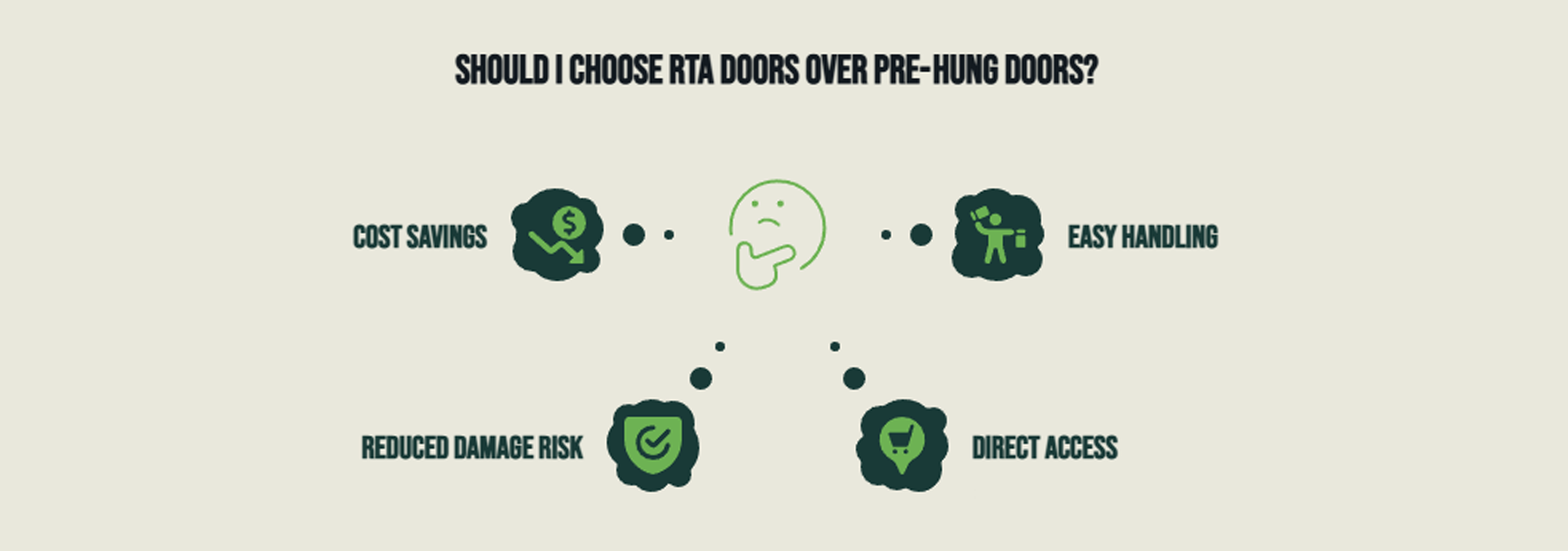
- Lower Total Cost: RTA doors typically cost less to ship and install. You avoid bulky freight charges and save on labor.
- Lower Packaging Cost: Compact items require less protective material, less foam, and smaller boxes. This brings down the total packaging expense significantly — something often overlooked but meaningful.
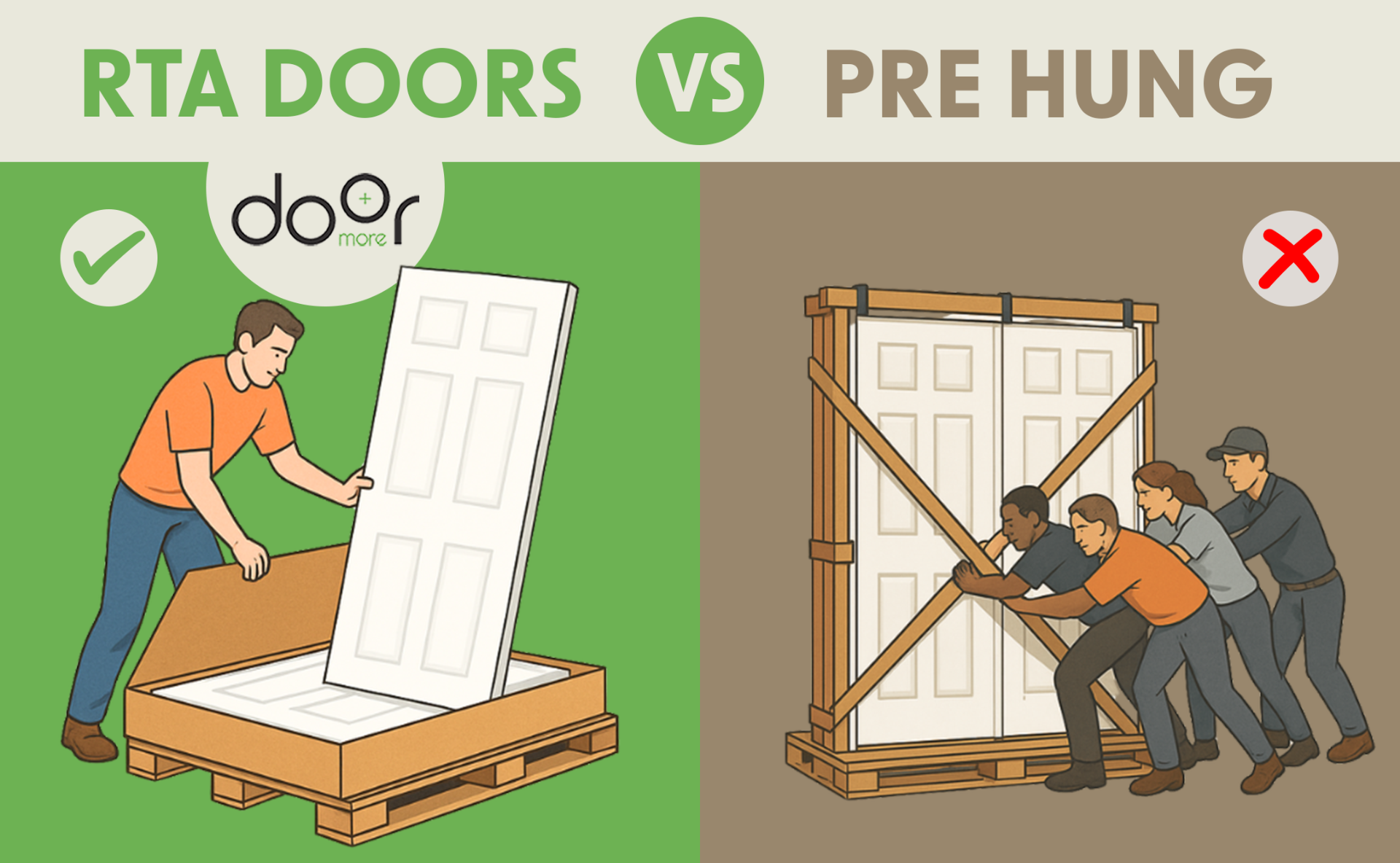
- Simplified Delivery: Shipped in compact boxes, they fit through standard doorways and can be handled by one or two people.
- Easy Handling: Unbox and move pieces one at a time. No need to wrestle with a 300+ lb. frame.
Reduced Damage Risk: Lightweight and compact packaging minimizes damage during transit — just like the flat-pack approach used by leading furniture brands.
Quick Cleanup: No messy pallets or plastic wrap to deal with.
Proven Packaging Logic: RTA minimizes damage risks — that’s why major furniture brands like IKEA have been using this system for decades.
Lower Final Prices Through Direct Access: When packaging and shipping costs are low, manufacturers can sell directly to customers across the country. This allows buyers to shop beyond local dealer networks, accessing better prices, broader selection, and faster turnarounds.
Pre-Hung Doors: Convenience with Hidden Costs
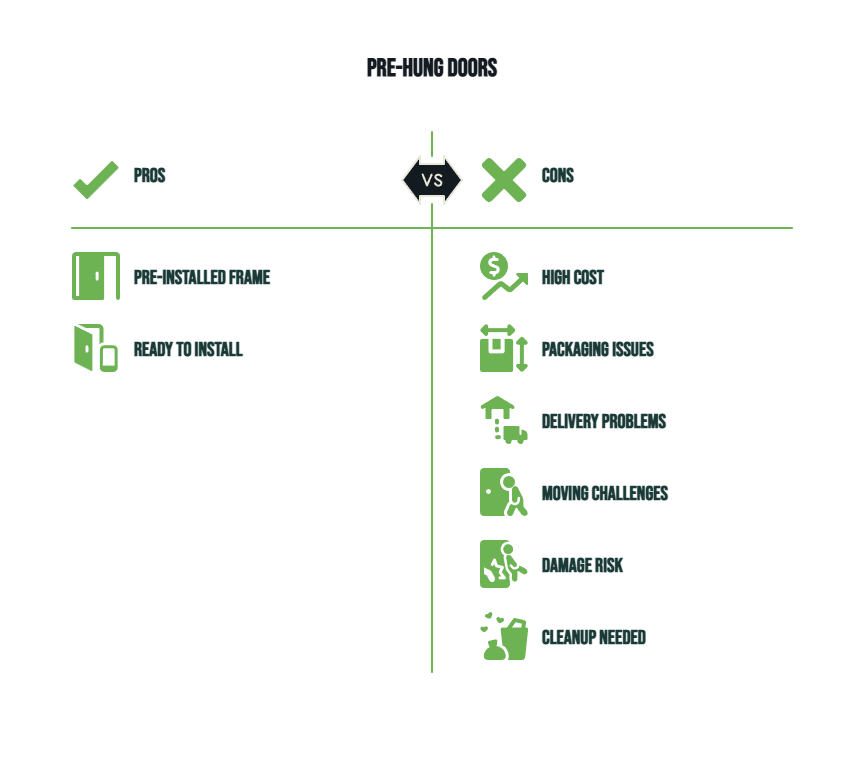
Higher Upfront Cost: Includes frame and hinges pre-installed, but comes with heavy freight fees.
Higher Packaging Cost: Bulky doors require reinforced wrapping, wood bracing, and shrink-wrapped pallets — all of which raise packaging costs.
Delivery Hassles: Requires a liftgate or forklift. Curbside delivery may leave you scrambling.
Difficult to Move: Large, heavy, and awkward — especially with stairs or tight hallways.
Greater Risk of Damage: Bulky size increases the chances of dings, dents, or scratches during shipping or jobsite handling.
More Cleanup: Pallets, shrink wrap, and framing braces add to your disposal workload.
Why Cost and Packaging Matter
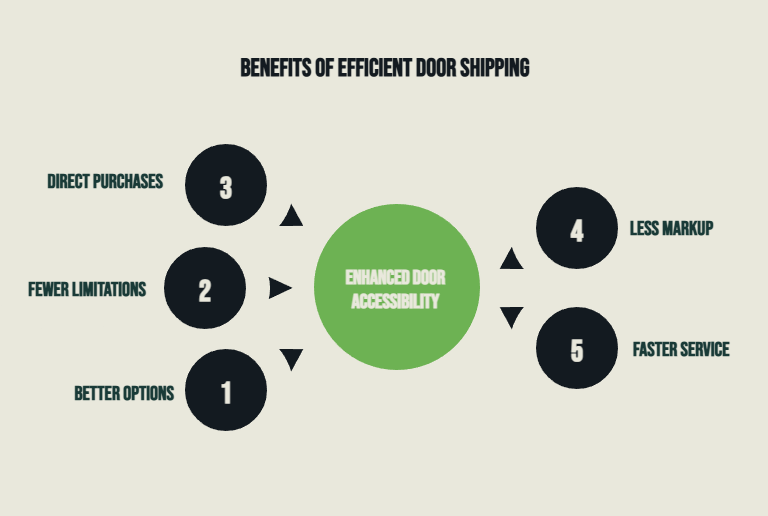
Smart packaging means more than just protecting the product — it opens the door (literally) to national accessibility. If a manufacturer in Florida can efficiently ship a door to a buyer in New York, that means:
More access to better options.
Fewer geographic limitations.
Direct-to-consumer purchases become viable.
Less dependency on local dealer markup.
Faster service and better pricing through factory-direct fulfillment.
Contractors & Installers: The Practical Realities
RTA Pros & Challenges for Pros
More Flexibility Onsite: Easier to navigate tight entries or upper floors. You assemble it where it needs to go.
Lighter Loads = Fewer Injuries: Lower weight per piece reduces strain and risk.
Smaller Replacement Costs: If a part is damaged or missing, you can replace that single component rather than the entire unit.
Challenge: Component Management: On large jobs, it can take time to sort and identify the right pieces. Clear labeling and jobsite planning are essential.
Challenge: Missing or Misplaced Parts: Delays may occur if one part goes missing, though these are typically easy and fast to replace.
Flip-Side Advantage: Even when issues happen — like a missing hinge or a miscut piece — replacement is cheap and fast. With Pre-Hung systems, a minor defect often requires replacing the entire unit, which may delay the project for weeks and cost significantly more.
-
Assembly Precision Concerns: Inexperienced contractors may worry about misalignments or poor sealing. However, RTA systems today are precision-cut with CNC machinery, labeled for clarity, and include gaskets and sealant kits to ensure airtight and watertight assembly — equivalent to factory-built units when installed correctly.

Pre-Hung Doors from the Installer’s POV
Pro: All-in-One Delivery: Pre-hung units come ready to install — assuming everything arrives intact.
Con: Heavy Handling: Moving large units is slow, labor-intensive, and risky.
Con: Vulnerable to Damage: A dented jamb on a double door might render the whole assembly useless.
-
Con: Costly Mistakes: If a pre-hung door is mismeasured or marred during handling, replacing the full unit is often required.

Real-World Comparison Example: Let’s say you’re installing a double door and the pre-hung frame arrives with a minor crack on one jamb. That seemingly small damage requires the entire unit to be replaced — time, cost, and a reset on the job schedule. With RTA, the cracked jamb is replaced and reassembled in days, not weeks.
Why More Builders & Manufacturers Still Choose RTA
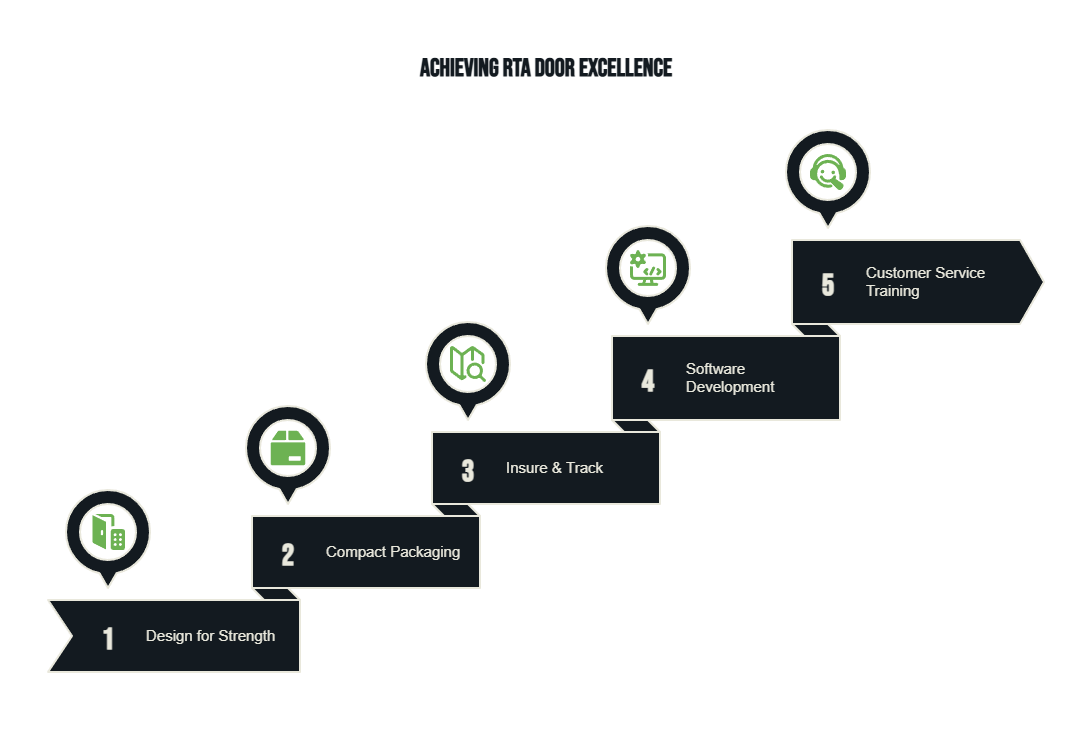
US Door & More Inc. pioneered the RTA model in the U.S. door industry. We were among the first to figure out how to ship high-end doors across the country without damage, delays, or inflated costs. That required rethinking everything:
More access to better options.
Fewer geographic limitations.
Direct-to-consumer purchases become viable.
Less dependency on local dealer markup.
-
Faster service and better pricing through factory-direct fulfillment.
We’ve tested, failed, adjusted, and refined for over a decade — and now we deliver high-end architectural doors nationwide with lower cost, higher reliability, and unmatched flexibility.
RTA isn’t just an operational shortcut — it solves real-world problems:
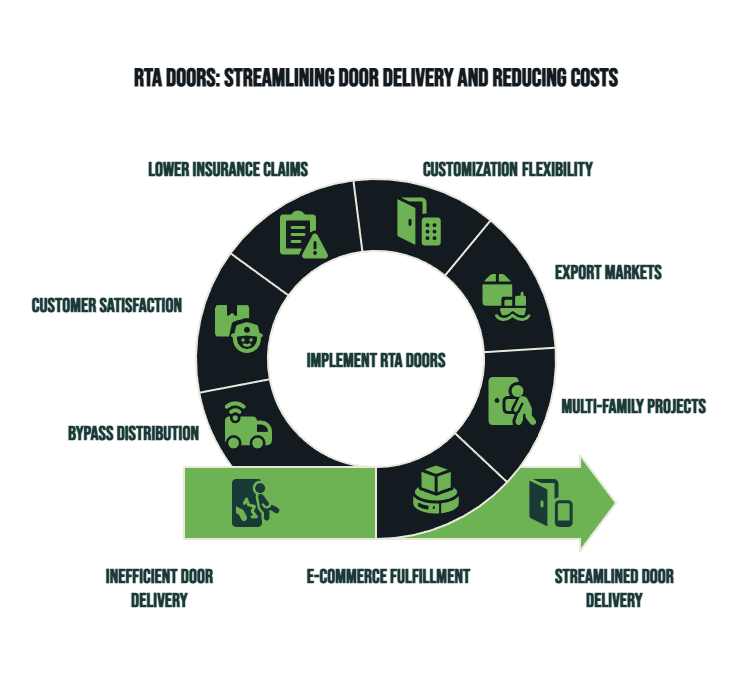
E-Commerce Fulfillment: Compact packaging is easier to ship across the country (or globe) without damage. Warehouses can store more product in less space, and returns due to freight damage are drastically reduced.
Multi-Family & Large Projects: Delivering pre-hung doors for 40+ units means forklifts, pallets, large crews, and storage headaches. With RTA, units can be distributed room-by-room or floor-by-floor with minimal labor.
Export Markets: International shipments demand efficiency and durability. RTA doors take up less space in containers and have significantly lower damage rates in global transit.
Customization Without Chaos: When you offer multiple wood species, glass styles, and sizes, pre-hung units quickly become logistical nightmares. RTA enables build-on-demand flexibility with minimal inventory commitment.
Lower Insurance Claims: Because damages are less common and easier to fix, RTA reduces claim costs and administrative overhead for both retailers and builders.
Better Customer Satisfaction: When parts are damaged, customers don’t have to wait for full door replacement. A quick part swap makes the process smoother and avoids negative reviews.
Bypassing Multi-Tier Distribution: Traditional door sales often rely on multi-tier supply chains — factories ship to regional warehouses, which then deliver to local dealers who finally sell to customers. Every step adds margin. RTA changes this by enabling a factory in Florida to ship affordably and directly to a customer in New York. That means:
Fewer hands in the pot.
Less overhead.
Lower final prices.
Honest Considerations & Industry-Wide Concerns
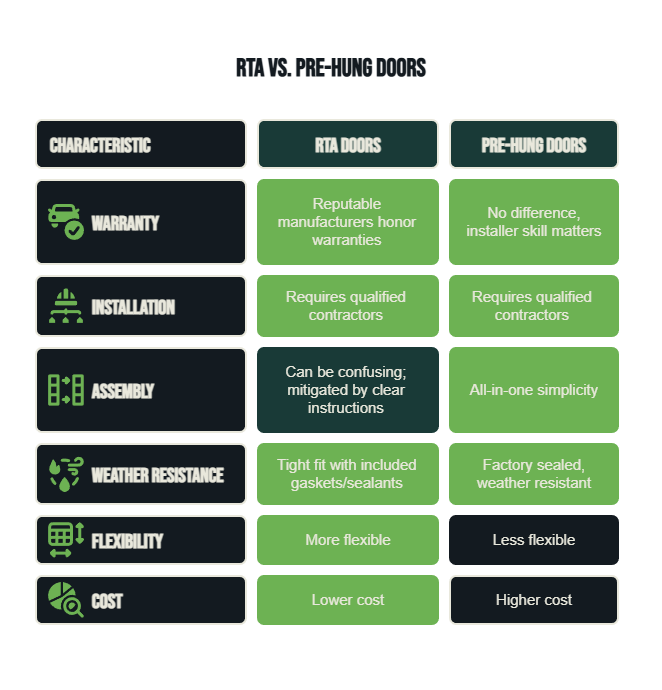
Warranty Complexity: Some fear RTA systems complicate warranties. But in practice, reputable manufacturers like US Door & More Inc. don’t avoid responsibility. With today's tools (smartphones, video, AI), verifying issues and resolving them quickly is easier than ever.
Installer Skill Matters: The success of either system — RTA or Pre-Hung — depends on qualified contractors. We assume professional installation is part of the process.
Assembly Confusion: Finding and identifying parts may slow down the job. We combat this with color-coded labels, pre-cut gaskets, sealant kits, and detailed instructions (including mobile-accessible guides).
Weather Tightness Doubts: RTA has evolved. Today’s CNC-cut precision parts fit tightly, and gaskets/sealants supplied with the unit provide the same weather resistance as pre-hung factory units.
-
All-in-One Simplicity: Some still prefer the pre-assembled route. But the tradeoff is less flexibility and higher cost across the board.
RTA has evolved — and so has the way we support it.
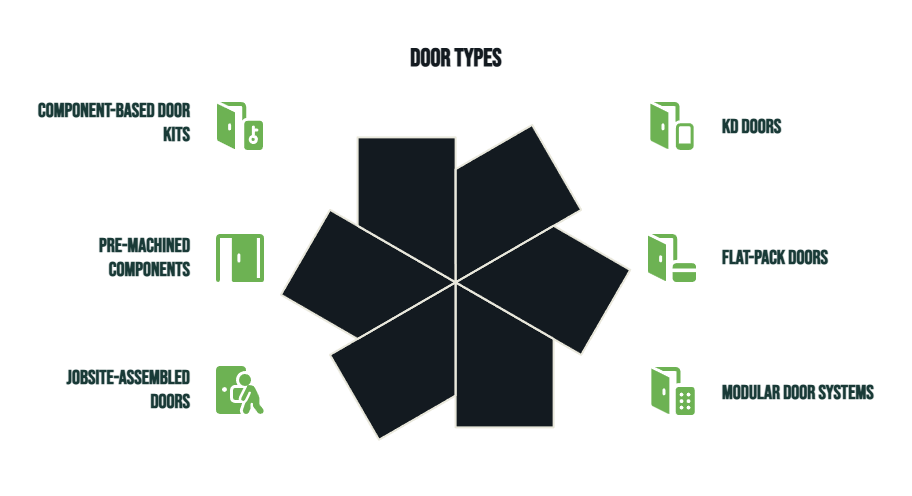
Alternate Terms for RTA in the Door Industry
KD (Knock-Down) Doors — Common in commercial hardware contexts.
Flat-Pack Doors — Emphasizes compact shipping; popular in furniture-style logistics.
Modular Door Systems — Highlights customizable configuration.
Jobsite-Assembled Doors — Installed and built at the final location.
Pre-Machined Components — Parts arrive pre-cut and prepped.
Component-Based Door Kits — Sold as a bundled parts kit ready for assembly.
Bottom Line: Why RTA Is the Better Choice
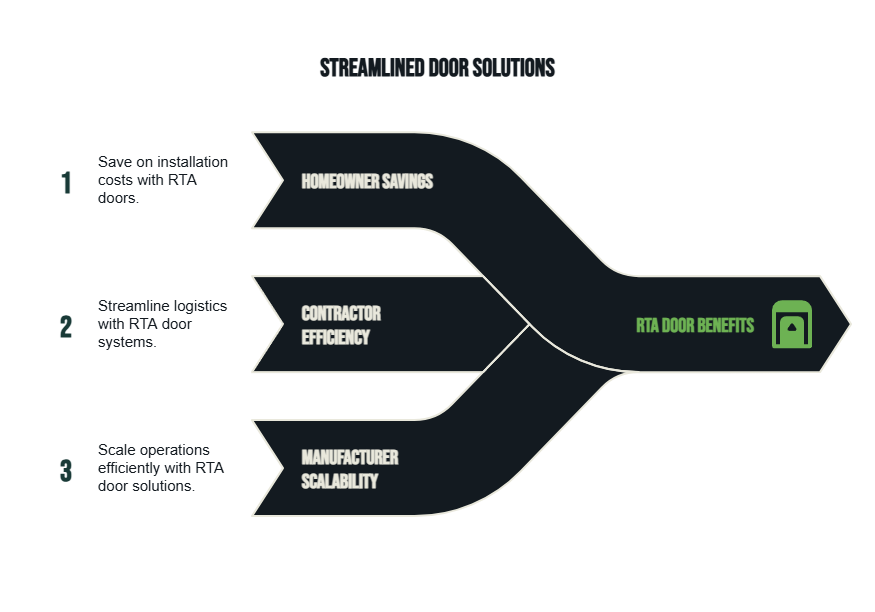
Whether you're a homeowner trying to save on installation, a contractor juggling logistics, or a manufacturer scaling operations — RTA doors consistently deliver greater flexibility, lower cost, and fewer headaches.