Fiberglass vs Steel Door: Which is better?
-
 By Shayan Behjati
 - Aug 1, 2021
Curb appeal is important to potential buyers, says 97-percent of Realtors in the National Association of Realtors’ 2018 Remodeling Impact Survey of Outdoor Features. One of the best ways to improve your home’s curb appeal and upgrade its structure, security, and efficiency is with a new front entry door. But between style, color, and material, the options are dizzying. Assuming you’ve already narrowed your choices down to fiberglass vs steel doors, let’s choose the best door for your home.
What about wood?
Wood is gorgeous, warm, inviting, and the traditional choice for a front entry door. But, unless you choose your wood door carefully, some wood options require more maintenance, are less durable, and are not as energy-efficient as their fiberglass and steel doors counterparts. If you’ve done your research and shopped the premium wood entry doors at US Door & More and still have not found what you’re looking for, you have a few remaining options available—fiberglass vs steel doors.
When shopping for your new entry door, make sure you’re comparing apples with apples. All doors come in a wide array of quality and price points. And it’s important when comparing, not to place the economic version of one material against the premium version of another.
“Do your research and understand what good quality door specs are,” says Shayan Behjati, CEO of US Door & More. “Then compare doors of equal quality.”
Below, we’ll explain how you can determine the differences in quality in steel and fiberglass doors.
How to tell a quality fiberglass door
Fiberglass doors consist of a high-impact, compression-molded fiberglass skin that covers a thick, polyurethane foam core. Rails and stiles of either wood or a strong composite material create the door’s frame, protecting the foam and holding everything together. The foam both insulates the home from extreme temperatures and also provides soundproofing qualities.
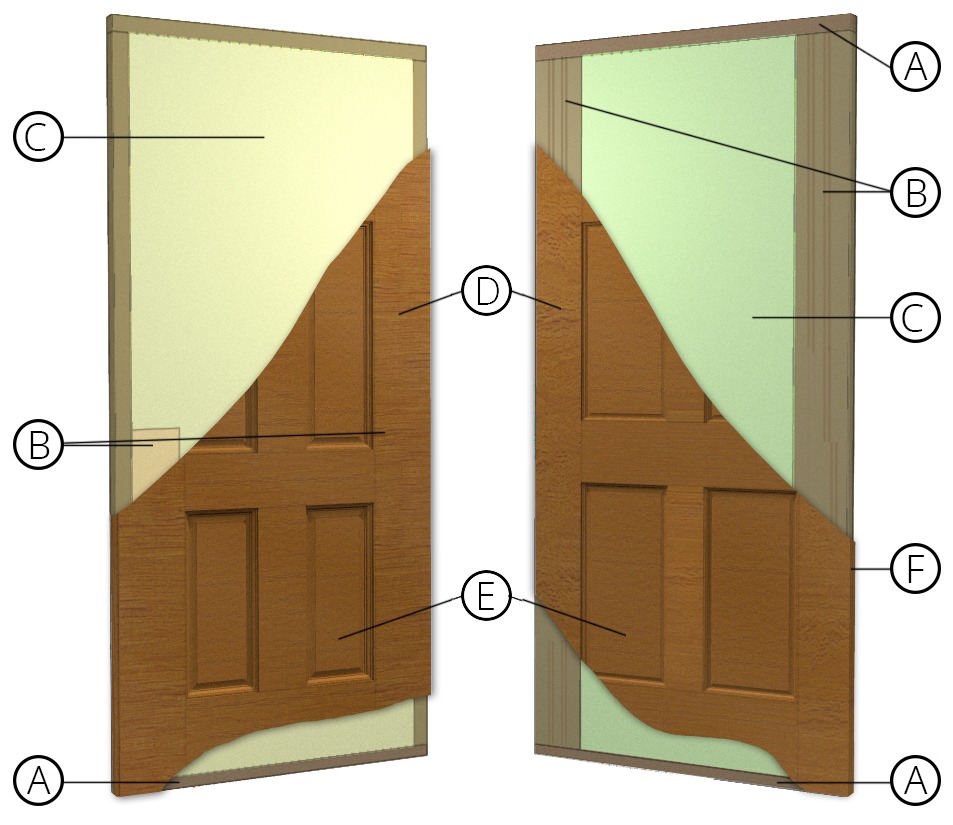
Pro v. Premium Fiberglass Door
- Bottom composite, rot-resistant rail v. Top and bottom.
- Wood stiles and wood lock-blocks on both sides v. LSL stiles used for both edges
- 2 lbs foam v. 3 lbs foam
- Authentic woodgrain prefinish on both
- Fiberglass reinforced door skin imitates wood door grains on both
- Door edges constructed of hard-rock maple.
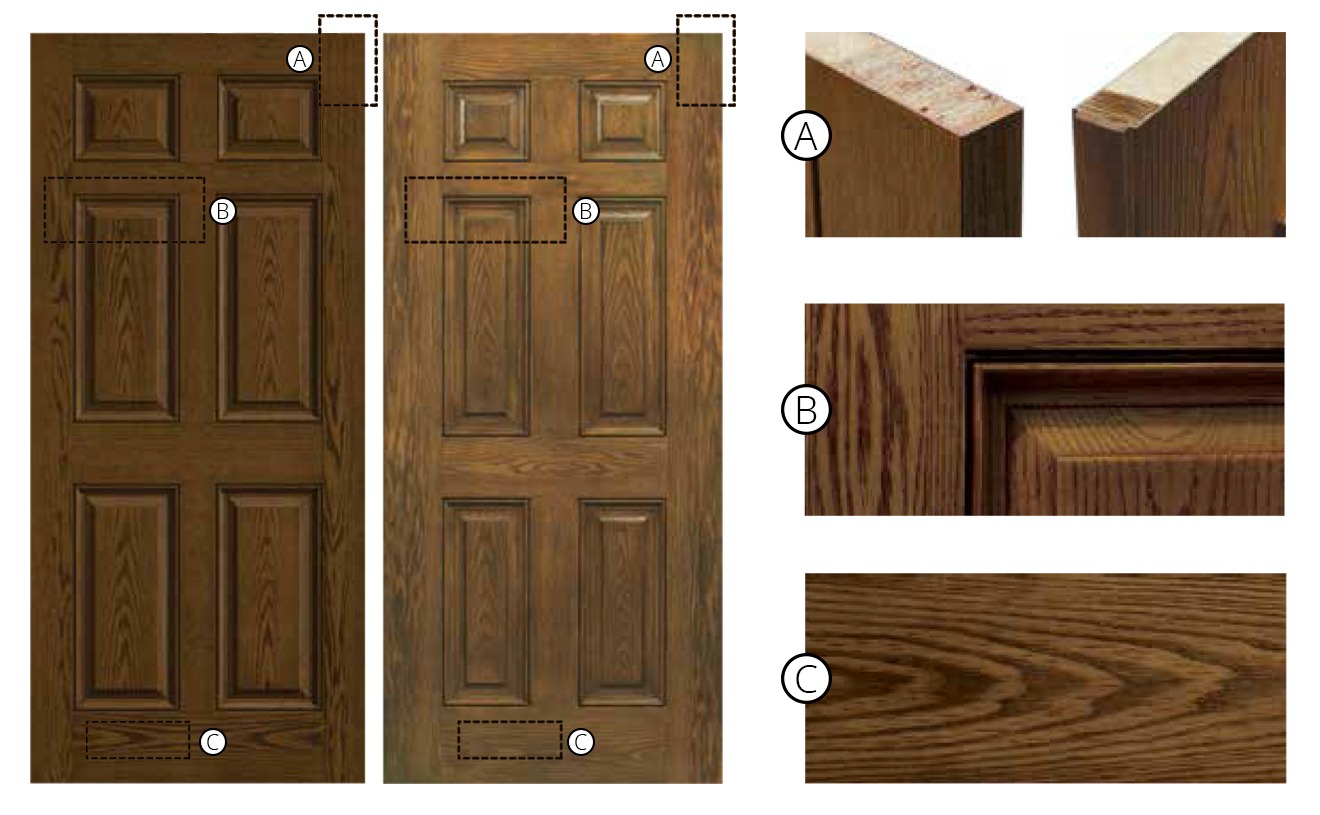
Premium v. Standard Fiberglass Door
- Solid hardwood square edge v. bullnose edge.
- Crisp, fine detailing that is more elaborate and deeper.
- Better wood grains/surface detail.
To tell a quality fiberglass door, Behjati recommends looking for:
A fiberglass door with top and bottom rails of composite material to prevent water absorption and rot.
Stiles, or edges, of laminated hardwood lumber to prevent warping on your fiberglass door.
Lock blocks on both edges for mounting hardware.
Dense foam core. In a fiberglass door, Three-pound foam is 50 percent denser than 2-pound.
Thick fiberglass skin that closely resembles wood. If you can tell a fiberglass door is not wood, it’s probably not of premium quality.
Pros and cons of a fiberglass door
Pros
- Durable—Fiberglass doors are not prone to dings or scratches and are the best choice for high-traffic entries.
- Energy-efficient—Fiberglass doors are not a conductor of heat or cold.
- Easy to maintain—Fiberglass doors doesn’t require regular applications of paint or stain.
Cons
- Sizing—Not all fiberglass doors can be trimmed to fit. Verify this feature with the manufacturer before purchase. Otherwise, if your opening is out of square, or if you measure wrong, the door can’t be made to fit.
- Can fracture—Low-quality fiberglass doors can break or fracture on impact. If you want the benefits of fiberglass, save money by choosing a quality door once, rather than a cheaper door you have to replace.
- Lower ROI—According to Remodeling magazine’s 2021 Cost vs Value report, a fiberglass door brings a slightly lower return on investment than a steel door when the home is sold.
For proper sizing, read
How to tell a quality steel door
Steel doors are a great choice for where you want durability. They are strong and secure but you won’t mistake a steel door for wood if that’s the look you want. Contrary to popular opinion, all steel doors are not created equal. When shopping, you’ll find two types of construction. The first type, made similarly to fiberglass doors, are more economical than forge steel doors made of solid metal. Let’s look at the two types.
Sheet metal steel doors
Most homeowners on a budget choose sheet steel doors for their garage entry or side and back door, where aesthetics aren’t critical. They’re made similarly to fiberglass doors with a steel skin covering a thick, polyurethane foam core and wood or composite framing. Typically, the sheet steel used for these doors is around 18 gauge.
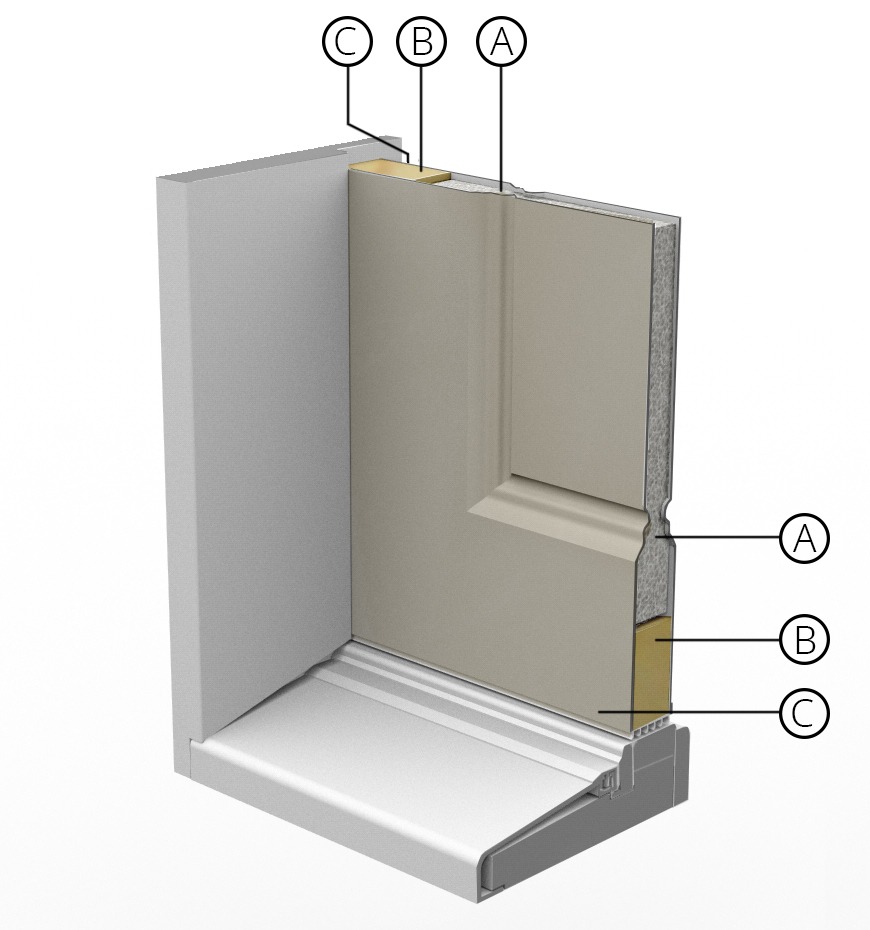
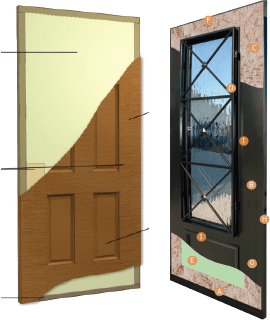
- Insulating Foam Core
- Laminated Strand Lumber Beams
- Stainless Steel Sheets
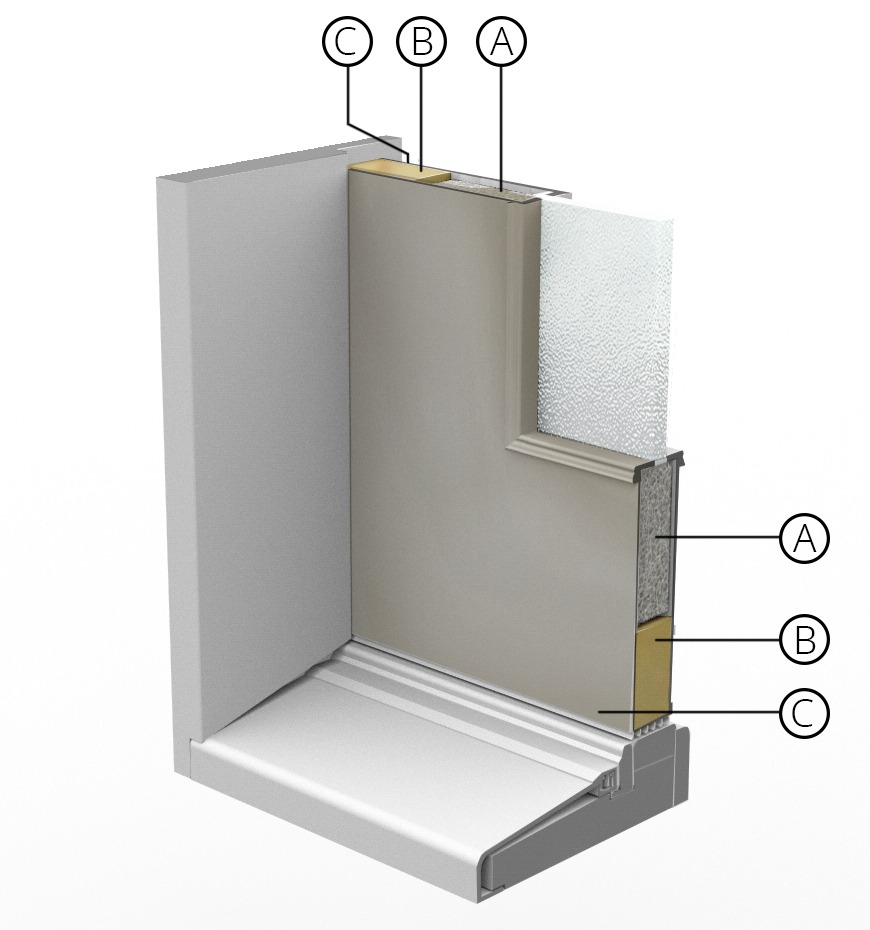
To find a quality-made sheet steel door, look for:
A steel door with top and bottom rails of composite material to prevent water absorption and rot.
Stiles, or edges, of laminated engineered wood to prevent warping.
Engineered stiles extend the entire length of the steel door on both edges to eliminate the need for lock blocks.
Thermal break technology to resist the transfer of heat and cold.
Heavy gauge skin on both sides of the door.
Galvanized coating to prevent rust on the steel door
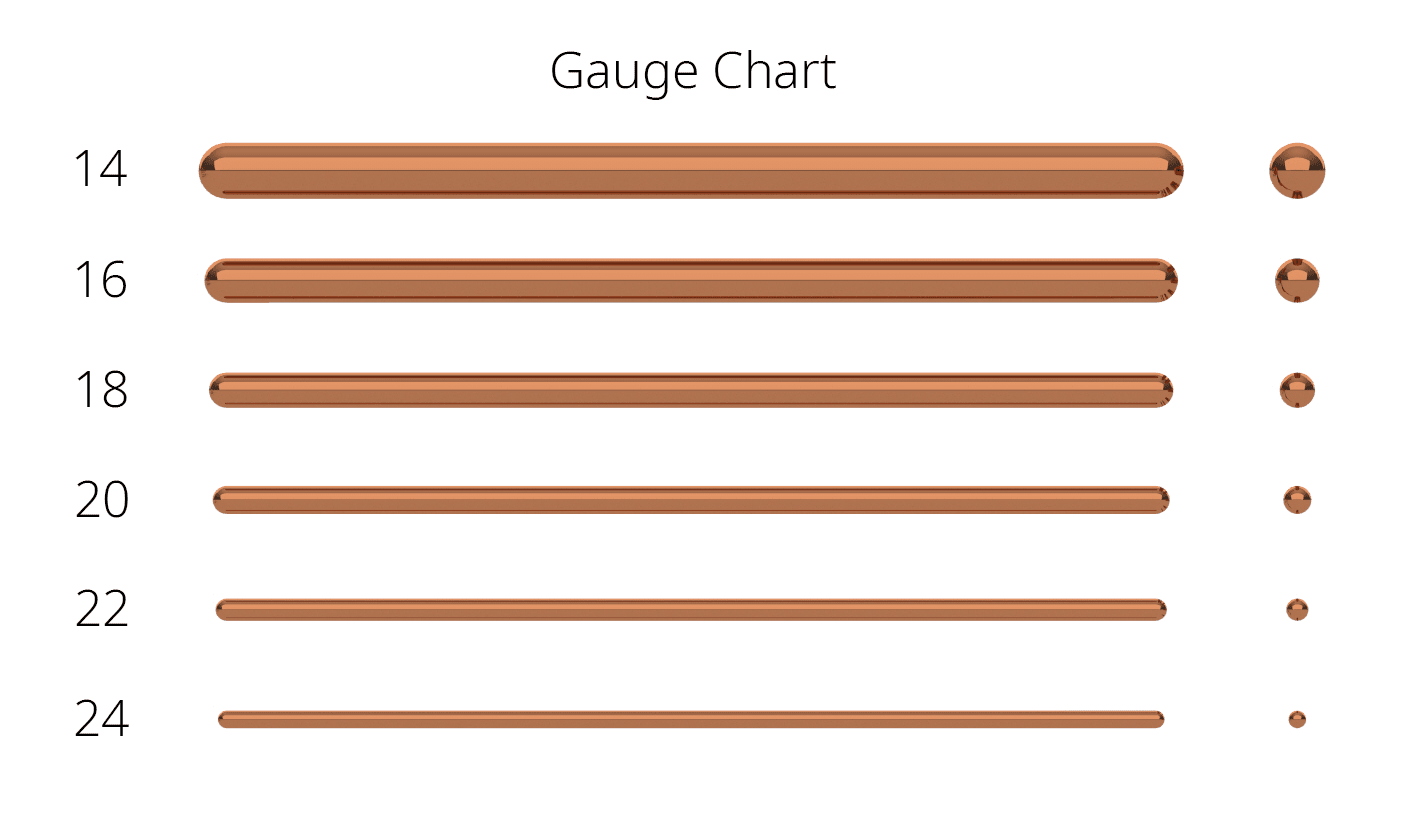
To visualize the gauge of the metal
Generally, as the gauge of metal increases, the thickness decreases. That means 18-gauge steel is much thicker than 26-gauge steel. Armed with that knowledge, you can choose the best quality door for your home. Many retailers sell doors with a 24- to 26-gauge steel skin. Metal this thin is sometimes used for roofing material because it bends and folds easily. A quality steel door is made with metal at least 20-gauge thick—roughly the thickness of metal used to make automobiles. Our ThermaPlus doors are 18-gauge, a higher standard than the average steel door.
Pros and cons of a sheet metal door
Pros
- Low maintenance—Steel doors come finished or primed for you to finish at home.
- Secure—Steel is strong enough to resist most attempts at break-ins.
- Trimmable—You can trim a sheet steel door if needed.
Cons
- Holds temperatures—Metal transfers hot and cold, making steel doors less energy-efficient than fiberglass. For an energy-efficient steel door, look for one with Thermal Break technology.
- Can ding or scratch—Children and pets are not your sheet steel door’s best friend.
- Rust—If the galvanized coating wears off, your steel door could rust.
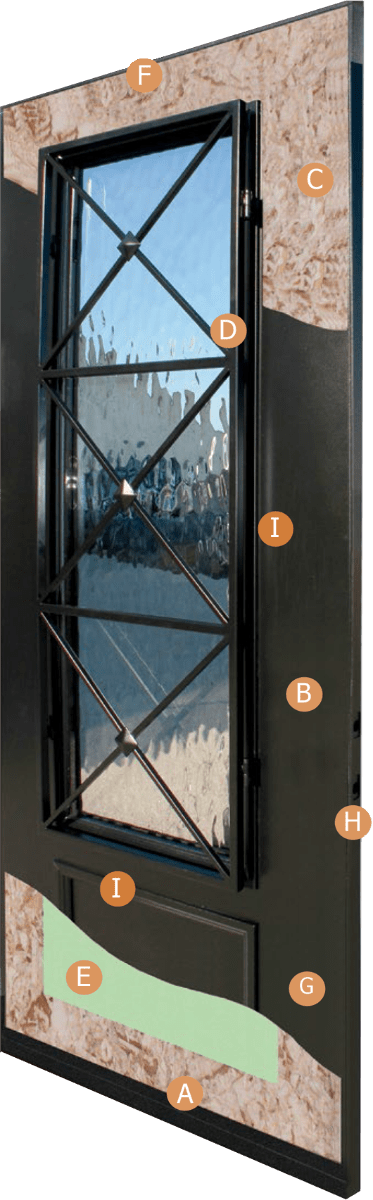
- All door edges are trimmable, to allow for a perfect fit; ¼” trim allowed on top and sides, and 1” on the bottom edge.
- Durable finishes with a slightly textured surface.
- Laminated Strand Lumber beams used on door stiles and rails; no need for “lock-blocks.”
- Operable hand-wrought iron or cut steel grilles mounted to the aluminum frame.
- 1” thick core of insulating foam
- Rot-resistant and waterproof door edges.
- 18-gauge steel skin, dent-resistant.
- Doors are a full 1-¾” thick.
- Aluminum frame around the glass and flat solid panels on both sides of the door.
Forge steel doors
Premium steel doors rival wood and fiberglass as beautiful options for the front entryway. In a forge steel door you’ll find classic profiles with a heavy, solid door. They’re made of a welded framework of solid steel into which is set premium, insulated safety glass. In some models, you’ll find an inner glass door behind ornamental wrought iron grating that you can open to unknown visitors without risking security.
Pros and cons of a forge steel door
Pros
- Low maintenance—Premium steel doors come factory-finished with automotive-grade paint for long-lasting beauty.
- Secure—Steel is strong enough to resist most attempts at break-ins.
- Include cast ball-bearing hinges to take the extra weight of the solid steel.
- From contemporary to traditional, forge steel doors come in many styles and options to choose from.
Cons
- Holds temperatures—Metal transfers hot and cold, making steel less energy-efficient than fiberglass. For an energy-efficient steel door, look for one with Thermal Break technology.
- Rust—If the galvanized coating wears off, your steel door could rust.
- Not trimmable. So, if you measure wrong, the door cannot be made to fit.
What we recommend
For a stunning entryway to your home, Behjati suggests the following products:
- FiberCraft composite doors by GlassCraft Door Company
- Buffalo Forge THERMAPREMIUM by GlassCraft Door Company