
Door Collection

Solid Wood Doors vs. Wood Doors with Glass

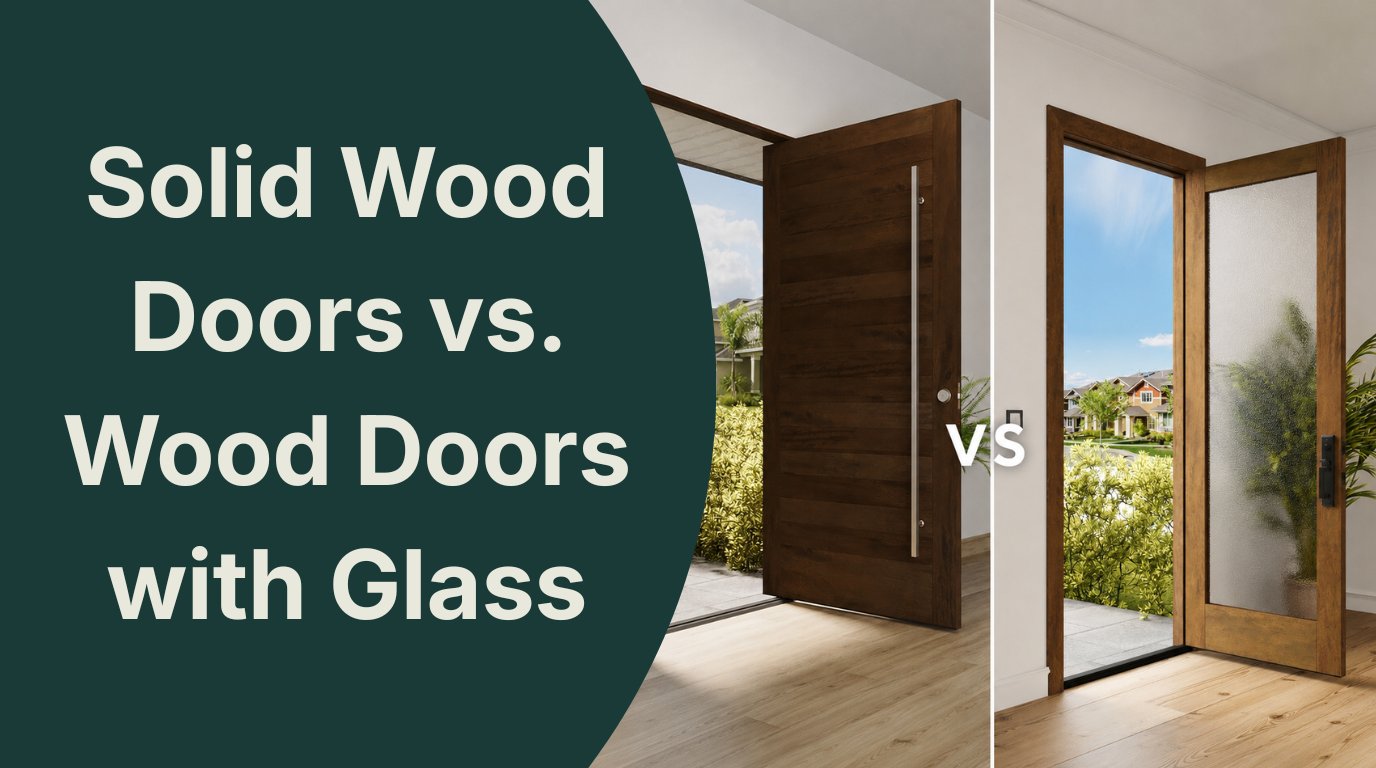
A split-screen comparison graphic showing a solid wood pivot door and a wood door with textured glass, with text reading "Solid Wood Doors vs. Wood Doors with Glass" on a dark green background.

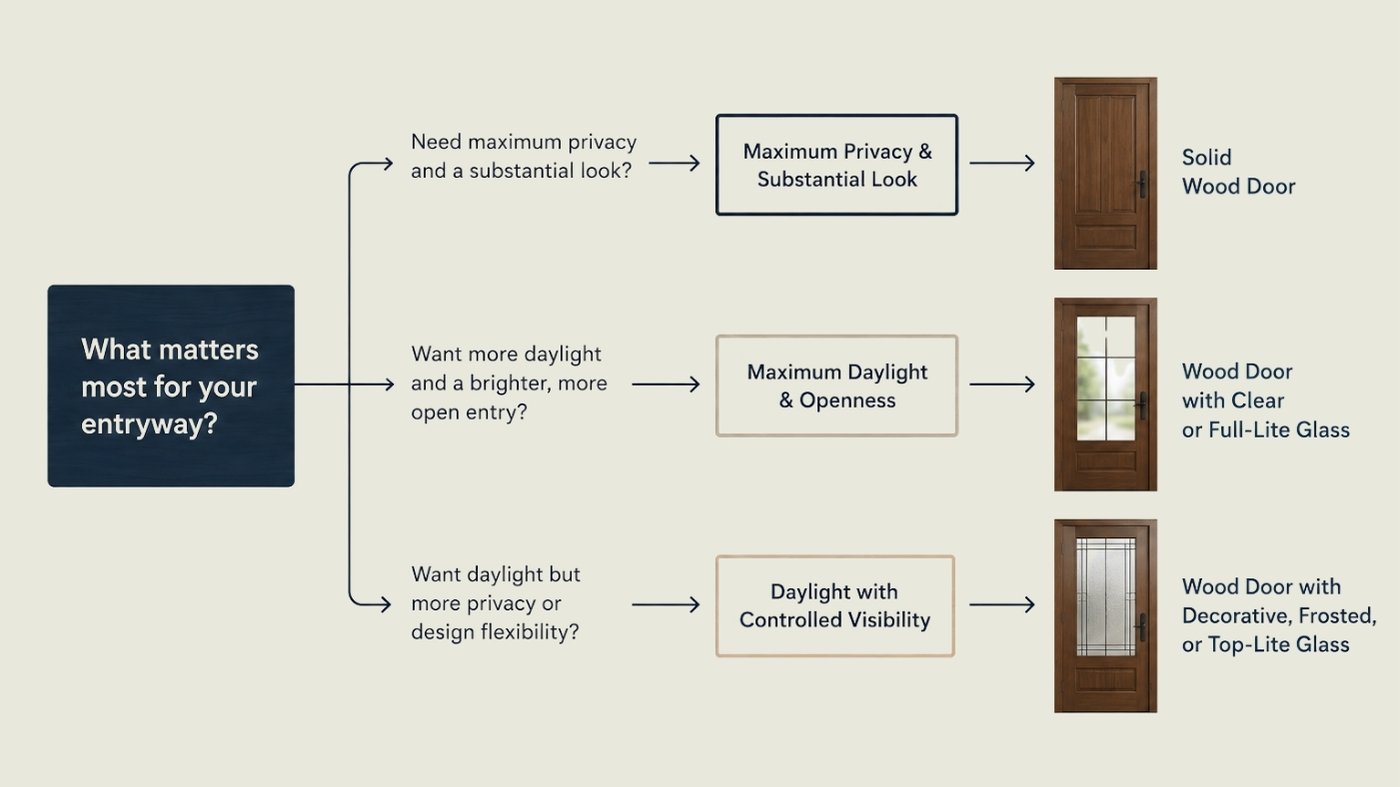
For homeowners comparing solid wood doors vs wood doors with glass, the decision usually comes down to how the entry should feel and function.

A solid wood door can make the entry feel more private, grounded, and traditional. A wood door with glass can bring in daylight, increase visibility, and make the entry feel brighter and more open.

The better fit depends on your privacy needs, daylight goals, glass placement, style preference, finish appearance, and what the door may need over time. Neither option should be treated as the default winner. The right choice is the one that fits the entry, the home, and the level of visibility you feel comfortable with.

Main Differences to Consider

A practical comparison starts with how each option changes the entry in daily use. Solid wood doors and wood doors with glass can both support a strong entry design, but they create different effects.

Decision pointSolid wood doorWood door with glass
PrivacySupports a more closed visual feel.Can increase visibility depending on glass type and placement.
Natural lightKeeps the door surface visually solid.Can admit visible light through the glass area.
VisibilityCreates a more enclosed entry.Can make the entry feel more open.
StyleEmphasizes wood surface, tone, and door shape.Uses glass amount and pattern as part of the door style.
Everyday expectationsOften fits homeowners who want a quieter, more private entry.Often fits homeowners who want more daylight or a brighter look.

The overall look of the entry is shaped by the door surface, glass amount, wood tone, panel shape, and style. The decision is not only about privacy or daylight. It is also about whether the entry should feel more enclosed, more open, more traditional, or brighter.

Privacy and Natural Light

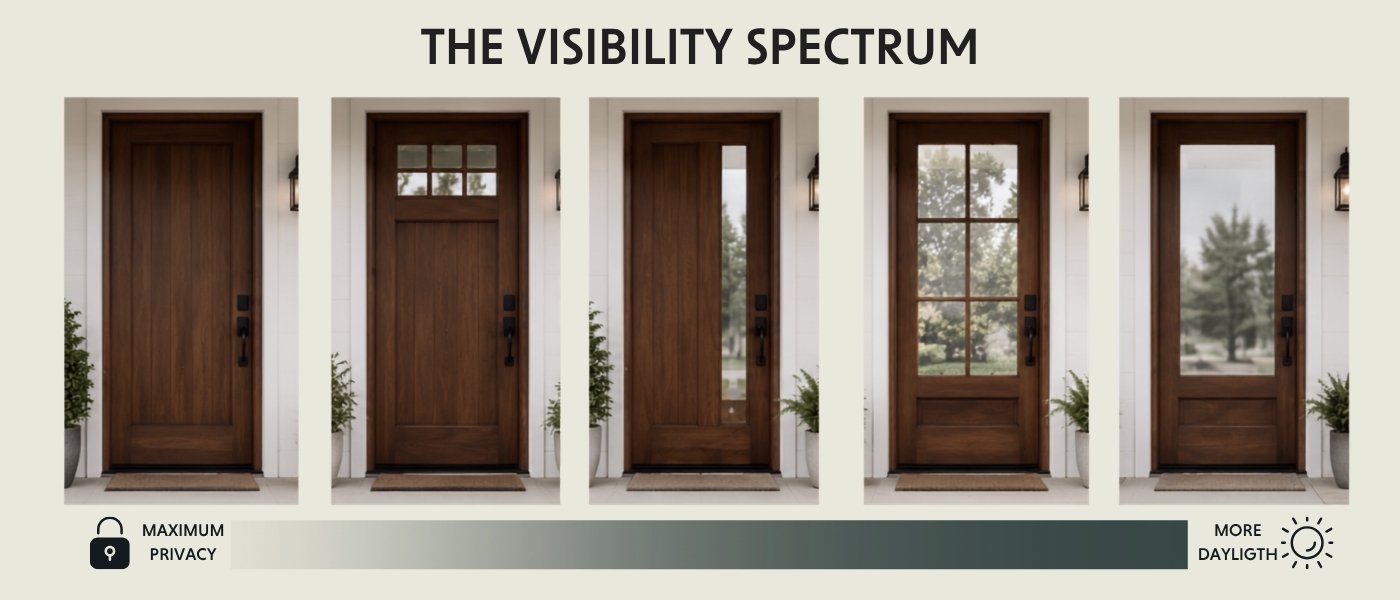
Privacy and natural light are the main tradeoff in this comparison. Glass can admit visible light, but it can also increase visibility depending on the glass type and where the glass sits in the door.

No glass style should be treated as a guarantee of privacy or security. A small glass area near the top of the door may feel different from a tall central glass panel. Divided glass can also change the look by breaking the glass area into smaller parts.

The exact privacy and daylight result depends on the door design and glazing. Rather than thinking in broad categories, ask practical questions:

  • How much daylight do you want at the entry?
  • How much visibility feels comfortable?
  • Does the glass placement support the privacy level you expect?
  • Should the entry feel more open or more enclosed?
For more glass-specific context, review Door Glass.

When a Solid Wood Door May Fit

A solid wood door may be a good fit when you want stronger visual privacy, a more enclosed entry, and a traditional or substantial look.

This can work well for entries where the door faces a sidewalk, street, neighbor, or another area where visibility comfort matters. It can also fit homeowners who prefer the look of a continuous wood surface rather than visible glass.

A solid wood door should not be described as inherently safer, longer lasting, or better for every home. It is best understood as a good fit when privacy and a solid wood look matter most.

When a Wood Door with Glass May Fit

A wood door with glass may be a good fit when you want to add daylight, create a more open entry, or use glass as part of the door’s style.

This can work well for entries that feel dark, narrow, or visually heavy and would benefit from a brighter look. It can also fit homeowners who like decorative glass, divided glass, or a door design where glass is part of the overall style.

A wood door with glass should not be assumed to perform better or worse on its own. The result depends on the glass size, placement, glazing, and specific door design.
Other Factors to Keep in Mind

A few related factors can shape the decision, but they should stay product-specific.

Energy comfort should be treated carefully. Doors, windows, and skylights can affect heating and cooling loads, and rated products may be compared with measures such as U-factor and SHGC. This page should not claim that one door type is broadly more efficient than the other.

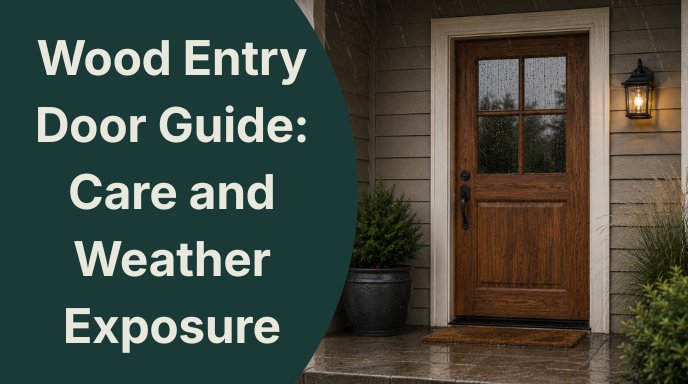
Exterior wood doors also call for finish and exposure awareness. Sun, moisture, and weathering can affect exterior wood finishes over time. This is not a maintenance tutorial, but it is a useful reminder that exposure and finish direction can affect what the door may need over time.

Security language should stay focused on privacy and visibility comfort. A solid wood door should not be framed as inherently safer, and a door with glass should not be framed as unsafe.

Glass terms such as clear, privacy or frosted, decorative, divided-lite, full-lite, and blinds-glass can be useful when comparing styles. Treat those as examples, not as a claim about full catalog availability.

Wood species and finish direction can also shape the look of the door. For example, mahogany and paintable or smooth paths may be mentioned as appearance or finish cues, not as species rankings or durability claims.

Next Steps

Once you know whether privacy, daylight, glass placement, or entry feel matters most, you can move from comparison to browsing.

For broader wood entry options, review Wood Front Doors rather than treating this article as a category page.

For doors where glass is part of the design, review Doors with Decorative Glass.

Use those category pages as next steps while keeping this comparison focused on the choice between a more private solid wood door and a brighter wood door with glass.

FAQ

Not universally. A solid wood door supports a more private, closed entry, while a wood door with glass can add daylight and visibility. The better fit depends on privacy needs, daylight goals, glass placement, and style preference.

A solid wood door can support a more closed entry feel. A wood door with glass can increase visibility depending on glass placement and glazing. Neither option should be described as guaranteeing privacy.

Glass can admit visible light, but the result depends on the size, placement, and glazing used in the door design.

This comparison should not be framed as a security claim. It is safer to discuss privacy and visibility comfort rather than saying one door type is inherently safer.

Privacy or frosted glass, decorative glass, divided-lite glass, full-lite glass, and blinds-glass can all affect the privacy feel. The result also depends on where the glass sits in the door and how the design is glazed.
Modern Entry Doors Overview

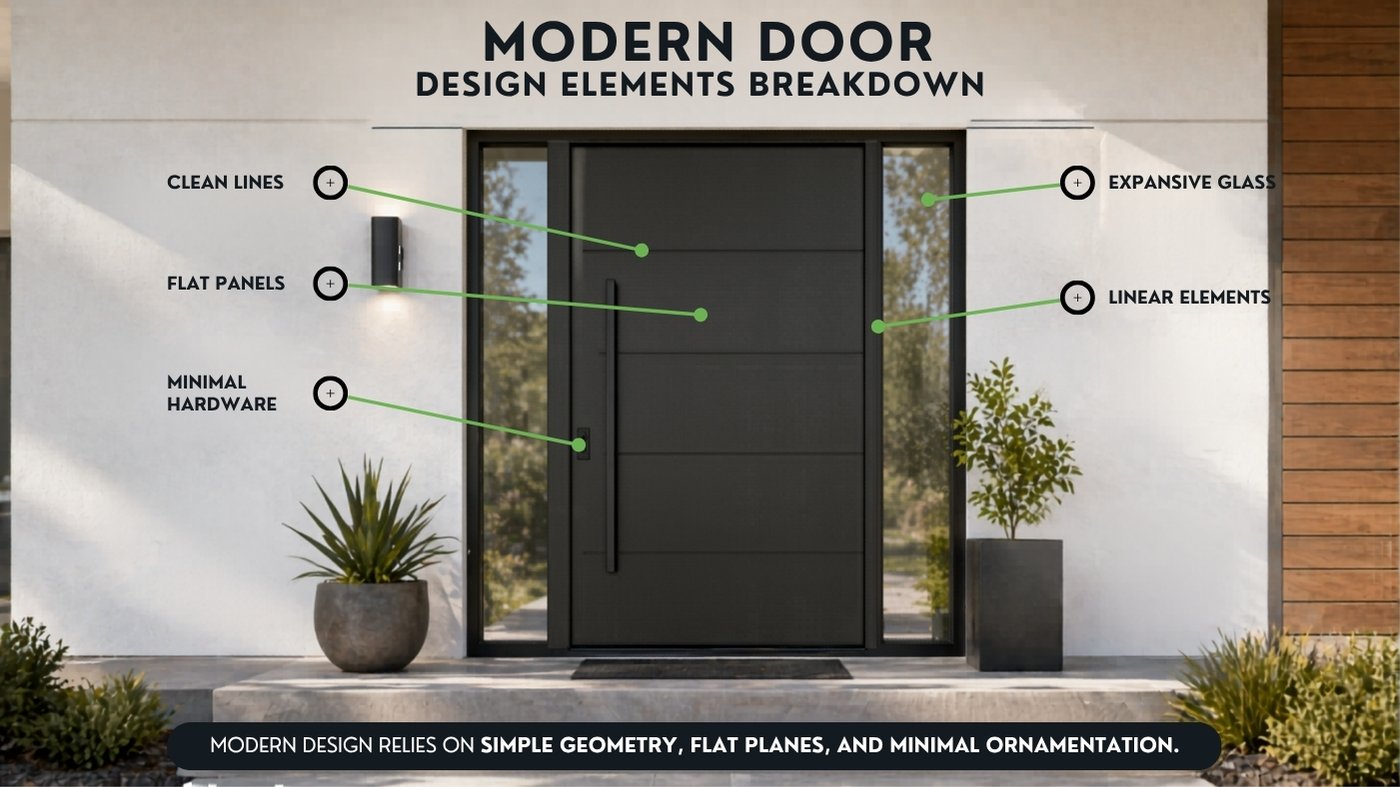
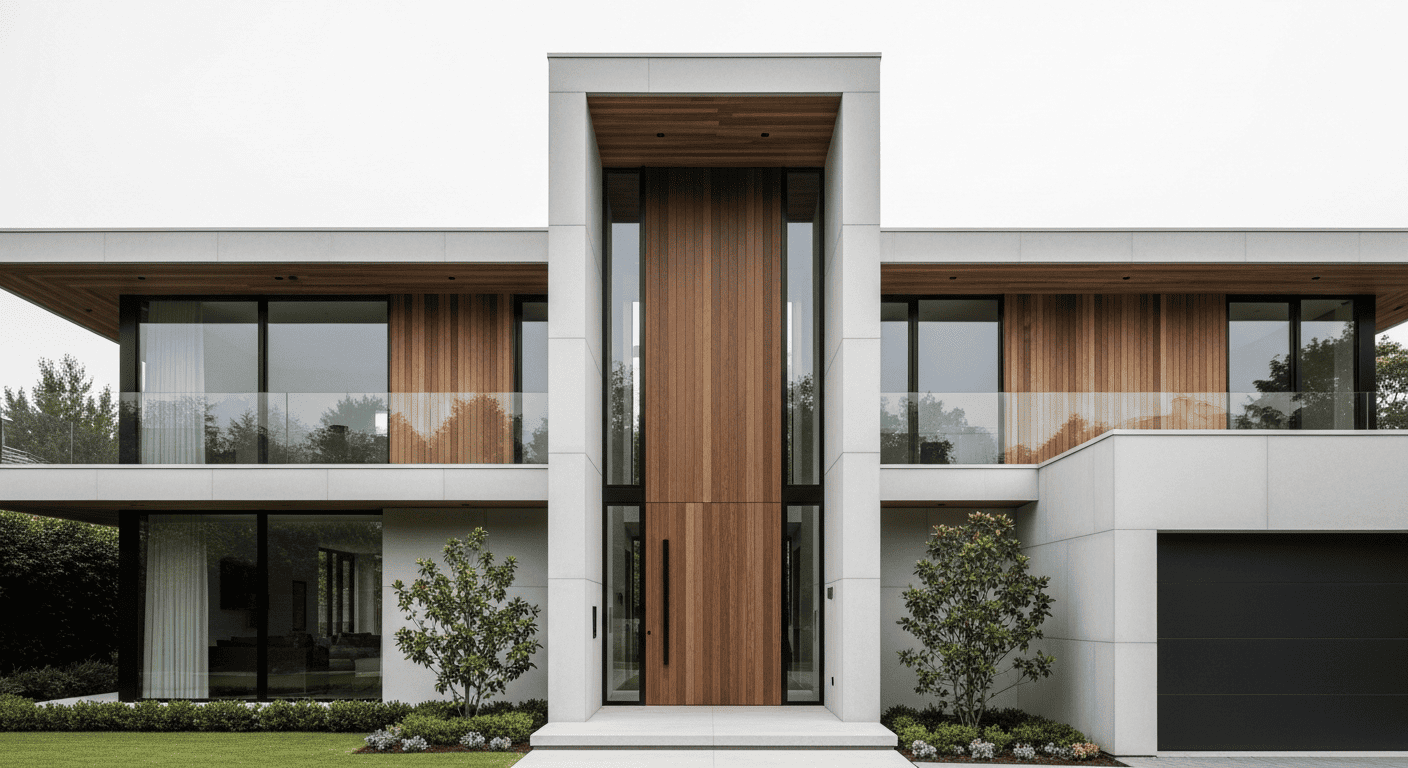
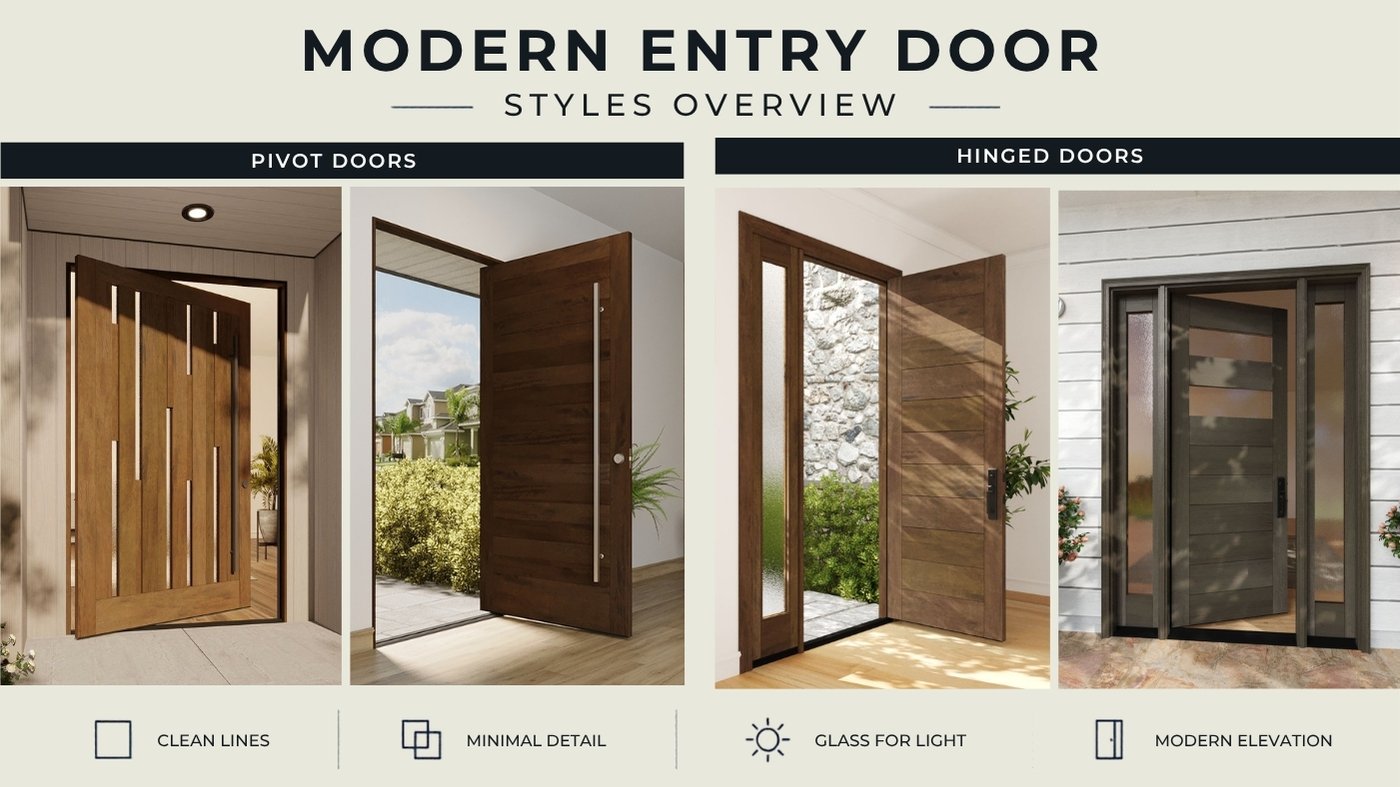
A modern entry door is defined by clean lines, minimal detail, and confident use of glass. Instead of decorative paneling, it relies on broad planes, crisp geometry, and a calm architectural presence that works well with a simple exterior. The result is a door that feels intentional, uncluttered, and visually quiet.

Here, modern means clean-lined, rectilinear, and often glass-forward when privacy allows. Contemporary can overlap, but it is a broader term for what feels current.

A pivot door can support that look, but it is not required. To narrow your direction, explore modern options or get a quick recommendation based on your facade.

Core Modern Design Characteristics

To make a door read modern from the street, start with the essentials: clean lines and minimal ornamentation. The more the design relies on simple planes and restrained detailing, the more modern it feels.

Modern exteriors tend to be rectangular, linear, and visually spare. That same language carries into the entry door. Look for rectilinear layouts, long vertical or horizontal elements, and little to no traditional detailing. When glass is used, it is often expansive and paired with sleek profiles that reinforce light, openness, and simplicity.

When reviewing product photos, focus on the overall impression. Does the door feel calm and architectural, or patterned and ornate? The quieter and more intentional it feels, the more it aligns with modern design.

Pivot Doors in Modern Design

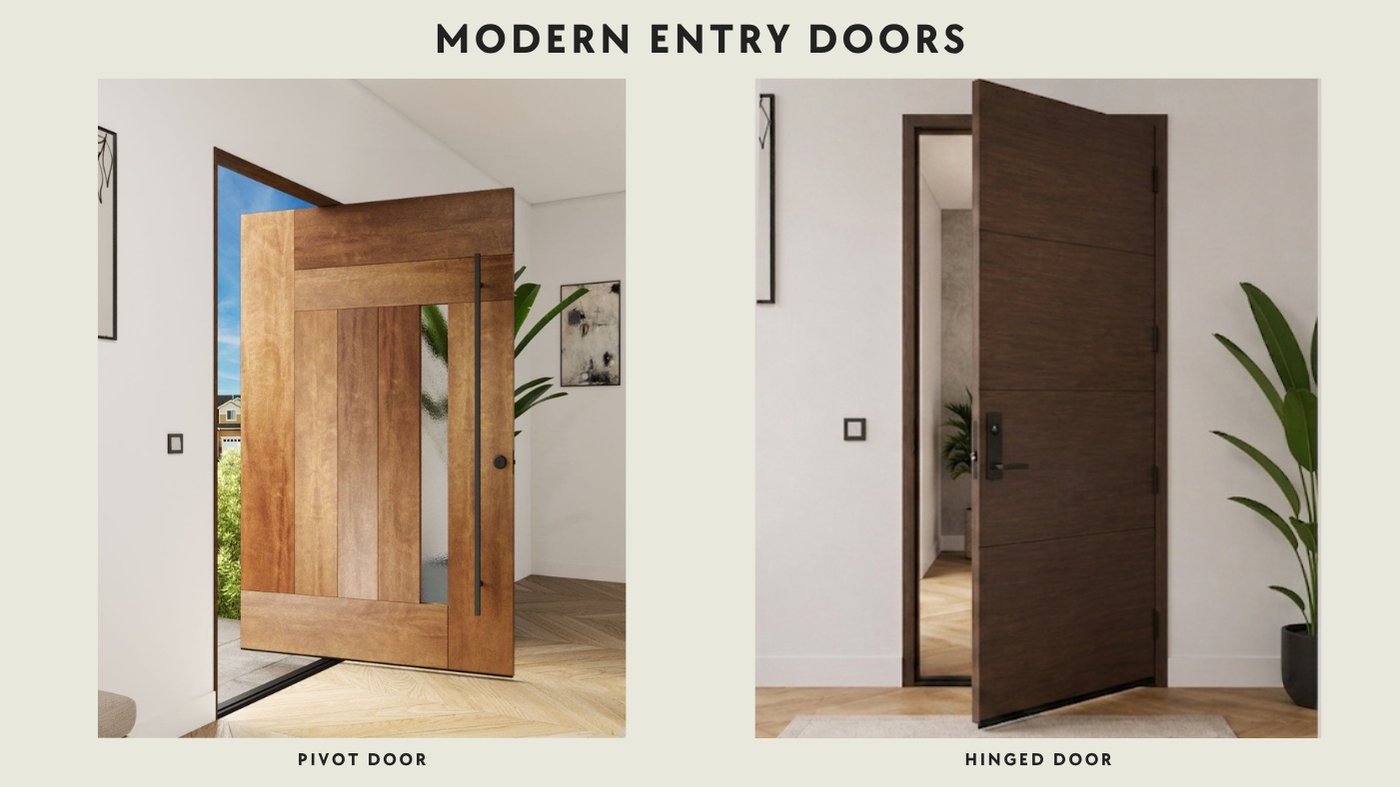
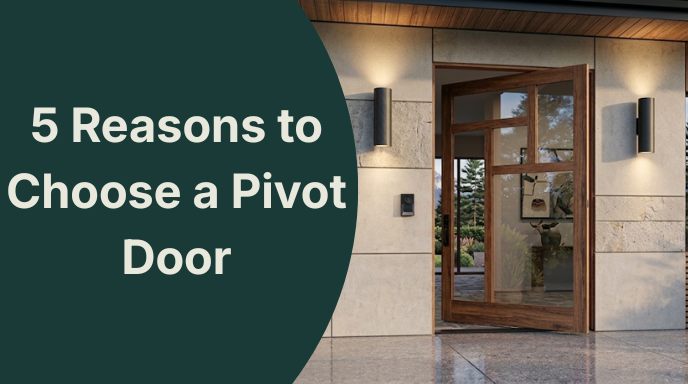
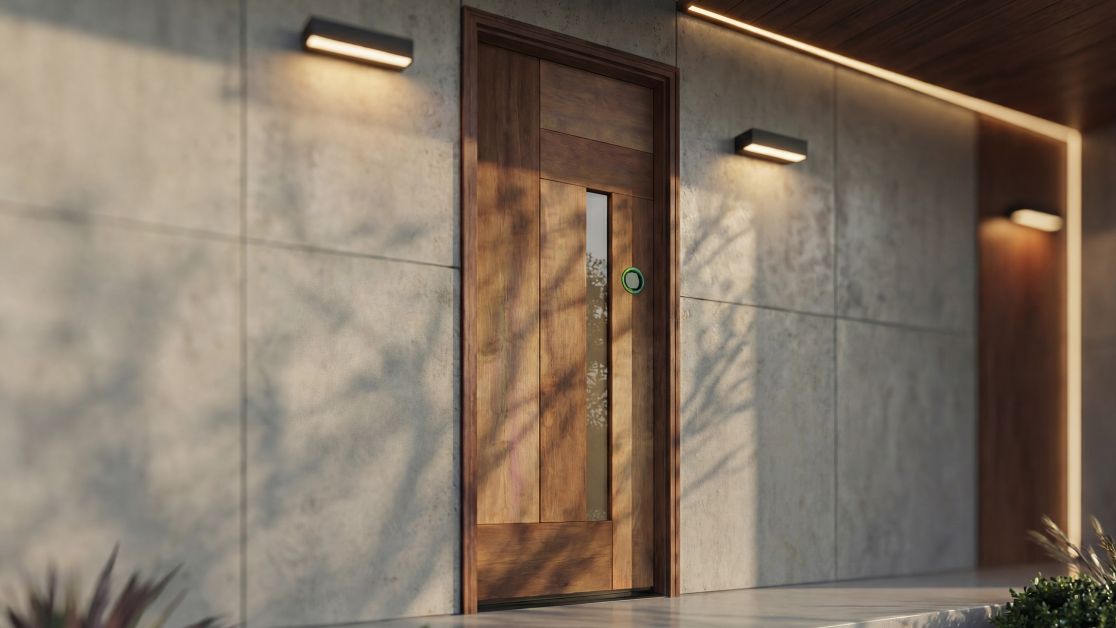
Pivot front doors are most often used in modern design when the goal is a statement-scale entry. They can support very large door panels while reducing visible hinge lines, which creates a bold, seamless appearance.

Both pivot and hinged doors can look modern. A hinged door can feel just as clean and architectural when it uses slab-like geometry, restrained detailing, and well-placed glass.

Choose based on the visual effect you want, not the assumption that pivot is automatically more modern. For more detail, explore the Pivot Door Deep Dive.

Pivot vs Hinged for a Modern Entry

Choose based on your entry goals, not the assumption that one option is inherently more modern.

  • Statement scale vs standard scale: Pivot doors are often chosen for large, monolithic openings. Hinged doors remain a strong option for achieving a modern look in a more familiar size and format.
  • Dramatic vs restrained presence: If you want a bold, gallery-like entrance, pivot may fit that intent. If you want a quieter modern look, a hinged door can deliver clean design without oversized emphasis.
  • Facade fit: A large door works best when the home’s architecture supports it. Broad surfaces and large openings can carry the scale well, while smaller or more segmented facades may not.
  • Personal comfort: Some homeowners want modern design but prefer the familiarity of a hinged entry. That usually leads to a more balanced final choice.

If you are comparing the two, get help choosing pivot vs hinged based on your facade and privacy needs.

Materials That Read Modern

Fiberglass Doors

Durable and versatile, fiberglass doors are low-maintenance and available in smooth or textured finishes.

Wooden Doors

Classic and customizable, wooden doors bring warmth and character to any home.

Ironwork

Strong, secure, and modern, ironwork doors offer unmatched durability for exterior applications.

For modern exterior doors, materials should support clean geometry and simple surfaces. Common directions include warm wood with flat faces, dark metal-look finishes for a crisp appearance, smooth contemporary fiberglass, and restrained glass combinations.

The material itself matters less than how the design reads overall. Flat planes, clean edges, and low visual noise are what make a door feel modern.

To compare material types in more detail, explore guides for wood doors, fiberglass doors, or doors with ironwork.

Glass and Privacy Tradeoffs

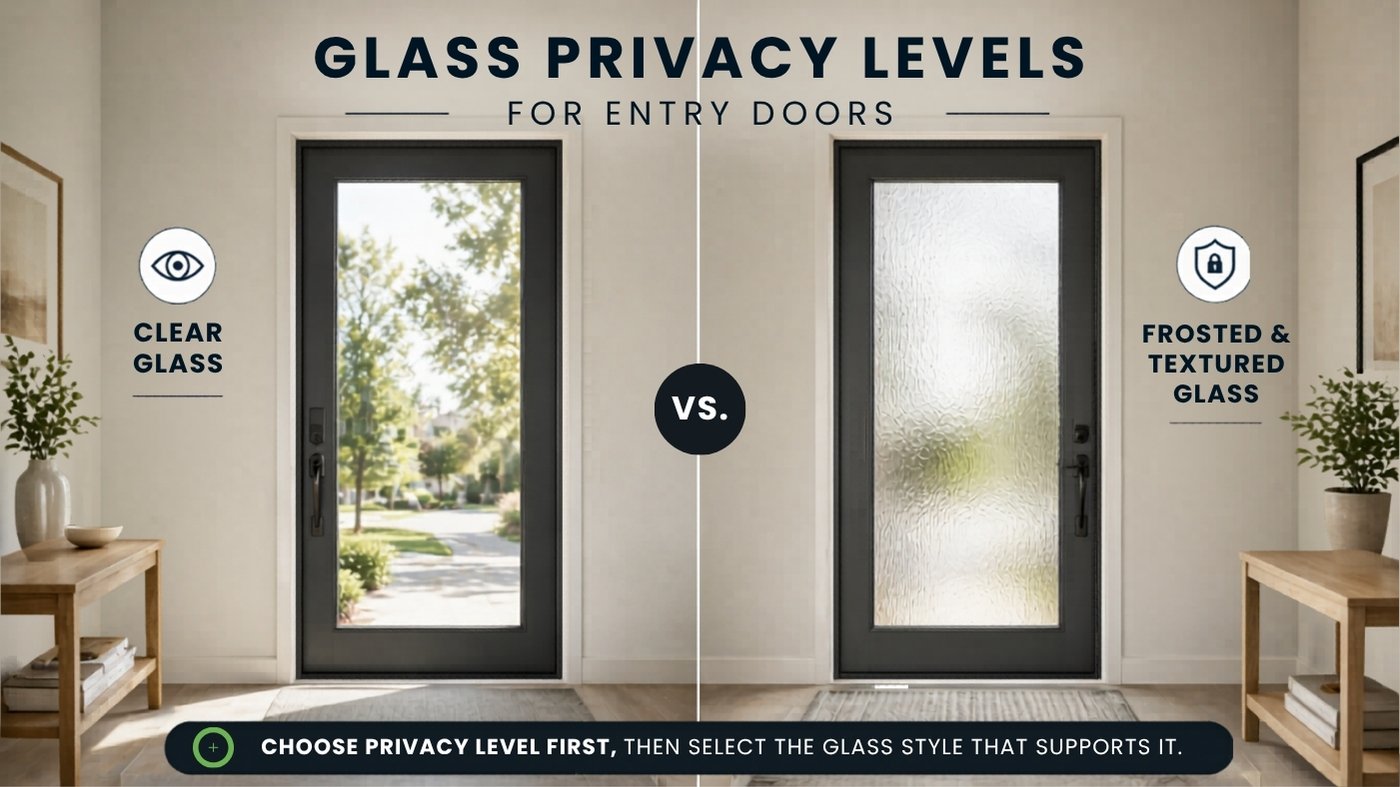
Glass is a defining feature in many modern front doors because it supports minimal lines and a brighter, more open entry. The tradeoff is straightforward: more openness usually means less privacy, especially when the door faces the street or direct approach.

You can keep the light, modern feel while improving privacy by choosing glass that reduces visibility, such as frosted, textured, or tinted options. A common mistake is choosing the look first and realizing later that the privacy level does not suit daily life. Start with privacy, then choose the glass style that supports it.

For help finding the right balance, visit the Glass and Light Guide Hub.

Scale and Proportion Guidance

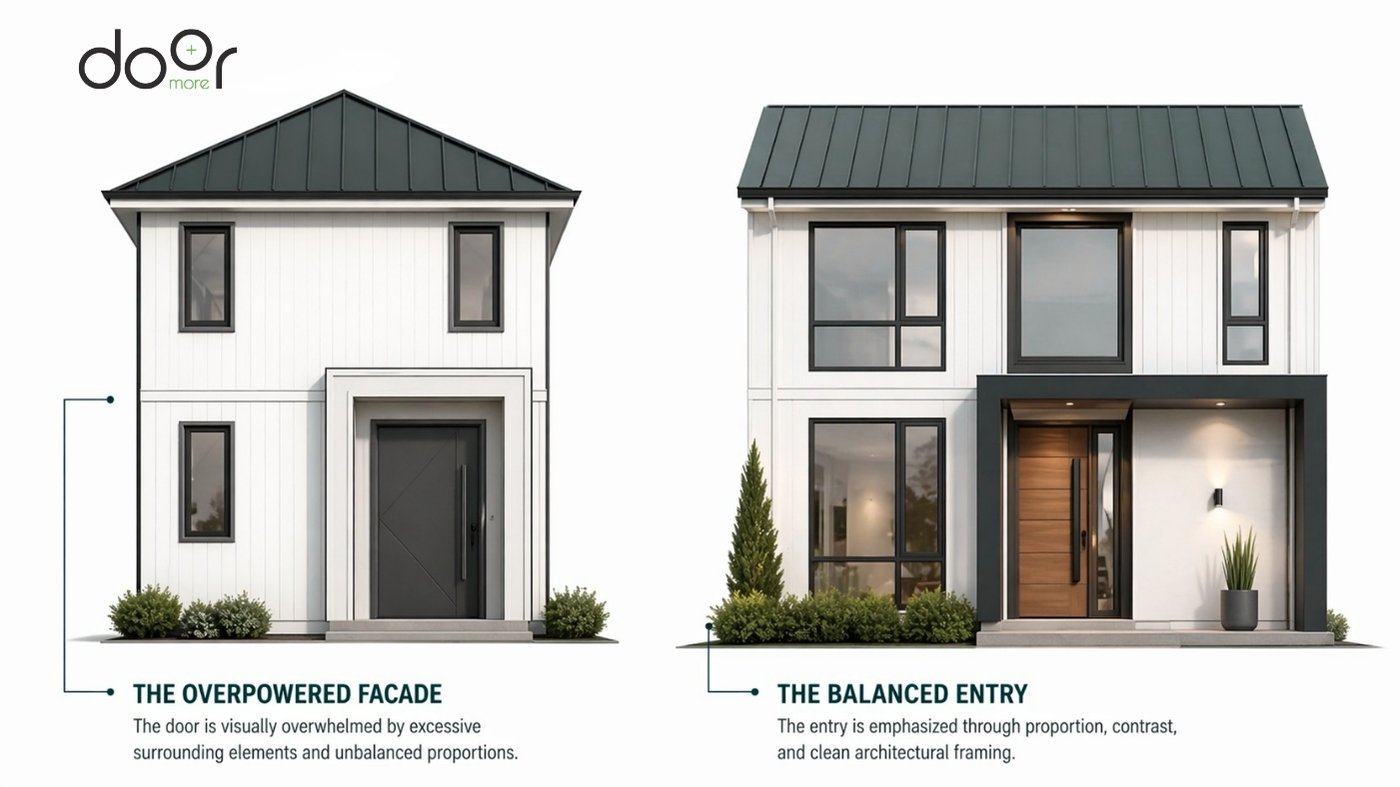
Door size has a major effect on how the entry looks and feels. In modern design, the best result usually comes when the door aligns with the larger geometry of the home instead of feeling oversized or undersized.

Use a few simple checks. Step back and look at the full facade. Does the door feel centered and composed, or does it pull attention away from everything else? Look at nearby windows and openings too. If the home uses large glass areas and wide surfaces, a larger door may feel natural. If the structure is more compact, an oversized door can feel disconnected.

To gut-check the scale, explore modern door options or share your facade for guidance.

Quick Decision Checklist

  • I want a modern entry door defined by clean lines and minimal ornamentation
  • I prefer rectilinear geometry over decorative paneling
  • I want glass for light and openness, and I have chosen my privacy level first
  • Privacy will be handled with obscure or textured glass, not guesswork
  • I want either statement scale or a modern look in a standard format
  • The door’s size aligns with my home’s overall proportions
  • Security will be evaluated separately based on configuration
  • Energy performance and maintenance will be confirmed after design direction

You can continue by browsing options or going deeper into specific topics: Shop Modern Entry Doors or explore the Pivot Door Deep Dive

FAQ

Clean, straight lines with minimal ornamentation define a modern entry door. Simple geometry and restrained detailing reinforce the look.

No. Glass is common because it supports a bright, minimal aesthetic, but a door can still feel modern without large glass panels if the geometry stays clean.

No. Pivot doors are optional. Hinged doors can achieve the same modern appearance when designed with clean lines and balanced proportions.

Pivot doors work best for large, statement-scale openings where the architecture can support a bold, monolithic look.

Choose glass that limits visibility, such as frosted or textured options, while still allowing light into the entry.

Assuming modern always means pivot. That can lead to a door that feels oversized or mismatched to the home.

Security depends on hardware and configuration, not style. It should be evaluated separately based on your needs.

Energy performance varies by product and glass choice. It is best reviewed after the design direction is finalized.

Solid Panel Classic-Craft Rustic Collection


Add the character of a rustic entryway to your home's Southwestern or European country architecture with the Classic-Craft® Rustic Collection™. These front doors have the look of real wood grain, and the simple yet authentic hand-craftsmanship of the artisans that originally created these door styles.


The Rustic Collection is made with our patentedAccuGrain™ technology to give the look of high-grade wood, with all of the durability of fiberglass. The exterior doors in this collection have the look and feel of a real wood front door but unlike genuine wood doors, they resist splitting, cracking and rotting.


Read more