Architectural Pattern of Doors

Colonial Style Doors for Colonial Style Homes | US Door & More

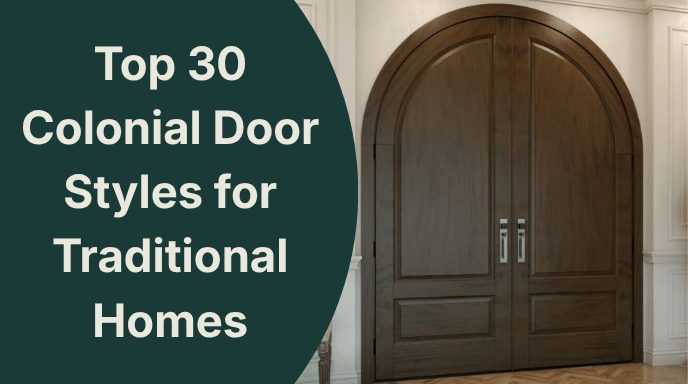
Arched dark wood double doors in a traditional interior next to text about Colonial door styles.

The Colonial style, as it is so aptly named, refers to the first European settlements that colonized the New World. Having left their homes, they built their new ones in foreign lands to reflect the styles of the homes they had left behind in France, Spain, the Netherlands, and Germany. However, this Colonial style was mostly inspired by the British Isles and it was later named the Colonial Georgian Style. Today, we know this style became a major part of American architecture and each part of the country had its own interpretation thanks to different weather conditions and even the material available. Colonial style favors simple lines and proportions while giving importance to craftsmanship.

What Counts as a Colonial Door Style

The Colonial Georgian style was very popular in the first thirteen colonies bringing with them design elements from the luxurious Georgian houses of England when King George I and III were on the throne. Georgian style was usually built using bricks but wooden clapboards became more popular in the United States. This style’s decorative features include wooden trim and white wooden columns.

Baseline criteria:
A paneled door combined with a balanced, formal entry composition that supports a centered, visually intentional doorway
What it is not:
A one-size-fits-all “just pick a six-panel” rule, or a rustic plank-door look used as the primary reference

Use the quick identifiers below to narrow which Colonial door styles fit your home before choosing a specific design.

Quick Visual Identifiers You Can Spot in 10 Seconds

  • Symmetry cue:
    The entry reads as part of a balanced front, often centered, rather than as a stand-alone element.
  • Panel geometry cue:
    Raised or recessed panels form the main field, with panel count and proportion guiding comparison.
  • Glazing cue:
    An over-door light or fanlight can signal a more classical entry composition, though it is not universal.
  • Surround cue:
    Entries influenced by British and Colonial Revival traditions often use a more formal, framed doorway language than the surrounding façade.

If you check only one thing first, confirm that the façade reads as symmetrical and centered.

Origins and Regional Influences That Shape Colonial Entries

Colonial entry design cues are typically shaped more by regional architectural influence than by applied decoration.

  • British and Georgian influence:
    A formal composition with a paneled door and a more classical framed surround, often paired with a fanlight, creating an intentionally composed entry.
  • Dutch influence:
    Commonly associated with regions such as the Hudson River Valley, western Long Island, and northern New Jersey, often linked to stone or brick homes and sometimes expressed through Dutch door configurations.
  • French and Creole influence:
    Façades tend to read more open, using French doors and repeated openings rather than focusing on a single centered door.
  • Spanish influence:
    Stucco walls, arches, wrought iron, and grilles can shift the entry away from strict paneled formality.
  • Colonial Revival bridge:
    Many traditional homes follow Colonial Revival patterns, maintaining a centered, symmetrical entry with paneled doors and optional fanlight or sidelight framing.

Match your home’s regional character first, then choose within that family.

Key Characteristics: Symmetry, Proportion, and Entry Composition

Colonial door recognition is primarily driven by façade composition first, with ornament playing a secondary role.

Symmetry as a core cue:

A centered doorway within a balanced façade is one of the clearest signals of Colonial and Colonial Revival entries.

Proportion as a control:

The door’s panel field and any glazing should read as intentional relative to surrounding trim and openings.

Preservation logic

When updating an entry with historic character, retain the elements that establish visual identity, especially openings, materials, craftsmanship, and key detailing

Before adding more glass or ornament, confirm that the change supports rather than disrupts the façade’s balance.

How to Identify Colonial Styles by Panel Geometry and Glazing Layout

Identify Colonial front door designs in three steps: architectural family influence, panel geometry, and glazing placement.

Panel geometry:

Paneled doors use raised or recessed center panels, with panel count and proportion as useful comparison cues, commonly ranging from two to eight panels

Six-panel as an anchor:

Six-panel doors became common in the Georgian period and remain one of the clearest Colonial signals, but they are not the only expression

Formality cue:

raised and fielded panels are associated with more developed Georgian door design and typically read as more formal than flat panel fields

Glazing placement:

over-door lights were introduced to bring daylight into interior halls, and true fanlights are commonly associated with Georgian and later classical entry compositions

For deeper panel construction detail, keep that research separate from style selection and refer to the Panel Style Browsing Hub.

Major Colonial Style Families, Defined

British or Georgian-Influenced

Often reads as a formally composed doorway, with a paneled door, classical surround language, and sometimes a fanlight or over-door light supporting a balanced façade. The entrance is typically treated as more elaborate than surrounding openings.

Dutch Colonial

Commonly associated with regions such as the Hudson River Valley, western Long Island, and northern New Jersey. Historic material traditions often lean toward stone or brick, and a Dutch door can be a fitting stylistic cue, though it is not required.

French Colonial or Creole

These homes frequently emphasize openness and façade rhythm, often using French doors rather than concentrating identity on a single, more formal entry door.

Spanish Colonial or Spanish Colonial Revival

Entries often feature stucco walls, arches, wrought iron, and sculptural surrounds. These elements shift emphasis away from strict paneled formality.

Colonial Revival

A practical bridge for many traditional American homes, Colonial Revival maintains central entry symmetry with paneled doors and classical framing cues such as fanlights or sidelights.

Choose the closest architectural family first, then explore the Top 30 styles within that category.

Comparisons: How the Major Families Differ at the Door

Georgian or British-Influenced vs Dutch
  • British-influenced entries emphasize formality through classical surround language and, in many cases, fanlight or over-door light cues.
  • Dutch-influenced homes often express identity through regional materials and practical entry forms rather than classical compositions.
  • A Dutch door may appear within Dutch-influenced homes, but it should not be treated as a universal feature.
Georgian or British-Influenced vs French or Creole
  • British-influenced entries concentrate emphasis on a single, composed doorway.
  • French and Creole traditions distribute visual rhythm across multiple openings, often using French doors.
  • Both can read as symmetrical, but the role of the front door as the primary focal point differs.
Georgian or British-Influenced vs Spanish-Derived
  • British-influenced designs center on paneled doors with classical framing.
  • Spanish-derived entries highlight arches, stucco, and ironwork as primary visual signals.
  • The entry reads as more formally composed in British-influenced architecture and more sculptural and textured in Spanish-derived homes.

Top 30 Colonial Door Styles

The names below are descriptive labels based on visible cues such as panel geometry, glazing placement, and architectural influence.

British-derived and Georgian-leaning

1. Six-panel, no glass, formal surround read

What it is: A six-panel door with a balanced, symmetrical layout and no glazing

Where it works best: Georgian, Federal, and more formal Colonial Revival façades

Why it fits: The composition reinforces symmetry and a clearly defined entry

2. Six-panel with raised and fielded depth

What it is: A six-panel layout with more pronounced panel profiling

Where it works best: Homes with refined trim and composed entry surrounds

Why it fits: Added depth supports a more formal reading without changing the geometry

3. Paneled door with semicircular fanlight

What it is: A paneled door topped with a true semicircular fanlight

Where it works best: Classical Georgian and Federal-style entries

Why it fits: The fanlight reinforces a formal, centered composition

4. Paneled door with rectangular over-door light

What it is: A paneled door paired with a restrained rectangular transom

Where it works best: Entries that benefit from added daylight without a full fanlight

Why it fits: The composition remains controlled while introducing light

5. Two-panel vertical proportion, no glass

What it is: A door with two tall vertical panels and no glazing

Where it works best: Narrower entries or façades with a vertical emphasis

Why it fits: The simplified panel layout maintains a clear Colonial signal

6. Eight-panel formal read

What it is: A grid of smaller panels arranged within a balanced composition

Where it works best: Homes with detailed trim and more refined proportions

Why it fits: Increased panel count supports a more formal, composed appearance

Dutch-influenced

The Dutch Colonial style can be traced back to the 1600s when Dutch colonists set foot in what is New York and New Jersey today. As with other styles in North America, the brick and stone homes of the Dutch soon gave way to wood and clapboards and as families grew bigger, lean-to additions were seen around.

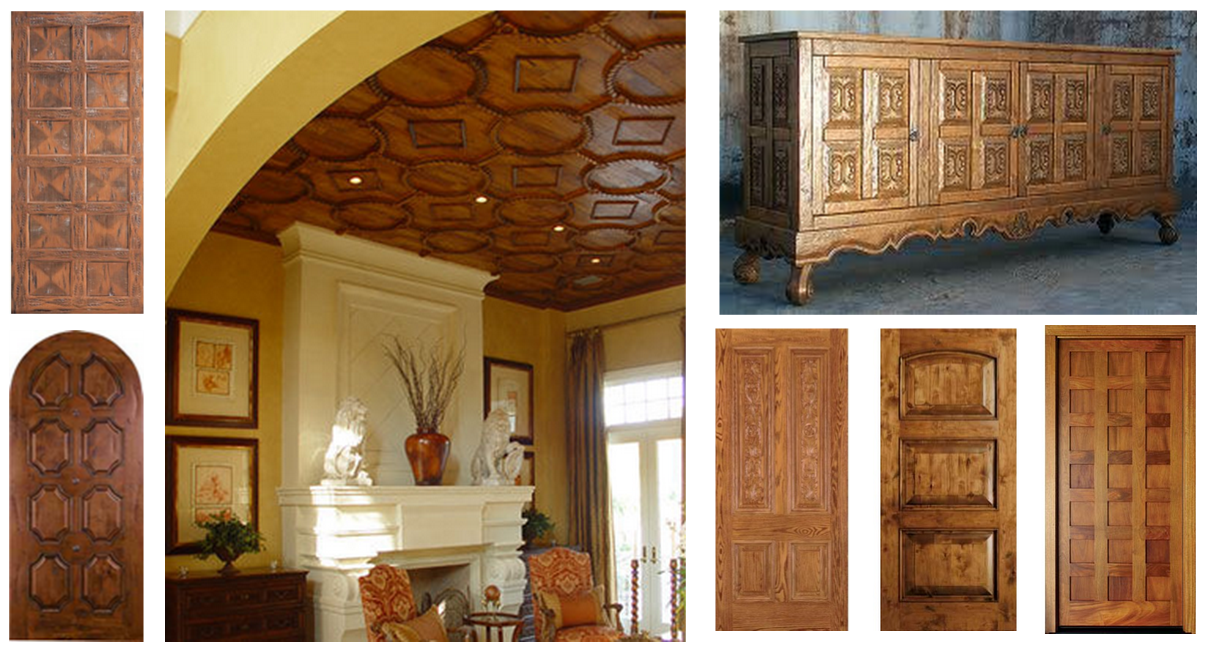
The Dutch door can be recognized by its horizontal division, which allows for the top half to be opened by the bottom half remains closed. This was first designed with the purpose of keeping animals outside the house on farms and barns while still letting in the light. While this door was popular in the 17th century, the Dutch colonists brought it with them to the new world and it became a defining point of the Dutch Colonial style.

7. Dutch door with paneled halves

What it is: A split door with paneled fields above and below

Where it works best: Homes reflecting Dutch regional traditions

Why it fits: The divided form references practical, regionally rooted entry types

8. Dutch door with small top glazing

What it is: A split door with limited glazing in the upper section

Where it works best: Entries that introduce light while maintaining a traditional Dutch-door form

Why it fits: Glazing is added without changing the overall character

9. Paneled door in masonry context

What it is: A straightforward paneled door designed to sit within stone or brick façades

Where it works best: Masonry-based Colonial homes

Why it fits: The simplicity of the panel field complements heavier wall materials

10. Four-panel with strong mid-rail emphasis

What it is: A four-panel layout defined by a pronounced horizontal mid-rail

Where it works best: Homes with a more grounded, regional character

Why it fits: The horizontal division reinforces a sturdy, practical expression

11. Six-panel without classical fanlight cues

What it is: A six-panel door used without a fanlight or classical over-door framing

Where it works best: Simpler Colonial compositions without formal surround emphasis

Why it fits: The familiar panel rhythm remains, but the entry reads less formal

12. Recessed-panel Dutch simplicity

What it is: A door with recessed panels and minimal profiling

Where it works best: More restrained Colonial entries

Why it fits: Reduced detailing aligns with a simpler, more utilitarian expression

French Colonial and Creole Influenced

13. French doors as the entry

What it is: Paired French doors used as the primary entry

Where it works best: Façades that emphasize openness and multiple openings

Why it fits: The entry remains visually light and integrated with the overall rhythm

14. French doors with transom light

What it is: French doors paired with a transom-like glazing element above

Where it works best: Entries that benefit from added light and ventilation

Why it fits: The composition stays open while introducing a simple overhead element

15. Façade rhythm matched entry door

What it is: A door selected to align with repeated openings across the façade

Where it works best: Homes with consistent window and door spacing

Why it fits: The entry supports the overall rhythm rather than standing apart

16. Mostly glazed French doors with lower panels

What it is: Paired doors with large glass areas and minimal paneling at the base

Where it works best: Entries that prioritize light while retaining some structure

Why it fits: The balance of glass and panel remains controlled and consistent

17. Quiet paneled door within open façade

What it is: A restrained paneled door set within a more open composition

Where it works best: Façades where other openings carry more visual weight

Why it fits: The door remains secondary, supporting the overall composition

18. Balanced façade with open entry emphasis

What it is: An entry that maintains symmetry while keeping the composition visually light

Where it works best: Homes that balance structure with openness

Why it fits: Symmetry is preserved without introducing heaviness

Spanish-Derived and Spanish Colonial Revival Leaning

19. Arched surround with restrained paneling

What it is: An arched entry surround paired with a simple paneled door

Where it works best: Spanish Colonial and Spanish Revival façades

Why it fits: The arch establishes the composition while the door remains visually quiet

20. Wrought-iron grille accent over glazing

What it is: Glazing combined with a decorative iron grille

Where it works best: Entries where ironwork is part of the architectural language

Why it fits: Iron detailing becomes the primary visual element without changing the door structure

21. Heavy sculptural surround with simple door

What it is: A pronounced, sculptural surround framing a restrained door

Where it works best: Façades with strong material expression and depth

Why it fits: The surround carries the visual weight while the door remains secondary

22. Simple paneled door within stucco façade

What it is: A paneled door set within a stucco-based entry

Where it works best: Homes with textured wall surfaces and minimal detailing

Why it fits: The door acts as a quiet base within a more expressive façade

23. Textured surround with minimal classical cues

What it is: An entry defined by wall texture and shaped openings rather than classical detailing

Where it works best: Spanish-influenced homes without formal classical framing

Why it fits: Surface and form define the entry more than panel geometry

24. Iron-accented door with restrained panels

What it is: A paneled door combined with subtle iron detailing

Where it works best: Entries that balance structure with added character

Why it fits: Panels provide order while ironwork introduces controlled visual emphasis

Colonial Revival leaning

25. Paneled door with fanlight or overlight

What it is: A paneled door paired with a classical over-door light or fanlight

Where it works best: Colonial Revival façades with formal entry emphasis

Why it fits: The composition reinforces symmetry and a more classical reading

26. Paneled door with pediment-style surround

What it is: An entry framed with a pediment-like surround

Where it works best: Homes with pronounced, symmetrical entry compositions

Why it fits: The surround emphasizes the doorway as a central feature

27. Symmetry-first door with restrained glazing

What it is: A paneled door with minimal glazing

Where it works best: Façades where overall balance is the primary driver

Why it fits: Reduced glass keeps the composition visually controlled

28. Six-panel Colonial Revival interpretation

What it is: A six-panel layout adapted for later Colonial Revival homes

Where it works best: Traditional housing with simplified classical cues

Why it fits: The familiar panel rhythm supports a recognizable Colonial expression

29. Raised-panel Colonial Revival formality

What it is: A paneled door with raised panel profiles

Where it works best: Entries that lean toward a more formal appearance

Why it fits: Panel depth reinforces a crisp, composed look

30. Paneled door with sidelight framing

What it is: A paneled door flanked by sidelights

Where it works best: Entries that benefit from added width and light

Why it fits: The composition creates a balanced, framed entry presence

Other important influences

Colonial Georgian styles

The Colonial Georgian styles can sometimes be recognized by the front door. Although not so lavish as the English styles, this style doors used rectangular geometry in divisions of 2, 3, 4, 5, or even 6 panels. Popular colors for the doors were white and ivory or another light tone showing great contrast to the rest of the house’s material. Also, at the entrance of a Colonial Georgian-style home, you’ll find wood carvings, symmetric windows, and maybe even rectangular columns.

Colonial German Colonial style

The German type of Colonial home was brought to American by the settlers from northern Europe. This style is unique because it uses half-timber and braced timbers filled with masonry to hold up the house. Like other homes from the Colonial style, it was rectangular but more often than not, it was asymmetrical. It was built so that the entrance always lead to a kitchen and then a backdoor, while the rest of the house had a hall, a parlor, and bed-chambers.

Modern Performance Adaptations That Keep the Traditional Look

Modern upgrades work best when they preserve the entry’s visible character.

  • Materials that maintain crisp panels: fiberglass can replicate the look of traditional raised-panel Colonial doors while reducing maintenance compared to wood
  • Glazing upgrades: fanlights and sidelights can be improved for thermal performance when detailing is handled carefully
  • Secondary considerations: hardware and performance ratings should support the style decision rather than define it

If you live in a storm-impact region, treat impact resistance as a regional requirement first, then return to preserving the Colonial appearance. If you install a smart lock, keep hardware visually restrained so the entry composition remains the focus. ENERGY STAR indicators can serve as quick performance cues, but should not drive the architectural decision.

For deeper material guidance, refer to the Custom Wood Door Guide.

Matching Guidance: Choose Colonial Door Styles That Fit Your Home’s Architecture

Start with façade symmetry: centered entries within balanced façades often align well with British-influenced or Colonial Revival designs.

  • Use panel geometry to confirm the style family: clear panel fields help maintain a recognizable Colonial signal
  • Use glazing placement intentionally: fanlights and over-door lights can reinforce classical composition cues
  • Use Colonial Revival as a bridge: many traditional homes combine Colonial cues with later housing forms

Select a few options from the Top 30 Colonial door styles that match your façade’s balance, then explore related resources for deeper guidance.

Colonial Composition Note: Sidelites and Transoms (Summary)

Sidelites and transoms function as composition tools that reinforce a formal Colonial entry.

  • When they help: they can strengthen symmetry and create a more composed doorway presence
  • Proportion warning: these elements are visually prominent, so detailing and integration need to be handled carefully

For configuration exploration, refer to the sidelites configuration page and the transoms configuration page.

Period Appropriate Color Note (Summary)

Color choices should remain historically grounded.

  • Use documented palettes: historically researched color collections help keep the result aligned with the home’s period character
  • Avoid trend-driven decisions: select colors that reinforce the architectural language rather than seasonal preferences

FAQ

A Colonial door typically begins with a paneled door set within a formal entry composition, often within a symmetrical façade. Panel geometry provides one of the clearest visual signals.

Six-panel doors are a strong historical reference, as they became common during the Georgian period. However, other panel arrangements can also align with Colonial architecture.

Fanlights are most closely associated with Georgian and classical entry compositions, where they were originally used to bring daylight into interior halls.

A Dutch door is most appropriate for homes influenced by Dutch Colonial traditions, particularly those connected to northeastern regional contexts.

Not always. French and Creole homes often favor more open façades with multiple doors or French doors, rather than emphasizing a single, more formal front entry.

Yes. Modern materials such as fiberglass can replicate the raised-panel appearance of traditional Colonial doors while improving durability and reducing maintenance.

Verify local guidelines before altering a character-defining entry, as openings, detailing, and proportions often play a significant role in maintaining historic character.

Top Modern Door Designs in 2026

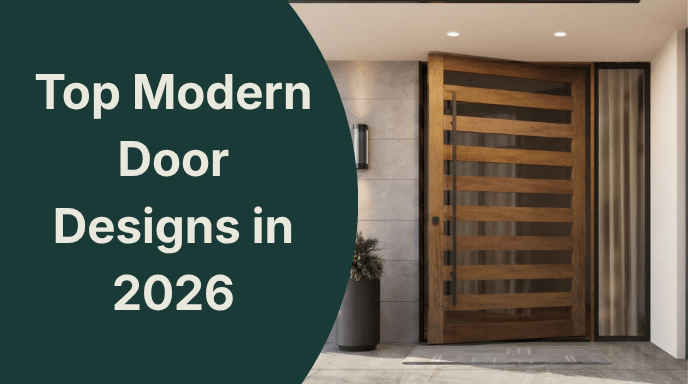
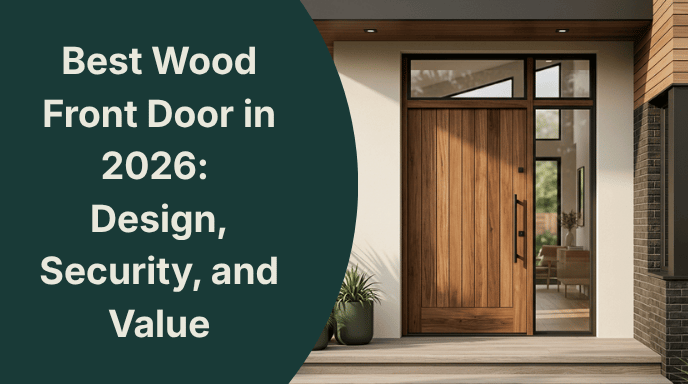
Graphic showing a wood pivot door with horizontal glass panels next to text that reads "Top Modern Door Designs in 2026."

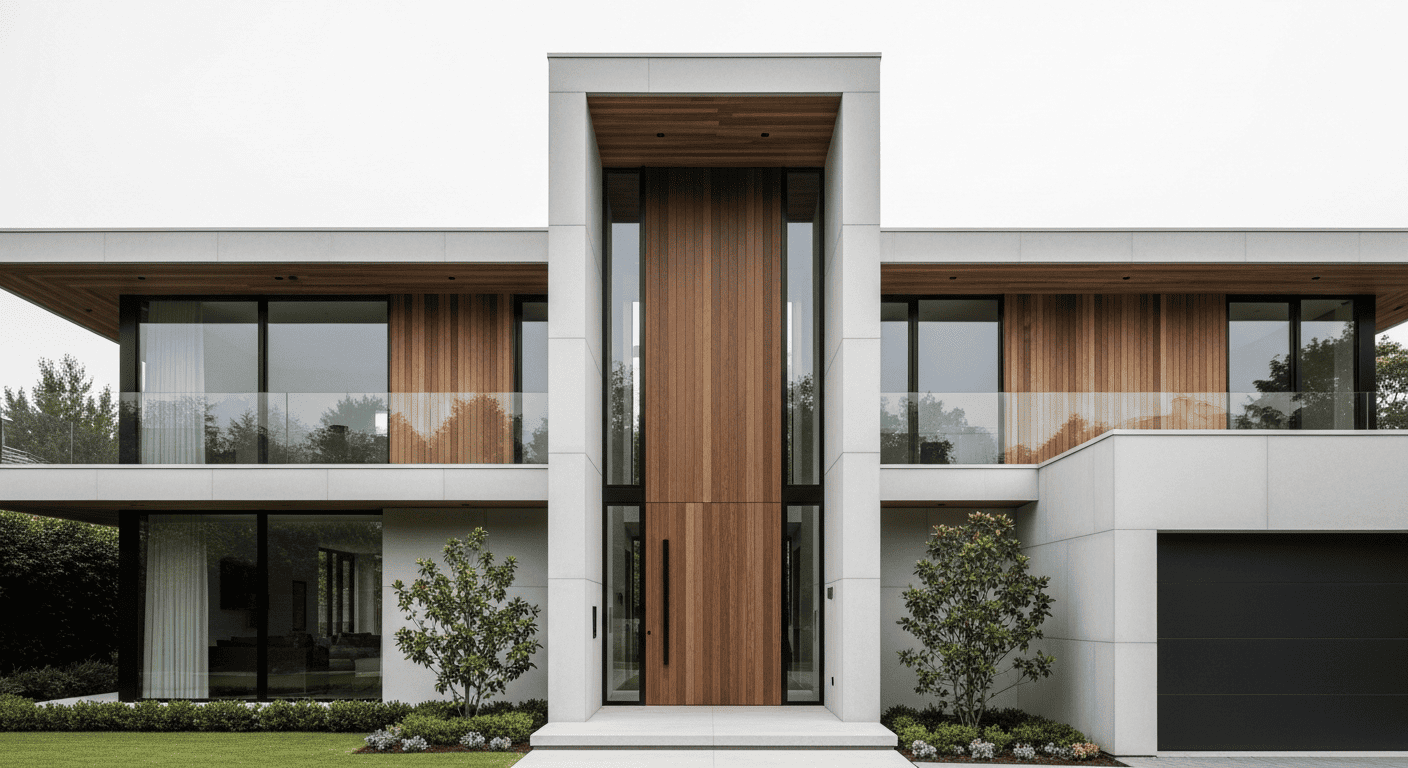
Modern door designs shape how a home is experienced from the exterior. Before anyone steps inside, the door sets the tone through its scale, its material, and how light moves across it. A well-proportioned modern door can make an entry feel more intentional and composed rather than busy or overdone.

Traditional doors often rely on heavier paneling and decorative detail. Modern doors simplify the face. They use clearer lines, fewer elements, and considered glass placement. The result often feels calmer, sharper, and more current without needing extra ornament.

Below, you’ll find 20 modern door designs selected for 2026, including options suited to both entryways and interiors. Each design includes a short note to help you understand where it fits and what direction to explore next.

20 Modern Door Directions for 2026

Start with the modern direction that matches your space. Then refine by warmth, light, and how much visual detail you want at the entry.

Category 1: minimalist

If you prefer modern that feels quiet and composed, start here. Minimalist doors reduce visual noise. They rely on proportion, surface, and subtle detailing rather than ornament.

Explore more in the Minimalist Modern Door Collection.

Flush Slab Modern

  • Material feel: smooth, uninterrupted surface with no raised panels.
  • Design language: simple, flat face with very little detailing.
  • Finish direction: matte black, charcoal, or a deep blue for contrast.
  • Best use case: entry when you want a calm first impression that doesn’t compete with the façade.
  • Home fit: contemporary homes with clean lines and simple massing.

Horizontal Line Modern

  • Material feel: flat surface with subtle horizontal grooves or plank divisions.
  • Design language: low-profile lines that echo horizontal architecture.
  • Finish direction: black for contrast or warm wood for balance.
  • Best use case: entry where the home already emphasizes width.
  • Home fit: streamlined façades and modern ranch-style exteriors.

Vertical Line Modern

  • Material feel: smooth face with vertical planks or grooves.
  • Design language: vertical lines that draw the eye upward.
  • Finish direction: bold black, soft neutrals, or natural wood tones.
  • Best use case: entry where you want to emphasize height.

Warm Minimal Modern

  • Material feel: minimalist surface softened by wood grain or subtle texture.
  • Design language: clean lines paired with warmth.
  • Finish direction: natural mahogany, walnut tones, or muted earth hues.
  • Best use case: entry or interior when you want modern without it feeling stark.

If you prefer modern that feels quiet and composed, start here. Minimalist doors reduce visual noise. They rely on proportion, surface, and subtle detailing rather than ornament.

Explore more in the Minimalist Modern Door Collection.

Flush Slab Modern

  • Material feel: smooth, uninterrupted surface with no raised panels.
  • Design language: simple, flat face with very little detailing.
  • Finish direction: matte black, charcoal, or a deep blue for contrast.
  • Best use case: entry when you want a calm first impression that doesn’t compete with the façade.
  • Home fit: contemporary homes with clean lines and simple massing.

Horizontal Line Modern

  • Material feel: flat surface with subtle horizontal grooves or plank divisions.
  • Design language: low-profile lines that echo horizontal architecture.
  • Finish direction: black for contrast or warm wood for balance.
  • Best use case: entry where the home already emphasizes width.
  • Home fit: streamlined façades and modern ranch-style exteriors.

Vertical Line Modern

  • Material feel: smooth face with vertical planks or grooves.
  • Design language: vertical lines that draw the eye upward.
  • Finish direction: bold black, soft neutrals, or natural wood tones.
  • Best use case: entry where you want to emphasize height.

Warm Minimal Modern

  • Material feel: minimalist surface softened by wood grain or subtle texture.
  • Design language: clean lines paired with warmth.
  • Finish direction: natural mahogany, walnut tones, or muted earth hues.
  • Best use case: entry or interior when you want modern without it feeling stark.

Category 2: Wood-forward

Wood-forward modern balances warmth with clean structure. The material becomes the focus, while the detailing stays restrained.

Browse the full Wood-Forward Modern Door Collection.

These directions range from full slab wood faces to subtle horizontal or vertical plank layouts. Some highlight natural grain and tone. Others use deeper stains or darker finishes for contrast. Wood-forward designs work well when you want the entry to feel warm and substantial without adding decorative detail.

Warm Wood Tone Modern Slab Look

  • Material feel: wood-forward appearance with a slab-like modern face.
  • Design language: simple and restrained, allowing the tone and grain to lead.
  • Finish direction: warm wood tones that feel livable and natural.
  • Best use case: entry when you want a welcoming modern look that doesn’t feel severe.
  • Home fit: pairs well with stone, stucco, or clean siding where warmth balances crisp lines.

Wood Tone with Horizontal Rhythm

  • Material feel: wood tone surface with subtle horizontal grooves or plank divisions.
  • Design language: horizontal lines that echo the home’s width while staying clean.
  • Finish direction: warm wood tones, or darker accents around the entry for contrast.
  • Best use case: entry where the architecture already emphasizes horizontal lines.
  • Home fit: modern massing and long, streamlined exteriors where continuity matters.

Wood Tone with Vertical Rhythm

  • Material feel: wood-forward surface with vertical plank or groove detailing.
  • Design language: vertical lines that help the entry feel taller.
  • Finish direction: warm wood tones, or softer natural hues for a subtle effect.
  • Best use case: entry where the opening feels wide and you want more height presence.
  • Home fit: clean façades with simple geometry and vertical emphasis.

Timeless Modern Wood-Forward Balance

  • Material feel: warm wood tone presented with a calm, minimalist face.
  • Design language: clean lines paired with warmth for a balanced look.
  • Finish direction: natural wood tones or deep greens for a grounded, nature-inspired feel.
  • Best use case: entry for homeowners who want modern without it feeling stark.
  • Home fit: homes that combine crisp architecture with warmer exterior materials.

Wood-forward modern balances warmth with clean structure. The material becomes the focus, while the detailing stays restrained.

Browse the full Wood-Forward Modern Door Collection.

These directions range from full slab wood faces to subtle horizontal or vertical plank layouts. Some highlight natural grain and tone. Others use deeper stains or darker finishes for contrast. Wood-forward designs work well when you want the entry to feel warm and substantial without adding decorative detail.

Warm Wood Tone Modern Slab Look

  • Material feel: wood-forward appearance with a slab-like modern face.
  • Design language: simple and restrained, allowing the tone and grain to lead.
  • Finish direction: warm wood tones that feel livable and natural.
  • Best use case: entry when you want a welcoming modern look that doesn’t feel severe.
  • Home fit: pairs well with stone, stucco, or clean siding where warmth balances crisp lines.

Wood Tone with Horizontal Rhythm

  • Material feel: wood tone surface with subtle horizontal grooves or plank divisions.
  • Design language: horizontal lines that echo the home’s width while staying clean.
  • Finish direction: warm wood tones, or darker accents around the entry for contrast.
  • Best use case: entry where the architecture already emphasizes horizontal lines.
  • Home fit: modern massing and long, streamlined exteriors where continuity matters.

Wood Tone with Vertical Rhythm

  • Material feel: wood-forward surface with vertical plank or groove detailing.
  • Design language: vertical lines that help the entry feel taller.
  • Finish direction: warm wood tones, or softer natural hues for a subtle effect.
  • Best use case: entry where the opening feels wide and you want more height presence.
  • Home fit: clean façades with simple geometry and vertical emphasis.

Timeless Modern Wood-Forward Balance

  • Material feel: warm wood tone presented with a calm, minimalist face.
  • Design language: clean lines paired with warmth for a balanced look.
  • Finish direction: natural wood tones or deep greens for a grounded, nature-inspired feel.
  • Best use case: entry for homeowners who want modern without it feeling stark.
  • Home fit: homes that combine crisp architecture with warmer exterior materials.

Category 3: Wood plus glass

Wood plus glass brings together material warmth and controlled daylight. The wood frame anchors the design, while the glass placement determines how open the door feels.

See variations in theWood and Glass Modern Collection.

These directions include narrow vertical lites, centered glass panels, or larger glazed areas. Clear glass increases brightness. Textured or obscured glass softens direct sightlines while still allowing light through. This approach suits homes that want both warmth and openness at the entry.

Wood Tone with Clean Framed Lite

  • Material feel: warm wood tone paired with a cleanly framed glass lite.
  • Design language: simple glazing that brings in daylight and lightens the entry.
  • Finish direction: warm wood for softness, or a deep blue for contrast.
  • Best use case: entry when you want brightness without going fully glass-forward.
  • Home fit: contemporary exteriors where warmth balances crisp geometry.

Wood Tone with Large Simple Glass Area

  • Material feel: wood tone frame with a larger, simple glass panel.
  • Design language: glass-forward approach that opens up the entry and brightens the interior.
  • Finish direction: warm wood, or darker tones for a stronger contrast.
  • Best use case: entry when the foyer or hall feels dark and you want more daylight.
  • Home fit: modern and contemporary façades with clean lines that suit larger glazing.

Wood Tone with Textured Modern Glass

  • Material feel: warm wood tone paired with reeded or fluted glass as the feature.
  • Design language: texture softens light and reduces direct sightlines.
  • Finish direction: warm wood tones, or nature-leaning hues for a calm, grounded look.
  • Best use case: entry when you want light without feeling too exposed.
  • Home fit: warmer modern homes where texture feels considered, not busy.

Warm Modern with Privacy-Softening Glass

  • Material feel: warm modern face paired with glass that obscures the view through texture.
  • Design language: restrained detailing with clean glass placement.
  • Finish direction: warm wood tones, or deep blues for warmth with contrast.
  • Best use case: entry for homeowners who want daylight but prefer a more private feel.
  • Home fit: homes that mix crisp lines with warmer finishes and layered exterior palettes.

Wood plus glass brings together material warmth and controlled daylight. The wood frame anchors the design, while the glass placement determines how open the door feels.

See variations in theWood and Glass Modern Collection.

These directions include narrow vertical lites, centered glass panels, or larger glazed areas. Clear glass increases brightness. Textured or obscured glass softens direct sightlines while still allowing light through. This approach suits homes that want both warmth and openness at the entry.

Wood Tone with Clean Framed Lite

  • Material feel: warm wood tone paired with a cleanly framed glass lite.
  • Design language: simple glazing that brings in daylight and lightens the entry.
  • Finish direction: warm wood for softness, or a deep blue for contrast.
  • Best use case: entry when you want brightness without going fully glass-forward.
  • Home fit: contemporary exteriors where warmth balances crisp geometry.

Wood Tone with Large Simple Glass Area

  • Material feel: wood tone frame with a larger, simple glass panel.
  • Design language: glass-forward approach that opens up the entry and brightens the interior.
  • Finish direction: warm wood, or darker tones for a stronger contrast.
  • Best use case: entry when the foyer or hall feels dark and you want more daylight.
  • Home fit: modern and contemporary façades with clean lines that suit larger glazing.

Wood Tone with Textured Modern Glass

  • Material feel: warm wood tone paired with reeded or fluted glass as the feature.
  • Design language: texture softens light and reduces direct sightlines.
  • Finish direction: warm wood tones, or nature-leaning hues for a calm, grounded look.
  • Best use case: entry when you want light without feeling too exposed.
  • Home fit: warmer modern homes where texture feels considered, not busy.

Warm Modern with Privacy-Softening Glass

  • Material feel: warm modern face paired with glass that obscures the view through texture.
  • Design language: restrained detailing with clean glass placement.
  • Finish direction: warm wood tones, or deep blues for warmth with contrast.
  • Best use case: entry for homeowners who want daylight but prefer a more private feel.
  • Home fit: homes that mix crisp lines with warmer finishes and layered exterior palettes.

Category 4: Glass-driven

Glass-driven modern puts light at the center of the design. The glazing becomes the dominant element, supported by minimal framing.

Explore the Glass-Driven Modern Door Collection.

These doors often feature larger glass panels and clean proportions. They suit homes where natural light is part of the overall plan. For more privacy, frosted or patterned glass can reduce visibility while maintaining brightness.

Clean Lite, Airy Modern Entry

  • Material feel: door face where glass becomes the dominant element.
  • Design language: large, simple glazing that brightens the entry.
  • Finish direction: deep blues or darker tones for contrast.
  • Best use case: entry when you want the threshold to feel lighter and more open during the day.
  • Home fit: modern homes with minimal trim and simple forms that suit larger glass areas.

Textured Glass Modern with Soft Light

  • Material feel: glass-forward door featuring reeded or fluted texture.
  • Design language: textured glazing that diffuses light and softens visibility.
  • Finish direction: black for contrast, or natural tones for a calmer feel.
  • Best use case: entry when you want daylight without full transparency.
  • Home fit: works well on both minimalist and warmer modern homes because the texture adds depth without ornament.

Minimal Frame Glass-Forward Modern

  • Material feel: cleanly framed glass with restrained detailing.
  • Design language: simple proportions and minimal trim around the lites.
  • Finish direction: bold black for crisp lines, or deeper hues for a current look.
  • Best use case: entry when you want brightness while keeping the overall design understated.
  • Home fit: contemporary façades where clean framing matches the home’s lines.

Warm-Toned Glass-Forward Modern

  • Material feel: glass-forward design balanced by warm material tone.
  • Design language: simple lines paired with warmth for a softer modern feel.
  • Finish direction: warm wood tones or nature-inspired greens.
  • Best use case: entry for homeowners who want light without the space feeling stark.
  • Home fit: homes that blend clean forms with inviting exterior materials.

Glass-driven modern puts light at the center of the design. The glazing becomes the dominant element, supported by minimal framing.

Explore the Glass-Driven Modern Door Collection.

These doors often feature larger glass panels and clean proportions. They suit homes where natural light is part of the overall plan. For more privacy, frosted or patterned glass can reduce visibility while maintaining brightness.

Clean Lite, Airy Modern Entry

  • Material feel: door face where glass becomes the dominant element.
  • Design language: large, simple glazing that brightens the entry.
  • Finish direction: deep blues or darker tones for contrast.
  • Best use case: entry when you want the threshold to feel lighter and more open during the day.
  • Home fit: modern homes with minimal trim and simple forms that suit larger glass areas.

Textured Glass Modern with Soft Light

  • Material feel: glass-forward door featuring reeded or fluted texture.
  • Design language: textured glazing that diffuses light and softens visibility.
  • Finish direction: black for contrast, or natural tones for a calmer feel.
  • Best use case: entry when you want daylight without full transparency.
  • Home fit: works well on both minimalist and warmer modern homes because the texture adds depth without ornament.

Minimal Frame Glass-Forward Modern

  • Material feel: cleanly framed glass with restrained detailing.
  • Design language: simple proportions and minimal trim around the lites.
  • Finish direction: bold black for crisp lines, or deeper hues for a current look.
  • Best use case: entry when you want brightness while keeping the overall design understated.
  • Home fit: contemporary façades where clean framing matches the home’s lines.

Warm-Toned Glass-Forward Modern

  • Material feel: glass-forward design balanced by warm material tone.
  • Design language: simple lines paired with warmth for a softer modern feel.
  • Finish direction: warm wood tones or nature-inspired greens.
  • Best use case: entry for homeowners who want light without the space feeling stark.
  • Home fit: homes that blend clean forms with inviting exterior materials.

Category 5: Pivot or statement

Statement modern focuses on scale and proportion. These doors are often taller or wider, and pivot hardware changes how the door opens and closes.

See more in the Pivot and Statement Door Guide.

This direction suits contemporary homes where the entry is meant to feel deliberate and grounded. The emphasis is on size, balance, and movement rather than ornament.

Clean Statement Pivot Presence

  • Material feel: larger-scale door with a calm, minimal face.
  • Design language: oversized proportion used intentionally, without added ornament.
  • Finish direction: bold black for contrast, or deeper blues for a modern tone.
  • Best use case: entry when you want the door to anchor the façade.
  • Home fit: contemporary homes where a taller or wider opening feels aligned with the overall scale.

Warm-Toned Pivot with Balanced Scale

  • Material feel: statement-scale door softened by warm material tone.
  • Design language: pivot movement paired with restrained detailing.
  • Finish direction: warm wood tones or natural greens for a grounded look.
  • Best use case: entry when you want impact while keeping the approach welcoming.
  • Home fit: warm modern homes where natural materials are part of the exterior palette.

Pivot with Glass Emphasis

  • Material feel: large-scale door combined with simple, clean glazing.
  • Design language: pivot framing paired with minimal glass placement.
  • Finish direction: black for a crisp outline, or deeper tones for contrast.
  • Best use case: entry when you want scale and daylight together.
  • Home fit: contemporary façades with simple geometry and limited trim.

Oversized Statement Without Pivot

  • Material feel: larger door presence achieved through proportion rather than hardware.
  • Design language: clean framing and balanced scale.
  • Finish direction: bold black for drama, or natural tones for a quieter presence.
  • Best use case: entry when you want a focal point without using pivot hardware.
  • Home fit: homes that support a strong entry moment through proportion and layout.

Statement modern focuses on scale and proportion. These doors are often taller or wider, and pivot hardware changes how the door opens and closes.

See more in the Pivot and Statement Door Guide.

This direction suits contemporary homes where the entry is meant to feel deliberate and grounded. The emphasis is on size, balance, and movement rather than ornament.

Clean Statement Pivot Presence

  • Material feel: larger-scale door with a calm, minimal face.
  • Design language: oversized proportion used intentionally, without added ornament.
  • Finish direction: bold black for contrast, or deeper blues for a modern tone.
  • Best use case: entry when you want the door to anchor the façade.
  • Home fit: contemporary homes where a taller or wider opening feels aligned with the overall scale.

Warm-Toned Pivot with Balanced Scale

  • Material feel: statement-scale door softened by warm material tone.
  • Design language: pivot movement paired with restrained detailing.
  • Finish direction: warm wood tones or natural greens for a grounded look.
  • Best use case: entry when you want impact while keeping the approach welcoming.
  • Home fit: warm modern homes where natural materials are part of the exterior palette.

Pivot with Glass Emphasis

  • Material feel: large-scale door combined with simple, clean glazing.
  • Design language: pivot framing paired with minimal glass placement.
  • Finish direction: black for a crisp outline, or deeper tones for contrast.
  • Best use case: entry when you want scale and daylight together.
  • Home fit: contemporary façades with simple geometry and limited trim.

Oversized Statement Without Pivot

  • Material feel: larger door presence achieved through proportion rather than hardware.
  • Design language: clean framing and balanced scale.
  • Finish direction: bold black for drama, or natural tones for a quieter presence.
  • Best use case: entry when you want a focal point without using pivot hardware.
  • Home fit: homes that support a strong entry moment through proportion and layout.

Design categories to explore next

If you’re deciding between a few modern door designs, start with the direction that feels most natural to your space. Then explore that collection in more detail.

Each collection expands on the direction you’ve selected, with more variations in material, scale, and glass placement.

How to Choose: Match Direction to Entry, Light, Warmth, and Home

Entry vs interior intent:

Decide whether you’re shopping modern front door designs or modern interior door designs first. Entry doors usually carry more presence and durability expectations, while interior doors focus more on proportion and light-sharing.


Light versus privacy:

Reeded or fluted glass softens light while reducing direct visibility compared to clear glass. Choose clear glass for brightness, textured glass for comfort.


Modern but warm:

Balance clean lines with warmth cues such as wood tones or textured glass if you want modern without it feeling stark.


Pivot:

A pivot door rotates on a pivot point rather than side hinges. It’s often used for larger entries and tends to feel heavier and more deliberate when opened.


Finish tone selection for 2026:

Bold black, deep blues, warm wood tones, and muted nature-inspired hues are common choices. The right one depends on how much contrast you want against your exterior materials.

FAQ

A modern door is defined by clean lines and minimal detailing. Slab or flush faces communicate simplicity immediately. Proportion, glass placement, and finish tone support the look without added ornament.

Modern refers to a consistent design language built on simplicity and structure. Contemporary changes more often with trends. If you want something that feels steady over time, modern is usually the safer direction.

Start by deciding whether the door is an exterior focal point or an interior transition. Once that context is clear, narrow your direction by light preference and warmth level. Staying within one style family usually creates a more cohesive result.

Textured glass, such as reeded or fluted styles, softens incoming light and reduces direct visibility compared to clear glass. This allows brightness while maintaining comfort. The size and placement of the glass also affect how open the entry feels.

Bold black, deep blues, warm wood tones, and muted nature-inspired hues are common choices. Darker greens and rich blues are especially popular. The best option depends on how much contrast you want against your exterior materials.

A pivot door rotates on a pivot point instead of traditional side hinges. It’s often used for larger entries and tends to feel heavier and more deliberate when opened.

Modern can feel cold when there’s no warmth in the material or tone. Wood finishes, textured glass, and softer colors help balance clean lines. The goal is simplicity that still feels comfortable to live with.

Doors for Victorian Homes

Architecturally, Victorian houses are commonly known to be of a Victorian style, but the 'style' itself is just a historic period. This period responds to a time when Queen Victoria reigned over Britain. During this period, industrialization resulted in numerous innovations in architecture. Certain different Victorian styles include Shingle, Richardsonian Romanesque, Second Empire and Queen Anne.

Read more

What Door is the right for your Art Deco House?

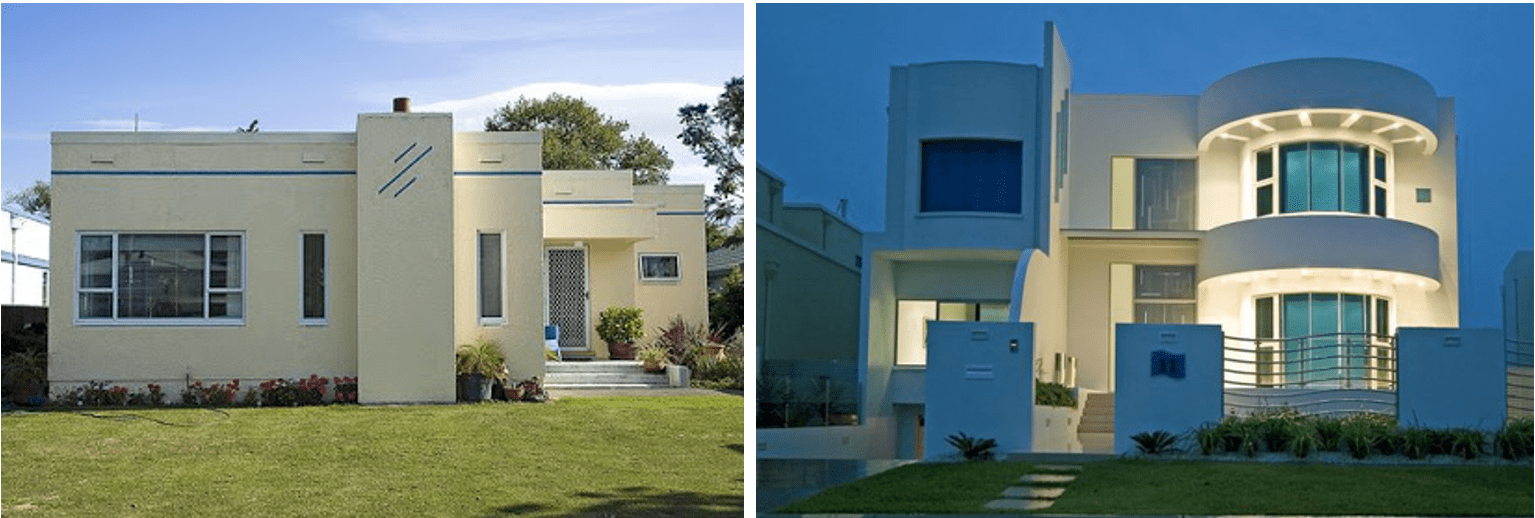
Art Deco  is a visual arts style that first made its appearance in France following World War I and then spread internationally between the 1920sand 1940s. After World War II, it grew less and less popular. Art Deco or Deco is a style that brings together standard craft motifs and marries them with a Machine Age look and use of materials. The style is often recognized by vibrant colors, bold geometry and lavish ornamentation.

ArtDeco Homes

Read more

Cape Cod Style & It's Doors!

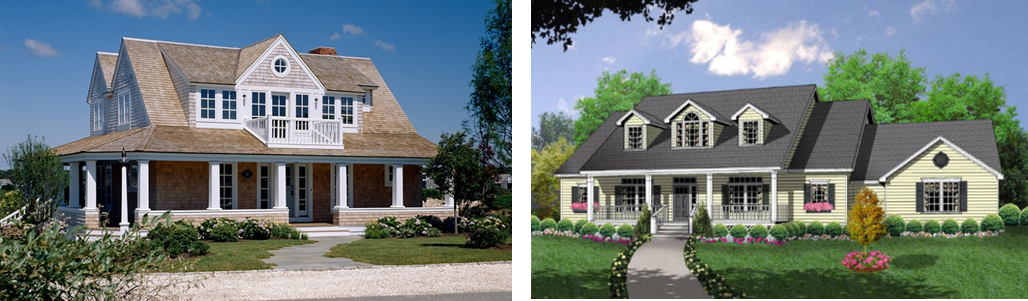
A Cape Cod cottage is a housing style that first originated in New England back in the 17th century. This type of housing style is usually identified with the broad frame building, steep pitched roofs with end gables, larger chimneys as well as very little use of ornaments. Traditional Cape Cod house styles are quite simple, consisting of symmetrically designed central front doors, which are encompassed by a couple of multi- paned windows on either side.  The houses were designed to withstand the stormy weather of the coast of Massachusetts, and most designs still draw from their colonial counterparts.

Cape Cod Style

Read more